REVIEW · DRESDEN
Walking Through Dresden’s Past with Dr. Fraser Macdonald
Book on Viator →Bookable on Viator
Dresden reads like a living history book. This walk links the city’s earliest settlement by the Elbe to its most famous landmarks, using clear stories you can follow site by site, with Dr. Fraser Macdonald setting the pace.
I especially like how it’s short but satisfying, with enough stops to understand Dresden’s past without eating your whole day. I also like the way the route mixes major showpieces with quieter corners—so you get more than the postcard view.
One potential drawback: for several stops, you’re looking from the outside, and entry to buildings or towers usually costs extra. If you’re hoping for a lot of indoor time, you’ll want to plan a little self-guided exploring after the tour ends.
In This Review
- Key things to know before you go
- A 2-hour walk that actually explains Dresden
- Start at Köpckestraße: where Dresden first took root by the Elbe
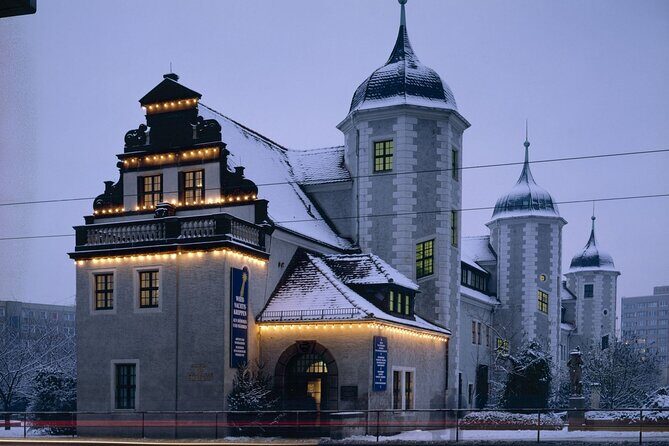
- Museum für Sächsische Volkskunst: a site with monastery roots
- Dreikönigskirche (Haus der Kirche): Baroque looks over earlier Altendresden
- Crossing Augustus Bridge to the Altstadt
- Frauenkirche Dresden: the 700-year story behind the Baroque face
- Holy Cross Church: built in the 1200s, damaged and reinterpreted
- Denkraum Sophienkirche: the Franciscan chapter that returned
- Dresden Castle (Residenzschloss): from minor town to Saxon power
- Price and logistics: what $60.34 buys you
- How to get the most from the walk (without overplanning)
- Should you book Walking Through Dresden’s Past with Dr. Fraser Macdonald?
- FAQ
- How long is the Dresden walking tour?
- What language is the tour offered in?
- What does the tour cost?
- What’s the maximum group size?
- Is the ticket mobile?
- Are entrances included in the price?
- Where does the tour start and end?
- What should I expect about church visits?
- Is the tour dependent on weather?
Key things to know before you go
- A guide who connects big events to street-level details (and answers questions with enthusiasm)
- Two hours that won’t fry your legs—it’s a walk with a manageable pace
- Church and monastery stories from the medieval start of Dresden through later upheavals
- Plenty of built-in options to go inside on your own, where the tour doesn’t enter
- A smart finish on Theaterplatz, right by major sights like the Zwinger and Semperoper
A 2-hour walk that actually explains Dresden
This tour is built for the moment when you first arrive in Dresden and feel the city is both beautiful and complicated. You’re not just ticking off famous names. You’re learning why the city’s shape looks the way it does—how religious power, political power, and even destruction and rebuilding left fingerprints on real streets and real stone.
I like that it’s paced like a conversation. Dr. Fraser Macdonald brings an anthropology-style focus on people and systems, not just facts. The result is that you come away with a framework for understanding what you’re seeing later—especially if you want to connect the medieval origins, the Baroque era, and the 20th-century story that Dresden can’t ignore.
At the same time, it’s not a marathon tour. Reviews point out it feels efficient and not rushed, which matters in a city where the sights are spread out just enough to make planning annoying if you’re on your own.
You can also read our reviews of more walking tours in Dresden
Start at Köpckestraße: where Dresden first took root by the Elbe
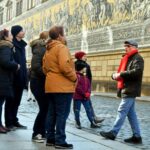
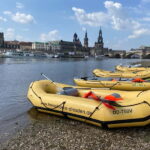
You begin at the Golden Rider area (Neustädter Markt), then the walk quickly frames the origin story. At Köpckestraße, you’re on the banks of the Elbe, pausing where Dresden was first permanently settled. That matters, because Dresden’s history didn’t grow from nowhere—it grew around movement, trade, and settlement along the river.
This is also where the tour handles something many city tours skip: the reality of displacement. Instead of presenting the “beginning” as a neat origin myth, you’re encouraged to think about early residents, their language and culture, and what happened to them over time.
Practical tip: if you’re sensitive to cold river air, dress accordingly. The Elbe can change the temperature fast, even on a decent day.
Museum für Sächsische Volkskunst: a site with monastery roots
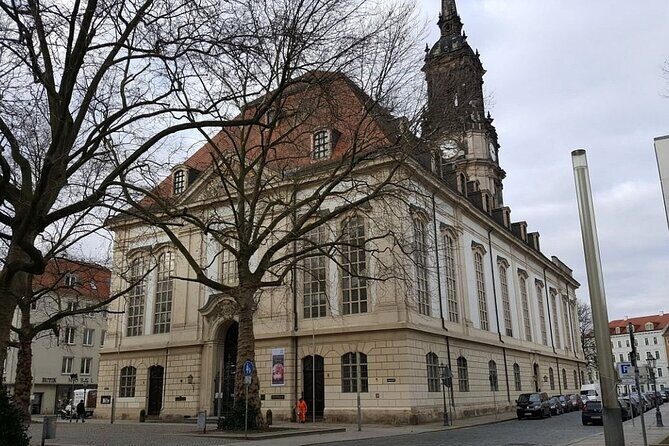
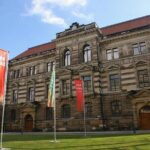
One of the best values here is how the tour uses recognizable places to teach a deeper story. At Museum für Sächsische Volkskunst mit Puppentheatersammlung, you don’t spend time inside as part of the guided portion. Instead, you learn what the site used to be.
The key idea: this location started in the 15th century as a wealthy Augustinian monastery. After the Reformation reshaped religious life, the building was demolished and later turned into a royal hunting lodge. That shift—from religious institution to royal leisure—helps you understand how power changed hands in Dresden.
If you’re curious about the collection, you can go in at your own pace afterward. The tour itself keeps moving, which is helpful if you want more stops in less time. If you’d rather prioritize museums over churches, this is a good moment to decide whether to add the museum visit yourself.
Dreikönigskirche (Haus der Kirche): Baroque looks over earlier Altendresden
Next comes Haus der Kirche – Dreikoenigskirche, a Baroque church tied to the older story of Altendresden. Even without entering, you’ll hear about the earlier era going back to the early 15th century—so the building you see becomes a kind of timeline marker.
The tour does not include entering the church or climbing the tower. That’s a fair setup in a two-hour route. You get the meaning first; you can choose the extra effort (like climbing) if you want it. Tower access costs extra, and it’s listed as an option for those who want the view.
Who this stop suits: if you like learning how layers of time stack up in cities that weren’t frozen in one era. You’re learning to read the architecture like a document.
Crossing Augustus Bridge to the Altstadt
After Altendresden, you cross the Augustus Bridge and step into the Altstadt. This is one of those “easy to miss” moments that turns into a mental reset. The bridge crossing isn’t just a transfer point—it’s the physical switch between contexts.
You’re going from the tour’s origin-layer discussion into the medieval core of Dresden. By the time you reach the next major churches, you understand what to pay attention to: how Dresden’s religious and civic center took shape, and why rebuilding and change left visible traces.
If you like photos, this is a solid stretch for it. The bridge area and surrounding viewpoints are exactly the kind of setting that makes the city look like the postcard—without you having to chase it on your own.


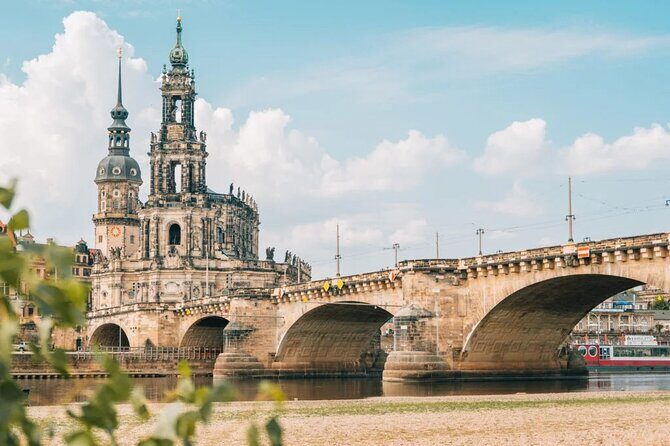
Frauenkirche Dresden: the 700-year story behind the Baroque face
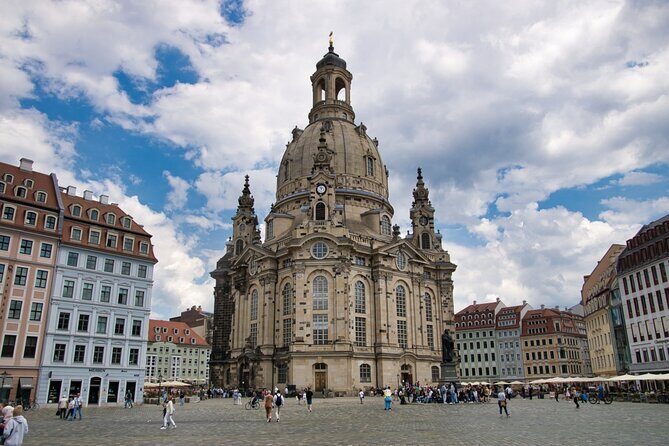
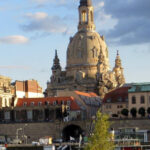
The Frauenkirche Dresden stop is all about the long timeline. The church you see is Baroque, but the tour frames it as part of a 700-year history, with structural and religious changes along the way.
You’re not entering the church or its museums during the guided segment, but it’s presented as a place you can revisit later. That works well because Frauenkirche is the sort of landmark that rewards quiet attention after you’ve heard the story.
What I like about this approach: you’re given context before you form your own impressions. Without that, it’s easy to treat a landmark as just a pretty building. With it, you start looking for what changed, what survived, and what the city chose to rebuild.
Holy Cross Church: built in the 1200s, damaged and reinterpreted
At Holy Cross Church, you hear a classic Dresden theme: creation, destruction, and re-creation. The story goes back to its 13th-century origins, then moves through a history of being destroyed multiple times. You also learn how it witnessed key moments during the Reformation.
This stop is free for access during the visit option, and the guided part stays outside. That keeps the pace smooth and gives you room to choose how much time to spend looking closely on your own.
This is a good stop for history buffs who want the Reformation period explained in human terms. It’s not just dates. It’s what shifts in faith can do to a city’s major institutions.
Denkraum Sophienkirche: the Franciscan chapter that returned
The Denkraum Sophienkirche stop adds a different angle: it focuses on the first Franciscan monastery in Dresden, constructed in the 13th century, and the story of its demise and later resurrection as the Sophienkirche—described as iconic, but also sadly lost.
This is one of the stops that helps you see Dresden as more than what survived the big wars and the big styles. Some places are gone. Some meanings remain. And the “missing” pieces can be just as instructive as the buildings still standing.
If you like connecting political and religious currents to architecture, this is a strong one. The church becomes a window into how those currents affected what Dresden built—and what it could no longer keep.
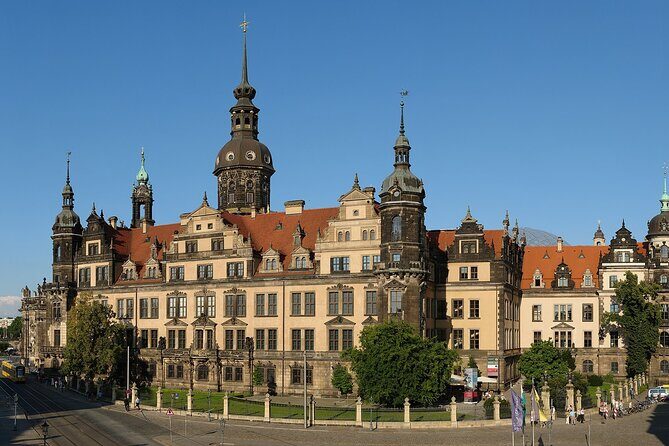
Dresden Castle (Residenzschloss): from minor town to Saxon power
The final stop is Dresden Castle, the Residenzschloss. Here, the tour shifts from “what happened to buildings” to “what happened to the city.” You’ll examine how Dresden grew from a smaller, less important place into a major center in the Holy Roman Empire.
The focus is on the royal residence built to house the Electors and Kings of Saxony. You learn how that palace reflects power and transformation over time—so the castle isn’t just a final backdrop. It’s part of the explanation for why Dresden became a big deal.
During the guided portion, you won’t go inside or into the museums. Entry is available on your own with a separate ticket. If you’re the type who loves palace interiors, you can use the tour as your “why this matters” briefing, then decide whether it’s worth the extra time and cost.
Price and logistics: what $60.34 buys you
For $60.34 per person and about two hours, you’re paying for a guided route that gives you structured context across multiple eras without you having to research everything on your own. You also get a small-group feel: the tour has a maximum of 30 travelers, which helps with Q&A.
A key part of the value is that the tour doesn’t overload you with paid entrances. Many stops are free to access. But you’ll see clearly where extra entry costs may apply—like tower climbing or visiting museums/palaces.
Here’s how to think about it: if you’re short on time, the tour’s real win is that it sets your bearings fast and points you toward the right “next steps.” If you already plan to pay for several interiors anyway, you might want to allocate some budget after the tour so you can follow your interests.
Other practical notes that matter:
- The tour is offered in English and uses a mobile ticket.
- It runs on good weather, so plan to bring backup flexibility.
- It ends on Theaterplatz, which is a convenient jumping-off point for the Zwinger, Semperoper, and the neighboring Altstadt area.
How to get the most from the walk (without overplanning)
This is the kind of tour where your best move is to show up ready to look up and listen. Since several stops are exterior-focused, you’ll gain more by slowing down for details rather than trying to beat the clock.
A few practical tweaks that make it easier:
- Wear shoes you trust. Even if it doesn’t feel like a long trek, you’ll be on your feet for two hours.
- Bring a question or two. The guide is set up for interaction, and some stops naturally lead to discussion (especially the “why did Dresden change like this” stuff).
- Use the free-time option wisely. The tour often ends with a “you can enter later” vibe. If you’re tired, skip interiors and come back. If you’re energized, take the tour’s context into the building for a second round.
If you’re a first-time visitor, this tour works as a foundation. You’ll recognize landmarks later and understand the logic behind the skyline instead of treating it like a random list.
Should you book Walking Through Dresden’s Past with Dr. Fraser Macdonald?
Yes—if you want an efficient, story-driven introduction to Dresden with a guide who connects the city’s layers of time. The two-hour format is ideal when you’re trying to cover key areas without turning your vacation into a checklist.
Skip or reconsider if your top priority is indoor museum time. This walk spends a lot of the guided portion outside, and some of the “big interior wins” (like climbing a tower or entering the palace/museums) cost extra and take separate time.
If you want to understand Dresden’s past and still have energy to roam afterward, this is a strong, practical choice.
FAQ
How long is the Dresden walking tour?
It’s about 2 hours.
What language is the tour offered in?
The tour is offered in English.
What does the tour cost?
The price is $60.34 per person.
What’s the maximum group size?
The tour has a maximum of 30 travelers.
Is the ticket mobile?
Yes, you’ll get a mobile ticket.
Are entrances included in the price?
No. Entrance to several places (including tower climbing and some museums/palaces) isn’t included, though some stops are free to access.
Where does the tour start and end?
It starts at Golden Rider, Neustädter Markt 14, 01097 Dresden, Germany and ends at Theaterplatz, 01067 Dresden, Germany.
What should I expect about church visits?
The guided portion does not include entering some churches or climbing towers, but participants may visit on their own where permitted.
Is the tour dependent on weather?
Yes. The experience requires good weather, and if it’s canceled due to poor weather, you’ll be offered a different date or a full refund.