REVIEW · BERLIN
Berlin Private Custom 5-Hour Tour by Car
Book on Viator →Operated by A Friend in Berlin UG · Bookable on Viator
Berlin keeps score, even in plain streets. This private, custom 5-hour drive lets you stitch together East and West landmarks fast, with your driver ready to pause whenever you want photos or a quick walk. I especially liked the hotel pickup/drop-off convenience and the way you control the pace instead of being herded on a fixed schedule.
One thing I’d watch: the route is packed, so some stops are brief. If you try to do everything equally, you can end up rushing what you care about most.
In This Review
- Key moments to plan around
- A Private 5-Hour Berlin Car Tour That Lets You Set the Tempo
- Hotel Pickup and the Air-Conditioned Comfort Factor
- The Core Loop: Brandenburg Gate, Reichstag Area, and Wall-Era Landmarks
- Brandenburg Gate: more than a postcard
- Reichstag and Government Section: transparency with a history
- Holocaust Memorial area and Topography of Terror
- Potsdamer Platz and the art of rebuilding a city
- Berlin Wall sites and Checkpoint Charlie
- Why the Tour Builds Meaning at the Memorial Church and Beyond
- West Berlin Highlights: Victory Column, Tiergarten Drive-Bys, Kurfürstendamm, and Charlottenburg Palace
- Tiergarten and the Victory Column story
- Kurfürstendamm: the West-Berlin boulevard
- Charlottenburg Palace: a calmer pause in the schedule
- Hackescher Markt and Jewish Berlin: Courtyards, Synagogue, and Old Cemeteries
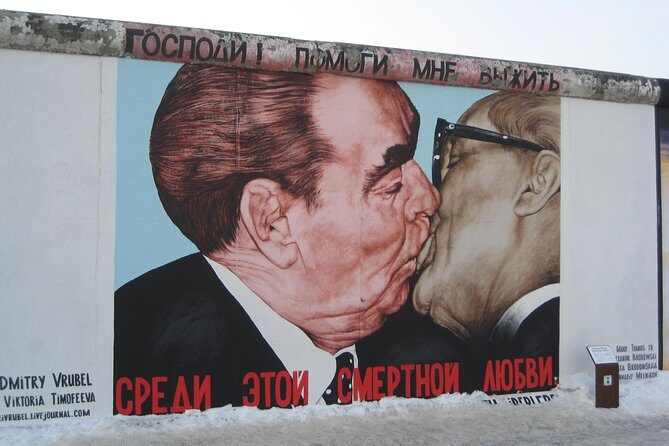
- East Side Gallery: Berlin’s Wall as an Outdoor Art Wall
- Kreuzberg and Oberbaumbrücke: Migration Stories, Modern Night, and City Energy
- How Much Walking Time Do You Get Really?
- Price and Value: What You’re Paying For
- Who This Tour Fits Best
- Should You Book This Private 5-Hour Berlin Car Tour?
- FAQ
- How long is the Berlin private custom tour by car?
- Where do you pick up from?
- Is this tour private?
- What language is the tour offered in?
- Does the tour include transportation?
- Are food and drinks included?
- Is the tour operated in all weather?
- Can I cancel for a full refund?
- Is admission included for the stops?
Key moments to plan around
- Hotel pickup/drop-off anywhere in Berlin keeps your day simple
- Your driver stops on demand for photos and quick exploring
- Brandenburg Gate to Checkpoint Charlie gives a tight East/West arc
- Memorial Church ruin + Holocaust Memorial area adds heavy context, not just views
- East Side Gallery + Kreuzberg brings the story forward into today
- West-Berlin boulevard and palace views balance the day beyond memorials
A Private 5-Hour Berlin Car Tour That Lets You Set the Tempo
Berlin is huge, and public transit can be great… until you’re trying to fit a lot into one day. This tour solves that with an air-conditioned minivan, private-only for your group, and pickup wherever you’re staying. In practice, it means you start without stress and you end with less guesswork about getting back across town.
The best part is the flexibility. You’re not locked to a rigid sightseeing script. Your driver will stop at any time for you to take photos and explore, so you can slow down for the spots that grab you and skip the ones you can read about later. Guides on this route (I’ve heard names like Thomas, Jan, Winfried, and Sven) tend to bring the city to life with clear explanations, and they can pivot when your group asks questions.
The other practical win: it’s about 5 hours. That sounds short until you realize Berlin rewards smart routing. You’ll see a lot of landmarks without spending half the day zig-zagging across different neighborhoods.
You can also read our reviews of more private tours in Berlin

Hotel Pickup and the Air-Conditioned Comfort Factor
If you’re traveling in cold weather or you’re arriving after a long flight, the pickup is more than a convenience. It’s time saved and decision fatigue avoided. You can be picked up from your hotel or residence anywhere in Berlin, and the tour also offers pickup from the airport with special conditions, if you ask ahead.
The minivan is air-conditioned, which matters in summer, but also in shoulder seasons when you might be going from drizzle to sun to cold wind. And because this tour runs in all weather conditions, you should plan to dress for the day you get, not the day you hoped for.
One more detail that helps: the tour uses a mobile ticket. That’s one less thing to manage once you’re already juggling plans, museum hours, and where to eat.
The Core Loop: Brandenburg Gate, Reichstag Area, and Wall-Era Landmarks
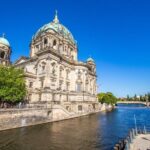
Your tour starts in central Berlin and is built around the biggest symbols people come to see. The core stretch is designed to connect political power, war memory, and the division of the city in a logical flow. You’ll cover major stops like Brandenburg Gate, the Reichstag and Government Section area, the Holocaust Memorial, Potsdamer Platz, Topography of Terror, Berlin Wall sites, and Checkpoint Charlie—plus Unter den Linden, Museum Island, Gendarmenmarkt, and Alexanderplatz along the way.
Here’s why that matters. Berlin’s landmarks aren’t just photo backdrops. They’re anchors for stories that overlap: empires, dictatorship, occupation, the Cold War, and reunification. When a guide is strong (and the feedback you’ll see here highlights this repeatedly), you get context that makes the streets feel like they have a plot.
Brandenburg Gate: more than a postcard
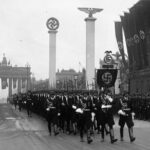
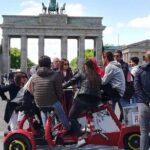
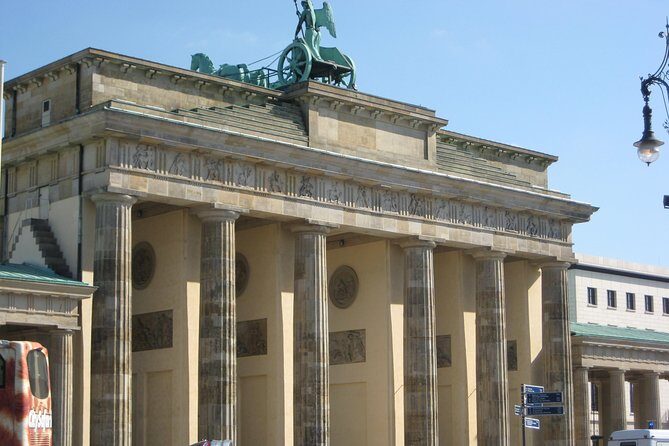
Brandenburg Gate has changed meanings so many times it feels like a living headline. It’s tied to late-1700s power, Napoleon-era marches, Nazi-era messaging, the later Berlin Wall era when it became isolated, and then the 1989 moment of celebration and German unification. If you pause here and let the story land, it becomes more than a stop—it becomes a timeline.
Reichstag and Government Section: transparency with a history
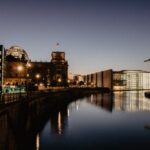
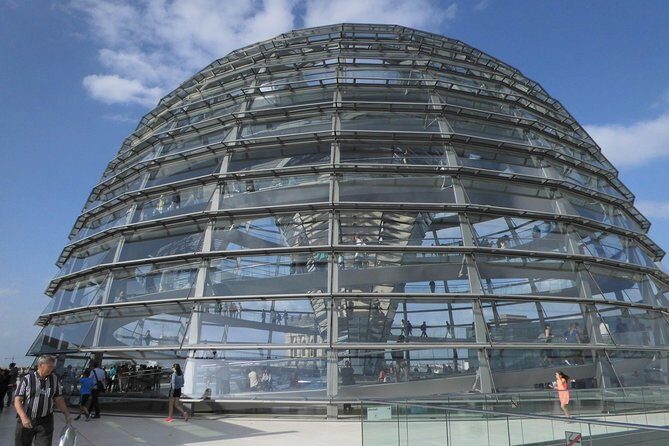
This area also connects to the modern idea of transparency, often framed through the famous glass dome at the Reichstag. Guides may include how that symbol became controversial and then iconic. Even if you don’t go inside, being there helps you understand why Berlin thinks about legitimacy the way it does.

Holocaust Memorial area and Topography of Terror
These stops are emotionally heavy, and the tour’s value is in pacing you through why the design and location matter—not just what happened. When guides share what you’re seeing and why the memorial landscape makes people feel uncomfortable or disoriented, it changes your read of the site.
Topography of Terror complements this by turning the past into physical geography—showing how institutions of power and violence used space. You get the feeling of the city remembering on purpose.
Potsdamer Platz and the art of rebuilding a city
Potsdamer Platz is a strong counterpoint. It’s where Berlin shows you reinvention in action: older urban layers replaced with newer ideas, with architecture that reads like a debate about modern life. It’s a reminder that Berlin doesn’t just look back—it rebuilds while arguing with itself.
Berlin Wall sites and Checkpoint Charlie
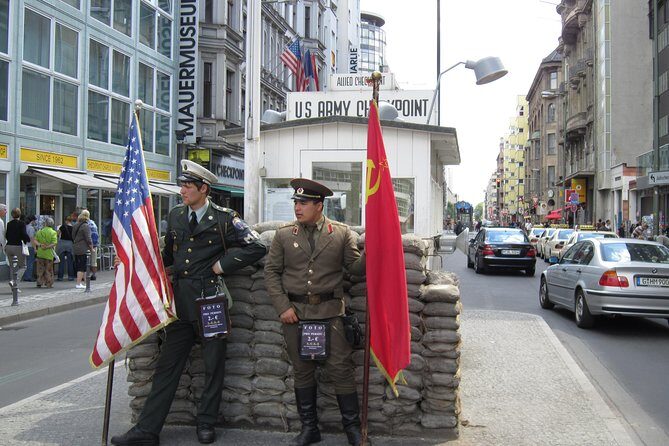
Checkpoint Charlie is the most famous crossing point from the US and Soviet tank face-off. You’ll have time for photos and a quick look at the vibe—touristy, yes, but also historically central to how people imagine the Cold War. Wall-era sites nearby help ground that drama in the reality of division, barriers, and the cost of borders.
Why the Tour Builds Meaning at the Memorial Church and Beyond
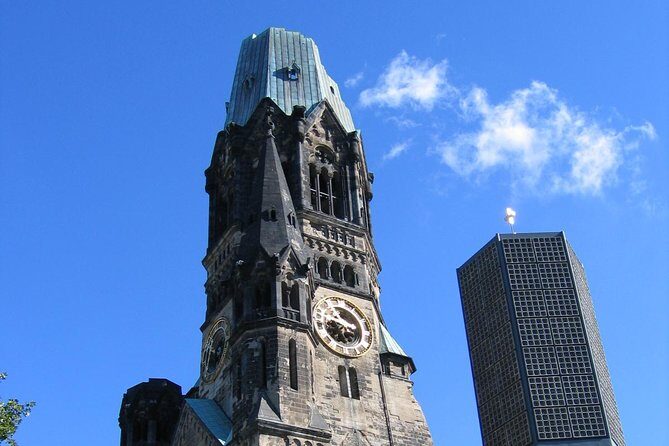
Not every stop is about grand viewpoints. Some of the strongest moments come from the Kaiser-Friedrich-Gedächtniskirche, better known as the Memorial Church. It’s a war ruin that functions as a lasting reminder of destruction. Even if you’ve read about bombings, standing near the preserved damage tends to hit differently because it makes destruction visible and permanent.
Guides often treat memorial areas with care. In the feedback I’ve seen, people highlighted how guides explained design choices at memorials and tied those choices to how people are meant to feel. That matters because memorials aren’t neutral. They’re built to influence memory and public behavior.
This tour also connects the day’s heavy themes to stories you’ll keep noticing afterward—how Berlin remembers through both official monuments and everyday spaces.
West Berlin Highlights: Victory Column, Tiergarten Drive-Bys, Kurfürstendamm, and Charlottenburg Palace
Berlin isn’t only two halves frozen in time. The city kept evolving in West Berlin too, and this route includes a nice dose of it.
Tiergarten and the Victory Column story
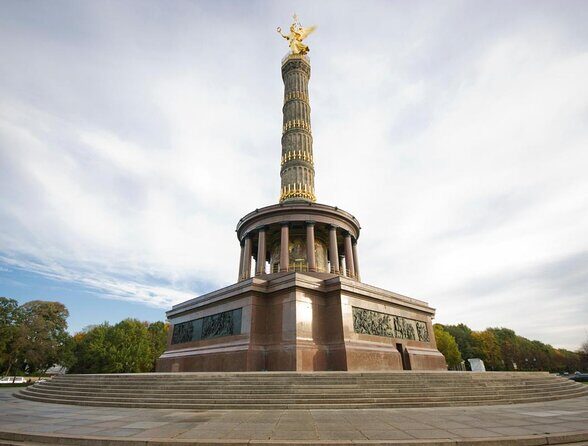
You’ll drive through Tiergarten and see the Victory Column. It was built in the 1870s in front of the Reichstag area, then moved by Albert Speer in the 1930s to its current spot. That detail is a big hint about how regimes reuse symbols: monuments are not only built, they’re relocated, repurposed, and made to fit new narratives.
Kurfürstendamm: the West-Berlin boulevard
Next is Kurfürstendamm, described as the world’s largest boulevard. You’ll get a quick look at the streetscape that shaped former West Berlin’s identity—shops, theaters, cafés, and restaurant life. Even with short timing, it gives you a sense of Berlin’s consumer and cultural energy outside the memorial zone.
Charlottenburg Palace: a calmer pause in the schedule
Charlottenburg Palace is the one big Hohenzollern-era palace that survived in Berlin. You’ll have time for a look, and it works as a breather. After the intensity of war and division, palace stone and gardens are a different kind of historical lens: power, wealth, and long rule rather than sudden rupture.
One practical note: if you care about palace interiors or gardens in detail, you may want extra time. In a 5-hour format, you’re usually seeing the palace as a dramatic stop rather than doing a full slow museum visit.
Hackescher Markt and Jewish Berlin: Courtyards, Synagogue, and Old Cemeteries
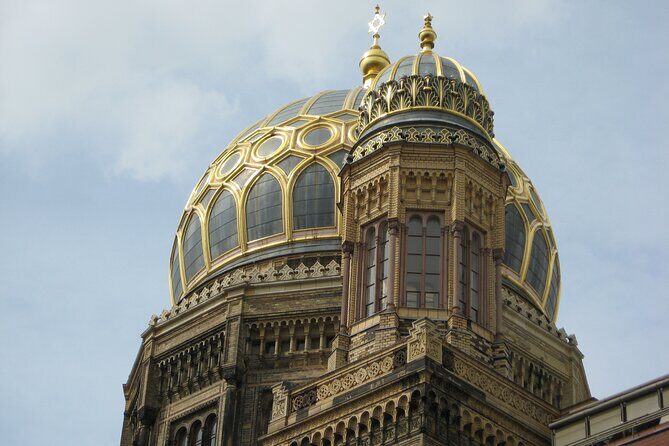
Later in the route you’ll reach Hackescher Markt, a historic hub tied to 19th-century immigrant settlement, including many Jews from Eastern Europe. This part of Berlin is great because it feels lived-in, not like a set built only for visitors.
You’ll see the New Synagogue, the Old Jewish Cemetery, and the Hackesche Höfe. The Höfe (courtyards) are especially useful for understanding Berlin’s urban texture: narrow passages, layered spaces, and that distinct blend of old and new that makes the city fun to explore on foot later.
Even if your time is limited here, the guide’s connections can help you notice what you might otherwise miss: how community, architecture, and history overlap right at street level.
East Side Gallery: Berlin’s Wall as an Outdoor Art Wall
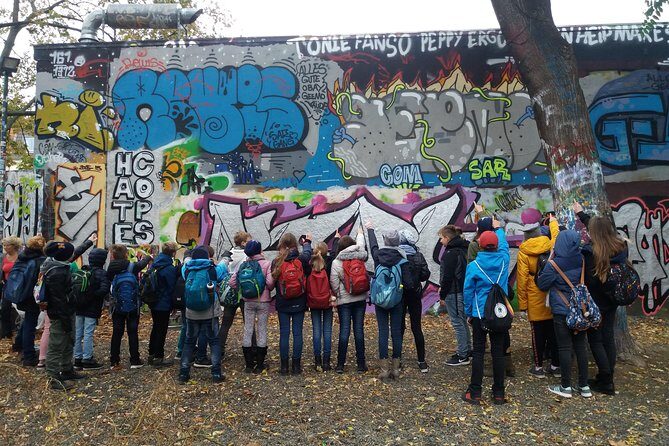
You’ll drive by the East Side Gallery, the stretch of Berlin Wall about 1.5 km long covered with works by more than 100 artists. That length matters. It’s not a single mural you check off—it’s a long, evolving exhibit you pass through visually as part of your day.
This stop works well after earlier Wall-focused moments because it reframes the Wall from barrier to canvas. The emotional tone is different: instead of division as policy, you see division turned into expression. If you’re a photo person, this is one of the best places to stop and take your time.
Kreuzberg and Oberbaumbrücke: Migration Stories, Modern Night, and City Energy
The final neighborhood leg crosses into Kreuzberg via Oberbaumbrücke. This bridge is another of those places where the city’s history shows up in the concrete. Kreuzberg became home for many Turkish immigrants in the 20th century, and today it’s multi-ethnic with plenty of bars, restaurants, cafés, and night clubs.
The value here is that it pulls your day out of the museum mode. You’re reminded that Berlin is not only a collection of historical checkpoints. It’s a living city shaped by waves of migration, changing communities, and modern culture.
If you’re thinking ahead to your evening, this is where the tour’s “what to do next” usefulness really shows up. Even without food included, your guide can point you toward areas where you’ll actually want to hang out.
How Much Walking Time Do You Get Really?
In a 5-hour car tour, timing is everything. Many stops are short—often around 10 to 20 minutes—so you should expect quick photo windows and brief orientation stops. That doesn’t make it weak. It makes it efficient.
But it does mean your group strategy matters. If you’re the type who wants to read every plaque and take 200 photos, you may find yourself choosing between stops. The good news is your driver can stop when you want. Use that. If one memorial hits harder, ask to spend more time there. If one street feels less relevant to your interests, keep moving.
My advice: pick two “must linger” moments before you go. For many people, that’s a memorial site and a Wall-related stop. Then you’ll enjoy the rest instead of trying to master everything.
Price and Value: What You’re Paying For
At $504.59 per person, this is not a budget group tour. It’s a private, car-based experience with hotel pickup/drop-off, an air-conditioned vehicle, and a dedicated driver/guide. The value isn’t just the ride—it’s the routing and the time saved.
If you’re a small group, the biggest value is control: you can pace the day to your interests, and you’re not stuck in a one-size-fits-all schedule. And because many stops have free admission listed, you’re mostly paying for interpretation, logistics, and the ability to cover a wide swath of Berlin efficiently.
Compared with DIY, you’re paying to remove three big headaches:
- figuring out transit transfers across long distances
- losing time to getting everyone moving again
- not knowing what matters most at each site
If you want the simplest path to a high-impact Berlin overview, the price starts to make sense.
Who This Tour Fits Best
This works best if you want a one-day Berlin story arc that spans major landmarks without turning your trip into a spreadsheet. It’s ideal for first-timers, history lovers, and anyone who feels overwhelmed by Berlin’s size.
It’s also a strong match if you like guides who connect dots. Multiple guides mentioned in feedback (like Thomas, Jan, Winfried, Sven, and Jürgen) were praised for giving context, balancing facts, and keeping the day interesting even on cold, rainy days. That “context plus pace” combo is what makes this feel like more than sightseeing.
If you’re the kind of traveler who only wants museums and long interior visits, you might still enjoy the tour—but you’ll likely want to add separate time blocks for deeper stops afterward.
Should You Book This Private 5-Hour Berlin Car Tour?
Book it if you want a fast, meaningful introduction to Berlin’s central highlights, plus the added bonus of West Berlin and neighborhood texture. This is the kind of tour that helps you get your bearings fast, then gives you better choices for the rest of your trip.
Skip it (or plan extra time elsewhere) if you know you want long museum time at specific sites. The route is packed, so your experience will depend on prioritizing where you want to linger.
If your goal is: see the big symbols, understand the connections, and end the day with a clearer picture of East and West—this is a solid pick.
FAQ
How long is the Berlin private custom tour by car?
The tour lasts about 5 hours.
Where do you pick up from?
Pickup is offered anywhere in Berlin, including hotels or residences. Airport pickup is possible with special conditions if you ask.
Is this tour private?
Yes. It is a private tour/activity, and only your group will participate.
What language is the tour offered in?
The tour is offered in English.
Does the tour include transportation?
Yes. You’ll travel by an air-conditioned minivan, with a driver/guide.
Are food and drinks included?
No. Food and drinks are not included.
Is the tour operated in all weather?
Yes. It operates in all weather conditions, so dress appropriately.
Can I cancel for a full refund?
You can cancel up to 24 hours in advance for a full refund.
Is admission included for the stops?
Admission tickets are listed as free for the stops in the itinerary.