REVIEW · BERLIN
BERLIN FULL in 3.5h (Guide + Headphones)
Book on Viator →Operated by coloridoberlin · Bookable on Viator
Berlin speaks fast, in 3.5 hours. This tour strings together Berlin’s biggest time periods in one practical loop, from medieval roots in Nikolaiviertel to the Wall-era story near Checkpoint Charlie and the memorial sites. You also get headphones, so you can hear the guide clearly without constantly turning your head or losing the group.
Two standout reasons I like this experience: the guide, Pablo, runs a clear, interactive, upbeat presentation that keeps history from feeling like a lecture, and the routing is packed with major landmarks while still feeling relaxed. One thing to consider: the itinerary hits a lot of ground, so most stops are short, and you’ll need to accept quick context rather than long lingering.
In This Review
- Key highlights to look for
- Where you start: Azem Bistro and the multicolored umbrella
- How the headphones change the experience
- Humboldt Forum to Alexanderplatz: Berlin’s rebuilt face, fast context included
- Museum Island and the Berliner Dom area: history next to the water
- Unter den Linden and Neue Wache: the city’s power and its scars
- Nikolaiviertel: medieval streets without the time travel fantasy
- Bebelplatz: a square with a hard lesson
- Checkpoint Charlie: border drama, plus the human story of Charlie
- Gendarmenmarkt: a beautiful square that helps you breathe
- Memorial sites and Nazi-era remnants: Berlin’s difficult middle section
- The Holocaust Memorial: a pause you feel, with room for your own meaning
- Reichstag and the Brandenburg Gate: modern Germany framed by rebuilt icons
- Price and value: what $23.76 really buys in 3.5 hours
- Who this tour is best for (and who should skip it)
- Should you book the Berlin Full in 3.5h tour?
- FAQ
- Where do I meet the guide?
- What’s the duration and start time?
- Are headphones included?
- How many stops are there, and do they involve free admissions?
- How big is the group?
- What happens if the weather is bad?
- Is the route close to public transportation?
Key highlights to look for
- Headphones included so you can follow the story even in busy streets
- Pablo’s interactive style that turns facts into something you can remember
- A tight central route that links medieval, imperial, Nazi-era, and reunification-era Berlin
- Free-entry listed stops across key sights (including time at Humboldt Forum)
- Major Cold War stops like Checkpoint Charlie and the Berlin Wall Memorial along the way
- Emotional stops with context like the Holocaust Memorial, handled as a meaningful pause
Where you start: Azem Bistro and the multicolored umbrella
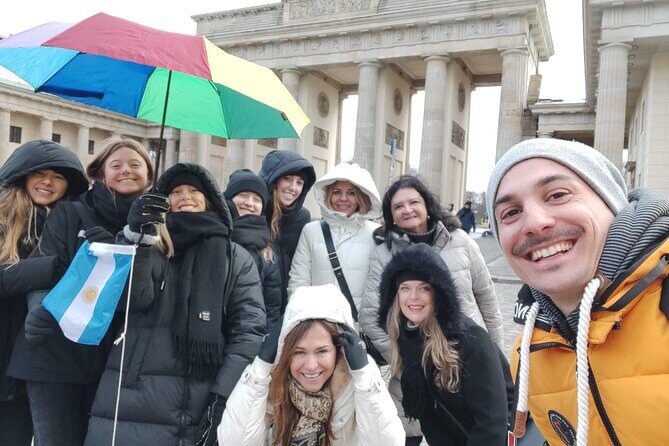
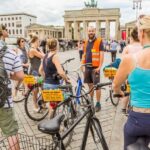
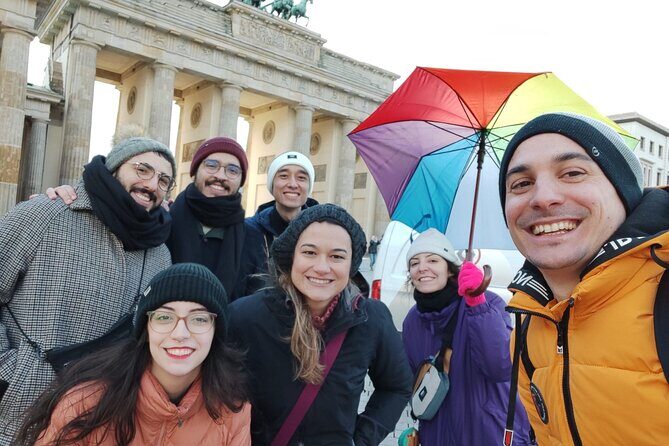
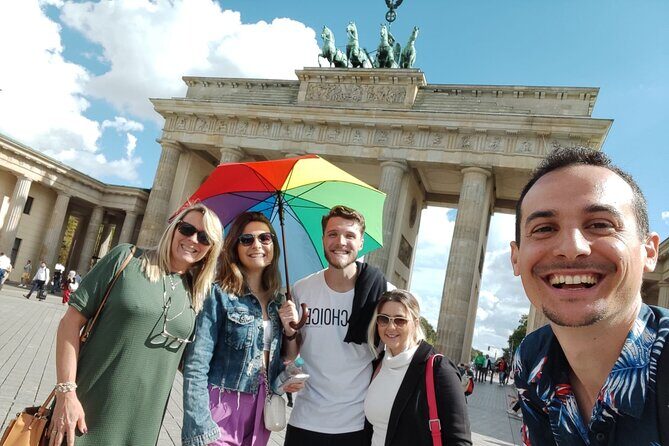
Your tour begins at AZEM BISTRO, Rathausstraße 17, 10178 Berlin. The guide meets you in front of the café and you’ll spot them by a multicolored umbrella, which is a small detail but a big help when you’re trying to find the group quickly at 10:00am.
This is a central-area walk, and it’s set up to be easy to join if you’re already using public transit in Berlin. The tour also uses a mobile ticket, so you can keep everything simple on your phone and focus on navigation outside.
You can also read our reviews of more guided tours in Berlin



How the headphones change the experience
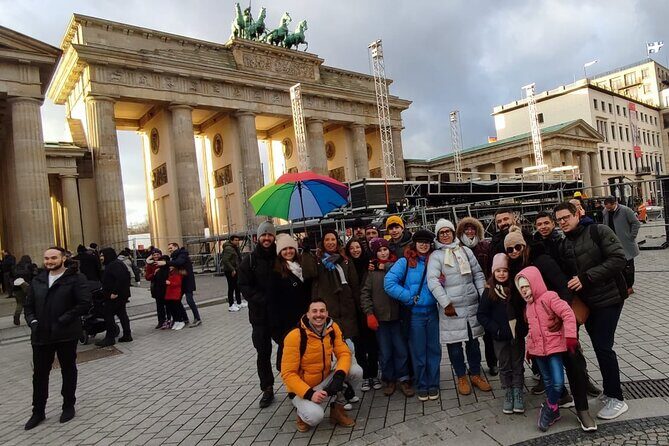
In Berlin, sound can get swallowed by traffic, tour groups, and crowds. This one solves that with headphones included, which means you can keep moving at a comfortable pace while still catching the guide’s explanations.
Practically, that makes the tour feel less stressful. You’re not constantly asking people next to you what you missed, and you’re less likely to fall behind when a street is narrow or busy. It also helps you stay oriented, because the guide can keep the story moving even as you turn corners toward the next landmark.
Humboldt Forum to Alexanderplatz: Berlin’s rebuilt face, fast context included
The first big stop is Humboldt Forum. The tour notes time to visit its interior, and it frames the building as an example of how Berlin keeps reworking its physical space as history changes. Even if you only spend a short window inside, you’re meant to notice the mix of architecture and what that means in a city that has been through major breaks.
From there you move to Alexanderplatz, one of Berlin’s unmistakable reference points. Here the focus is on how the square anchors the city’s life, with historic buildings and monuments nearby and the Spree River in the broader context. This is a good transition moment: you go from a single landmark and its story to a public space that helps you understand modern Berlin’s scale.
Museum Island and the Berliner Dom area: history next to the water
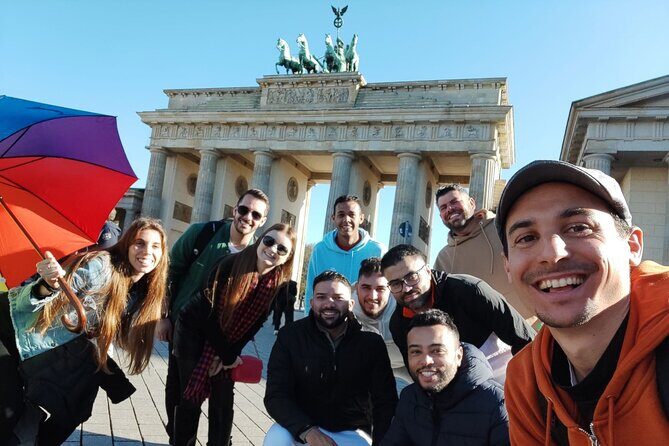
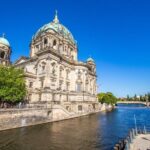
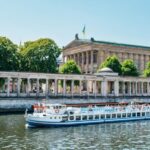
Next comes Museum Island, positioned right by the Spree and near the Berliner Dom. This is one of those places where Berlin’s layers feel close together. You’re not just seeing buildings; you’re getting a sense of how the city has used culture, museums, and monumental architecture to map its identity.
The tour keeps this part short, which is smart if you’re visiting Berlin for the first time. Instead of trying to cram museum visits into 3.5 hours, you get a guided snapshot of why the location matters—and then you’re free to decide later if a particular museum is worth a return trip.
Unter den Linden and Neue Wache: the city’s power and its scars
Then you walk Unter den Linden, described as Berlin’s oldest promenade, stretching from the Brandenburg Gate direction toward the Schlossbrücke and the Berlin Cathedral area. This stretch is about more than a pretty boulevard. The guide’s story connects it to royal residences and major eras of state power.
A key stop here is Neue Wache, framed as a memorial to victims of war and dictatorship. The tour highlights a moment meant to leave you with strong feelings, and that’s exactly how to treat this kind of site. You’ll get enough context to understand what you’re looking at without turning it into background noise.



Nikolaiviertel: medieval streets without the time travel fantasy
After the formal parade-grounds feeling of Unter den Linden, the tour heads to Nikolaiviertel, one of the city’s oldest areas. It’s presented as a place that still feels medieval in tone—tight alleys and older-style businesses that help you picture Berlin before it became a global capital.
This stop is timed longer than many others, so you can slow down here. If you like photos with story, or you enjoy “street texture” travel, this is one of the more satisfying moments of the route because it gives you a change of pace from the big monuments.
Bebelplatz: a square with a hard lesson
At Bebelplatz, the tour focuses on the theme of book burning and what that history means for the present. The square sits among important institutions—Humboldt University, an old library context, and the Berlin State Opera nearby—so it’s not just a random plaza. It’s a place where ideas, education, and political control intersect in a visible way.
Because the subject is heavy, the time here matters. In a 3.5-hour tour you won’t get a full history textbook, but you will get the interpretive thread: how intolerance can be staged publicly, and how it echoes long after the events.
Checkpoint Charlie: border drama, plus the human story of Charlie
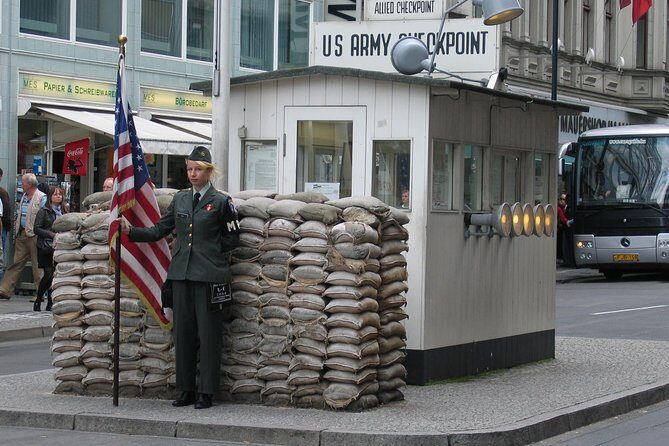
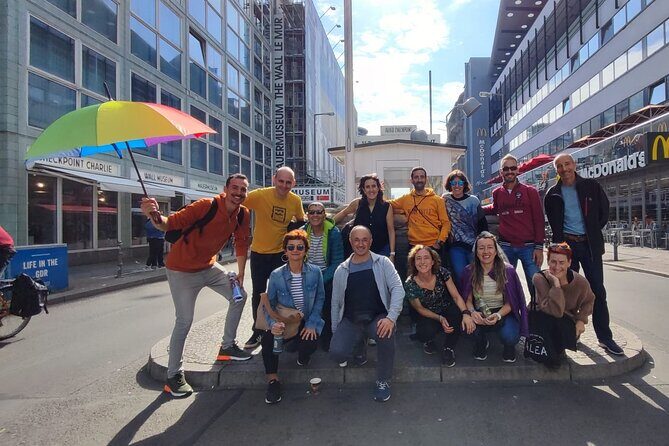
Then comes Checkpoint Charlie, one of the most famous Wall border crossings. The tour sets you up to understand more than the photo-op version. It explicitly points out that you’ll learn who Charlie was and what happened there—details that might otherwise be missed if you just wander around.
This is a “focus stop.” If you want to understand how Cold War history worked day to day—rules, escapes, propaganda—this portion is where the tour tries to give you that mental map.
Gendarmenmarkt: a beautiful square that helps you breathe
After the intensity of the border story, the route shifts to Gendarmenmarkt, the “Plaza de los Gendarmes” area. The tour points out the symmetrical look: two twin churches and a concert hall facing the square.
This is one of the better placement choices on the itinerary. It’s still central-history Berlin, but it feels lighter. You get a chance to reset your brain after the emotional sites, and you can appreciate the architecture without rushing to “translate” every detail.
Memorial sites and Nazi-era remnants: Berlin’s difficult middle section
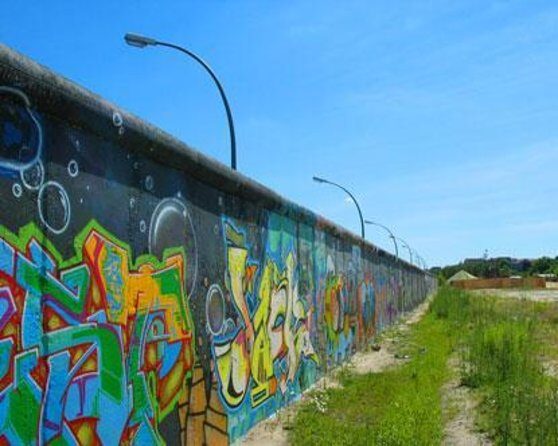
Next is the Memorial of the Berlin Wall, which the tour treats as a must-see. The messaging here is built around painful history and the contrasting emotions tied to 1989—triumph, relief, and hope. This isn’t just about seeing a wall piece; it’s about understanding why it mattered.
Right after that, the itinerary includes the Bundesministerium der Finanzen area, noted as one of the Nazi-era buildings that remains intact despite the war, with a reason behind it. That kind of stop is valuable if you want to notice how power leaves physical traces, not just memories.
Then there’s a short, sharp stop at Fuhrerbunker, presented through the question of where Hitler theoretically died and why people discuss competing theories. This part is brief by design. It gives you a framing for the debate rather than trying to force certainty into limited time.
The Holocaust Memorial: a pause you feel, with room for your own meaning
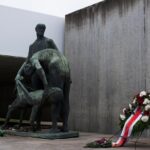
The route includes the Holocaust Memorial – Memorial to the Murdered Jews of Europe, described as one of the tour’s most emotional stops. The important note is that the moment is meant to land differently for each person, based on your beliefs and how you process something so difficult to measure.
Even on a short guided window, this stop can be powerful if you treat it as a pause. The best way to get value here is simple: slow down, look around, and let the guide’s context set the tone without treating it like another photo stop.
Reichstag and the Brandenburg Gate: modern Germany framed by rebuilt icons
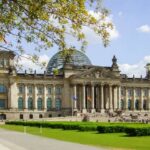
The tour then reaches the Reichstag area and includes an explanation of the German Parliament’s seat and the glass dome designed by Norman Foster. You’re not just looking at a famous building. You’re getting the “why” behind the design choice that symbolically connects transparency and civic life to Germany’s modern identity.
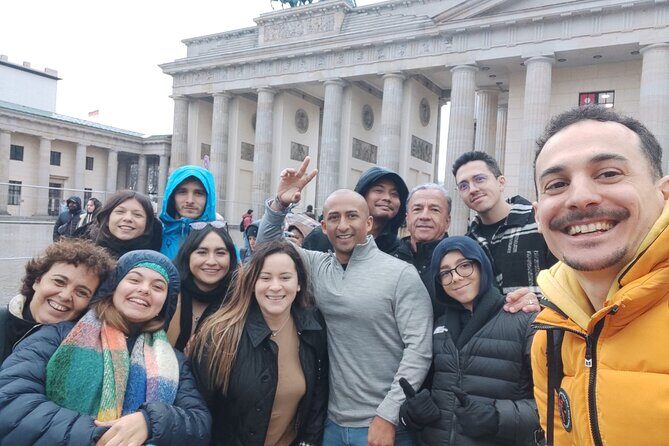
Finally, you end at the Brandenburg Gate, the iconic former gateway to Berlin. The tour highlights its role as an epicenter of social and political demonstrations and as a backdrop for events after Berlin rebuilt itself from ashes. This ending makes sense: you move from the darkest 20th-century chapters to a symbol that Germany uses for public life today.
Price and value: what $23.76 really buys in 3.5 hours
The price is $23.76 per person, and the tour is typically booked about 25 days in advance. On paper, that may not sound like a bargain, but the value comes from what’s bundled into the experience: a guided loop through many of Berlin’s top landmarks plus headphones, plus time allocations that help you connect the eras without getting lost.
Also, multiple stops are marked as admission ticket free within the tour structure. That matters because it reduces the “surprise costs” feeling you can get on sightseeing days where you end up paying separately for each attraction. The result is a tour that helps you see a lot of Berlin’s story without turning your day into a ticket-hunting chore.
Who this tour is best for (and who should skip it)
This one fits best if you:
- Want a first-time Berlin overview that links medieval, imperial, Cold War, and modern threads
- Like guided explanations but don’t want to constantly ask your group to repeat themselves
- Appreciate practical storytelling tools like headphones
You might want a different style of tour if you:
- Prefer long museum time or you want to deeply explore one site at length
- Get frustrated when stops feel short, because this route is built for efficient coverage
Should you book the Berlin Full in 3.5h tour?
If you’re the type of traveler who wants context more than endless wandering, I think you’ll be happy with this one. The route is built to connect eras that otherwise feel like separate postcards, and the headphones make it easy to follow without strain.
The only reason to hesitate is the pace. With many stops packed into 3 hours 15 minutes, you’re getting smart orientation rather than a slow, in-depth visit everywhere. If that matches your style, this is a solid, efficient way to start a Berlin trip with strong historical grounding and good storytelling from Pablo.
FAQ
Where do I meet the guide?
You meet at AZEM BISTRO, Rathausstraße 17, 10178 Berlin, Germany. The guide will be easy to spot with a multicolored umbrella.
What’s the duration and start time?
The tour runs about 3 hours 15 minutes and starts at 10:00am.
Are headphones included?
Yes. Headphones are included, so you can hear the guide’s explanations throughout the walk.
How many stops are there, and do they involve free admissions?
The itinerary includes multiple major Berlin landmarks, and the listed stops show admission ticket free for the included segments (including time at Humboldt Forum).
How big is the group?
The tour has a maximum of 50 travelers.
What happens if the weather is bad?
The experience requires good weather. If it’s canceled due to poor weather, you’ll be offered a different date or a full refund.
Is the route close to public transportation?
Yes. The tour is noted as near public transportation, and the meeting point is set in central Berlin.