REVIEW · ORANIENBURG
Never Again Berlin – Sachsenhausen Concentration Camp
Book on GetYourGuide →Operated by Can You Handle It Tours CYHIT · Bookable on GetYourGuide
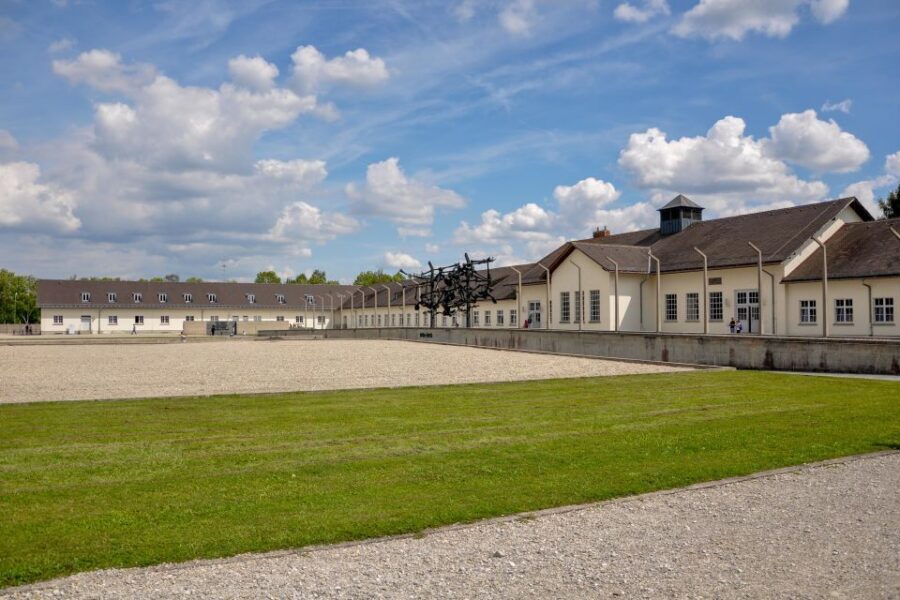
A train ride from Potsdamer Platz ends at hard truths. The Never Again Berlin tour at Sachsenhausen Memorial turns big, abstract history into something you can actually see: the layout, the routines, and the machinery of control. What makes it especially interesting is that the camp survived while the surrounding area was bombed, so the site feels strangely intact.
I like two things a lot. First, the tour uses practical on-site tools—like models at the visitors area—to show how the camp’s design enforced domination, before you even walk the grounds. Second, the guide walks you through specific, high-impact sections such as the SS troop areas, the Perpetrators’ Room exhibition, and Station Z’s explanation of mass murder.
One drawback to keep in mind: you’ll need to handle part of the transport yourself. The schedule includes travel from Berlin, but you also have to use a Berlin ABC ticket to reach Oranienburg, and food inside the camp is limited—so plan for that.
In This Review
- Key things to know before you go
- Never Again Berlin at Sachsenhausen: What this tour feels like
- Getting there from Potsdamer Platz and staying on schedule
- The Oranienburg start: visitors center models and what they teach
- Walking the SS troop camp and the house where officers lived
- Perpetrators’ Room: propaganda, indoctrination, and the machinery of belief
- Prisoner barracks, kitchen areas, and present-day echoes of denial
- Station Z: Soviet prisoners, child soldiers, and mass murder systems
- Infirmary and the Nazi medical story: racism, eugenics, and “lab rats”
- Price and logistics: what $38 buys, and what you must plan
- Tour pace, guide style, and how to protect your experience
- What to bring for comfort during a serious walk
- Who this tour suits best, and who should reconsider
- Should you book Never Again Berlin to Sachsenhausen?
- FAQ
- Where is the tour meeting point in Berlin?
- How do I get from Berlin to Oranienburg for this tour?
- Is entrance to the memorial included in the price?
- How long is the tour?
- Is the tour guided in English?
- What should I bring?
- Is the tour suitable for children?
- Is there an option to pay later or cancel for free?
- Is the tour wheelchair accessible?
Key things to know before you go
- You get the big picture fast: origins of Hitler’s rise and why this location became a camp.
- Models explain how control worked before you step into the grounds.
- You’ll visit both “systems” and “sites”: daily roll calls, propaganda rooms, and gas chamber-related areas.
- There’s an emphasis on perpetrators and indoctrination, not only victims.
- Expect a serious, heavy focus on racism, coercion, and eugenics.
- Bring snacks and water because options inside the camp are limited.
Never Again Berlin at Sachsenhausen: What this tour feels like
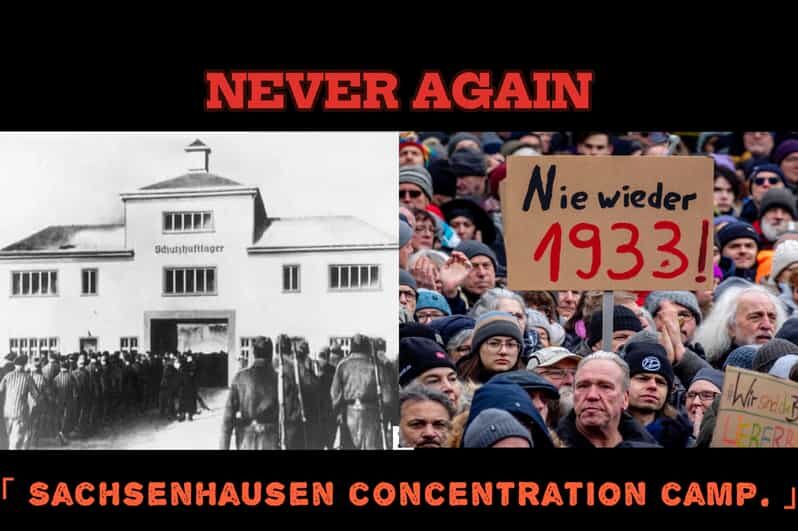
This is not a casual sightseeing stop. You’re going to walk through a memorial that explains how the Nazi regime ran concentration camps as a system—built for control, profit, and ideology. The “Never Again” framing matters because it pushes you to connect the past to patterns that can reappear in the present.
The tour’s tone stays focused on how things worked: the architecture, the routines, and the people who enforced the rules. You also get context about the war and the area around Oranienburg, including how the camp itself remained intact even as the city faced bombings. That contrast makes the grounds feel even more direct and less distant.
You can also read our reviews of more tours and experiences in Oranienburg.

Getting there from Potsdamer Platz and staying on schedule
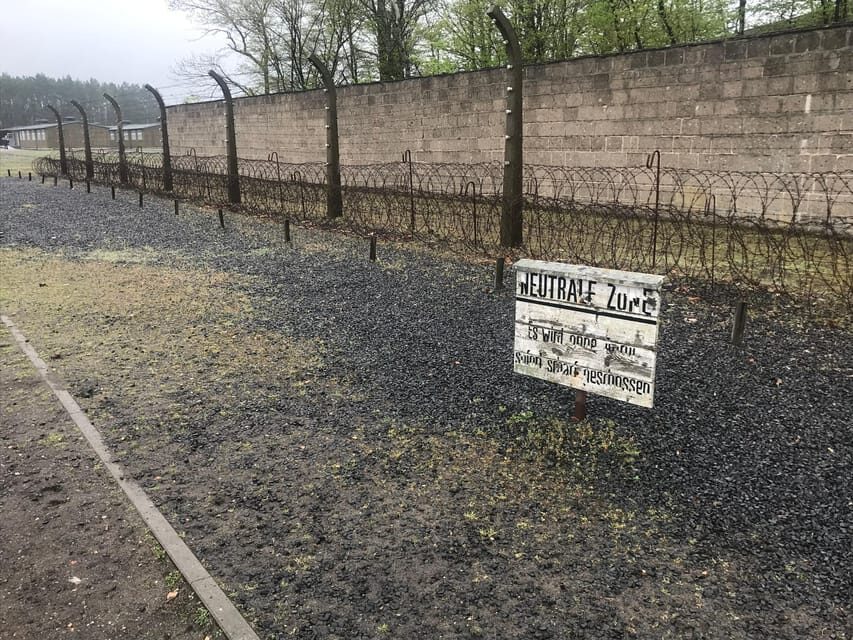
The day starts at Potsdamer Platz, with the meeting point in front of Espresso House and a guide holding a mini yellow flag. From there, the tour builds in train and coach segments so you’re not figuring out transfers alone. Expect roughly 35 minutes by train, then a short bus ride, and then the same back again.
The memorial portion is listed as about four hours, with guided time, breaks, and walking. That timing is important. In this kind of place, you’ll want enough time to process what you see instead of rushing through the exhibits.
One practical catch: the tour information notes you need a Berlin ABC train ticket to reach Oranienburg, and it’s not included in the price. So even though the tour helps with the route, you still need to plan your own transit purchase ahead of time.
The Oranienburg start: visitors center models and what they teach
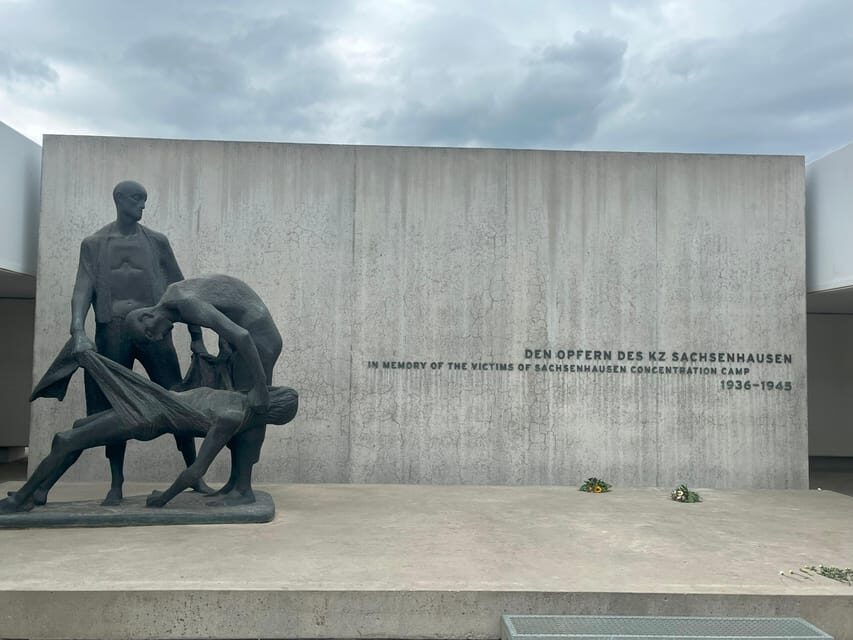
The walk from the train station leads you to the visitors’ center, which sets the tone right away. Before you go deep into the grounds, you get detailed models that explain the physical structures designed for control. That step helps you “read” the camp as you walk it, instead of treating everything as the same-looking ruins or corridors.
This is where the tour tackles the roots of Nazi power and why the location mattered. Understanding the selection of the site is not trivia—it explains how the Nazis planned for intimidation, transport, administration, and exploitation.
You also learn about the unsettling continuity of the place. The tour mentions how a former SS training camp has become part of today’s Brandenburg police academy. That doesn’t reduce the horror; it adds a modern edge, because it shows how institutions can outlive the ideology that shaped them.
Walking the SS troop camp and the house where officers lived
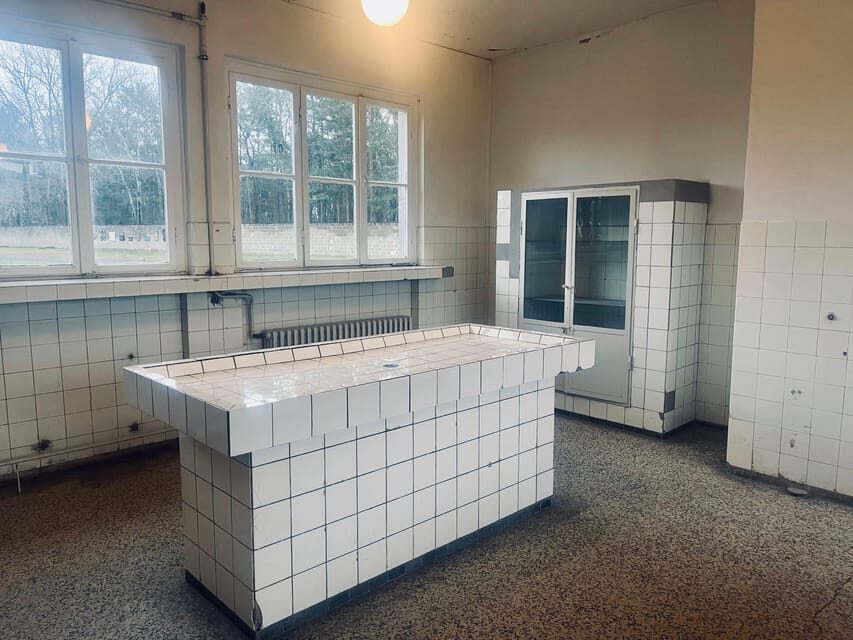
Once you’re on the grounds, the tour directs your attention to areas tied to everyday operation and comfort—specifically the SS troop camp area and the head of camp house. The point here is brutal: while prisoners suffered and were controlled, officers could enjoy normal family life.
This contrast hits hardest when you’re standing in the spaces where it happened. The tour’s structure keeps reminding you to look at purpose and power, not just facts. You’ll also be guided through topics the Nazi system weaponized, including exploitation tied to the gendered realities of captivity.
Perpetrators’ Room: propaganda, indoctrination, and the machinery of belief
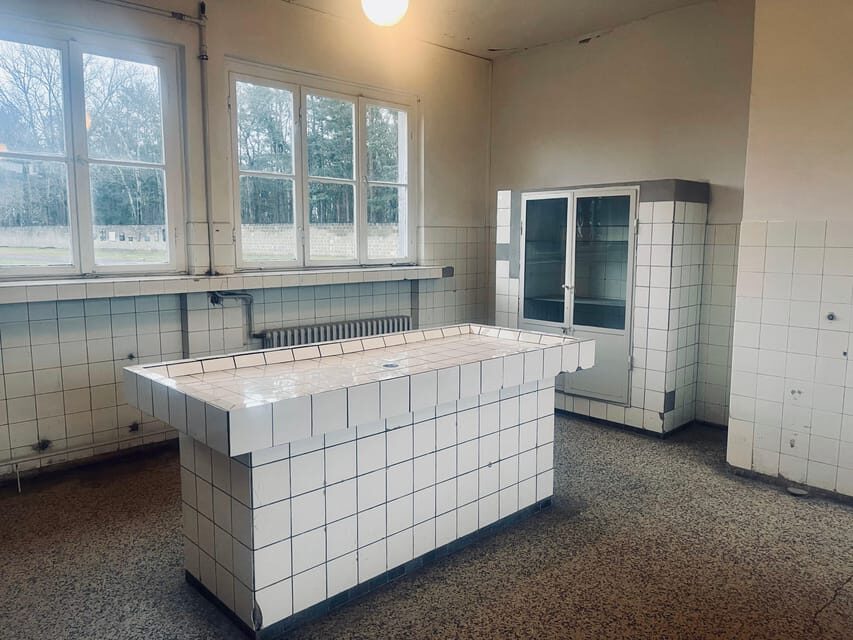
One of the most intense sections is Tower A’s Perpetrators’ Room exhibition. Here, the tour connects ideology to action—showing indoctrination of the SS and portraits of officers that illustrate the reach of brainwashing.
The value of this stop is that it explains terror as something planned and organized, not random brutality. When the tour talks about daily roll calls and the way prisoners were forced into humiliating categories, you start to understand how the system turned people into “numbers” and made cruelty feel routine.
You’ll also encounter the shoe testing track mentioned in the tour details. The language is stark, but the takeaway is clear: the Nazis profited from prisoners’ agony and labor, using testing and classification to justify what they were doing.
Prisoner barracks, kitchen areas, and present-day echoes of denial
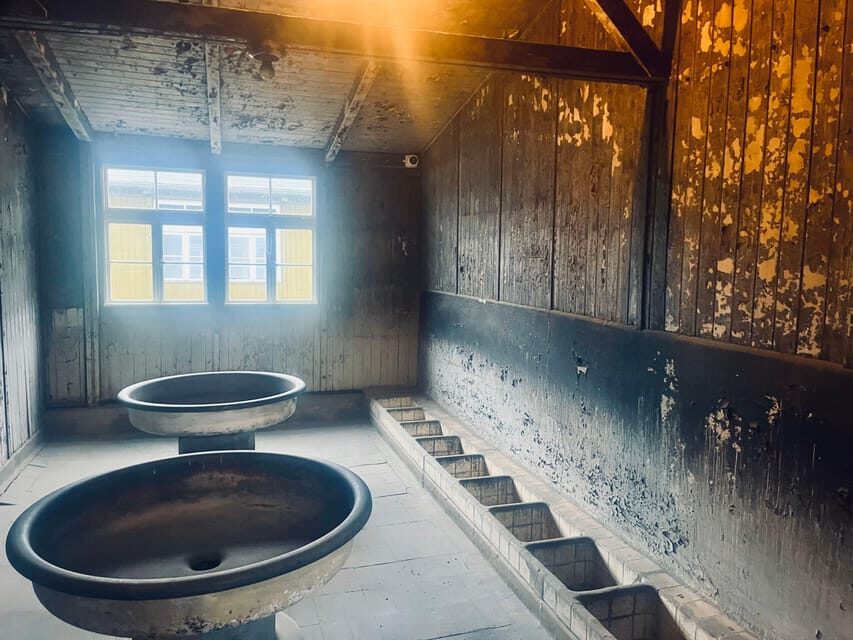
After the major interpretive exhibits, the tour includes time for autonomous exploration in areas such as prisoners’ barracks and the camp kitchen. That self-guided part is useful because it lets you linger where you need a moment, and it gives you space to take in how the buildings supported the camp’s operations.
The tour information also flags attacks by Neo-nazis who deny the Holocaust. That matters for modern context. In a memorial setting, it’s not just about the past being “over.” It’s about how denial and extremist politics keep trying to rewrite what happened.
The tour also points to connections in today’s politics, including the rise of AfD, Germany’s far-right party. Even if you already know those names, the memorial lens makes the connection more immediate: propaganda isn’t a museum piece; it’s a tool.
Station Z: Soviet prisoners, child soldiers, and mass murder systems
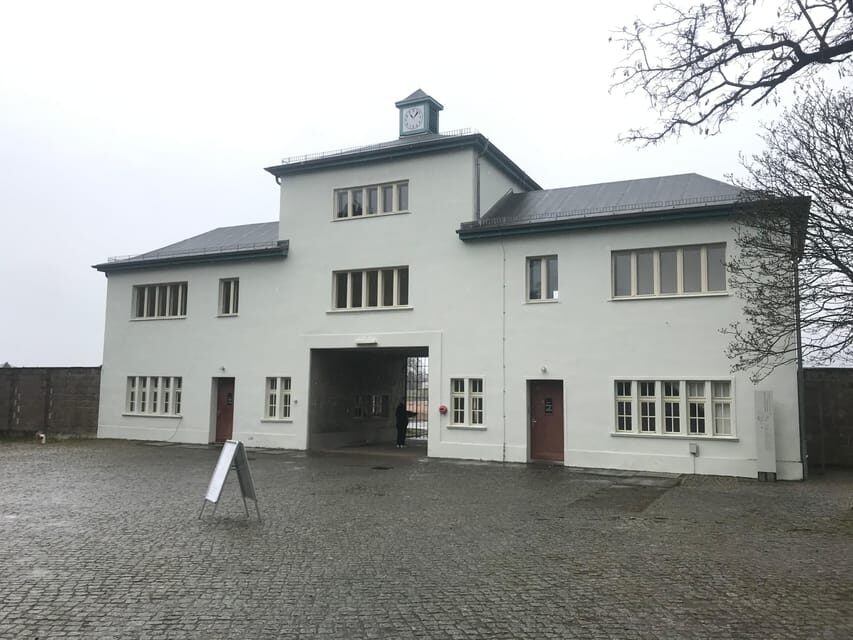
Station Z is where the tour shifts from “camp routines” to mass murder as an organized process. The details provided include the mass murder of Soviet prisoners, including child soldiers, and the explanation of how the gas chambers and crematorium worked.
This section is heavy, and it deserves your attention. The lesson isn’t just the word genocide. It’s the system: how an industrial approach to killing was paired with bureaucracy, logistics, and secrecy.
If you’re someone who needs to make meaning while absorbing tragedy, this is likely one of the clearest parts. The tour links the mechanics—gas chambers and crematorium—to the human cost so you don’t leave with only shock, but also understanding.
Infirmary and the Nazi medical story: racism, eugenics, and “lab rats”
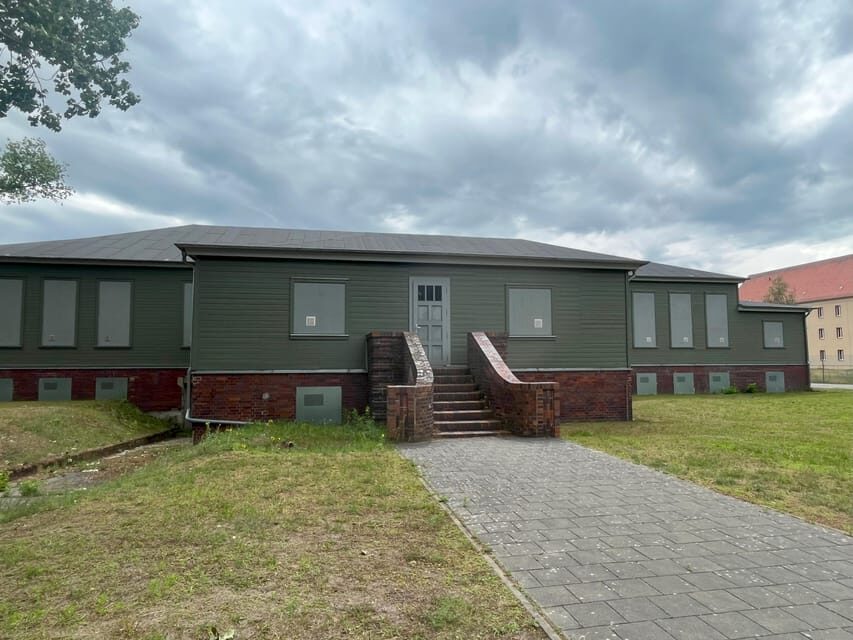
The final major thematic stop is the infirmary, where the tour explains racism, control over women’s bodies, and eugenics. The details are uncomfortable on purpose because they show how Nazi doctors advanced careers through prisoner harm.
The “lab rats” framing in the tour description is the core idea: victims were treated as instruments. That turns the concept of medical ethics into something concrete. You’re not just reading about it; you’re standing where the consequences of that thinking were carried out.
This is also where the tour connects past atrocities to present responsibilities. Even if you come in with general knowledge, the infirmary explanations tend to sharpen your understanding of how ideology can infiltrate science and institutions.
Price and logistics: what $38 buys, and what you must plan
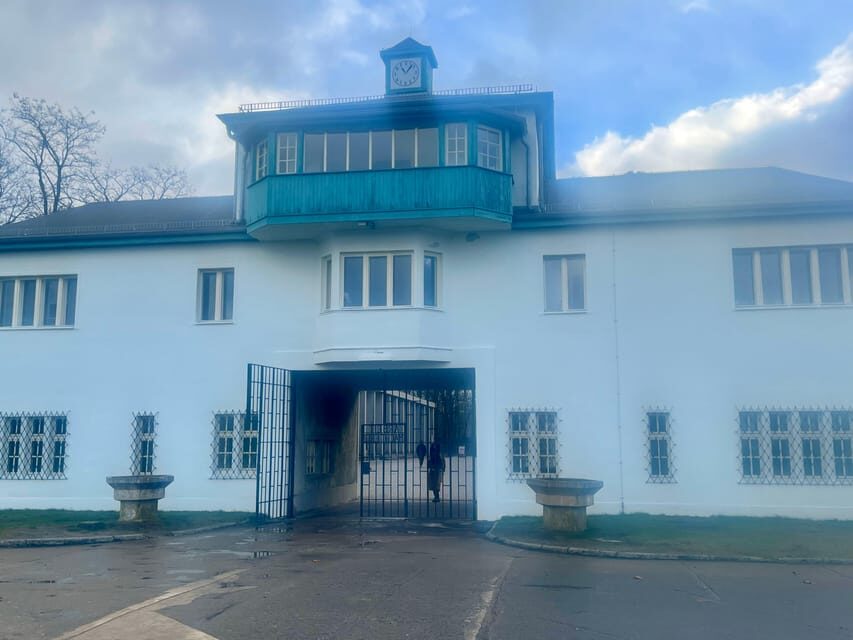
At $38 per person (with the schedule listed at about 270 minutes), this tour can be good value for what you get: a live English guide, entrance included, and a structured visit designed to cover the key interpretation zones. You’re paying for interpretation, not just walking around.
But the “cheap ticket” trap can happen in memorial tours, and this one needs a bit of self-management. Train ticket costs to reach Oranienburg via Berlin ABC are not included, and you need to buy that beforehand. Also, food and drink options inside the camp are limited and not always open, so plan to bring snacks and water.
So the value depends on you being ready. If you show up with your basics sorted—comfortable shoes, water, and snacks—this can be a straightforward, low-stress way to get a lot of meaning in a short time.
Tour pace, guide style, and how to protect your experience
This kind of tour runs on pacing, and the guide is the pacing engine. In the guide feedback you have from the tour’s own community, Siobhan comes up as a standout name—people describe her as extremely knowledgeable and passionate, and say she took time to explain parts of the camp that you might miss on your own.
There are also caution points worth hearing. Some feedback describes times when the guide didn’t accompany the group through a large chunk of the tour, and they felt the narration wasn’t clear enough. Other notes mention that having two languages at once can make it harder to follow.
What I’d do if you want the best experience: go in expecting a serious, structured tour, but also understand that memorial logistics can affect how much a guide stays right beside you at every moment. If clear narration is your top priority, it’s smart to set your expectations and take notes on your phone so you can track key points.
What to bring for comfort during a serious walk
The tour recommends comfortable shoes, snacks, water, and comfortable clothes. That’s not just polite advice. On a memorial walk with long indoor and outdoor segments, your feet will decide whether you can actually pay attention.
Food options inside the camp are limited, so pack a small snack plan. Bring a refillable water bottle if you can, since you don’t want to spend energy searching for what may not be open.
Also dress for the weather. Even though this is an interpretation-heavy day, you still walk enough that being cold or cramped makes everything harder.
Who this tour suits best, and who should reconsider
This is not listed as suitable for children under 12. For families with older kids, the tour’s heavy subject matter may still be a lot, but the tour data is clear about the lower age limit.
If you’re a history traveler who likes structure—where the guide connects the dots between ideology, organization, and specific sites—this tour fits well. If you prefer quiet self-guided pacing only, you might find parts of it too guided, too focused, or too fast. But you’ll still get some autonomous exploration in prisoners’ barracks and the camp kitchen areas.
Should you book Never Again Berlin to Sachsenhausen?
Book it if you want a guided, English-language memorial visit that explains how Sachsenhausen functioned as a system—from indoctrination and daily routines to mass murder sites and the medical atrocities tied to racism and eugenics. At $38 with entrance included, it can be a strong value as long as you handle the Berlin ABC ticket and bring your own snacks and water.
Skip it or think twice if you can’t handle emotionally heavy content or you’re looking for an easy half-day. Also consider the guide-coverage concern if you need constant, close narration the whole time—this tour can include gaps where the guide stays outside certain areas.
FAQ
Where is the tour meeting point in Berlin?
You meet in front of Espresso House at Potsdamer Platz. The guide will have a mini yellow flag.
How do I get from Berlin to Oranienburg for this tour?
The schedule includes train and coach time from Berlin, but you need a train ticket for the Oranienburg trip using a Berlin ABC ticket. That ticket is not included and must be purchased beforehand.
Is entrance to the memorial included in the price?
Yes. The price includes entrance.
How long is the tour?
The duration is listed as 270 minutes, and the memorial visit portion is listed as about four hours.
Is the tour guided in English?
Yes. The tour has a live English guide.
What should I bring?
Bring comfortable shoes, snacks, water, and comfortable clothes. Food and drink options in the camp are limited.
Is the tour suitable for children?
It is not suitable for children under 12.
Is there an option to pay later or cancel for free?
The tour offers free cancellation up to 24 hours in advance for a full refund, and it also offers a reserve now & pay later option.
Is the tour wheelchair accessible?
Yes. The tour is listed as wheelchair accessible.