REVIEW · BERLIN
Alternative Berlin Private Tour with Jacob – Graffiti and Squats
Book on Viator →Operated by Nadav Jacobs Berlin experience · Bookable on Viator
One walk. A totally different Berlin lens. You’ll spend 2 hours 45 minutes with guide Jacob (Nadav Jacobs Berlin experience) moving through graffiti, squats, and LGBTQ history with a private-group feel, plus hotel transfers to make it easy to start.
Two things I like a lot are the hands-on focus on local artist work and the practical support kit: a mobile ticket, a big subway map, and an A3 picture folder to help you keep track as the neighborhood details stack up. One consideration: this is a walking tour aimed at active people, so if you want a sit-down museum pace, you may find the route a bit fast and very outdoors.
In This Review
- Key Highlights That Make This Tour Worth It
- A Different Berlin Route: Alternative Culture With Real Context
- Meeting Up in Berlin Without Stress: Pickup and a Mobile Ticket
- Stop 1: Victory Column and LGBTQ Community History
- Stop 2: Potsdamer Platz as Culture, Cinema, and Business
- Stop 3: Brandenburg Gate, the Wall, and the Hippie Era
- Stop 4: Hackesche Höfe for Renovated Yards and Night Life
- Stop 5: Hackescher Markt and Berlin Street Food
- Stop 6: Haus Schwarzenberg, Tachles, and the Dead Chicken Squats
- Stop 7: Warschauer Strasse as a Hanging Out Area
- Stop 8: Kreuzberg for Murals and Graffiti
- Stop 9: East Side Gallery, the Longest Gallery in the World
- How the Tour Pace and Route Feel in Real Life
- Value for Money: Why $310 Per Group Can Make Sense
- Who Should Book This Tour (and Who Might Skip It)
- Should You Book Alternative Berlin With Jacob?
- FAQ
- What is the price and group size?
- How long is the tour?
- Is pickup included?
- Is there a mobile ticket?
- What’s included in the experience?
- Is public transport included in the price?
- Is this tour limited to a certain group size?
- Can I choose my start time?
- Is free cancellation available?
Key Highlights That Make This Tour Worth It
- Private attention for your group (up to 15), so you can ask questions without feeling rushed
- Hotel/airport/train-station pickup in Berlin for a smoother start
- Graffiti and alternative culture stops in Kreuzberg and the East Side Gallery area
- Real neighborhood texture, from Hackesche Höfe nightlife yards to Warschauer Strasse hangout streets
- WWII memory in the art conversation, including how memorial themes show up around Berlin
- Support that actually helps: WhatsApp help, a big subway map, and an A3 guidance picture folder
A Different Berlin Route: Alternative Culture With Real Context
This tour is built for people who don’t just want the postcard version of Berlin. It threads together big landmarks and then quickly shifts into street-level culture—graffiti, underground spaces, squats, and the communities that shaped modern Berlin’s identity.
What makes it work is the way the stops connect. You’re not treated to a random grab bag of sights. You get a story line that starts with major symbolic locations (like Victory Column and Brandenburg Gate) and then moves into the neighborhoods where people live, create, protest, and party.
You’ll also like the guide-style: Jacob is presented as the person behind the experience, and that comes through in how the tour is designed—interactive, question-friendly, and tuned for people who like walking and paying attention to details. And yes, it’s private, so the group stays together and the pace can be managed to your group.
One more practical point: each listed stop notes admission as free. That matters because it keeps your budget under control while you focus on learning and moving through the city.
You can also read our reviews of more private tours in Berlin

Meeting Up in Berlin Without Stress: Pickup and a Mobile Ticket
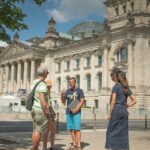
Berlin can be confusing if you’re not used to the transit system, and this tour tries to remove that headache.
Here’s what you can count on from the info provided:
- Pickup is included from your hotel, apartment, Air B&B, train station, or airport in Berlin
- Mobile ticket is included, so you’re not stuck hunting for printouts
- WhatsApp availability for questions or help during your Berlin visit
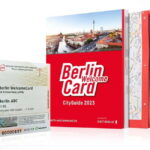
- Big subway system map plus an A3 guidance picture folder to help you follow along
Value-wise, hotel pickup is not a small perk. It often turns a “maybe we’ll do this” day into a “yes, we can make it happen” day—especially if you’re arriving from another city or trying to avoid multiple transit transfers before you even start seeing neighborhoods.
Stop 1: Victory Column and LGBTQ Community History
You start at Victory Column, and the focus is explicitly on the gay parade and the LGBTQ community in Berlin. That’s a smart opening because it tells you from minute one that this tour is about lived culture, not just stone-and-statues sightseeing.
Even though the stop time is short, plan to take in the location’s importance as a backdrop for public identity. The idea here is that Berlin’s alternative scenes didn’t appear in a vacuum—they grew alongside political life, public visibility, and community organizing.
Why you’ll care: Berlin’s identity is tightly tied to where communities gather and how society changes. Starting here sets the tone for everything that follows.
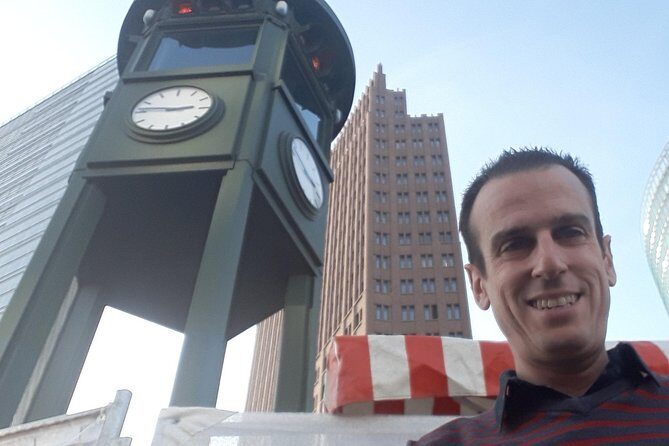
Stop 2: Potsdamer Platz as Culture, Cinema, and Business
Next up is Potsdamer Platz. It’s known as a major hub, and this tour frames it as a center for culture, cinema, and business.
That shift is useful. After a community-focused start, you get a reminder that alternative culture still depends on mainstream spaces—money, media, and public attention. Even when the vibe feels underground, it’s still connected to the city’s power centers.
Small drawback to note: Potsdamer Platz can feel busy and wide-open, so if you prefer narrow streets and slow wandering, this might feel more like a reset stop than the main event.
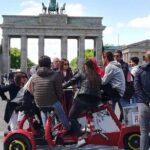
Stop 3: Brandenburg Gate, the Wall, and the Hippie Era
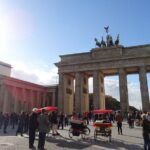
At Brandenburg Gate, the theme is the Wall and the hippis. This is one of those stops where the landmark is famous, but the angle keeps it from becoming generic.
This is where you’ll start building the timeline in your head: Berlin as a city shaped by division, then later by freedom, counterculture, and people choosing to define themselves outside of conventional expectations.
It’s also a good moment to ask questions, because the Wall-era story helps explain why later neighborhoods attract artists and why protest culture and public art became so visible.



Stop 4: Hackesche Höfe for Renovated Yards and Night Life
Then you move into Hackesche Höfe, where the focus is on renovated yards and night life. This stop is short, but it’s exactly the kind of place that rewards paying attention.
Yards like this are Berlin’s version of small worlds: tucked-in spaces, design details, and the feeling of a street-level culture zone. Night life here isn’t just about clubs—it’s about how public space gets used after hours.
Practical tip: If you’re sensitive to crowds, keep your pacing steady here. It’s a popular area, and the tour time is designed for movement, not lingering for long photos.
Stop 5: Hackescher Markt and Berlin Street Food
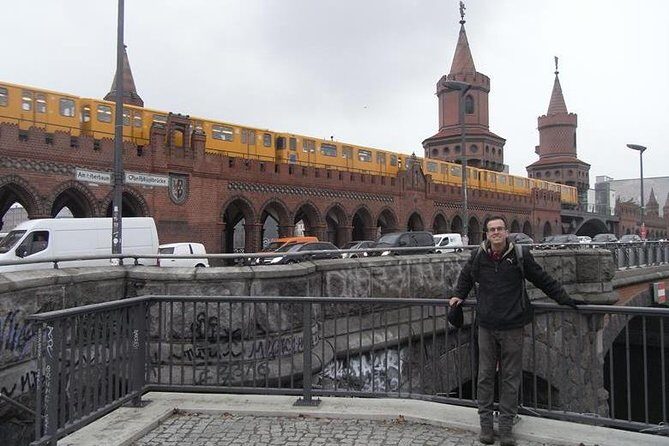
Hackescher Markt is framed around the famous street food pairing: currywurst and donner kebab.
This is one of the best “breathing space” stops because it gives you a simple way to experience Berlin beyond landmarks. It’s also the kind of stop where you can adjust based on your appetite and the time of day.
Plan for this: The tour is marked as free admission, but street food costs are separate (the data only confirms food ideas, not included meals). If you want to eat, bring cash or a card you can use easily.
Stop 6: Haus Schwarzenberg, Tachles, and the Dead Chicken Squats
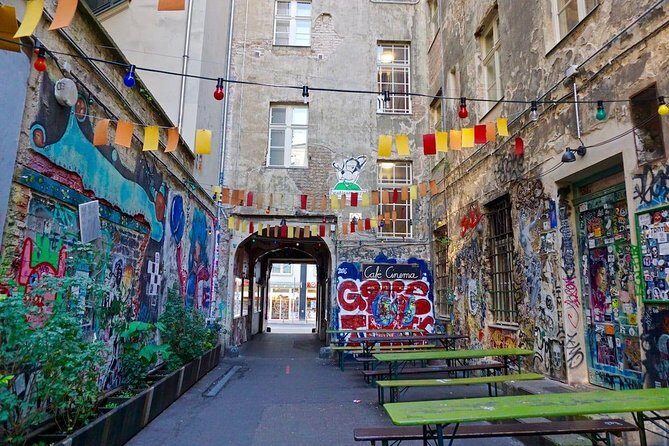
Now you shift into a name-heavy, alternative-scene stop: Haus Schwarzenberg, Tachles, and the dead chicken squats.
This is where the tour leans hardest into the underground and the “alternative Berlin” label in a way that feels specific, not marketing fluff. Spaces like this matter because they show how Berlin has repeatedly used occupied or semi-occupied creative sites to keep culture moving.
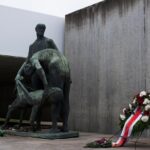
Also, one of the most praised aspects of the experience is the attention to local artist works and the connection to art memorial themes from World War II. So when the tour heads into places linked to alternative art and memory, you’ll likely hear how Berlin’s visual culture overlaps with history—not just what looks cool, but what meanings people attach to it.
What to expect: More walking-by observation and storytelling than museum-style narration.
Stop 7: Warschauer Strasse as a Hanging Out Area
Warschauer Strasse is described as a hanging out area of Berlin. That’s a very real way to talk about how neighborhoods feel—less about official attractions, more about where people gather because it works.
This stop is short, so use it to tune in. Notice the street rhythm, how public space is used, and how the area connects back to the culture themes you’ve been learning.
If you like street-level details—signs, murals, storefront energy—you’ll get more out of this stop than someone who only wants major monuments.
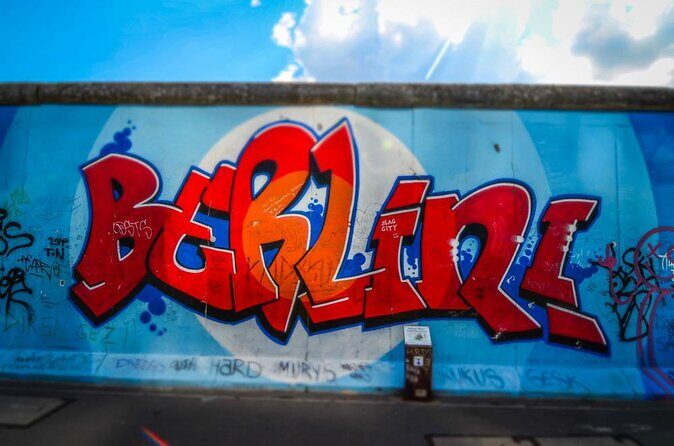
Stop 8: Kreuzberg for Murals and Graffiti
Kreuzberg is where the tour goes full-color. The theme is murals and graffiti, and that’s one of the biggest reasons people choose this kind of tour in the first place.
Graffiti here isn’t treated like random scribbling. It’s part of how people communicate—artist-to-public, culture-to-street, sometimes even protest-to-authority. And since the tour’s alternative angle is consistent, this stop fits naturally after the darker and memory-linked stories you’ve already heard.
Why this matters: When you learn the context, the art stops looking like decoration. It becomes a local language.
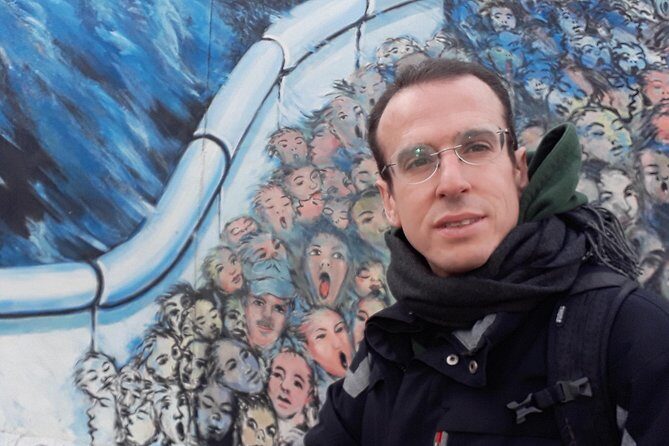
Stop 9: East Side Gallery, the Longest Gallery in the World
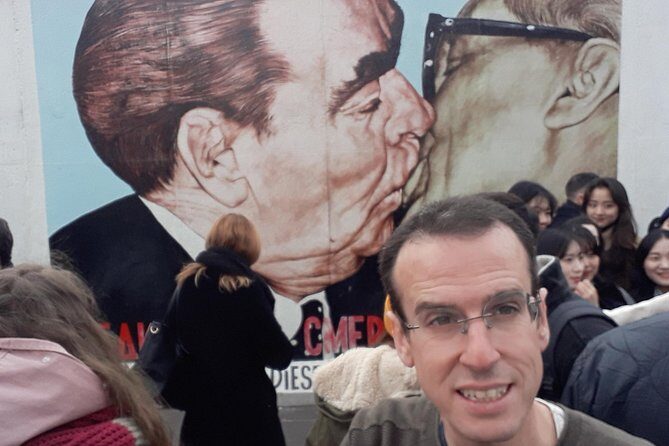
Finally, you reach the East Side Gallery, framed as the longest gallery in the world. It’s short on the clock, but it’s one of those places where the scale hits you immediately.
This is the symbolic payoff. After Wall history, after alternative culture, after squats and graffiti: the East Side Gallery shows how a divided city turned a hard barrier into a visual statement.
Practical note: It’s outdoors. Wear shoes you can walk in comfortably for the full 2 hours 45 minutes, because you’ll spend the time on your feet.
How the Tour Pace and Route Feel in Real Life
The route is structured into nine stops over about 2 hours 45 minutes. That’s not a long tour by distance, but the stop-by-stop format means you’ll be moving often, listening in short bursts, and shifting attention from landmark to neighborhood texture.
This suits people who like active travel and learning while walking. The tour info even points to active travelers as the best fit, and I agree: if you’re the type who enjoys observing street scenes, this tour will feel fun and efficient.
If you prefer slower, sit-down time, you can still do it—you just need to mentally plan for motion. Think of it as a guided route you can’t fully replicate on your own unless you already know the neighborhood story line.
Value for Money: Why $310 Per Group Can Make Sense
The price is $310 per group (up to 15 people). That pricing model is a big clue: you’re not just paying for a guide, you’re paying for access to a private alternative itinerary with pickup support.
For solo travelers or couples, the per-person cost depends on who else is in your group. Since it’s a private tour and not open seating in the data you provided, you’ll want to treat this as a group decision. If you’re traveling with friends or a small crew, private pickup + a guided route through multiple neighborhoods can be good value.
Also, the included items (big subway map, A3 picture folder, mobile ticket, and WhatsApp help) don’t sound huge individually, but together they reduce friction. And friction is what makes tours fail on travel days.
The one cost to plan for is public transport. The data states public transport is 3–11 euro per person (one time or daily ticket). Even with pickup, you should assume you may use some transit depending on where you’re staying and how the route is managed.
Who Should Book This Tour (and Who Might Skip It)
I’d steer you toward this experience if:
- you love street art, murals, and graffiti and want context
- you’re curious about Berlin’s LGBTQ community history
- you like alternative culture stops such as squats and creative spaces
- you want a private tour with practical support
You might consider skipping or switching to a different format if:
- you want mostly indoor attractions or a very slow pace
- you get uncomfortable with neighborhoods that focus on nightlife and street scenes
- you’re traveling with someone who needs frequent long sitting breaks
Should You Book Alternative Berlin With Jacob?
If your idea of a great Berlin day includes graffiti, history tied to public identity, and neighborhoods with a pulse, this is a strong pick. The combination of private guiding, pickup, and a route that connects major landmarks to alternative cultural stops makes it feel efficient and personal.
I’d book it when you want more than sightseeing: you want the city explained through the people and spaces that shaped it. If you’re unsure, ask yourself one question: do you enjoy walking and noticing street-level details? If yes, you’ll likely have a great time.
FAQ
What is the price and group size?
It costs $310.00 per group, for groups of up to 15.
How long is the tour?
The duration is about 2 hours 45 minutes.
Is pickup included?
Yes. Pickup is included from your hotel, apartment, Air B&B, train station, or airport in Berlin.
Is there a mobile ticket?
Yes. The tour includes a mobile ticket.
What’s included in the experience?
The included items are a local guide, private tour, pickup, an A3 guidance picture folder, WhatsApp availability for help, and a big subway system map.
Is public transport included in the price?
No. Public transport is listed as 3–11 euro per person (one time or daily ticket).
Is this tour limited to a certain group size?
The data says bookings bigger than 6 people require contacting the provider.
Can I choose my start time?
Yes. You should advise your preferred start time at the time of booking.
Is free cancellation available?
Yes. You can cancel up to 24 hours in advance for a full refund.