REVIEW · AACHEN
Aachen classic walking tour
Book on GetYourGuide →Operated by Guida di Colonia Sara · Bookable on GetYourGuide
Aachen history walks right up to you. This 1.5-hour Aachen classic walking tour strings together Roman thermal life, the era of Charlemagne, and the Holy Roman Empire’s coronation legacy—told by a native Italian-speaking guide, with stories that come with historical images. You start in the old-town core, then keep moving so the timeline feels logical instead of random.
What I like most is the guide. In this case, you’re with Sara (Guida di Colonia Sara), and the reviews consistently highlight that she’s prepared, friendly, and really good at making the story easy to follow. The second big win is pace: you get a lot of major-exterior stops in a short window, with entertaining anecdotes and curiosity without turning into a lecture.
One consideration: this tour keeps things outside only. If you’re hoping for guided explanations while you’re inside churches or monuments, plan for fewer interior moments; one review noted it wasn’t possible to get explanations inside the monuments.
In This Review
- Key highlights that make this tour worth your time
- Meet at the Aachen Tourist Board with Sara and the Italian flag
- Elisenbrunnen and Aquae Granni: the sulphurous start that sets the mood
- “Bad Aachen” and the 18th-century love affair with the baths
- The Palatine Chapel/Cathedral: Charlemagne’s final resting place and the UNESCO anchor
- Aachen’s “small stops” that explain how power looks in everyday life
- Granus Tower, Couven Museum, and reading Aachen’s layers without slowing down
- Town Hall, the old palatine hall foundations, and Aachen at the heart of Europe
- Charles Fountain, Palatine Courtyard, Treasury Chamber, then the Chapel again
- Price and value: is $29 worth 90 minutes with a native Italian guide?
- Who should book this Aachen classic walking tour
- Should you book this tour?
- FAQ
- What language is the tour in?
- How long is the Aachen classic walking tour?
- What does the tour include?
- Where do I meet the guide?
- What sights will I see on the route?
- Is the Palatine Chapel/Cathedral part of the tour?
- What’s the cancellation policy?
- How much does it cost?
Key highlights that make this tour worth your time
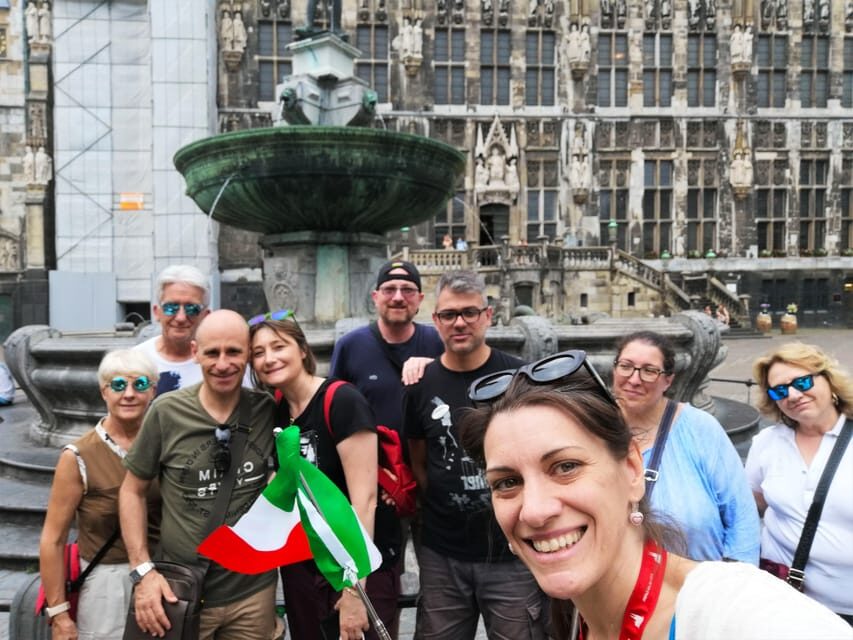
- Sara’s Italian storytelling: native language, lots of energy, and clear explanations
- Roman-to-Imperial timeline: Aquae Granni to coronation-site Aachen in one walk
- UNESCO Palatine Chapel/Cathedral focus: Germany’s first UNESCO World Heritage Site
- Photo-friendly fountain stops: Elisenbrunnen plus other iconic city features
- Built for a short visit: 1.5 hours with monuments viewed from outside
- History with visuals: historical images used to help you picture what came before
Meet at the Aachen Tourist Board with Sara and the Italian flag
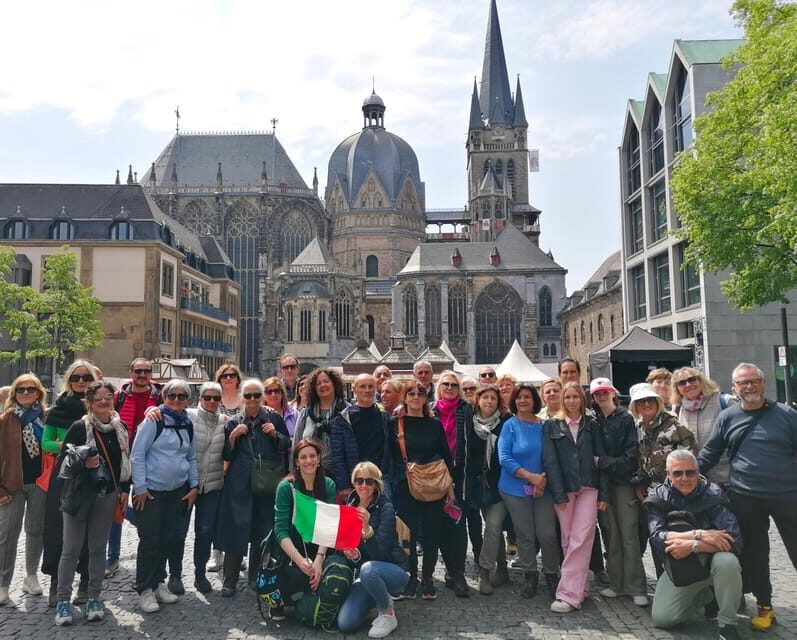
The tour starts right where you can get your bearings fast: in front of the tourist board. Sara’s easy to spot because she’ll have the Italian flag, which is a small detail that saves stress, especially if Aachen’s center feels busy and you’re arriving a few minutes early.
Because the tour is only 90 minutes, you’ll want to arrive on time and be ready to walk without long breaks. This is the kind of small-group experience that works best when you treat it like a guided “greatest-hits” pass, not a slow wander.
You’ll also know what language to expect upfront: the tour is Italian. If you’re traveling with limited German, this is a real advantage. If you’re comfortable in Italian, you’ll get the full story rather than piecing it together with hand gestures and luck.
You can also read our reviews of more walking tours in Aachen


Elisenbrunnen and Aquae Granni: the sulphurous start that sets the mood
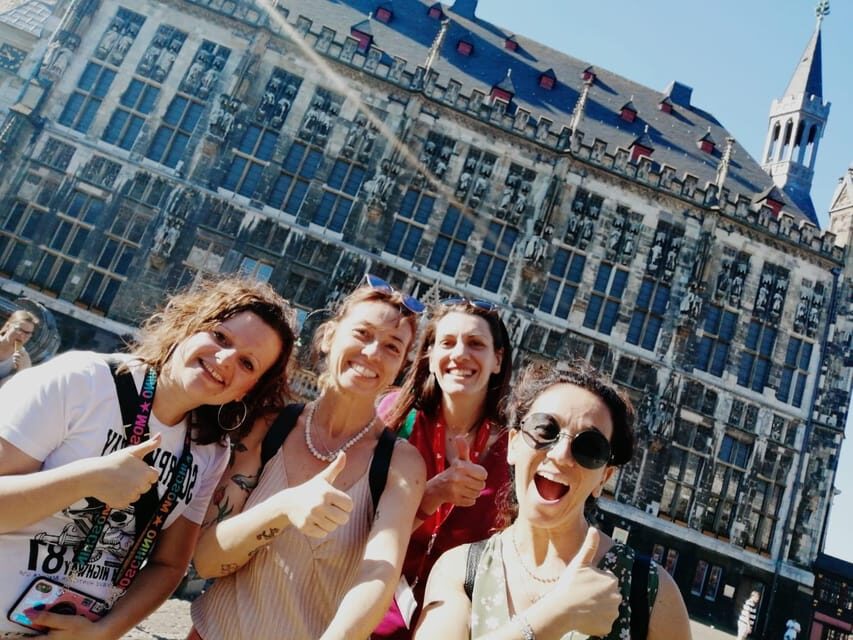
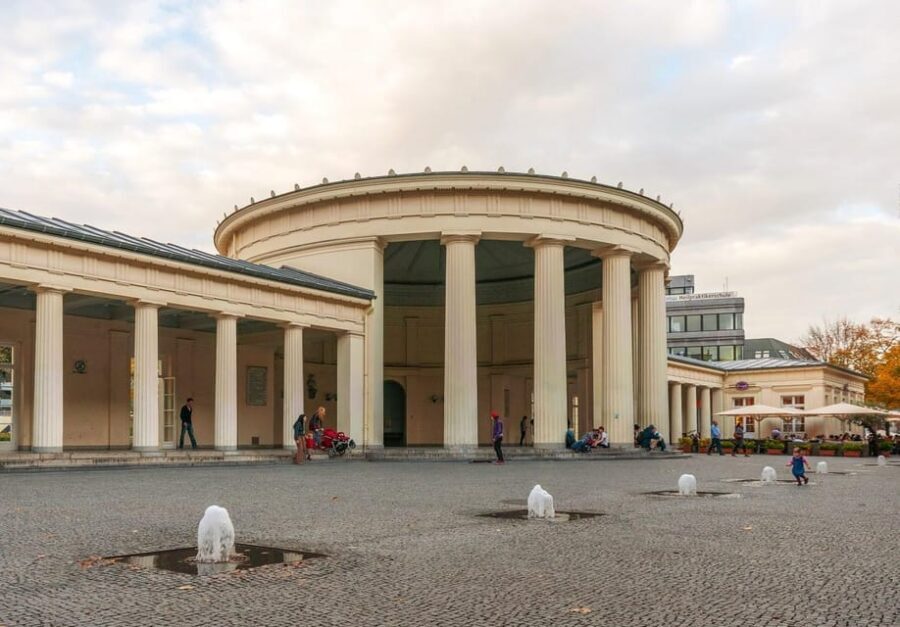
The walk begins at the Elisa Fountain (Elisenbrunnen), the grand entrance point to old Aachen. The defining image here is the sulphurous vapours, a strong sensory cue that these thermal waters are not a background detail—they’re part of the city’s identity.
From there, the route moves toward the ancient Roman baths of Aquae Granni. This is where the tour’s structure starts paying off. Instead of treating Aachen as only Charlemagne and cathedrals, you get the older layer first: Roman-era bathing culture, then later imperial power growing on top of it.
You’ll also see that the tour isn’t only about naming places. The guide ties them together. When a Roman baths site is placed right next to a thermal landmark like Elisenbrunnen, the whole story clicks: water, healing, ritual, and status all show up again and again, just with different eras running the show.
“Bad Aachen” and the 18th-century love affair with the baths
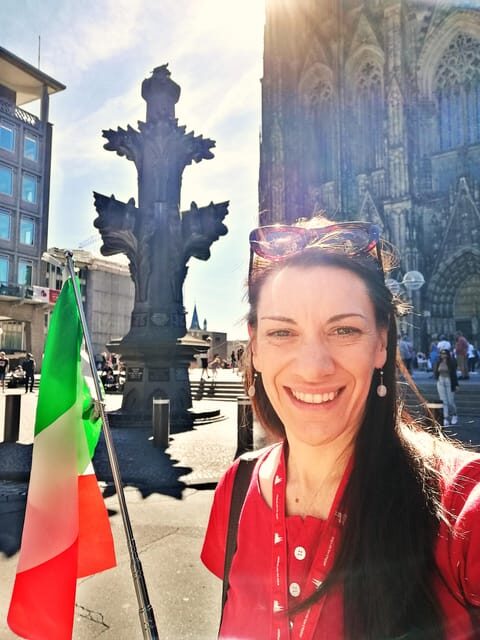
Aachen wasn’t only a Roman stop and an imperial stage. The tour points out that in the 18th century, the nobility loved spending time in the baths of Bad Aachen.
That matters, because it explains why a place can feel important without constantly being in the headlines. The city’s thermal reputation lasted. Even after Rome was gone and the Empire shifted, Aachen kept a core draw: people came for the water and stayed for what the water symbolized—comfort, prestige, and belonging.
On a 90-minute walk, you don’t get time for big side trips. But you do get just enough context to understand why the later imperial monuments make sense here. Charlemagne’s Aachen wasn’t built from nothing; it grew from a city already known for significance.
The Palatine Chapel/Cathedral: Charlemagne’s final resting place and the UNESCO anchor
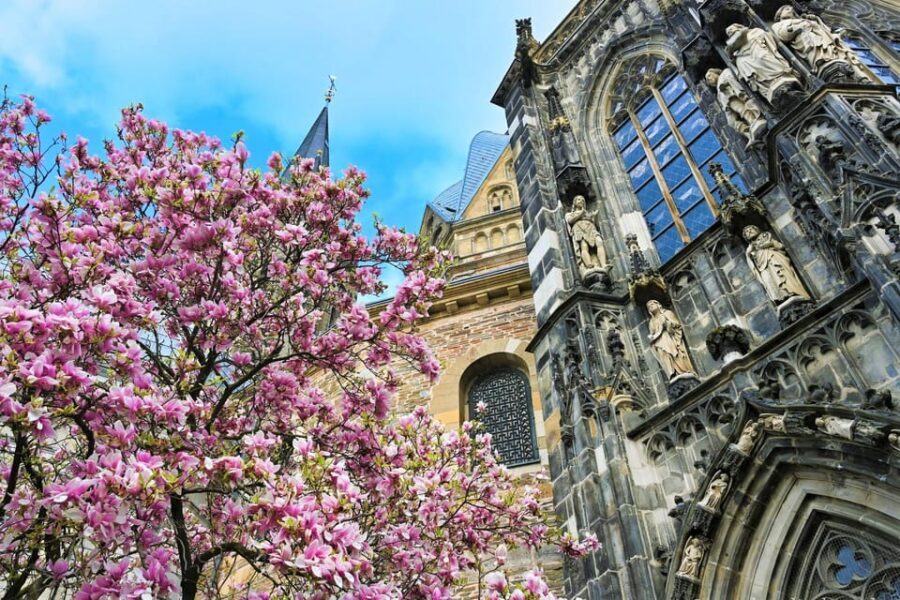
Next comes the big centerpiece. You’ll see the Palatine Chapel and the Aachen Cathedral—described as an architectural masterpiece and the first UNESCO World Heritage Site in Germany.
The core story is simple and powerful: it’s the final resting place of Charlemagne and it sits at the coronation site of emperors of the Holy Roman Empire. That’s not trivia. It’s the reason Aachen matters to European history beyond local pride.
You’ll also get a quick sense of scale without needing to rush inside. From the outside, the tour helps you read the site like a map. The guide uses historical images and exciting stories to make the place feel connected to real people and real rituals, instead of just stone and labels.
One more detail that’s worth appreciating: the stop includes the idea that the cathedral houses amazing treasures and artworks. Even if this tour keeps you outside, that clue nudges you to look at the building with a sharper question in mind. Not only what you’re seeing, but what it likely protected and displayed when it was at the center of power.
Aachen’s “small stops” that explain how power looks in everyday life
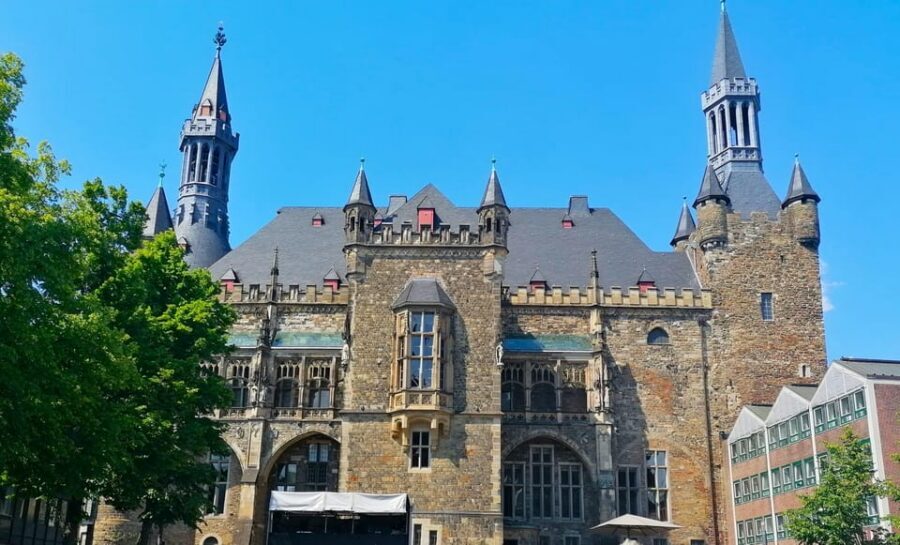
Not every stop is a royal monument. That’s a smart choice for a short tour, and it helps the city feel lived-in rather than museum-only.
Along the route you’ll see:
- the Coin Fountain
- the Puppet Fountain
- Am Hof
- and the Market Square
- plus other named features like the Charles Fountain
These breaks matter because fountains and squares are where stories land. When your guide points at them, you’re not just getting photo ops. You’re getting quick anchors for daily life—places where people gathered, where civic identity showed up, and where later visitors kept returning.
The Am Hof and Market Square stops are especially useful if you’re trying to understand Aachen as a living city now, not just as an imperial chapter in a textbook. Even in a fast tour, the guide steers you to notice how open spaces and civic features sit alongside the big sacred and political landmarks.


Granus Tower, Couven Museum, and reading Aachen’s layers without slowing down
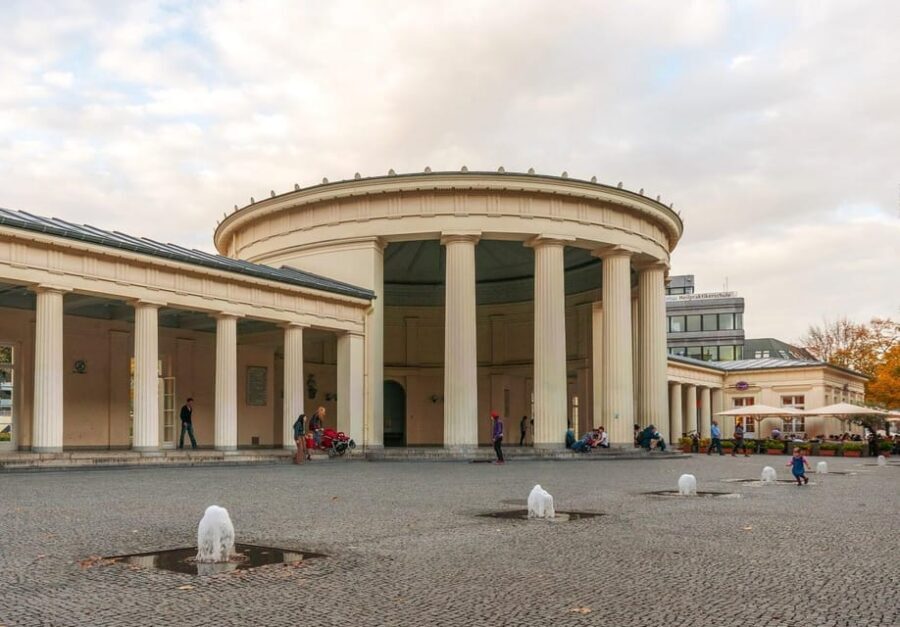
A good walking tour doesn’t waste your limited time. This one keeps momentum while still letting you see layers.
You’ll encounter:
- Granus Tower
- the Couven Museum area (as a stop on the walk)
Because the tour is “monuments from the outside,” you should expect orientation-level viewing here, not a deep interior museum experience. That’s not a flaw if you approach it correctly. In 90 minutes, the goal is to give you the structure. Then, if something sparks your interest, you can return later for a longer visit where you actually want to spend time inside.
Granus Tower and the Couven Museum stop work like connective tissue. They help you shift from imperial monuments to the idea that Aachen kept evolving, collecting tastes, styles, and public storytelling over time. The tour’s value is that it teaches you how to look at the city in layers rather than memorizing a list.
Town Hall, the old palatine hall foundations, and Aachen at the heart of Europe
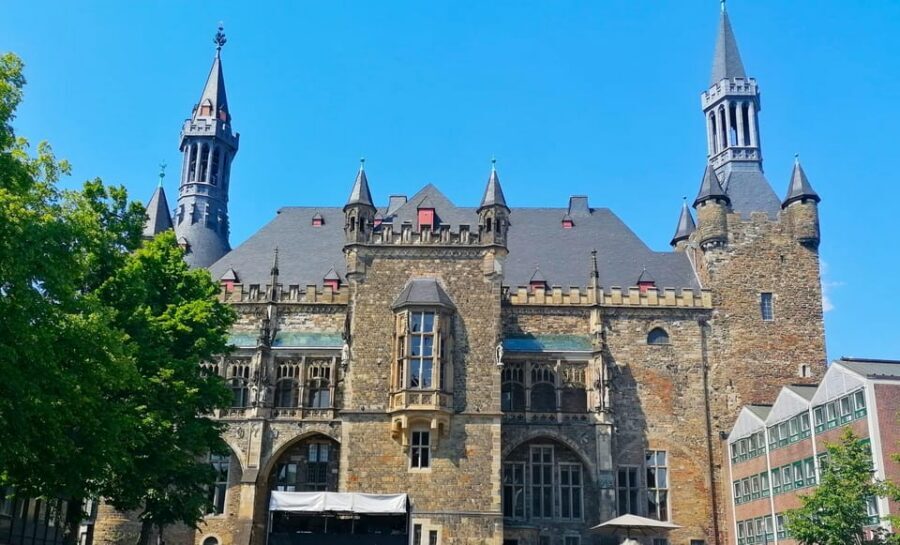
One of the most historically meaningful exterior stops is the historic City Hall (Rathaus).
Here the tour gives you a big takeaway: this building connects to the earlier palatine hall from the 8th–9th century, and Aachen’s Town Hall was built on those foundations. That means you’re not just looking at a pretty civic building. You’re looking at continuity—how political power and administration got rebuilt over older structures.
You’ll learn more about Aachen’s political and historical role at the heart of Europe, yesterday and today. That theme is important because it explains why Charlemagne’s choices mattered. If Aachen stayed central, it’s because it worked as a crossroads, not only as a ceremonial stage.
The Market Square follow-up reinforces this. Your brain starts grouping the city: imperial religious space here, governance and civic space there, and the everyday gathering points in between.
Charles Fountain, Palatine Courtyard, Treasury Chamber, then the Chapel again
The tour finishes with more of the complex around the Palatine area.
You’ll see:
- the Charles Fountain
- Palatine Courtyard
- Treasury Chamber
- and back to the Palatine Chapel/Cathedral area as the crown moment
Even without long entry times, the effect is useful. The route creates a sense of progression. Fountains like Charles Fountain help you reset visually and emotionally before you move into the more ceremonial spaces. Then the courtyard and treasury stop nudge you toward the heart of what the Palatine grounds represent.
The Treasury Chamber stop is worth noting even if you don’t go inside on this tour. It signals that the Palatine complex isn’t only about worship. It’s tied to the kinds of objects and displays that reinforce authority—what a place keeps, what it shows, and what it protects.
And then, with the Palatine Chapel/Cathedral, the story lands where it should: Charlemagne’s final resting place, plus the UNESCO weight. This is the kind of ending that helps you remember the “why” behind the “what.”
Price and value: is $29 worth 90 minutes with a native Italian guide?
At $29 per person for a 1.5-hour walking guided tour, the value comes from three things:
- A real-language expert: a certified, native Italian-speaking guide means you don’t lose nuance. You hear the story, not just the gist.
- High concentration of landmark names: Elisenbrunnen, Aquae Granni, the Palatine Chapel/Cathedral, Rathaus foundations, fountains, squares. In a short time window, that’s useful.
- Storycraft, not just sightseeing: the tour includes historical images and exciting stories, and reviews repeatedly praise Sara for being prepared and fun.
What you should mentally budget for: because monuments are viewed from the outside, it’s not the same as paying for an all-entry cathedral or museum day. If you want full indoor access and long stops inside, you’ll likely want a second visit later.
If you want an efficient, guided overview that helps you understand what you’re seeing, $29 makes sense.
Who should book this Aachen classic walking tour
This tour fits best if you:
- speak Italian or want to experience Aachen with a native guide
- have limited time and want a clear introduction to imperial Aachen
- enjoy guides who use anecdotes and historical images to make places feel human
- like short walks with a strong story thread rather than a long museum day
It’s less ideal if you:
- want lots of inside-the-building guidance or extended museum time
- prefer slow travel where you sit with one place for a long stretch
If you’re on a first visit, this is a strong orientation. If you’re returning, it can still help because it tells you where the meaning is.
Should you book this tour?
I’d book it if you’re heading to Aachen and want a quick, guided “map in your head.” The strongest reason is Sara’s Italian storytelling combined with an itinerary that keeps jumping through eras in a way that makes sense: thermal Aachen, Roman baths, then Charlemagne and UNESCO. For $29, that’s a lot of clarity packed into 90 minutes.
Skip it only if you’re expecting lots of guided time inside monuments or you want a deeper museum experience on this first day. For that, you’d pair this walk with separate, longer visits.
If you want one practical move: bring comfortable shoes and a curious mindset. The tour rewards attention—especially at the Palatine complex and around the fountains, where the guide turns everyday city features into story clues.
FAQ
What language is the tour in?
The live guided tour is in Italian.
How long is the Aachen classic walking tour?
It lasts about 1.5 hours.
What does the tour include?
It includes a walking guided tour of monuments from the outside.
Where do I meet the guide?
Meet in front of the tourist board. The guide will have the Italian flag.
What sights will I see on the route?
You’ll see places including Elisenbrunnen, the archaeological site, Coin Fountain, Nobis Printen, Puppet Fountain, Am Hof, Couven Museum, Granus Tower, Town Hall, Market Square, Charles Fountain, Palatine Courtyard, Treasury Chamber, and the Palatine Chapel/Cathedral.
Is the Palatine Chapel/Cathedral part of the tour?
Yes, it is included as part of the walk.
What’s the cancellation policy?
You can cancel up to 24 hours in advance for a full refund.
How much does it cost?
The price is $29 per person.