REVIEW · AACHEN
Aachen: Private Walking Tour With A Professional Guide
Book on GetYourGuide →Operated by Travmonde OÜ · Bookable on GetYourGuide
Aachen is a small city with big royal weight. This private walk centers on Charlemagne’s legacy—from the cathedral where German kings were crowned to the stories behind Aachen’s iconic sights. I love how the tour connects major landmarks to the people who shaped them, instead of treating them like photo stops.
Two highlights I really appreciate are the focus on Aachener Dom—with Charlemagne’s tomb and the throne you can still see—and the way the guide explains the Puppet Fountain characters, including the rooster, horse, professor, and canon. One thing to consider: at $288 per group (up to 15 people), it can feel pricey if you’re traveling as just one or two.
You’ll meet your guide in front of the cathedral, then spend 90 minutes walking and listening at an easy pace. Guides like Julia-Anna and Fr. Haas come through as especially engaging and able to answer questions on the spot, which is exactly what you want in a private format.
In This Review
- Quick hits before you meet your guide
- Entering Aachen through the Aachener Dom
- Charlemagne’s throne, relics, and the kings-crowned angle
- The Puppet Fountain: reading the symbols like a storybook
- From Roman-era threads to the city’s big turning points
- Medieval buildings and city gates: where the walk feels real
- City names in other languages: a small detail with big payoff
- Price and value for a 90-minute private group
- Who this tour suits best
- Should you book the private Aachen walking tour?
- FAQ
- Where do I meet the guide?
- How long is the tour?
- Is this a private tour?
- What languages are available?
- What is included in the price?
- Are entrance fees included?
- What is the cancellation policy?
Quick hits before you meet your guide
- Aachener Dom focus: the burial place of Charlemagne, plus his throne still in place
- 30 crowned kings story: a strong thread running through the cathedral narrative
- Puppet Fountain explained: what each puppet character symbolizes, from rooster to canon
- Roman to Frankish timeline: the walk ties Aachen’s major turning points together
- City name variety: you’ll hear how Aachen appears in other languages
- Private group feel: your guide can adjust on the spot based on your interests
Entering Aachen through the Aachener Dom
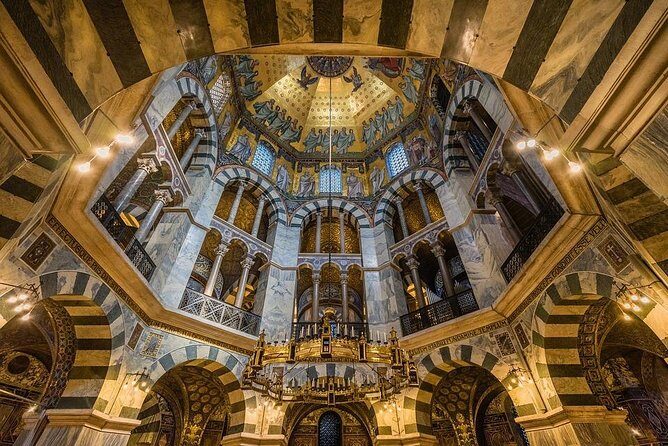
The meeting point in front of the cathedral is the smartest possible start. Aachen’s best-known landmark isn’t just a pretty building—it’s the reason the city mattered to European rulers. Once you’re standing there, you’ll quickly understand why Charlemagne and his successors treated Aachen like a power center, not just another town.
What I like most about beginning here is how it sets your mental map for the whole 90 minutes. The guide frames the cathedral as Germany’s first UNESCO World Heritage Site, not as a random badge, but as a place with real credentials: Charlemagne’s burial, the presence of holy relics, and the throne that remains associated with his legacy. When you later hear about kings, emperors, and court life, those details land harder because you’ve already anchored them to a physical place.
You should also plan your expectations for pace. This is a guided walking tour, not a cathedral lecture that lasts for hours. So if you want to linger inside longer on your own, you’ll likely want to set aside extra time after the tour—especially because entrance fees are not included.
You can also read our reviews of more walking tours in Aachen


Charlemagne’s throne, relics, and the kings-crowned angle
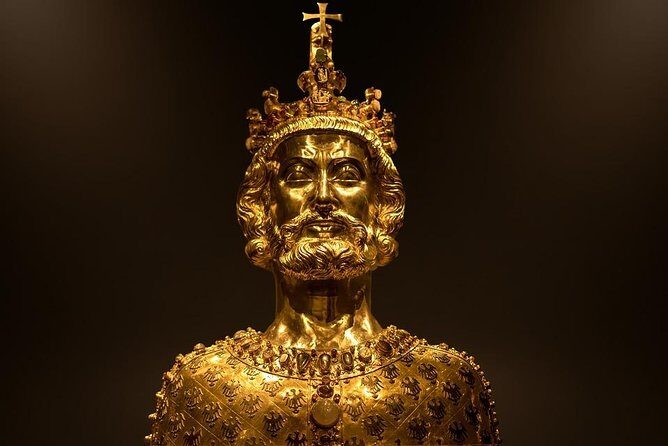
This tour leans hard into the “Charlemagne built the stage” story. Aachen became a capital chosen by Charlemagne, and the cathedral became the kind of center that broadcast authority across generations. The guide’s explanation of the cathedral ties three big ideas together: burial, continuity, and ceremony.
Here’s what that means in practice. You’ll hear that Charlemagne is laid to rest here, and the throne is still present. That throne detail matters because it turns a legend into something you can point at. You’re not just learning a name; you’re connecting it to an object tied to the symbolism of rule.
You’ll also get the royal layer: the story that 30 kings were crowned in this context. Even if you only remember one number from the tour, that one fact helps you grasp that Aachen wasn’t a footnote in medieval Germany. It functioned as a place where power was publicly confirmed—again, anchored by the cathedral.
Relics come up as well, and the guide’s job is to make them make sense. Instead of treating relics like museum glass, the explanation gives you the context for why people looked at them, prayed around them, and used them as a meaningful part of belief and civic identity.
If there’s a possible downside, it’s that some guests expect the whole cathedral experience to be included. It isn’t: entrance fees aren’t part of the tour price. You’ll still learn a lot from the guide outside and along the route, but if you want full inside-time, plan for additional costs.
The Puppet Fountain: reading the symbols like a storybook
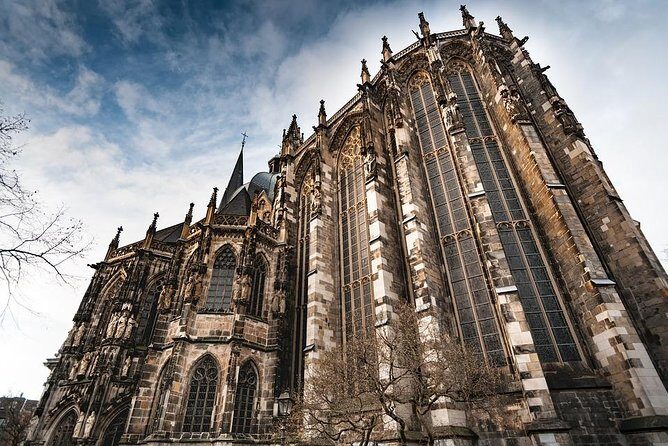
After you’ve absorbed Charlemagne and the cathedral’s role, the tour moves into something more playful: the Puppet Fountain. It might sound like a kid-friendly stop, but the experience is actually a clever way to understand Aachen’s culture and imagination.
What makes this part work is the guide doesn’t just point at puppets. You’ll hear what’s behind each character—specifically the rooster, the horse, the professor, and the canon. Each one is part of the fountain’s symbolism, so you start noticing how the figures function like characters in a shared story.
I love this kind of interpretation because it gives you a second lens. When you’ve spent the morning learning about emperors and crowns, it’s refreshing to see how civic symbolism can show up through public art and storytelling. The Puppet Fountain becomes a bridge between “official history” and everyday meaning.
Practical tip: if you’re traveling with kids, this stop can turn a history-focused walk into something that feels personal. If you’re traveling as an adult, it still works because you’re learning to read symbolism instead of just sightseeing.
From Roman-era threads to the city’s big turning points
The tour promises coverage from the Roman era through the significant moments that shaped Aachen. You don’t need to be a medieval-history buff to enjoy this—what you want is a guide who can connect time periods without turning everything into dates.
That’s the strength of this format: you get the timeline in human terms. Roman-era context gives you background on why Aachen’s location and importance grew. Then the story shifts toward the Frankish era and the court life tied to Charlemagne. The walk uses the city as your timeline, so key moments feel linked instead of scattered.
This matters for your own planning later. Once you understand the arc from Roman roots to Frankish power, you’ll be able to explore on your own with better instincts. You’ll look at buildings and city spaces differently, asking what role they played rather than just where they are.
Medieval buildings and city gates: where the walk feels real
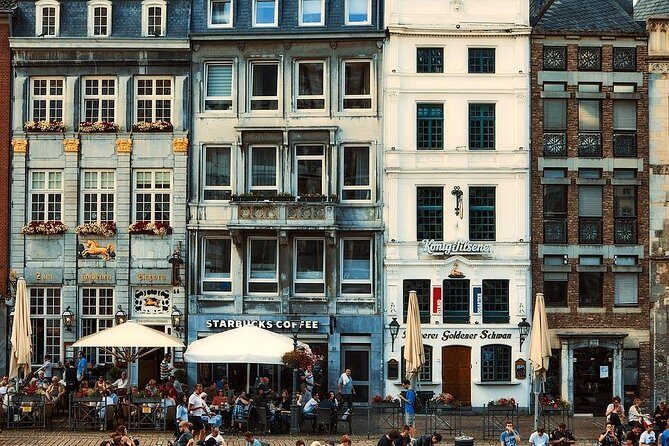
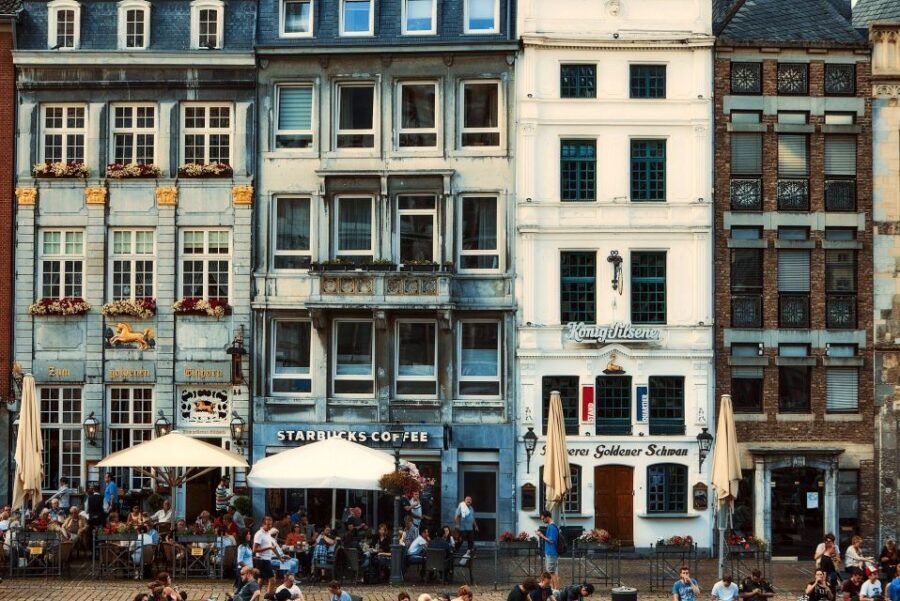
Aachen isn’t all grand institutions. You’ll also see well-preserved medieval buildings and city gates, and your guide uses them to reinforce the historical “feel” of the city. This part of the tour is valuable because it stops the experience from becoming purely theoretical.
City gates, in particular, are one of those details that only become interesting when someone explains why they mattered. They weren’t just decorative. They were control points, protective boundaries, and symbols of the city’s identity. When your guide ties them to the broader story, the gates become part of the same narrative as the cathedral and Charlemagne.
The medieval streets and preserved structures also help you picture daily life during different eras. Even when you don’t get a long lecture at each corner, the guide’s explanations give you a reason to look up, notice shapes, and connect architecture to power and prosperity.
You can also read our reviews of more guided tours in Aachen

City names in other languages: a small detail with big payoff
One of the tour’s more surprising inclusions is the variety of names Aachen has in other languages. This isn’t just trivia. It’s a fast way to understand how a political center can be interpreted and claimed across borders.
When a city name changes by language, you start noticing how travelers, rulers, and record-keepers referred to the place in their own world. The guide uses this to reinforce Aachen’s role in regional history and cross-cultural contact.
If you like learning a few “anchors” you can carry with you, this is a good one. It’s brief, but it makes your later reading—on signs, documents, or guidebooks—feel less confusing.
Price and value for a 90-minute private group
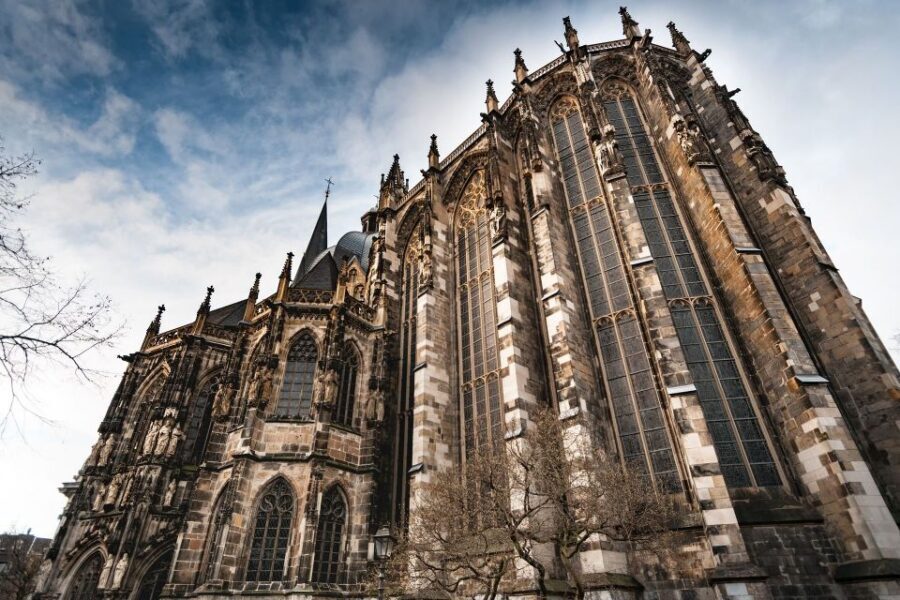
At $288 per group up to 15, you’re not paying a per-person ticket model. That’s a big deal for value. If you’re traveling with family or friends, the cost can stretch nicely, especially because you get a live guide in English or German and the ability to ask questions.
If you’re traveling solo or as a couple, it can feel expensive—one clear theme is that the price is on the higher side. That doesn’t mean it’s automatically bad. It just means you should ask yourself one question: do you want a guided interpretation of Aachen’s most meaningful sites, or would you rather self-wander and pay only for entrance tickets?
Here’s how I’d make the call. If you care about getting the story behind the cathedral, the throne, the kings-crowned angle, and the Puppet Fountain symbolism, a private guide is worth it because it turns “see a building” into “understand what you’re seeing.” If you mostly want photos and a relaxed stroll, you might not get enough value from a private format.
Who this tour suits best
This works especially well if you want structured history without feeling stuck in a classroom. The tour’s mix—cathedral power, Puppet Fountain symbolism, and Roman-to-Frankish context—keeps the pace varied within the 90 minutes.
You’ll also likely enjoy it if you like question-and-answer time. Guides such as Julia-Anna and Fr. Haas are described as professional, engaging, and willing to adapt explanations to your interests. That flexibility is rare in group tours.
Best fit:
- Families who want history explained in a way kids can enjoy (Puppet Fountain helps)
- Adults who like real context for famous landmarks
- Small groups who want a guide who can tailor the walk
Should you book the private Aachen walking tour?
I’d book this if your goal is to leave Aachen with more than a few photos—if you want to understand why the cathedral is central, what the throne symbolizes, how the kings-crowned story connects to the site, and what the Puppet Fountain characters mean. The “story in the walking route” approach is the value driver here.
I’d think twice if you’re price-sensitive as a small party. Because entrance fees aren’t included and the tour is 90 minutes, you’ll want to be sure you’ll use the guide time well. For solo travelers, it may be smarter to pair a self-guided cathedral visit with a shorter or less expensive guided option—unless you’re specifically excited about getting the symbolism and timeline tied together by a professional guide.
If you’re traveling with a group that can share the cost, this becomes a more comfortable decision. You’re paying for interpretation, not just movement.
FAQ
Where do I meet the guide?
Meet your guide in front of the Cathedral (Aachener Dom).
How long is the tour?
The tour lasts 90 minutes.
Is this a private tour?
Yes. It’s a private group.
What languages are available?
The live tour guide is available in English and German.
What is included in the price?
The tour includes a private tour, a local guide, and possible customizing on the spot with your guide.
Are entrance fees included?
No. Entrance fees are not included.
What is the cancellation policy?
Free cancellation is available up to 24 hours in advance for a full refund.