REVIEW · DRESDEN
Dresden: Private Guided Walking Tour
Book on GetYourGuide →Operated by Dresden Information · Bookable on GetYourGuide
Dresden has a way of talking back. This private guided walking tour threads Baroque highlights with real history, from medieval shadows to the Peaceful Revolution of 1989. You’ll move through the old town with a licensed guide who knows how to turn buildings into stories.
I really like two things here: the guide’s mix of big historical context and small, human anecdotes (with humor in the tone), and the fact that you see Dresden’s key sights in a tight route without feeling rushed. One possible drawback: since it’s a small-group tour capped at 25, a bad timing day or a group that moves slowly can make the 2 hours feel packed.
In This Review
- Key things I’d prioritize
- Baroque Dresden, told like a story (not a lecture)
- The route: Neumarkt to Frauenkirche in two focused hours
- Neumarkt and the big opener: getting oriented fast
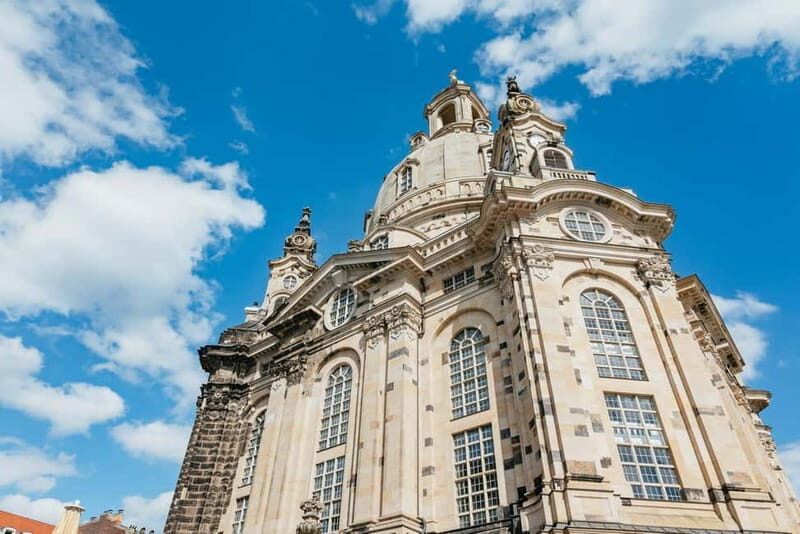
- Frauenkirche: seeing a landmark with context
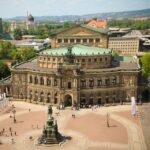
- Semperoper: Baroque grandeur in motion
- Baroque Zwinger: dramatic style, explained
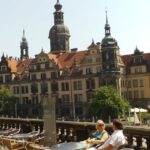
- Dresden Castle and the shift toward courtly Dresden
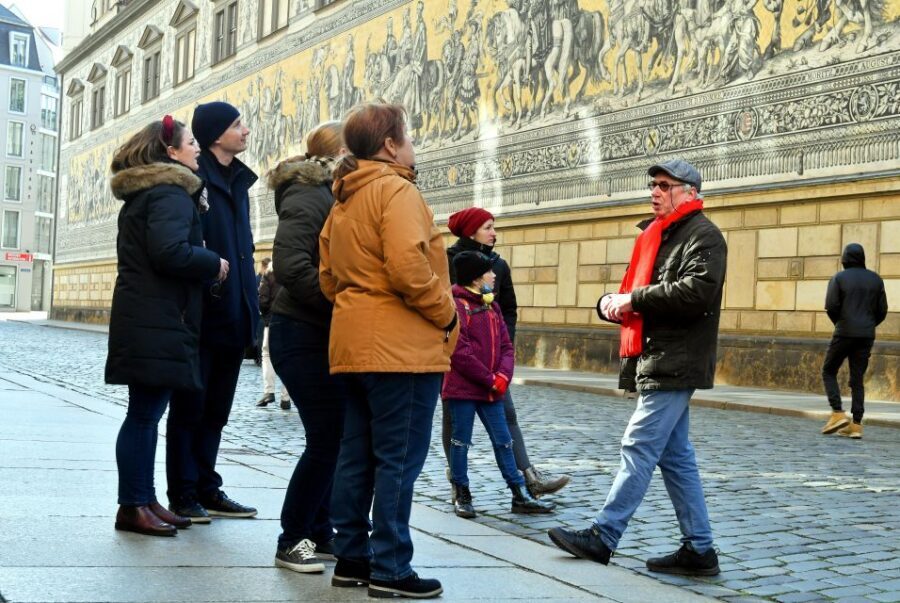
- Brühl’s Terrace, Procession of Princes, and Stallhof: where the tour slows just enough
- Dresden Cathedral: ending one storyline, starting another
- Taschenbergpalais and Augustus Bridge: the city in perspective
- Finishing near Frauenkirche: you’ll see the same place differently
- Who this tour suits best (and who should pick something else)
- Price and value: $212 per group can be very fair
- A quick word on reliability
- The best way to get the most from this tour
- Should you book the Dresden private guided walking tour?
- FAQ
- FAQ
- How long is the Dresden private guided walking tour?
- What is the group size limit?
- Where do I meet the guide?
- What languages are available?
- Is the tour wheelchair accessible?
- What sights will I see on the walk?
- Is this a private tour?
- What’s included in the price?
- Can I cancel for a full refund?
Key things I’d prioritize
- Licensed guide, English or German for clear, story-driven explanations
- Neumarkt to Frauenkirche route that hits the headline Baroque stops efficiently
- History from the Middle Ages to today, including the 1989 Peaceful Revolution
- Insider tips for restaurants, events, and what’s worth your time
- Private small-group experience (up to 25) so you’re not lost in crowds
Baroque Dresden, told like a story (not a lecture)
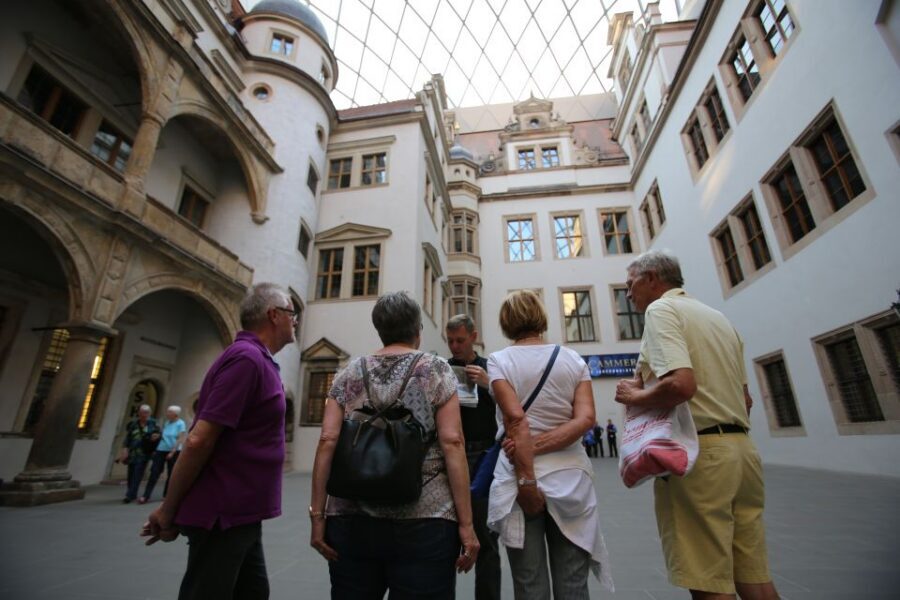
Dresden can feel like a museum you can walk through. But on this tour, the sights aren’t just pretty facades. Your guide connects them to what people in Dresden were dealing with—fear, ambition, rebuilding, and political change—over roughly 1,000 years.
That matters because it changes how you look. Instead of seeing “a famous building,” you start asking what role it played, what kind of power or hope it represented, and why it stands where it does. And because it’s a private guided format, the pace stays geared toward your group rather than a scripted herd.
You can also read our reviews of more walking tours in Dresden

The route: Neumarkt to Frauenkirche in two focused hours
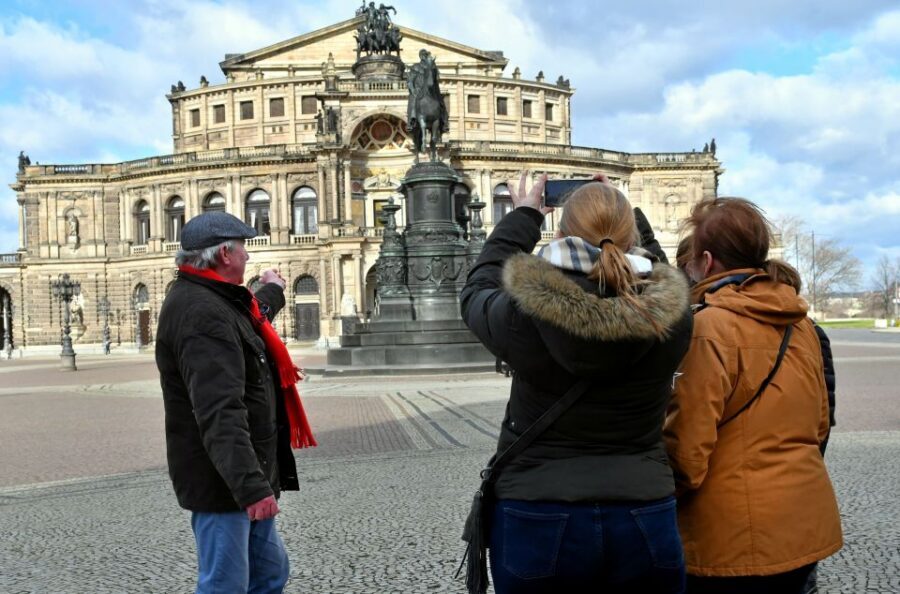
The walking tour starts at Dresden Information, Neumarkt 2, QF Passage Basement floor (01067 Dresden). You begin at Neumarkt, which is a smart starting point because it keeps you in the middle of the action. You don’t spend time commuting across town; you start with the old-town core and build from there.
From the start, expect a classic “greatest hits” path through Dresden’s center:
- Frauenkirche
- Semperoper
- Baroque Zwinger
Then the route continues toward:
- Dresden Castle
- Brühl’s Terrace
- Procession of Princes
- Stallhof
- Dresden Cathedral
And finishes with:
- Taschenbergpalais
- Augustus Bridge
- concluding near Frauenkirche
Neumarkt and the big opener: getting oriented fast
Neumarkt is where you get your bearings fast. If you’ve never been to Dresden before, this is the part that helps you understand the geography of the city center as you move. You’ll also hear quick framing stories that set expectations for what you’re about to see—especially the way Dresden’s artistic style and political history tangled together over time.
This is also where you’ll feel the “private” advantage. With a small group, your guide can gauge your questions early and adjust the emphasis—more history, more architecture context, or more practical advice for later.
Frauenkirche: seeing a landmark with context
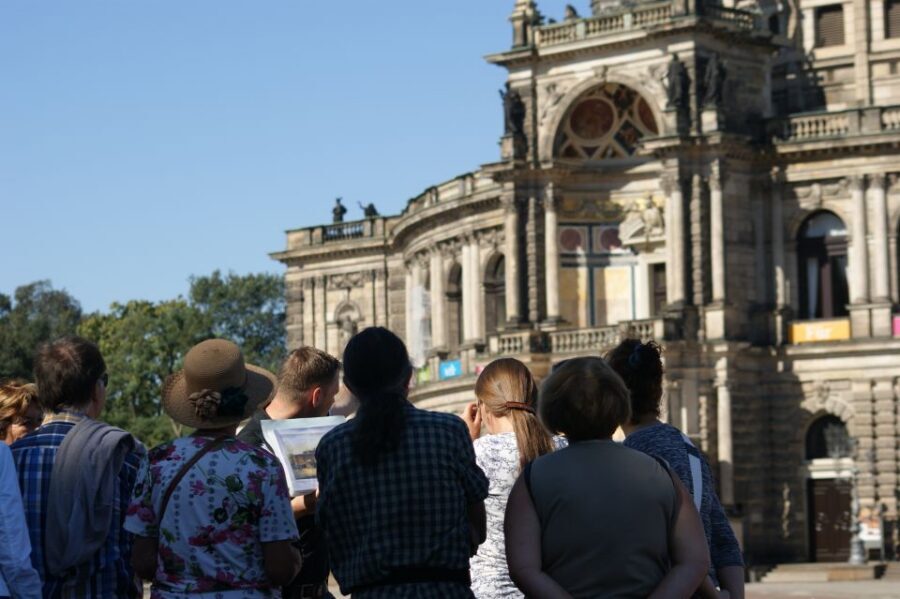
You’ll see Frauenkirche early and again near the end (when the tour concludes close by). That repetition is useful: the first view helps you notice the obvious. The later view makes you notice what your guide has already pointed out—why that place matters in Dresden’s longer story.
What I’d watch for here is how your guide connects major historical periods to what you’re standing in front of. This tour isn’t just pointing; it’s explaining. And when a guide can layer meaning without drowning you in facts, the landmark starts to feel personal.
Semperoper: Baroque grandeur in motion
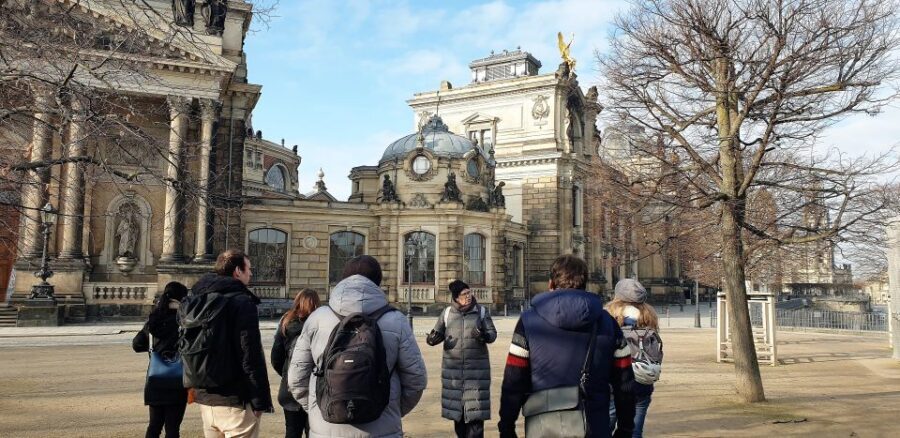
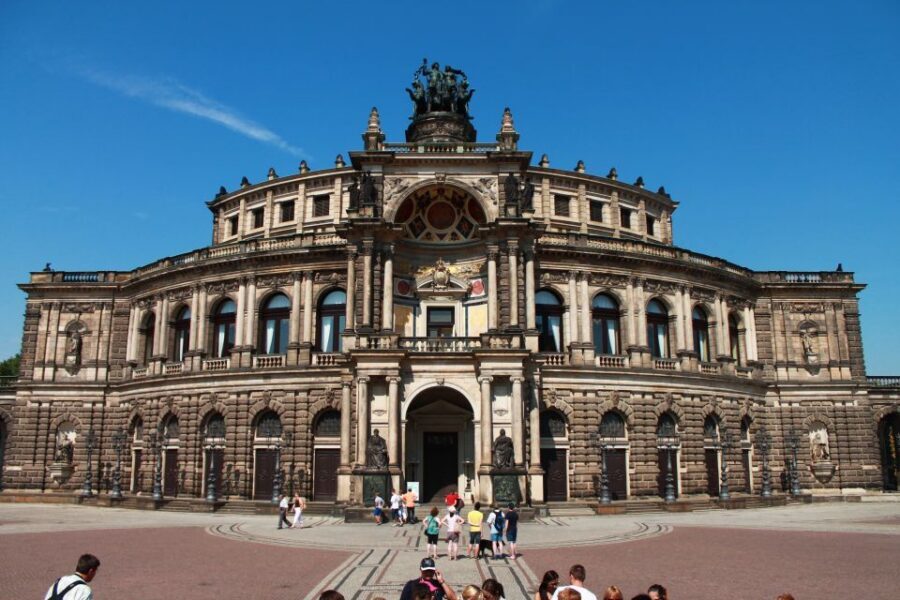
Next comes Semperoper, another “you can’t miss it” stop. The main value of this moment isn’t trying to memorize details. It’s learning how your guide reads the city’s artistic direction through time—how grandeur shows up in public spaces and how that connects back to the people who lived here.
Since the tour’s theme is Dresden’s Baroque world, this is a place where you’ll probably start connecting dots between the look of the buildings and the stories behind them. Your guide’s tone matters too. In the feedback I saw, people praised guides who could keep things lively, with humor mixed into the historical material.
You can also read our reviews of more guided tours in Dresden





Baroque Zwinger: dramatic style, explained
The Zwinger is one of the Baroque anchors on the route. You’ll stop to admire the dramatic presence and then hear the broader context that makes it click. Baroque architecture often feels theatrical, and this tour leans into that idea instead of pretending it’s neutral.
If you like when guides connect aesthetics to history, this is a high-payoff stop. You’ll learn the “why” behind the style, and you’ll also get a sense of how Dresden’s identity formed as more than just one era. The tour explicitly spans the medieval period, the Renaissance, and the Baroque, so the Zwinger doesn’t sit alone—it’s part of a timeline.
Dresden Castle and the shift toward courtly Dresden
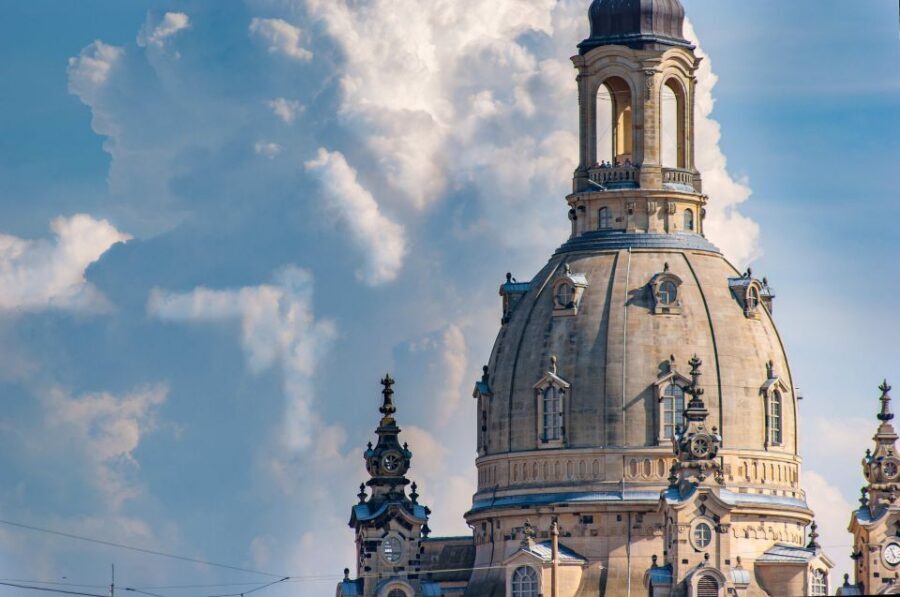
After the earlier headline landmarks, the route moves toward Dresden Castle. This shift matters because castle-area viewpoints often change the way you perceive the city. It can feel more like you’re looking at power and planning rather than only art and street life.
Your guide will use this section to bridge older history with later periods. This is where the tour’s “over 1,000 years” promise starts to feel real. If you’ve been hoping for more than surface-level sightseeing, this middle stretch is where you tend to get it.
Brühl’s Terrace, Procession of Princes, and Stallhof: where the tour slows just enough
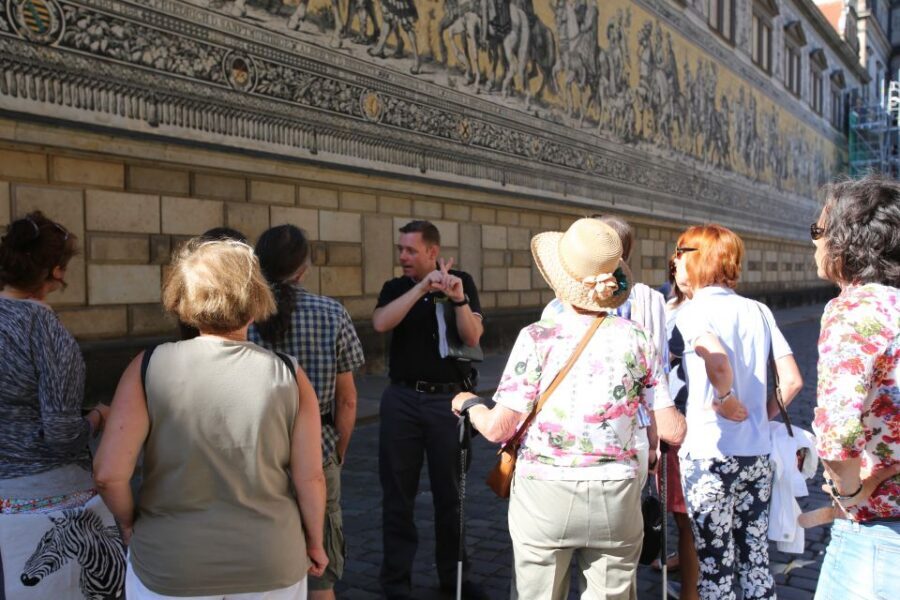
Next up is Brühl’s Terrace, then the Procession of Princes, and Stallhof. Even with a 2-hour limit, these stops are often where walking tours win or lose: too fast and they’re just photo ops, too slow and you run out of time.
Here, the design seems intentional—your guide gets you to look, then helps you understand what you’re looking at through the lens of Dresden’s changing eras. I’d use these minutes to do two things:
- Stand still long enough to take in the whole composition
- Listen for how the guide ties these spaces to the city’s bigger shifts
These stops are also good for getting your bearings for later independent exploration. If you’re planning to return, this is the area you’ll want to remember.
Dresden Cathedral: ending one storyline, starting another
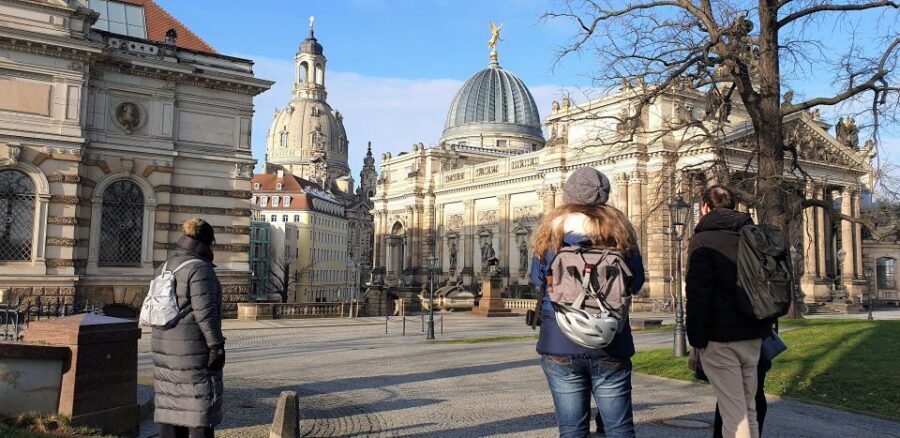
You’ll arrive at Dresden Cathedral after the Brühl’s Terrace/Stallhof segment. This works well as a “tone change” point: the tour keeps moving, but the guide can pivot to another layer of Dresden’s identity.
If you care about the connection between cultural spaces and politics, this is a key part of the tour. The tour’s description promises coverage that includes dark medieval times, Renaissance energy, Baroque grandeur, and then the modern emotional reality of the Peaceful Revolution of 1989. A stop like the Cathedral helps anchor that broader narrative so it doesn’t feel like a random collection of attractions.
Taschenbergpalais and Augustus Bridge: the city in perspective
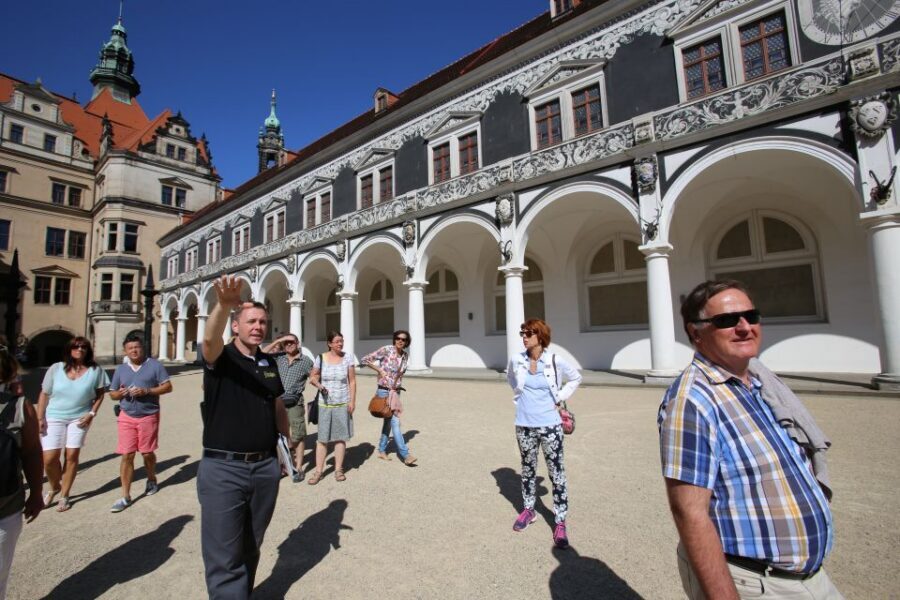
After the cathedral, you head to Taschenbergpalais and Augustus Bridge. This stage is valuable because it shifts you from “named landmarks” into city-level perspective. Bridges and palace fronts often give you a sense of how parts of Dresden connect—physically and historically.
Your guide uses the walk itself to make the story feel continuous. This is where you may notice that the tour isn’t just about stopping for pictures; it’s about moving through the city in the right order so the timeline makes sense.
Finishing near Frauenkirche: you’ll see the same place differently
The tour concludes near Frauenkirche, which is a smart ending choice. Coming back to it right after the rest of the old town lets you recalibrate your view. You start with the landmark, you work through a route full of context, and then you return with a better understanding of what you saw and why it mattered.
This is often when guides land their strongest storytelling. People in the feedback specifically praised guides who could keep things humorous while still delivering strong history, including a guide named Frau Schulz who impressed both younger and older visitors. That kind of delivery tends to make the final moments feel like the tour actually “lands,” not just ends.
Who this tour suits best (and who should pick something else)
This experience is a strong match if you:
- want a private small-group format without the pressure of a huge crowd
- like history that’s explained clearly in English or German
- want Dresden’s top sights (Frauenkirche, Semperoper, Zwinger, and the Baroque core) in a 2-hour plan
- care about how modern history connects to everyday places, including the 1989 Peaceful Revolution
It may be less ideal if you need long museum-style time inside buildings or want deep architectural analysis without movement. This is a walking tour—quick, focused, and story-forward—so it won’t feel like a slow day on purpose.
Price and value: $212 per group can be very fair
The price is listed as $212 per group up to 25 for a 2-hour private guided walking tour. That pricing model matters because it’s not $212 per person. If you have a smaller group, it can still feel pricey; if you bring a full group of 25, it becomes very low cost per head (about $8.50 each at maximum capacity).
So the value depends on your travel style:
- If you’re traveling with a group (friends, family, or a small club), this can be a great deal.
- If you’re two people, you might compare it to other city tours and decide if the private format is worth paying more per person.
What helps justify the price here is the presence of a professional, licensed, enthusiastic guide plus insider tips for restaurants and events. That kind of practical local guidance often saves time later.
A quick word on reliability
The overall rating is high, and many people praised the guides for being friendly, experienced, and engaging. I did also see one complaint about a no-show situation. It’s rare in the data you provided, but it’s real, and it’s worth noting.
My practical advice: if you book, make sure you have the meeting point details saved and check in close to start time if you’re traveling independently.
The best way to get the most from this tour
To make the 2 hours work for you, come ready to walk and listen. Wear comfortable shoes; this route covers a dense old-town area and you’ll want to stay present instead of constantly stopping.
I also suggest you prepare one or two questions before you arrive—something like:
- What changed in Dresden between medieval times and the Baroque era?
- How did the 1989 revolution reshape the city’s story?
- What should I do after the tour to keep exploring?
When guides know what you care about, the walk tends to feel personal fast.
Should you book the Dresden private guided walking tour?
Yes, if you want a high-signal introduction to Dresden: major sights, Baroque atmosphere, and history that actually connects to real turning points like the Peaceful Revolution of 1989. The biggest plus is the guide quality—people specifically praised guides (including Frau Schulz and Idiko) for being enthusiastic and able to keep different ages engaged, with humor and strong historical storytelling.
Book with confidence if your dates are flexible and you like private formats. If you’re extremely concerned about reliability due to past issues, choose a time you can double-check details on the day and keep your confirmation info handy.
FAQ
FAQ
How long is the Dresden private guided walking tour?
It lasts 2 hours.
What is the group size limit?
The maximum group size is 25 persons.
Where do I meet the guide?
Meet your guide at Dresden Information, Neumarkt 2, 01067 Dresden, Germany, in the QF Passage Basement floor.
What languages are available?
The tour is offered in English and German only.
Is the tour wheelchair accessible?
Yes, it’s listed as wheelchair accessible.
What sights will I see on the walk?
You’ll see major old-town attractions including Frauenkirche, Semperoper, the Baroque Zwinger, Dresden Castle area, Brühl’s Terrace, the Procession of Princes, Stallhof, Dresden Cathedral, Taschenbergpalais, and Augustus Bridge.
Is this a private tour?
Yes, it’s a private group walking tour.
What’s included in the price?
It includes a private small-group walking tour with a professional, licensed, enthusiastic guide, plus insider tips (restaurants, events, and more).
Can I cancel for a full refund?
Yes. Free cancellation is offered up to 24 hours in advance for a full refund.