REVIEW · BERLIN
Traces Of Berlin: Guided Berlin Tour (English or German)
Book on GetYourGuide →Operated by Namola · Bookable on GetYourGuide
Berlin’s divide still shows. This 2-hour walk turns key Wall sites into clear, human stories, from Die Mauer at Leipziger Platz to Checkpoint Charlie. I love how the route makes you notice details you would normally skip, like the shift in street lighting and the famous Ampelmann.
Second, I like that the guides keep it grounded and practical. In one recent booking, a tiny group (three people) had an unusually high guide attention with four guides working the walk, which made the story feel personal rather than rushed. One catch: this is an outdoor walking tour with uneven ground and weather. Bring comfortable shoes and expect to keep moving.
In This Review
- Key Things You’ll Remember From This Berlin Wall Tour
- Why a 2-Hour Berlin Wall Walk Works
- Starting at Die Mauer | The Wall (Leipziger Platz)
- Martin-Gropius-Bau and Bundesrat: How Buildings Tell Political Stories
- Topography of Terror: When Repression Becomes Location
- Checkpoint Charlie: The Human Side of Crossing Points
- A No-Man’s-Land Segment and the GDR Watchtower Base
- Potsdamer Platz and Leipziger Platz: Division Through Urban Design
- Brandenburg Gate: A Landmark That Carries Cold War Weight
- June 17th and Socialist Mural Moments You’ll Want to Look For
- Ampelmann and Traffic-Light Stories: Small Things, Big Meaning
- Martin-Gropius-Bau to Panoramacafè: The Viewpoint Finale
- Price and Value: Is $41 Worth Two Hours?
- Who This Tour Is Best For
- Practical Stuff You’ll Be Glad You Noted
- Should You Book This Berlin Wall Tour?
- FAQ
- How long is the guided Berlin Wall tour?
- What languages are offered?
- Where does the tour start and where do you end?
- What major sights are included?
- What should I bring?
- Is photography allowed?
- Can I get a refund if my plans change?
Key Things You’ll Remember From This Berlin Wall Tour
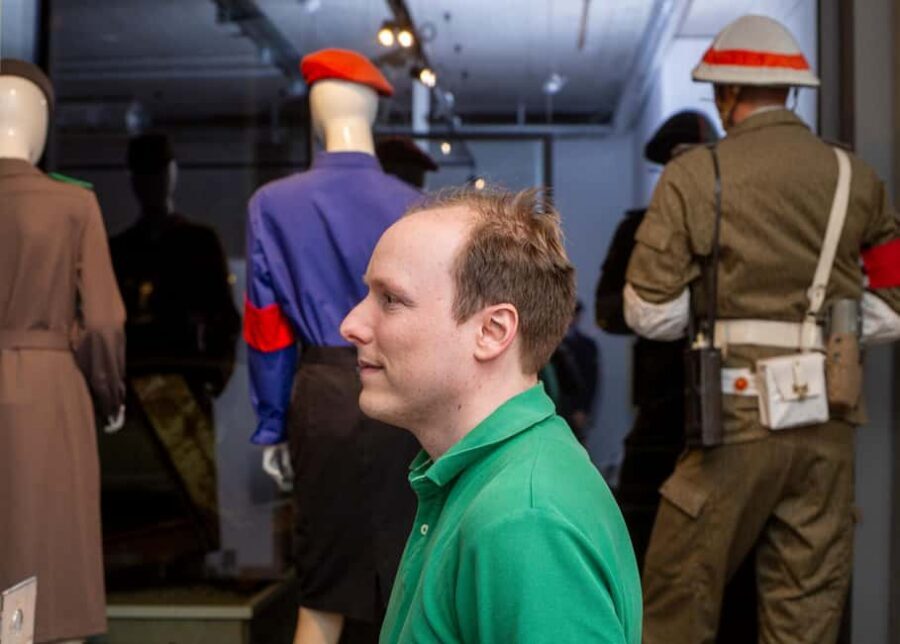
- Die Mauer | The Wall as a strong starting point that sets the tone fast
- Martin-Gropius-Bau and Bundesrat so you see how power shows up in architecture
- Topography of Terror where repression is explained with real locations in the mix
- Checkpoint Charlie with the practical story of escape attempts and control
- No-man’s-land leftovers, including the base area of a former GDR watchtower
- Ampelmann and the traffic-light details that make division visible in everyday life
Why a 2-Hour Berlin Wall Walk Works
If Berlin’s Cold War story feels too big, this tour is a smart fix. In just two hours, you get a tight chain of iconic places tied to the Wall and the wider East-West divide.
You’ll also get something you can’t easily pull from a brochure: how the past shows up in your feet, your view, and even the street design. That matters because the Wall wasn’t only a barrier. It was an entire system that shaped movement, risk, and daily choices.
You can also read our reviews of more guided tours in Berlin



Starting at Die Mauer | The Wall (Leipziger Platz)
Your tour begins at the entrance to DIE MAUER | THE WALL – Das Museum am Leipziger Platz. This is a good move because it gives context before you start threading through landmark after landmark.
From here, you’re set up to pay attention. You’re not just sightseeing famous spots. You’re learning how Berlin marked division in space—where people could go, where they couldn’t, and where the city created friction on purpose.
Martin-Gropius-Bau and Bundesrat: How Buildings Tell Political Stories
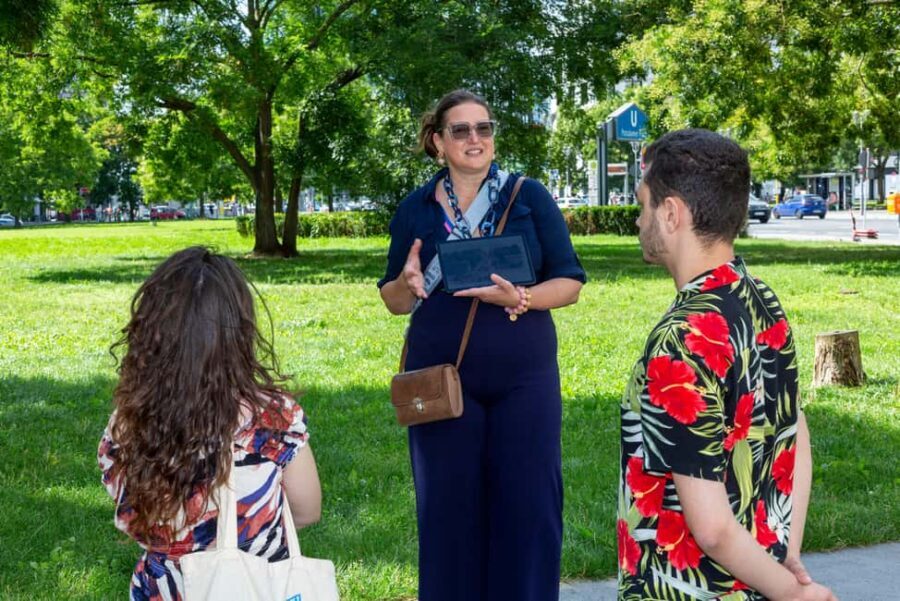
A short guided stop at Martin-Gropius-Bau helps you read the city like a document. The point isn’t architectural trivia for its own sake. It’s learning how official power and public space can feel different depending on who controlled the system.
You’ll also connect this area to Bundesrat. The guide’s role here is key: they connect the architecture to the lived reality of a divided city, so the buildings become evidence, not just backdrops for photos.
If you like understanding the “why” behind what you see, this is one of the places where the tour is most satisfying.
Topography of Terror: When Repression Becomes Location
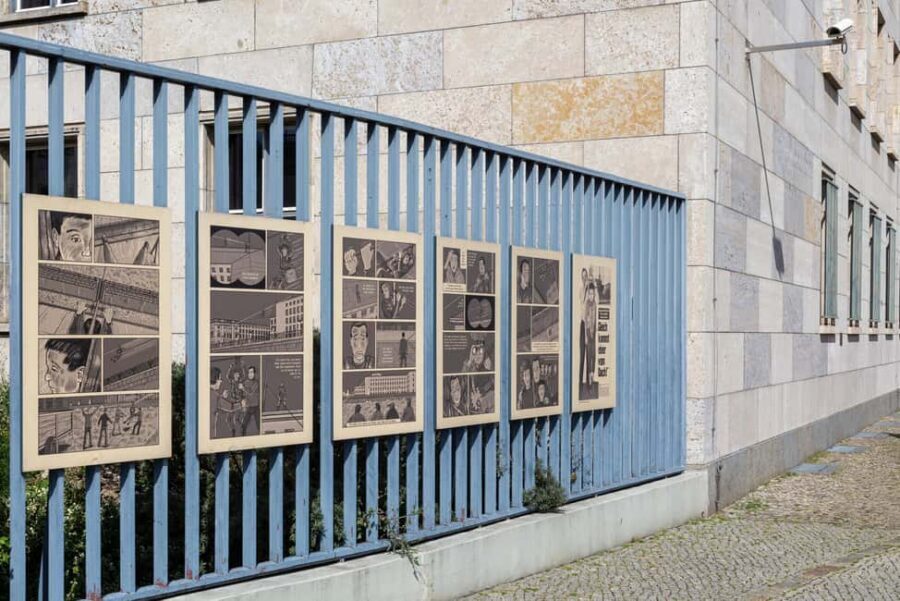
Next comes Topography of Terror, a stop designed to make the history concrete. This isn’t just about naming events. It’s about understanding how institutions of oppression worked, and why those power structures left an imprint on specific sites.
The timing is brief, so treat this as an orientation. You’ll leave with a clearer mental map of what happened here and how Berlin carried that burden afterward.
One practical tip: the surfaces around major memorial areas can be uneven, and you’ll likely be looking up at signage and panels. If you wear glasses, bring them, since the tour mentions them as helpful for reading.
Checkpoint Charlie: The Human Side of Crossing Points
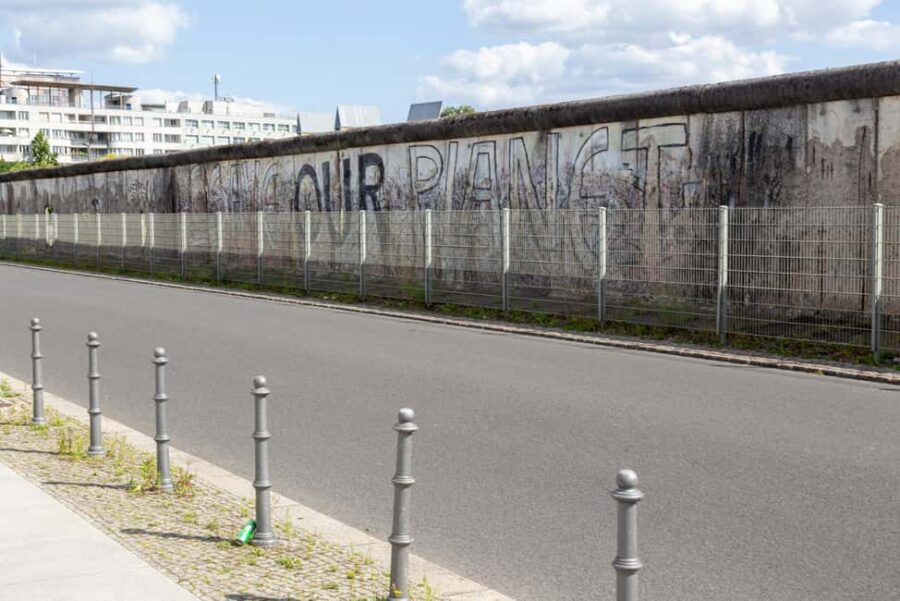
Checkpoint Charlie is the Wall story turned into a recognizable stage. But the tour’s value is that it frames the checkpoint as a working reality—how control was exercised, and how escape attempts faced obstacles that were both visible and built into the process.
You’ll also hear about escape, repression, and resistance as connected themes, not separate facts. That’s the best way to understand Berlin: people weren’t only trapped; they also found ways to challenge the system.
If you’re the type who likes history to feel specific, you’ll probably enjoy this part most. It’s where the story has sharp edges.





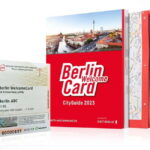
A No-Man’s-Land Segment and the GDR Watchtower Base
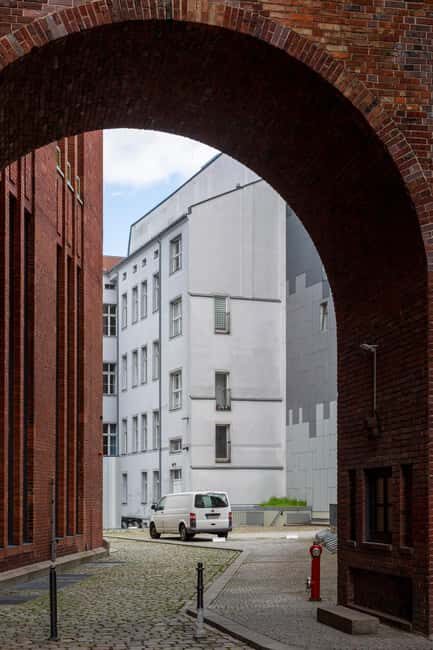
One of the most intriguing pieces of the walk is the secret stop area that leads you into the idea of no man’s land—places that existed because the city was divided.
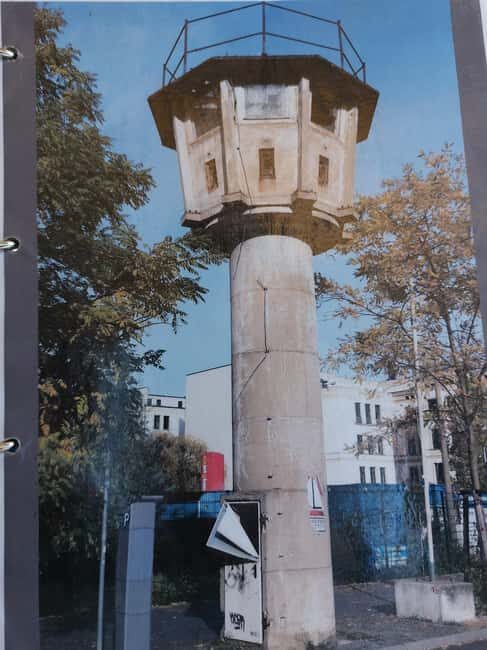
The tour specifically includes time near the base of the former GDR watchtower. Even if you know the Wall basics, the watchtower detail brings you closer to the daily logic of surveillance and control. It’s easier to understand fear and risk when you’re standing where someone could have been watching.
This is also where the walking matters. You’ll get a sense for sight lines and proximity—what it meant to be close to a boundary you couldn’t cross safely.
Potsdamer Platz and Leipziger Platz: Division Through Urban Design
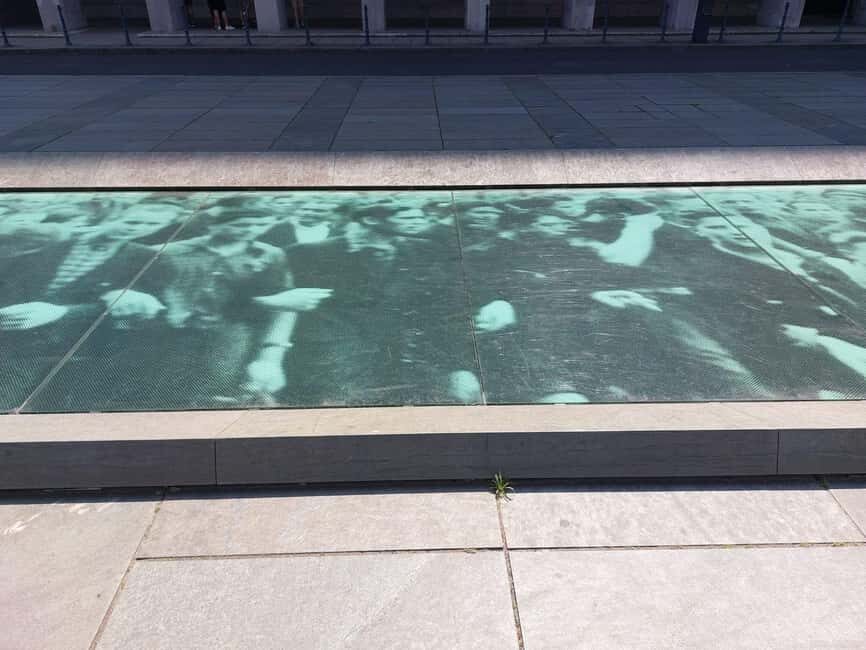
Between the Wall’s major points, the tour threads through areas like Leipziger Platz and Potsdamer Platz, where city planning becomes part of the story.
These locations help you see how division wasn’t only a Wall line on a map. It was woven into street rhythms, movement patterns, and the way Berlin arranged public space after the split.
The tour also highlights the visible symbols of division, including the difference in street lighting between East and West Berlin. That’s such a smart detail because it trains your eyes. Once you notice it, the city starts telling you its own history.
Brandenburg Gate: A Landmark That Carries Cold War Weight
You’ll visit the Brandenburg Gate area as a core stop in the Wall narrative. The gate is famous, but what makes it work on this tour is the way it’s placed inside the broader story of division and movement.
It’s the kind of stop that can feel too big and too symbolic on your own. With a guide, you get the practical connections—how nearby spaces and access routes fit into the Wall-era reality.
If you want Berlin to make sense without reading a stack of books, this guided framing helps a lot.
June 17th and Socialist Mural Moments You’ll Want to Look For
The route includes time around Platz des 17. Juni and the socialist mural of June 17th mentioned as part of the tour experience. This matters because it connects history to public expression—what the state wanted people to remember and how propaganda was displayed in daily view.
You’re not just looking at art or walls. You’re learning what messages were designed to stand in people’s everyday paths.
Ampelmann and Traffic-Light Stories: Small Things, Big Meaning
One of the highlights is seeing Ampelmann (the little pedestrian figure associated with Berlin crossing lights). The guide uses it as a doorway into the city’s divided past.
This is a rare tour moment where something playful becomes serious. The difference is in what the guide connects to the figure: it’s a symbol that carries memory of how each side of Berlin marked public life.
You might also hear fun facts—like the tour pointing out that the first traffic light in Europe was in Berlin—as part of how everyday infrastructure became part of the historical story.
If you love when travel mixes serious history with human-scale details, don’t skip this segment.
Martin-Gropius-Bau to Panoramacafè: The Viewpoint Finale
You’ll finish at Panoramacafè, in the Panoramapunkt area. This ending works well because it gives you perspective after you’ve been walking through the Wall’s chain of sites.
The tour includes a view point visit, which is exactly the kind of moment that turns a line on paper into a real route. You can stand, look, and connect what you just learned with what you can see.
For photos, bring your camera—photography is allowed during the walk.
Price and Value: Is $41 Worth Two Hours?
At about $41 per person for 2 hours, this is the type of tour that makes sense if you want the Wall story in a focused burst.
What you’re paying for isn’t just access to landmarks. It’s the guided stitching: the way Brandenburg Gate, Checkpoint Charlie, Topography of Terror, Potsdamer Platz/Leipziger Platz areas, and Wall-era details like the watchtower base are connected into one coherent narrative.
Two hours can sound short, but the payoff is speed plus context. If you tried to do the same set of sites on your own without a guide, you’d likely spend time figuring out what mattered and where to look.
Just keep your expectations realistic: this tour is a walking tour with guided visits, not a full-day deep dive into every museum room.
Who This Tour Is Best For
This guided Berlin Wall tour is a strong fit if you:
- Want a clear, guided overview of Wall-era sites without planning a self-made route
- Like history that explains why you see what you see in the city
- Enjoy walking between major points and picking up small details (like Ampelmann and street lighting differences)
- Prefer a guide in English or German so you can stay fully engaged
It may not be a great fit if you:
- Have mobility limits, since the tour is not suitable for people with mobility impairments
- Want a slow, sit-and-read museum pace (this is built for movement)
Practical Stuff You’ll Be Glad You Noted
Plan for outdoor weather. The tour mentions being prepared for conditions and walking through historical sites with uneven surfaces.
Wear comfortable clothes and bring a sun hat (especially in summer). You’ll also want a pair of shoes you trust on irregular sidewalks.
And if you like reading signs or viewing details up close, bring your glasses. The tour explicitly recommends them.
Transportation and meals are not included, so you’ll want to handle those on your own.
Should You Book This Berlin Wall Tour?
I’d book it if you want the Wall story told in a clean, logical path through Berlin’s most recognizable reminders of division. It’s a smart way to get oriented fast, then use the rest of your trip to explore deeper on your own.
I wouldn’t book it if you’re looking for a leisurely pace, step-by-step mobility-friendly routes, or an experience that replaces major museums. Also, if uneven outdoor walking is hard for you, skip it.
If you’re ready for a focused two hours with a guide who helps you see history, this is good value and a satisfying use of limited time.
FAQ
How long is the guided Berlin Wall tour?
The tour lasts 2 hours.
What languages are offered?
The live guide is available in English or German.
Where does the tour start and where do you end?
You start at the entrance to DIE MAUER | THE WALL – Das Museum am Leipziger Platz. You finish at Panoramacafè in the Panoramapunkt area.
What major sights are included?
You’ll see sites tied to the Wall such as Leipziger Platz, the base area of a former GDR watchtower, Martin-Gropius-Bau and Bundesrat, Topography of Terror, Checkpoint Charlie, Platz des 17. Juni, Potsdamer Platz/Brandenburg Gate areas, and the Panoramapunkt finish area.
What should I bring?
Bring comfortable shoes and comfortable clothes, plus a sun hat/hat for outdoor weather. If you want to read signage or view details, glasses are recommended.
Is photography allowed?
Yes, photography is allowed during the tour.
Can I get a refund if my plans change?
Yes. There’s free cancellation up to 24 hours in advance for a full refund. You can also reserve now and pay later.