REVIEW · MUNICH
Third Reich Tour Munich
Book on Viator →Operated by Go Tours Munich · Bookable on Viator
Munich has a way of putting history on your feet fast. This Third Reich walking tour strings together major Nazi-era landmarks like Königsplatz and the Führerbau, with expert commentary that makes the rise to power easier to track. I like two things most: the focused route across key sites (not just the obvious ones) and the small-group feel. The one drawback is the subject matter is heavy, so plan for the emotional weight of memorial moments and propaganda spaces.
I especially valued how the guides turn street-level stops into a clear story. In the reviews, guides such as Kaevan and Jamie Buckley are praised for answering questions and keeping the pace comfortable, even when you want to stop and take in extra details along the way. If you hate being outdoors for long stretches in cold or wet weather, pack accordingly and consider layering up.
The tour lasts about 2 hours 30 minutes and ends at Königsplatz, which makes your escape back into central Munich simple. You’ll get a mobile ticket, meet at Isar Gate/Tal 50, and finish close to U-Bahn connections.
In This Review
- Key things to know before you go
- Munich’s Third Reich tour: what you’re really signing up for
- Meeting at Isar Gate: starting point, route energy, and timing
- Isartor Gate: the city marker before the political story
- Sterneckerbräu: the former beer hall where the movement took shape
- Hofbräuhaus: speeches, crowds, and how propaganda worked
- Feldherrnhalle: the 1923 Beer Hall Putsch and how symbols took over
- The Square for the Victims of National Socialism: an essential pause
- Führerbau on Königsplatz: offices, high-level decisions, and the Munich Agreement
- Königsplatz: Nazi mass-rally space and propaganda architecture
- Getting back after the tour: Königsplatz to central Munich
- Price and value: what $34.73 really buys you
- Who this tour suits best (and who should think twice)
- The bottom line: should you book this Third Reich tour in Munich?
- FAQ
- Where does the Third Reich Tour in Munich start and end?
- How long is the tour?
- What does the tour include?
- Is admission required for the stops?
- How big is the group?
- Where is the best place to get back into central Munich afterward?
- Are service animals allowed?
- What is the cancellation policy?
Key things to know before you go
- Small group size (max 20) keeps questions from getting lost and helps the pace stay human.
- A guide-led narrative connects beer halls, political rallies, and decision-making sites into one storyline.
- Stern and necessary stop at the victims’ memorial grounds the tour in what the regime did to real people.
- Königsplatz isn’t just architecture—you learn how spaces were shaped for mass events and propaganda.
- Mobile ticket makes last-minute logistics easier than digging for paper.
- Easy ending point near Königsplatz means you’re not stuck far from the city.
Munich’s Third Reich tour: what you’re really signing up for
This is a walking tour built around cause and effect. You start where the story begins showing up in public life, then you move through places tied to early Nazi organization, speeches, and the 1923 failed power grab. After that, you shift to the memorial for victims, and then back to the architecture and offices where the regime ran on visibility and control.
The big value here is the structure. Instead of bouncing between scattered sites with separate facts, the guide helps you connect the dots between meeting places, public spectacle, and top-level decisions. That makes it far easier to understand why Munich mattered so much to the Nazi rise—and how the city’s spaces helped sell the movement.
You can also read our reviews of more tours and experiences in Munich.
Meeting at Isar Gate: starting point, route energy, and timing
You meet at Isar Gate (Isartor) at Tal 50, 80331 München. The first stop is near the gate itself, and it’s a short walk from there to the next historic beer-hall site. Expect a setup moment where your guide frames the route and what to watch for as you go.
The walking style is straightforward: you’re moving site to site, with short blocks to take photos, read the environment, and hear the guide’s explanation. The total time is about 2 hours 30 minutes, so it’s long enough to feel like more than a quick drive-by, but short enough that you’ll still have energy to explore after.
Also note where the tour ends. It finishes at Königsplatz 1, 80333 München, which is handy because getting back to central Munich is fast.
Isartor Gate: the city marker before the political story
The tour begins at Isartor Gate, a classic Munich landmark that serves as a kind of anchor. Starting here matters because it reminds you that these events weren’t happening in a vacuum. They unfolded in the real rhythm of the city—streets, public spaces, and places people actually walked through.
This early moment is also a useful mental shift. Before you hit the beer halls and monuments, you’re primed to look at the built environment as part of political messaging. That lens carries through the rest of the walk.
Sterneckerbräu: the former beer hall where the movement took shape
Next you visit Sterneckerbräu, described as the former beer hall where the prototype Nazi Party was founded. This stop is short, about 15 minutes, but it hits hard because it shows how public political momentum can start in everyday settings.
Your guide explains the significance of Sterneckerbräu as an early meeting place for Adolf Hitler and his followers. The point isn’t just name-dropping. It’s learning how early gatherings and shared ideology were built through repeated visits to familiar spaces—places where people already went for social life.
A practical note: beer-hall sites can feel like “just buildings” if you arrive expecting a museum experience. This is more about interpretation—how the guide connects what you’re seeing with what happened here.
Hofbräuhaus: speeches, crowds, and how propaganda worked
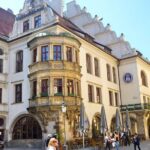
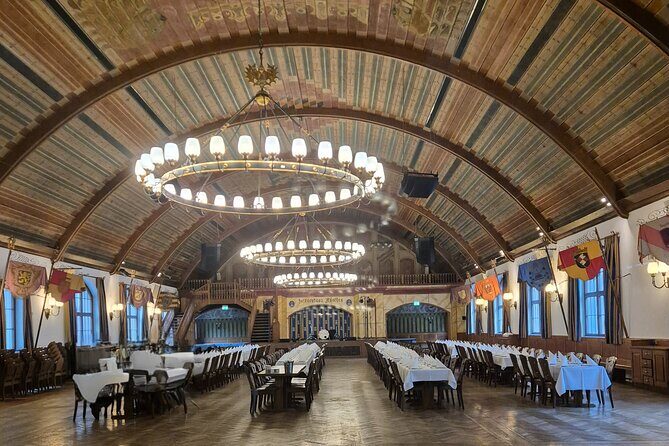
Then you move to Staatliches Hofbräuhaus, one of Munich’s most famous beer halls. This stop takes about 25 minutes, and it’s where the story starts to shift from early organizing to larger public attention.
Hofbräuhaus is tied to early Nazi Party meetings, including where Adolf Hitler held early gatherings. Your guide focuses on how these speeches drew larger crowds as the movement gained momentum, and how that growing visibility fed the regime’s propaganda efforts.
What I like about this part is the balance between place and explanation. The guide helps you understand why a beer hall could become a stage for political messaging. It’s not random. It’s built on sound, crowd psychology, and repeated public ritual.

Feldherrnhalle: the 1923 Beer Hall Putsch and how symbols took over
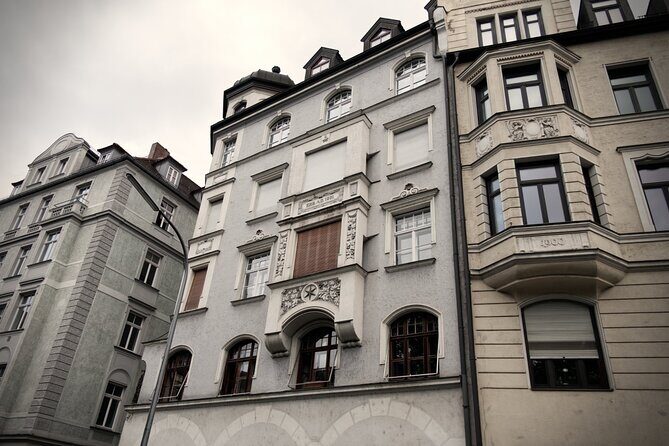
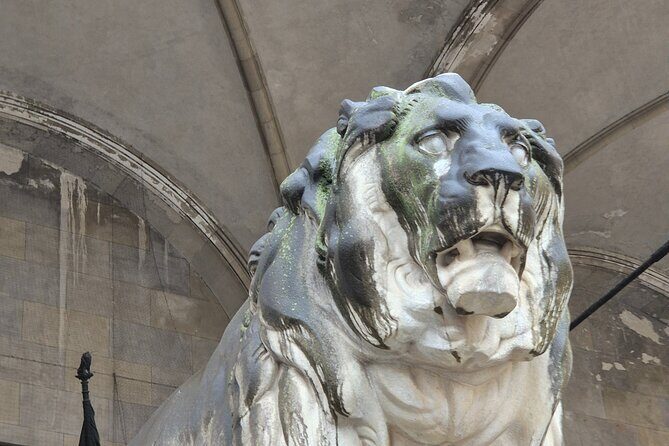
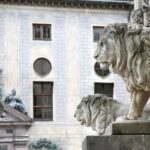
The next stop is Feldherrnhalle, visited for about 25 minutes. This is one of the most consequential stops on the tour because it marks the attempted seize-power moment in 1923.
Here, you learn about the failed Beer Hall Putsch and the clash between Nazi supporters and Bavarian police. Your guide also explains how the monument became a symbol of Nazi martyrdom after that clash—showing how regimes can transform defeat into propaganda by framing it as sacrifice.
This is a moment to slow down. Even if you’ve read about the event before, seeing the physical space helps you understand how public memory can be engineered. Expect the guide to tie the symbolism back to why Hitler’s path through Munich changed after 1923.
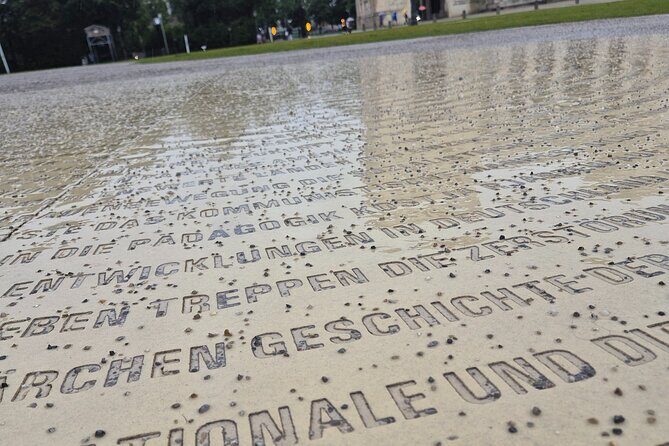
The Square for the Victims of National Socialism: an essential pause
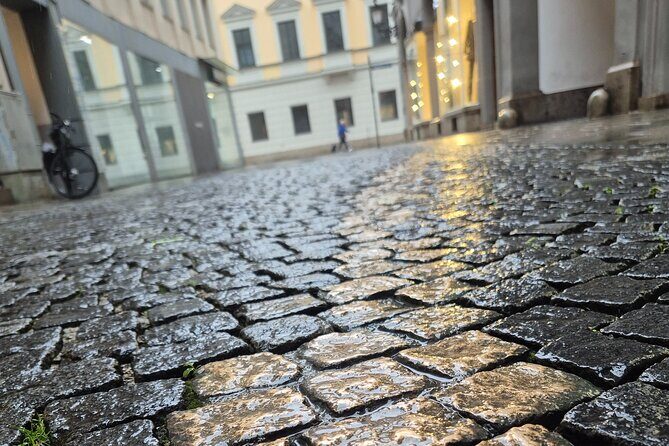
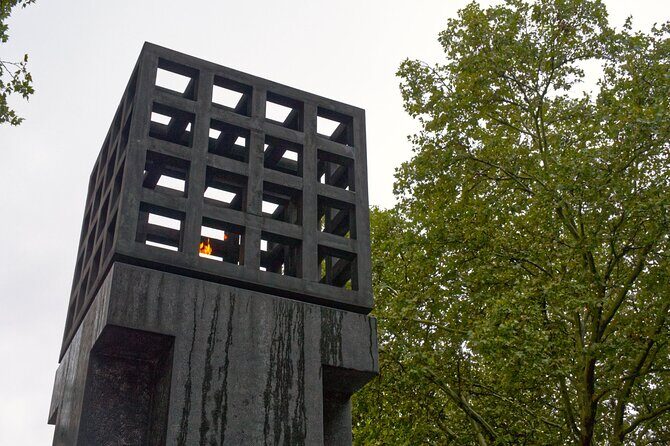
About 20 minutes here are reserved for Platz der Opfer des Nationalsozialismus, a memorial for those persecuted by the Nazi regime. The guide keeps this stop solemn, and it’s deliberately not about spectacle.
You’ll see the memorial’s eternal flame, described as striking, and you’ll hear what the square is meant to do: honor victims and force remembrance instead of myth-making. For a tour covering propaganda architecture and political power, this stop functions like a reset button.
If you’re the type who gets uncomfortable with heavy topics, this is still worth it—but go in with an open mind. This part makes the overall tour feel more honest.
Führerbau on Königsplatz: offices, high-level decisions, and the Munich Agreement
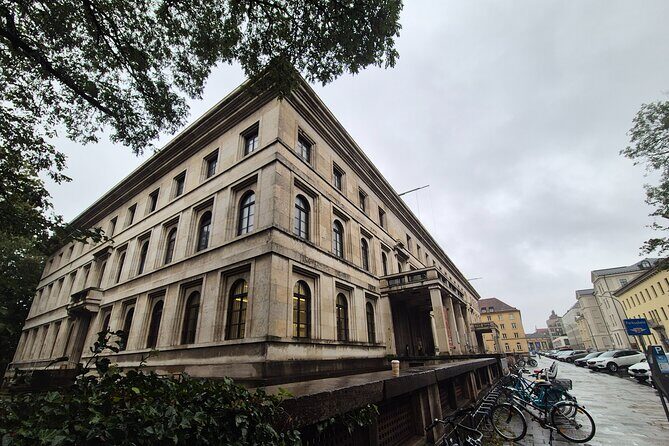
Now you shift to Fuhrer Building (Führerbau), located on Königsplatz. This stop runs around 20 minutes and focuses on Hitler’s official offices in Munich where high-ranking officials met and key decisions were made.
A specific detail you’ll learn here: the signing of the Munich Agreement in 1938. The guide’s job is to connect the desk-and-office setting to the public consequences that followed. It’s a reminder that big political outcomes often come from small rooms and administrative meetings.
This stop also works as a reality check. You’re no longer just studying speeches or public rallies. You’re seeing the side of power that functions behind the scenes—until it shapes events across Europe.
Königsplatz: Nazi mass-rally space and propaganda architecture
The final walk is Königsplatz, about 20 minutes. This square is where the Nazi regime turned architecture and open space into messaging tools.
You learn that the Nazis transformed Königsplatz into a stage for mass rallies and military parades. The guide also talks about the design choices meant to reflect ideas of power and control, and how the space supported public ceremonies and even book-burnings that bolstered Nazi support.
This is where the tour becomes visually clear. If you’ve ever wondered why propaganda looks so theatrical, this stop helps. You see the scale, the lines, the way a crowd would gather and face the same direction, and how the environment supports ritual and authority.
Because the tour ends here, you can also use this moment to plan your next step. The square is well positioned for a smooth return to the rest of the city.
Getting back after the tour: Königsplatz to central Munich
Since the tour ends at Königsplatz, you’re in a convenient location. One option is to use the U2 U-Bahn from Königsplatz Station to central station—just one stop, about one minute.
If you’d rather not transfer, you can also use nearby buses and trams. And if you’re feeling energetic, Old City is reachable on foot in less than about 15 minutes.
Price and value: what $34.73 really buys you
At $34.73 per person, this isn’t a budget-only experience, but it also isn’t priced like a private event. The value comes from two things: a guided interpretation of multiple major sites and the fact that admissions at each stop are listed as free.
Duration matters too. About 2.5 hours means you’re getting enough time to understand the transitions between places—early meetings, public expansion, the 1923 plot, the victims memorial, and the office-and-square power structure.
Finally, the group limit (max 20) affects value. Smaller groups usually mean more time for questions and fewer rushed explanations, and that’s exactly what the reviews emphasize—guides like Kaevan and Jamie Buckley keep a comfortable pace and answer questions.
Who this tour suits best (and who should think twice)
This works well for history buffs and curious people who want a clear Munich-focused narrative. It’s also a solid choice if you like walking tours where the guide connects what you see to why it matters.
It might be less ideal if you’re looking for a casual, light “photogenic” tour. This is about Nazi-era organization, propaganda mechanisms, and persecution. The memorial stop is important, but it also means the tour asks you to take the topic seriously.
If you’re sensitive to emotion, go prepared. Bring warm layers, because the experience is outdoors and reviews mention cold weather as a factor people noticed.
The bottom line: should you book this Third Reich tour in Munich?
Book it if you want more than headlines. This tour gives you a guided path through key sites—beer halls, the 1923 failed power attempt site, the victims’ memorial, and the spaces where the regime presented and ran power.
Skip it if you want a relaxed stroll with minimal emotional impact. The subject is dark, and the tour doesn’t treat it lightly.
If you do book, consider time for careful attention at Feldherrnhalle and especially at the victims’ memorial. Those pauses are where the tour becomes most meaningful.
FAQ
Where does the Third Reich Tour in Munich start and end?
The tour starts at Isar Gate (Isartor), Tal 50, 80331 München and ends at Königsplatz 1, 80333 München.
How long is the tour?
The experience runs for approximately 2 hours 30 minutes.
What does the tour include?
The tour includes experienced guides with commentary on Munich’s Nazi-era history, plus a mobile ticket.
Is admission required for the stops?
Admission is listed as free for the stops on the tour.
How big is the group?
The tour has a maximum group size of 20 travelers.
Where is the best place to get back into central Munich afterward?
Since the tour ends at Königsplatz, you can take the U2 U-Bahn from Königsplatz Station to central station (one stop, about one minute). You can also use nearby trams and buses or walk into the Old City (less than about 15 minutes).
Are service animals allowed?
Yes, service animals are allowed.
What is the cancellation policy?
You can cancel for free up to 24 hours in advance of the experience start time for a full refund. Changes less than 24 hours before start time are not accepted.
If you want, tell me your travel dates and whether you’re more into architecture, political history, or memorials—I can suggest what time of day to go and what to pair it with nearby after the tour.