REVIEW · ROSTOCK
Rostock: Surprise Walk of the city with a Local
Book on GetYourGuide →Operated by LocalBini AG (EU) · Bookable on GetYourGuide
Rostock clicks faster when someone local points. This 90-minute surprise walk is built for first-time orientation plus real street stories, starting right at the Town Hall area and moving through the city’s key sights at a pace that won’t wear you out.
I especially like how it’s small-group (up to 8) and guided by a private local, so the talk feels practical instead of scripted. I also like that you get multiple “anchor” stops—town hall, churches, and central squares—so you leave with a mental map you can actually use.
One thing to consider: the route adapts to your interests and the weather can shift stops. If you hate walking in changes of wind/rain, you’ll want to dress for it and keep your expectations flexible.
In This Review
- Key highlights you’ll feel immediately
- A 90-Minute Surprise Walk That Feels Like a Local Errand
- Neuer Markt Town Hall: Where Rostock’s Center Becomes Clear
- Marienkirche (St. Mary Church): A Church Stop That Makes the Streets Make Sense
- Doberaner Platz: The Square Stop That Teaches You How Rostock Moves
- Ständehaus on Wallstraße: Civic Architecture You’ll Notice More After 45 Minutes
- Alter Markt and St. Petri Church: Ending with Another Side of the City
- How Good Is $116 for 90 Minutes?
- What You’ll Do During the Walk (So You Don’t Guess)
- Practical Tips to Make Your 90 Minutes Comfortable
- Who This Tour Is Best For (And Who Should Skip It)
- Should You Book This Rostock Surprise Walk?
- FAQ
- Where do we meet for the Rostock walk?
- How long is the experience?
- Is it a private tour or a group tour?
- What languages are the guides?
- What’s included in the price?
- What should I bring?
- Is the itinerary fixed?
- Are tickets or entry fees included?
Key highlights you’ll feel immediately
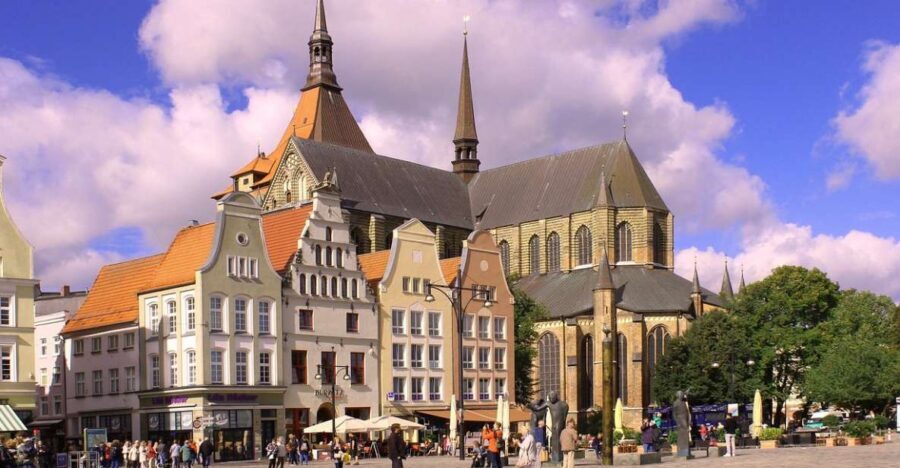
- Meet at the Town Hall (Neuer Markt) and get oriented fast, even if you’re new to Rostock
- Live local guide in English or German, with a flexible route based on your pace and interests
- A tight 90 minutes that packs in central landmarks without turning into a marathon
- Churches and squares as story stops: St. Mary and St. Petri give context to everyday city life
- Central civic sights like Ständehaus make the walk feel anchored in how the city works
- Small group up to 8, so it stays conversational, not crowded and chaotic
A 90-Minute Surprise Walk That Feels Like a Local Errand
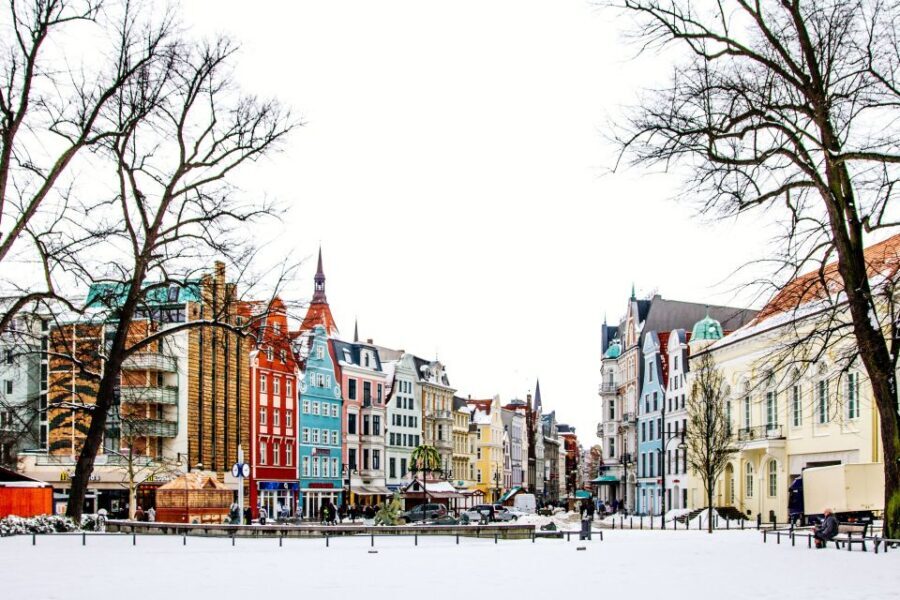
This is the kind of city walk I like for short trips: meeting in a clear, central spot and then getting guided through the places that shape Rostock’s feel. You’re not doing a long checklist tour. You’re doing a “show me what matters here” walk, with a local who adjusts to your questions and how fast your legs move.
The format is also smart. You’re grouped as either a private or a small group, and the cap is up to 8 travelers. That size matters because you can ask real questions and still hear the guide without straining. The guide is live, speaking English or German, so you’re not stuck playing catch-up.
Price is $116 per person for 90 minutes. Is that cheap? No. But it’s not just paying for a person to point at buildings. You’re paying for a registered local and the convenience of someone else building the flow for you, while you focus on walking, looking, and asking why things are where they are.
One practical note: the guide “adapts to travellers’ interests,” and stops may vary with weather. That’s a plus for many people, but it means you can’t treat the walk like a rigid schedule. Bring a little patience, and you’ll get more out of it.
You can also read our reviews of more walking tours in Rostock

Neuer Markt Town Hall: Where Rostock’s Center Becomes Clear
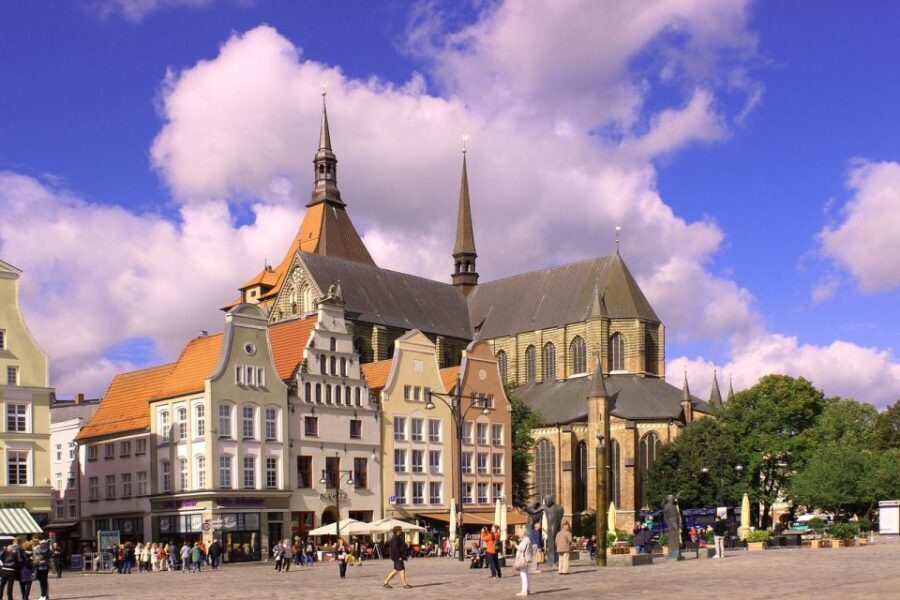
You start in front of the town hall at Neuer Markt 1a. Even if you’ve only seen Rostock for the first time, this kind of beginning helps. A town hall area is a natural “orientation anchor.” It tells you where civic life tends to cluster, where routes converge, and where people naturally pass through.
What I like about starting here is the way it sharpens your attention for the next stops. Instead of wandering, you’re learning the city’s logic. Your guide can help you notice the details you’d miss alone: how the space is used, what directions feel “most natural,” and what kind of stories people connect to this central hub.
If you arrive on a short timeline, the early orientation also pays off. You’ll feel more confident the rest of your day, because you’ll know where you are in relation to the major squares and churches.
Marienkirche (St. Mary Church): A Church Stop That Makes the Streets Make Sense

Next on the radar is St. Mary Church (Marienkirche) at Marienkirche 2. Churches can be tricky on walking tours: sometimes they become quick photo stops. Here, the point is not just seeing a landmark. It’s using that landmark to understand how Rostock thinks and gathers itself.
I like this kind of stop because it teaches you to look upward and outward at the same time. You can compare what you’re seeing with what you’ve already noticed near the town hall, then let the guide connect the dots. Even if you don’t go inside (entry tickets aren’t included), the surroundings still tell a story.
A useful way to get more out of this moment: ask your guide how the church fits into everyday city life, not just what it represents historically. You’ll walk away with a sense of “why it’s here” rather than just “what it looks like.”
Potential drawback: if it’s cold or windy, you may want to keep your time at the church area focused—quick photos, a short look around, and then move on. This isn’t a slow, sit-down experience.
Doberaner Platz: The Square Stop That Teaches You How Rostock Moves
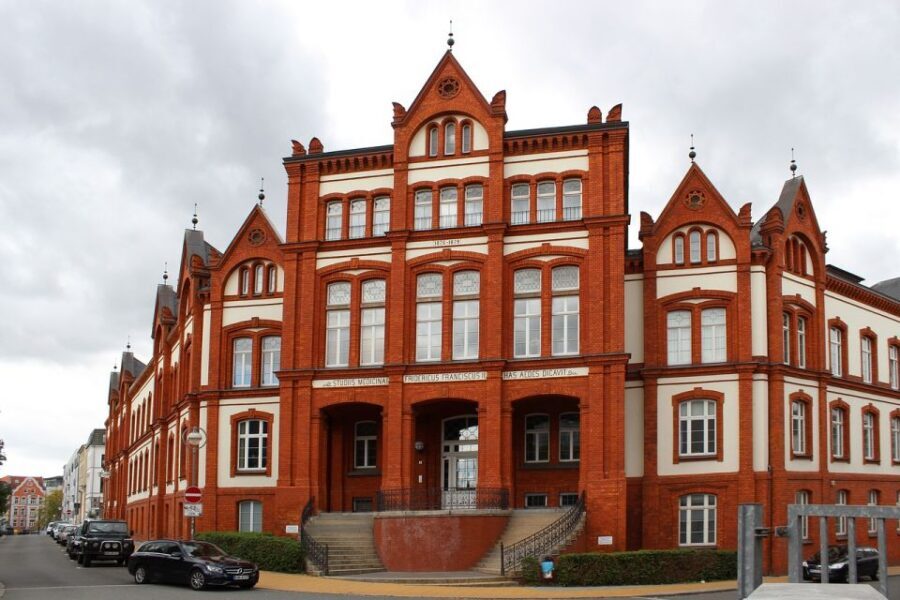
The walk also includes Doberaner Platz at Doberaner Platz, 18057 Rostock. Squares are where cities reveal their rhythms. They show you where people linger, where paths cross, and where daily life naturally clusters.
On a short tour, a good square stop is like a reset button. You get a chance to regroup, scan the streets branching out, and let the guide explain what tends to happen in this part of town. If you’re the type who likes “learning the city by watching it,” this stop is a strong match.
What you can do right away: stand still for a minute and look for street lines that funnel toward the square. Then ask your guide which direction makes sense for a first self-guided stroll afterward. That’s where this tour becomes more than sightseeing—it becomes a practical tool.
Drawback to plan for: if the weather is rough, open spaces like a square can feel exposed. Dress for the conditions and keep water handy.
Ständehaus on Wallstraße: Civic Architecture You’ll Notice More After 45 Minutes
You’ll also pass by Ständehaus at Wallstraße 3, 18055 Rostock. This is one of those spots that works best when you’ve already had time to orient yourself. After the town hall and churches, Ständehaus feels less random. It starts to click as part of the city’s civic “shape.”
I like civic buildings on walks because they show how a city organizes public life. Even when you’re not going inside, the exterior presence and the way streets approach the building teach you something. Your guide can help you spot the subtle signals: where authority and administration historically lived, and how the area functions today.
If you tend to skim quickly on tours, this is a place to slow down for 60 seconds. Look at the entrance placement, the surrounding streets, and the way the building relates to the nearby squares. Those small observations turn into a mental map you can use later.
You can also read our reviews of more city tours in Rostock

Alter Markt and St. Petri Church: Ending with Another Side of the City
The walk includes St. Petri Church at Alter Markt 1. Ending (or at least hitting this later in the flow) matters because you get a second major church anchor in a different central square. It’s an easy way to compare how different parts of town feel and how the city’s core spaces relate.
What I like about St. Petri as a stop is the chance to notice contrasts. Two churches in two central squares can feel similar at first glance. A good guide helps you see what’s different: the surrounding urban geometry, how the crowd patterns might change from one square to the other, and what each spot means to locals as a meeting point or landmark.
If you’re the type who likes to take photos, this is a great place to do it with intent. Don’t just shoot the building—capture the square context too. A wider shot helps you remember how Rostock “frames” its landmarks, not just the landmarks themselves.
How Good Is $116 for 90 Minutes?
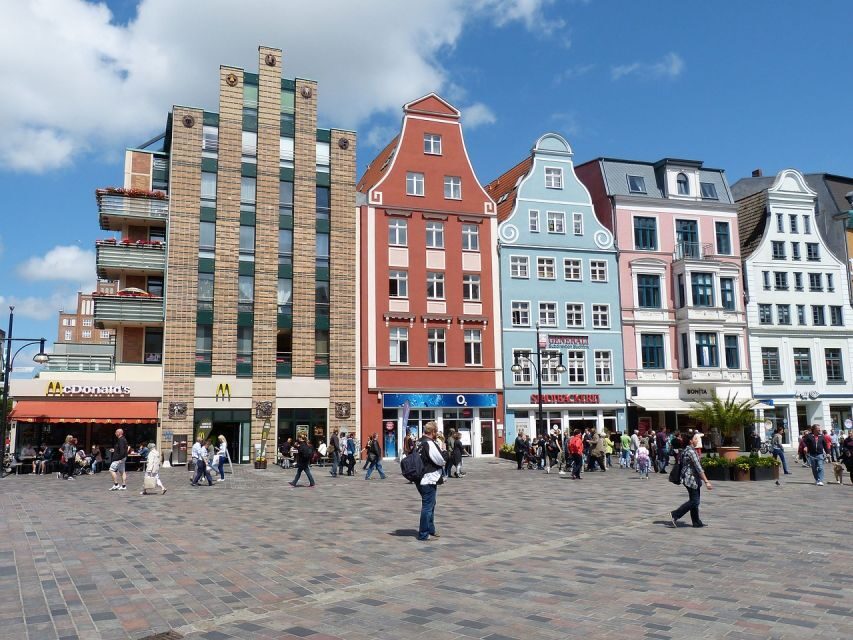
Let’s talk value, not hype. At $116 per person for 90 minutes, you’re paying for:
- a live local guide (English/German),
- a small group environment (up to 8),
- and a route that’s adjusted to your walking pace and interests.
That’s why it can be a good deal for certain trips. If you’re only in Rostock for a short time, spending your first hour and a half with a local can save you from guesswork later. You’ll get a mental map and a list of places you’ll want to return to on your own.
What’s not included is also part of the value equation. Food, drinks, and any entry tickets for transportation, museums, or monuments are excluded. Translation: you’re paying for guidance and the walk itself, not for spending your day inside paid attractions. If you plan to pop into extra sites after the walk, bring a bit of cash or card for those.
Also, one review detail that stuck with me: a guide named Joan reportedly reached out ahead of time to confirm details. That kind of proactive communication helps a lot when you’re trying to make travel days run smoothly.
What You’ll Do During the Walk (So You Don’t Guess)
This experience is built around a “surprise walk” idea, which usually means you won’t get every second laid out like a stage play. Still, you can expect the experience to center on these core stops:
- Town Hall (Neuer Markt)
- St. Mary Church (Marienkirche)
- Doberaner Platz
- Ständehaus (Wallstraße)
- St. Petri Church (Alter Markt)
Between those anchors, your guide uses anecdotes, tips, and local explanations to connect the dots. And because the itinerary adapts to what you want and how you’re doing physically, the walk can feel more personal than a fixed tour.
That flexibility is great when you like conversation. It can be less ideal if you want total control over timing. If you’re trying to hit a strict museum entry right after, I’d give yourself buffer time.
Practical Tips to Make Your 90 Minutes Comfortable
I’d treat this as a short city hike, not a stroll in flip-flops.
Bring:
- Comfortable shoes (you’ll cover real ground in 90 minutes)
- Water (especially in warm weather or windy squares)
- Weather-appropriate clothing
- A charged smartphone for navigation and photos
And plan your expectations: the walk is private or small groups available, and the pace can adapt. If you want more photo stops, you’ll likely get them—just tell your guide early so they can balance it with the remaining time.
One more thing: there’s a note saying wheelchair accessible, but it also says it isn’t suitable for people with mobility impairments. If that applies to you, I’d contact the host before booking to confirm what route and surfaces you’ll face.
Who This Tour Is Best For (And Who Should Skip It)
This tour fits best if you:
- are curious and want a local perspective quickly,
- like walking short distances between major sights,
- and want a first-time orientation that doesn’t eat your whole day.
It’s also a solid pick if you prefer small groups. Up to 8 people keeps the vibe friendly and allows questions.
I’d skip it if mobility limitations make walking difficult. The experience is described as not suitable for people with mobility impairments, so don’t assume you can “power through” for 90 minutes.
Should You Book This Rostock Surprise Walk?
Book it if you want a smart first pass through Rostock’s center with a local guide and you’re fine keeping some flexibility in your schedule. Starting at the Town Hall and hitting major anchors like St. Mary Church, Doberaner Platz, Ständehaus, and St. Petri gives you a real foundation for future wandering.
Skip it if you want a strict, minute-by-minute route, or if you dislike weather-driven changes. Also reconsider if walking is tough for you, since the experience flags limitations for mobility impairments.
For most visitors, though, this is exactly the kind of short, practical tour that pays off later. You’ll leave knowing where you are, what to return to, and how locals talk about the city.
FAQ
Where do we meet for the Rostock walk?
You meet in front of the Town Hall at Neuer Markt 1a, Rostock.
How long is the experience?
The walk lasts 90 minutes.
Is it a private tour or a group tour?
It can be private or a small group, with up to 8 travelers.
What languages are the guides?
The live guide speaks English and German.
What’s included in the price?
A passionate local dedicated to providing the exclusive experience is included.
What should I bring?
Wear comfortable shoes, bring water, dress for the weather, and have a charged smartphone.
Is the itinerary fixed?
No. The route adapts to your interests and walking pace, and stops may vary depending on weather.
Are tickets or entry fees included?
Entry tickets for transportation, museums, and monuments are not included.