REVIEW · ROSTOCK
Rostock: City Walking Tour
Book on GetYourGuide →Operated by ROSTOCK GUIDE Anne Kirchmann · Bookable on GetYourGuide
Rostock unfolds fast on foot. This 2-hour city walking tour pairs major sights with quieter corners, so you get an overview without feeling like you’re stuck in a lecture. I love the small-group format and the way the guide keeps the focus on the route, with insider context at each stop. One drawback to plan around: it is not suitable for people with mobility impairments, since you’ll be walking outdoors for the full tour.
You’ll meet Anne Kirchmann in front of the Rathaus (town hall) at the main entrance, under the Greif symbol (griffin). Then you’ll move through the old-town alleys and riverside boulevards toward the harbor area, where the feel shifts from medieval streetscape to a more modern, 20th-century look—still all connected by an easy walking rhythm.
In This Review
- Key Things I’d Mark on Your Rostock Map
- Rostock on Foot: Why This Walk Works So Well
- Meeting at the Rathaus Greif Entrance: Your First Win
- Town Hall, Gothic Churches, and the Medieval City Wall
- Old-Town Alleys to University Square: Getting a Feel for Daily Life
- Riverside Boulevards and the Historic Harbor Area
- Medieval to 20th Century in One Easy Two Hours
- Price and Value: What $147 Covers for Up to 6
- Who This Tour Fits Best (and Who Might Want Something Else)
- Booking Smart: When to Choose This Walk
- Should You Book This Rostock City Walking Tour?
- FAQ
- How long is the Rostock city walking tour?
- Where do I meet the guide?
- Who provides the tour?
- What language is the live guide?
- Is this a group tour or private?
- What’s the price?
- What areas and sites does the tour cover?
- What’s included in the price?
- Is it suitable for people with mobility impairments?
- Can I cancel for a refund?
- Is there a reserve now and pay later option?
Key Things I’d Mark on Your Rostock Map
- Rathaus + Greif meeting point: start at the town hall entrance under the griffin symbol, easy to find and instantly historic
- Route-first pacing: you get explanations, but the tour stays focused on the walk and the sites you’re passing
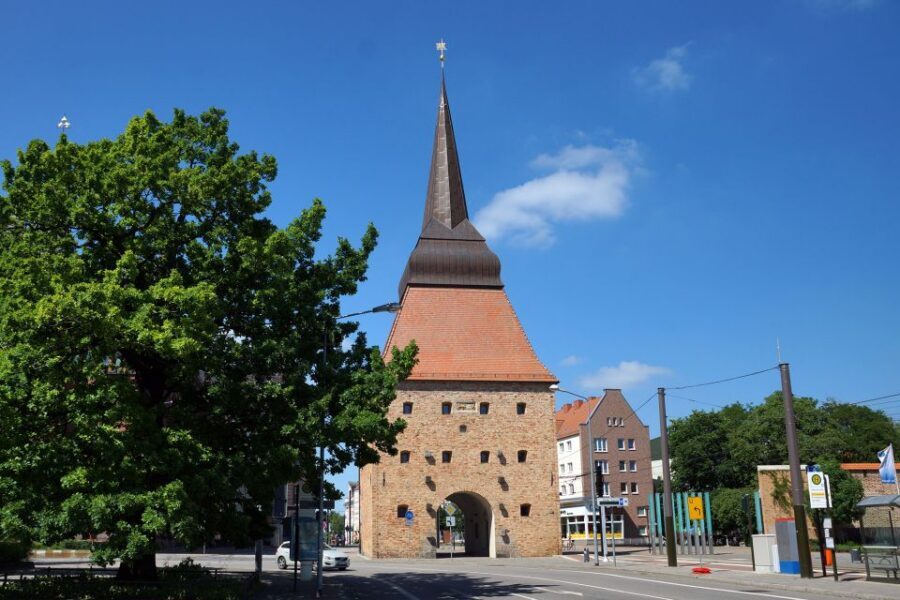
- Core highlights included: town hall, gothic churches, and the medieval city wall show up in the main storyline
- Old streets plus waterfront: alleys, university square, and riverside boulevards give you a full-city feel in two hours
- Ask questions as you go: the guide’s style makes it natural to stop and get the details you care about
Rostock on Foot: Why This Walk Works So Well
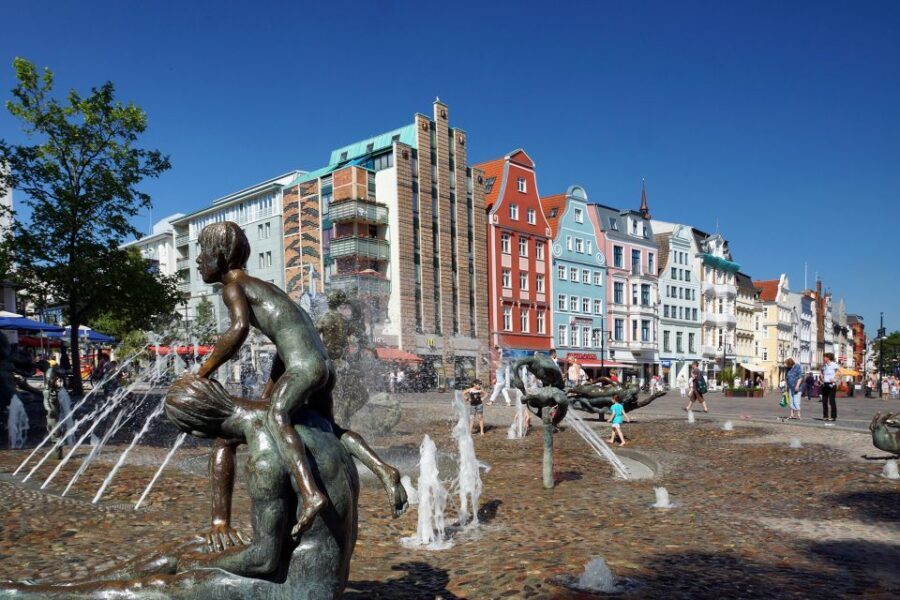
Rostock can feel bigger than it looks on a map, mainly because you’re dealing with distinct layers of city life: medieval core, harbor atmosphere, and later urban changes. This tour is designed to give you the lay of the land quickly. You’re not just ticking off buildings; you’re learning how the town’s center connects to its water and how the streets guide your eye from older structures to later sections.
What I like most is the balance. You get a real overview of key places—town hall, gothic churches, medieval city wall—without drowning in numbers and dates. It’s the kind of tour that helps you orient yourself. Afterward, you’re not wondering where things are. You’re ready to wander on your own with a sense of what you’re seeing and why it matters in a Hanseatic city.
You can also read our reviews of more walking tours in Rostock

Meeting at the Rathaus Greif Entrance: Your First Win
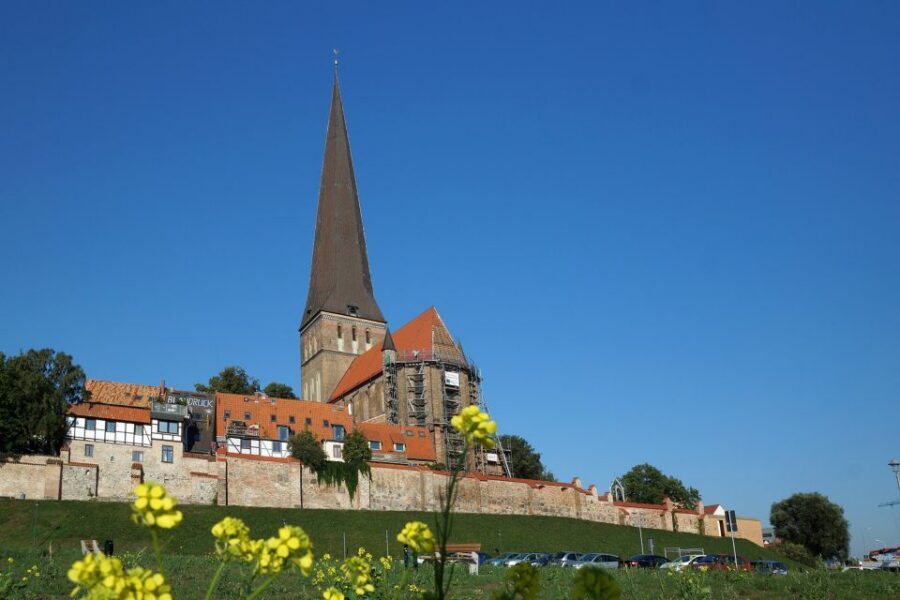
Your tour starts at the Rathaus (town hall), in front of the main entrance under the Greif symbol (griffin). That’s a smart choice. First, it anchors the walk in the civic heart of Rostock. Second, it gives you an immediate visual reference for the rest of the route: you’re literally standing at the kind of landmark that shapes how a town organizes itself.
From there, the guide leads you through the historic center with a steady two-hour flow. You’re walking through a mix of streets and public spaces: narrower old-town lanes, larger open areas, and riverside stretches. This matters because it changes your experience of the city. On one kind of street you notice textures and angles; on another you notice how the town opens toward water.
Town Hall, Gothic Churches, and the Medieval City Wall
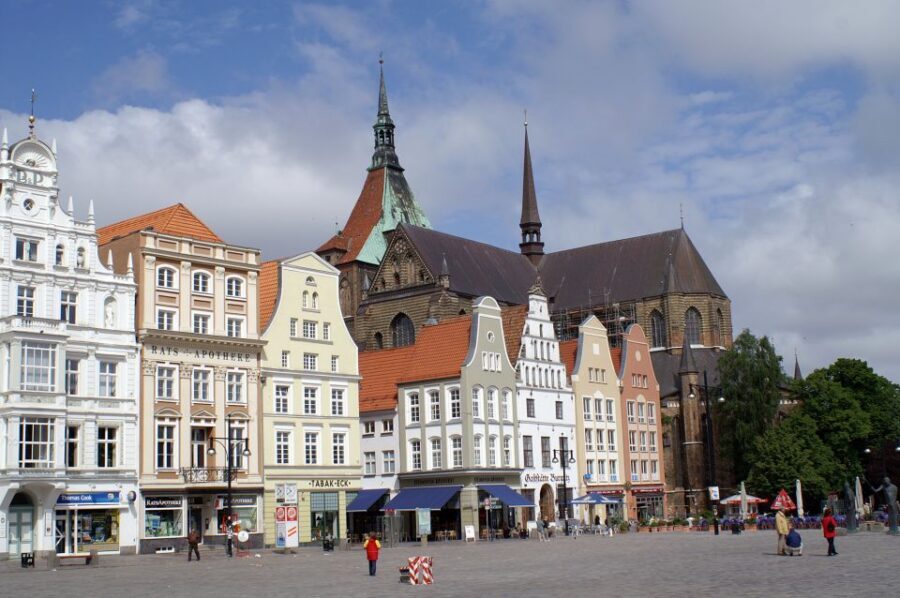
A good city walk needs structure, and this one builds it with the big anchor sights. You’ll cover the town hall area first, then move into the core religious and defensive landmarks—gothic churches and the medieval city wall.
Here’s what these stops do for you as a visitor:
- Town hall: It’s the civic center, a place where city authority and everyday life intersect. Even if you’re not a history fanatic, you’ll pick up how Rostock organized power and community in the medieval Hanseatic context.
- Gothic churches: These buildings tend to dominate the visual skyline and street corners. During the walk, they help you read the town—where you are and what period you’re looking at—even before you dig into details.
- Medieval city wall: Walls aren’t just stone. They’re a story about how the city protected itself and how the shape of the old town grew within boundaries. Seeing this on foot helps it click. The wall is easier to understand when you’re literally moving along it and seeing its relationship to adjacent streets.
The way the tour is handled is also important. The guide’s focus stays on site-to-site clarity, so you’re not trapped in a long preamble. If you like learning while you walk—asking questions when something catches your eye—this style fits.
Old-Town Alleys to University Square: Getting a Feel for Daily Life
Between major sights, the route through old-town alleys and university square changes the texture of the walk. Instead of only looking at monuments, you’re also getting a sense of scale: narrow lanes that compress space, then wider areas that let the city breathe.
University square is especially useful because it reminds you that Rostock isn’t frozen in time. It’s a working city with student life and everyday movement. Even without a deep lecture, you’ll come away with a better feel for what parts of the center are used now versus what parts mainly serve as historic backdrops.
This is one of those tours where the “hidden gems” aren’t described as secret magic spots. They show up as small street turns, viewpoints, and details you might otherwise miss if you were speed-walking with a phone in hand. You’ll get the kind of guidance that makes your next stroll smarter.
Riverside Boulevards and the Historic Harbor Area
Rostock’s connection to water is not a side note. It’s central to the Hanseatic identity. That’s why the tour includes the historic harbor area and also takes you along riverside boulevards.
Walking near water changes your perspective in a simple way: it widens your frame. Streets that seemed tight in the old center open up in linear stretches where you can see the city’s geometry more clearly. And because Rostock’s growth is tied to trade, the harbor angle makes the city feel logical rather than random.
You’ll also notice the shift across time. The walk is described as spanning from medieval architecture to a more 20th-century feel. On foot, that’s easier to register. You don’t just see different styles—you see how the city continued to evolve outward from its earlier core.
You can also read our reviews of more city tours in Rostock



Medieval to 20th Century in One Easy Two Hours
A lot of “old town” tours stop at medieval—and you miss the bridge to modern life. Here, you’re shown how the story continues, with the route designed to carry you across that change in atmosphere.
This matters if you want to plan the rest of your stay. For example, after you get an overview, you’ll know where to spend more time later:
- If you’re drawn to medieval-looking streets, you’ll know which stretches to revisit.
- If you prefer broader city views, you’ll know where the waterfront and larger spaces tend to be.
- If you’re curious about how the city reworked its spaces in later eras, you’ll already have a path in your head.
And because the tour stays at a walking-tour pace, you’re not left exhausted. You’re left oriented.
Price and Value: What $147 Covers for Up to 6
The price is $147 per group for a tour of up to 6 people, lasting 2 hours. That pricing can be a good deal if you’re traveling as a small group or family unit, because you’re paying for a guide, not per head.
To judge value, look at what you’re buying:
- You’re paying for a live expert guide (not an audio guide).
- You’re paying for a tight route that covers town hall, gothic churches, medieval city wall, old alleys, university square, and riverside/harbor areas.
- You’re buying time you don’t have to spend figuring out where things are and what order to see them in.
If you’re traveling solo, it can still be worth it if you enjoy guided orientation and want to skip guesswork. But if you’re the type who loves getting directions and building your own route, you might compare it with what you’d spend on transit and museum tickets later. The guide’s value is strongest when you want the story connected to the streets in real time.
Who This Tour Fits Best (and Who Might Want Something Else)
This walk is a great match if you want:
- An overview of Rostock’s core sites in a short time
- A guide who can explain as you go, with time for questions
- A route that mixes major landmarks with calmer streets and waterfront sections
It’s also ideal when you’re planning your first day in town and you want to understand what to revisit later.
It’s not the best fit if you need step-by-step mobility support, since it’s not suitable for people with mobility impairments. And if you’re hoping for a very long, very detailed deep-dive, you may find the two-hour format deliberately light on density.
Booking Smart: When to Choose This Walk
Book this tour when:
- You want a first-day orientation of Rostock’s historic center and harbor area.
- You like walking through places while getting context in plain language.
- You’re traveling with up to a small group (since the price is per group up to 6).
If your schedule is tight, two hours is a manageable chunk that fits before dinner or between other plans. And if your plans might shift, you can take advantage of free cancellation up to 24 hours in advance and the reserve now, pay later option.
Should You Book This Rostock City Walking Tour?
I’d book it if you want the easiest path to understanding Rostock’s layout: Rathaus-centered civic core, gothic church landmarks, a medieval city wall feel, then alleys and open squares, and finally the harbor and riverside connection. The best part is the guide style. You get explanations that match what you’re standing in front of, and the pace stays on a walk-focused route rather than turning into a history seminar.
I wouldn’t book it if you can’t do a full outdoor walking tour, or if you want a more specialized, long-form historical treatment. But for most people seeking a clean, high-value orientation, this one makes a lot of sense.
FAQ
How long is the Rostock city walking tour?
The tour lasts 2 hours.
Where do I meet the guide?
Meet your guide in front of the Rathaus (town hall) at the main entrance under the Greif (griffin) symbol.
Who provides the tour?
The tour is led by an expert guide. The provider listed is ROSTOCK GUIDE Anne Kirchmann.
What language is the live guide?
The live tour guide is in German.
Is this a group tour or private?
It’s described as a private group.
What’s the price?
The price is $147 per group for up to 6 people.
What areas and sites does the tour cover?
It covers the old town and the historic harbor area, with stops tied to the town hall, gothic churches, the medieval city wall, old-town alleys, riverside boulevards, and university square.
What’s included in the price?
An expert guide is included.
Is it suitable for people with mobility impairments?
No, it’s not suitable for people with mobility impairments.
Can I cancel for a refund?
Yes. You can cancel up to 24 hours in advance for a full refund.
Is there a reserve now and pay later option?
Yes. You can reserve your spot and pay later.