REVIEW · FRANKFURT
Public Frankfurt Tour: Small Group
Book on Viator →Operated by Global Guide Services · Bookable on Viator
Frankfurt can feel like two cities at once: old streets and big money.
This small-group walking tour helps you connect the dots fast, from medieval buildings to Germany’s writing royalty, with a guide who keeps the story straight and practical. I especially like the way the walk covers centuries in just 90 minutes, and I love getting landmarks tied to real turning points, not just names on a map. One thing to consider: the pace is light and the focus is history-and-sightseeing, so if you want heavy entertainment or lots of inside visits, plan your expectations accordingly.
You’ll meet your guide at Frankfurt (Main) Central Station, then step into scenes that explain how Frankfurt became the city it is today. I’m a fan of tours where the guide points out what to notice next, and this one does that well with major stops like the Römerberg and the Paulskirche. The route also gives you a natural follow-up plan—once the walk ends, you’re already oriented for exploring on your own.
In This Review
- Key highlights you’ll actually feel on the ground
- Start at Frankfurt Central Station, then hop centuries fast
- Practical note for comfort
- Römerberg square and the ceremonial Römer town hall
- Saalhof and the imperial cathedral: medieval power in stone
- If you’re a “show me the why” person
- Paulskirche and Frankfurt’s role in 1848
- Sachsenhausen cider culture in a village-like setting
- A quick expectation setting
- Financial Frankfurt views plus the Goethehaus pilgrimage
- Guide style and pace: easy walking with room to ask questions
- Photo tip that helps later
- Price and value for a 90-minute small-group walk
- Admission tickets aren’t included
- Finding your meeting point near the action (2:00 pm)
- A simple way to pair it with your day
- Tips for making the most of this Frankfurt walk
- Should you book this small-group Frankfurt walk?
- FAQ
- How long is the Frankfurt Public Walking tour?
- What time does the tour start, and is it daily?
- Where do I meet the guide?
- Where does the tour end?
- Is the tour offered in English?
- Is admission included for the stops?
- What is the maximum group size?
- Are kids allowed, and do they pay?
- How much does it cost per person?
- Is there a cancellation refund window?
Key highlights you’ll actually feel on the ground
- A tight 90-minute route that links medieval power, 19th-century politics, and modern Frankfurt
- Römerberg and the ceremonial Römer, a perfect place to start understanding city identity
- Saalhof and the imperial cathedral area, where you see how rule and religion met in stone
- Paulskirche’s 1848 moment, making a major German turning point easy to picture
- Sachsenhausen cider culture, a memorable local flavor stop in a village-like setting
- Goethehaus, Frankfurt’s literary pilgrimage, adding meaning beyond sightseeing
Start at Frankfurt Central Station, then hop centuries fast
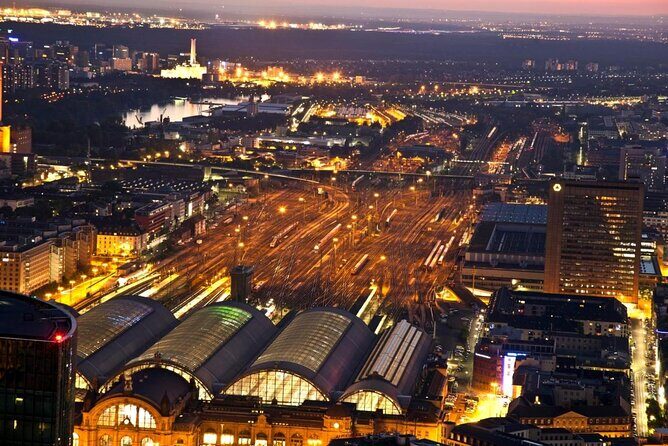
If you land in Frankfurt and don’t have much time, this tour is a smart way to get your bearings. You begin at Frankfurt (Main) Central Station, right where most trains drop you, so there’s no complicated transit puzzle to solve. From there, your guide’s job is to turn walking into storytelling you can remember.
What I like most is the balance: you’re not just doing a “look at that building” loop. You’re learning why those buildings mattered. Expect the walk to move you through different eras—medieval Frankfurt, the political spotlight of the 1800s, and the modern city that grew out of those roots.
Because the group is capped at 25 travelers, you should get a real chance to ask questions without shouting over a crowd. On some departures, it can even feel more personal, like it’s built for a small circle—enough that you can slow the guide down if you have a specific curiosity.
You can also read our reviews of more tours and experiences in Frankfurt.

Practical note for comfort
This is a walking tour, so wear shoes you trust for pavement and longer stretches than you might expect from a 90-minute label. Bring water, and keep your phone charged for photos and maps afterward. Also note that some stops are best appreciated from the outside, so don’t be surprised if you spend more time observing than entering buildings.
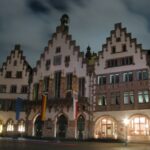
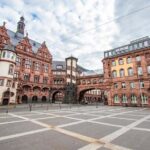
Römerberg square and the ceremonial Römer town hall
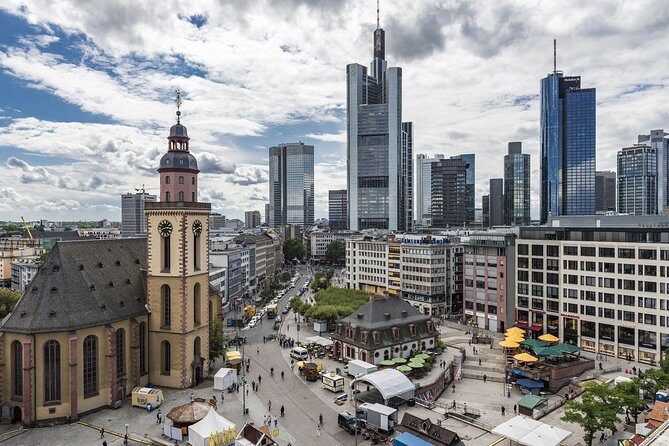
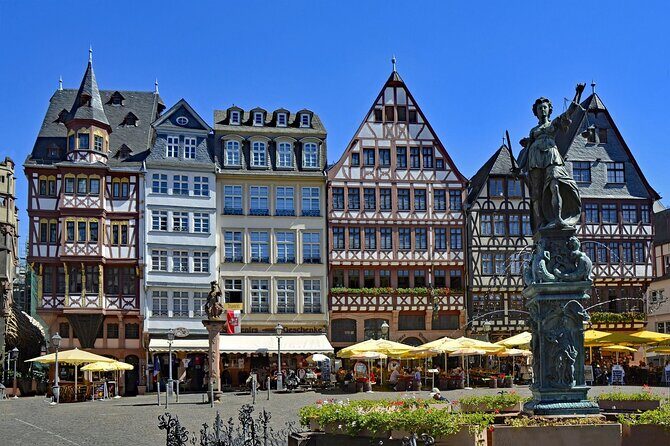
The tour’s early mood shift is one of its best tricks. You go from a modern rail hub into a square designed for ceremony and civic pride: the Römerberg. Then you look up at the Römer, Frankfurt’s ceremonial town hall, and suddenly the city feels older than your first train-platform impression.
This stop matters because it’s not random. It shows how a city projected authority and tradition in public space. Standing near the town hall, you get a sense of why medieval and early-modern cities cared so much about the buildings that faced the people.
If you like architecture, you’ll probably enjoy how the guide frames the details. If you don’t, you’ll still get the point: this is where civic identity becomes physical. And because Römerberg is open and photogenic, it’s a good place to pause, look around, and reset before the route pulls you deeper into the story.
Saalhof and the imperial cathedral: medieval power in stone
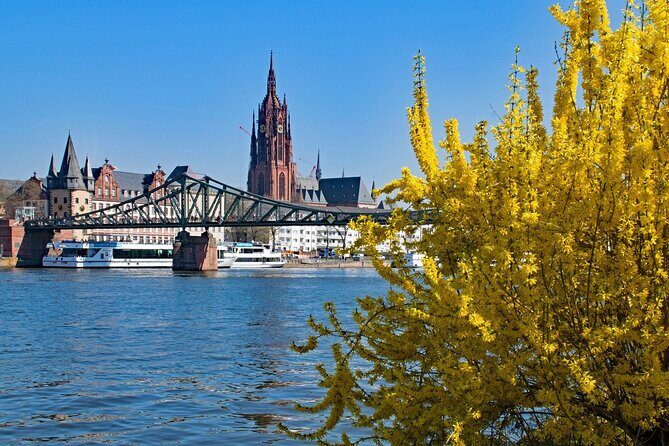
Next comes a more serious tone: the area connected with the Saalhof and the imperial cathedral. The Saalhof is described as the city’s oldest and most prestigious medieval building, once part of a 12th-century imperial compound. That’s a mouthful, but the guide’s framing helps it land in your mind as something concrete: this wasn’t just local life. It was tied to empire.
Then you encounter the imperial cathedral, coronation church of German kings and emperors. That detail changes how you view the space. You’re not looking at another old church. You’re looking at a site linked to major political rituals—places where power was affirmed.
I like how this kind of stop teaches you to read a city. The building is the headline, but the guide turns it into context: what kind of authority was here, why it mattered, and how Frankfurt’s status grew over time. It’s the difference between seeing a landmark and understanding what made that landmark worth building in the first place.
If you’re a “show me the why” person
This is where you’ll feel the tour click. Your guide doesn’t just toss dates at you. The goal is to make the centuries connect, so when you see the next 1800s landmark, it doesn’t feel like a jump cut.

Paulskirche and Frankfurt’s role in 1848
Then you reach the Paulskirche (St. Paul’s Church), where Germany’s first national assembly convened in 1848. This is one of those moments that sounds like a textbook fact until you have a physical place to attach it to.
From a traveler’s perspective, this stop is valuable for a simple reason: it gives you an anchor point for understanding what “national assembly” meant on the ground. Even if you only have a casual interest in German history, the guide’s context helps you picture the stakes—why Frankfurt mattered at that moment, and why the building still carries symbolic weight.
This is also a good segment if you want to ask questions. Political history is easy to personalize once you have a location. You can steer your curiosity toward how ideas moved, why cities competed for significance, and how the timeline connects to what you see in the streets today.
Sachsenhausen cider culture in a village-like setting
After the grand civic and political sites, the tour turns human-scale. You head into Sachsenhausen, Frankfurt’s party district, with traditional cider—often highlighted as apple cider—served in charming surroundings that feel like a village.
This stop is more than a vibe check. It shows another side of Frankfurt: the city’s social life and its everyday traditions. When a guide points out local drinks and the character of a neighborhood, you get a stronger sense of what it’s like to live here, not just to visit.
One practical reason I like including a food-and-drink adjacent stop on a walking tour: it breaks up the history sections and gives you something memorable to carry home. Even if you don’t stop for a drink, you’ll likely walk away with a clear sense of where locals head for that cider culture.
A quick expectation setting
This tour focuses on sightseeing and context, and the cider offering is framed as part of the charm of the area. If you’re trying to turn this into a full evening meal plan, you’ll want to follow up after the walk ends rather than assuming a long food stop is built in.
Financial Frankfurt views plus the Goethehaus pilgrimage
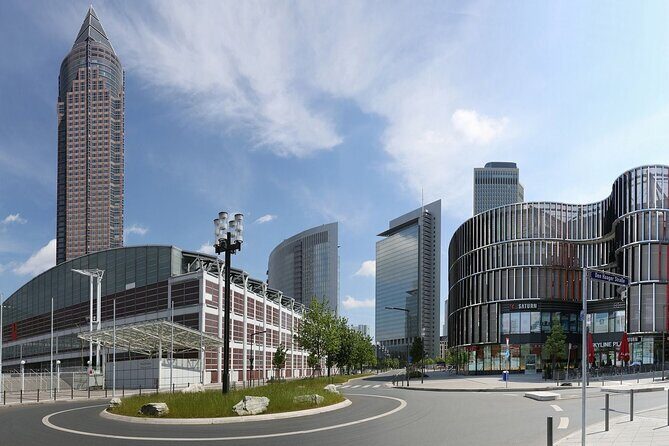
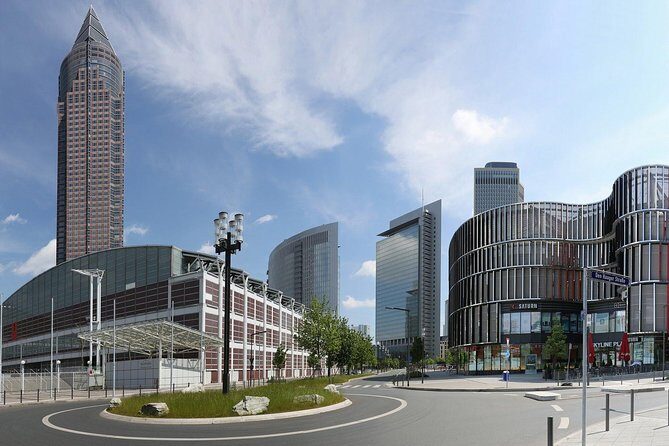
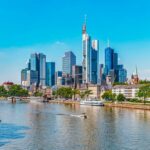
Now you see modern Frankfurt’s edge. The tour includes the financial district and mentions Germany’s only high-rise skyline. That detail helps explain why Frankfurt became a magnet for finance and international business. It’s not random—it grew from the kind of central status cities like this earn over time.
Then you finish with a literary pilgrimage stop: the Goethehaus, place of birth of Johann Wolfgang von Goethe. This is where the tour adds personality. You’re not only tracking power and politics; you’re seeing how culture and famous names are rooted in specific places.
If you’re into literature, you’ll enjoy the poetic payoff. If you’re not, it still works. Goethe is one of those names that turns a city into a character, and standing at the place tied to him makes Frankfurt feel more connected to the wider world. It’s a great ending because it broadens the story beyond government and industry.
Guide style and pace: easy walking with room to ask questions
Across the experience, the guide approach seems consistent: clear explanations, smooth pacing, and time for questions. Guides like Jürgen and Alla come up in past departures, and both were praised for telling stories that bring the city to life.
In plain terms, you should expect a walk that stays easy to follow. The tour is designed for most travelers to participate, so you’re not dealing with constant scrambling or speed-walking. Instead, the best moments happen when you pause, look, and let the guide connect the landmark to the larger story.
What makes this valuable is that questions become part of the experience, not an interruption. If you’re curious about why Frankfurt mattered, or what links the medieval and modern eras, this is the kind of tour where those answers feel tailored to what you’re looking at.
Photo tip that helps later
Take a wide photo of each main stop from a good angle. Later, when you’re planning where to walk on your own, you’ll be able to match what you saw to your own memory faster. It sounds basic, but it’s a big help.
Price and value for a 90-minute small-group walk
At $199.82 per person for about 1 hour 30 minutes, this isn’t the cheapest way to tour Frankfurt. But it’s also not trying to be. The value comes from three things:
First, the time compression. In 90 minutes you cover multiple “big themes” in the city—medieval civic authority, empire-era religious-political symbolism, the 1848 national assembly moment, and the cultural pull of Goethe. Getting that much context on your own would take a lot longer, and most people don’t want to spend their vacation reading wall-to-wall history before they even start walking.
Second, the guide. A good guide saves you from the common beginner problem: looking at a pretty building but not knowing why it matters. Here, the guide’s job is to give you that why. That’s the heart of the experience.
Third, the group size. With a maximum of 25 people, the tour should stay manageable. Smaller groups tend to make questions easier and the tone less rushed. On some departures, it can even feel like a tight group of just a couple people, which is a real perk if you like dialogue.
Admission tickets aren’t included
One important point: admission tickets are not included. That means if you want to enter any stops that require paid entry, you’ll likely need to handle that separately. For me, that’s not a dealbreaker—great tours often show you the exterior and the context—but it’s worth keeping in mind so you don’t get surprised by extra costs at the door.
Finding your meeting point near the action (2:00 pm)
You start at Frankfurt (Main) Central Station, at Am Hauptbahnhof (60329 Frankfurt am Main, Germany). The good news is that this meeting point is easy to locate if you’re already near the trains. You don’t need to bus across town or hunt for a remote street.
The tour runs daily at 2:00 pm, so it works well as an afternoon orientation. If you arrive earlier in the day, you can use the morning to drop bags and grab a coffee, then join the walk to get your mental map in place before you explore on your own.
A simple way to pair it with your day
After the tour ends back in Frankfurt, you’ll be in a much better position to choose what to do next. I like treating this tour as a framework: it shows the major anchors, and you pick your extra time based on what you felt drawn to—literature stops, old-town streets, or neighborhood vibes.
Tips for making the most of this Frankfurt walk
Here are a few practical things that make the 90 minutes work better for you:
- Bring comfortable walking shoes and plan for city pavements.
- Have your phone ready with offline maps if you like to wander after.
- If you’re the type who loves asking questions, don’t be shy early in the walk—those answers often help you understand later stops.
- If you care about entering specific sites, remember that admission is not included, so check what you want to go into before you expect a ticket to be part of the tour.
- If you’re traveling with kids, note that children under 9 are free of charge, which can make the pricing easier for families.
Also, the tour is offered in English, so you can relax if that’s your main language. You’ll still get a clear explanation of the city’s major moments without needing to decode local history on your own.
Should you book this small-group Frankfurt walk?
Book it if you want a fast, friendly orientation that connects the city’s past to the landmarks you’ll actually see. I think it’s especially worth it if you’re short on time and you don’t want to spend that time piecing together history from a dozen sources.
Don’t book it if you’re expecting a packed schedule of inside visits or lots of hands-on activities. This is a walking tour with context, not a museum marathon. Also, if you’re already very confident about Frankfurt history and you’d rather wander freely with a guidebook, you might find a self-paced route cheaper.
My rule: if you want the why behind the what, this tour is a strong use of your afternoon. With a small group, a focused route, and stops like Römerberg, the Paulskirche, and the Goethehaus, you’ll leave with more than photos—you’ll leave with a story.
FAQ
How long is the Frankfurt Public Walking tour?
The tour lasts about 1 hour 30 minutes.
What time does the tour start, and is it daily?
It starts at 2:00 pm and runs daily.
Where do I meet the guide?
You meet at Frankfurt (Main) Central Station, Am Hauptbahnhof, 60329 Frankfurt am Main, Germany.
Where does the tour end?
The tour ends in Frankfurt am Main (open in Google Maps on the end location provided).
Is the tour offered in English?
Yes, the tour is offered in English.
Is admission included for the stops?
No. Admission tickets are not included.
What is the maximum group size?
The tour has a maximum of 25 travelers.
Are kids allowed, and do they pay?
Children under 9 years old are free of charge.
How much does it cost per person?
The price is $199.82 per person.
Is there a cancellation refund window?
Yes. You can cancel up to 24 hours in advance for a full refund.