REVIEW · HAMBURG
private city tour of Hamburg’s UNESCO World Heritage Site
Book on Viator →Operated by Marius Gebhardt Fotografie & Stadtführungen · Bookable on Viator
Hamburg history, told street-by-street. This private walk through Hamburg’s UNESCO World Heritage Site turns the city’s port and merchant story into something you can actually picture, from early settlements to modern trade. I really liked how Marius Gebhardt connects names, places, and odd details into one clear narrative. You get a guided route that stays focused on what matters, without the feeling of being herded.
Two things I liked most: the way the tour explains big ideas (how trade and the port evolved) using small, concrete clues, and the fact that it feels genuinely personal because you’re only with your group. A practical bonus: it’s an easy fit for mixed ages, and I can see why families with kids around 12 to 16 would enjoy it.
One drawback to plan for: it’s a walking tour in specific central areas, and private transportation isn’t included, so you’ll want comfortable shoes and a weather-ready mindset.
In This Review
- Key highlights I’d plan around
- A Private 2-Hour UNESCO Walk That Starts at Hammaburg-Platz
- Domplatz: How Hamburg Got Its Name and Its Early Shape
- Kontorhausviertel: Merchants, Trade, and a Ballerina Detail You Won’t Forget
- Reading the Port Charter: Contradictions and the Language of the Harbor
- Speicherstadt: Red-Brick Gorges and Trade From Hanseatic Cogs to Containers
- Price and Logistics: What $208.28 per Group Buys You
- Who This Tour Fits Best (And Who Might Want a Different Plan)
- Ending at St. Annenplatz: A Convenient Finish for More Hamburg
- Should You Book This Private UNESCO Tour?
- FAQ
- FAQ
- How long is the Hamburg UNESCO private city tour?
- What is the starting and ending point?
- How many people are in the private group?
- Do I need an admission ticket for the stops?
- What ticket type is used?
- Is private transportation included?
- Is free cancellation available?
- Can I bring a service animal?
- Is the meeting point near public transportation?
- Who is this tour best suited for?
Key highlights I’d plan around
- Three themed stops that follow Hamburg’s story from early origins to the port era
- Domplatz, Kontorhausviertel, and Speicherstadt all in one tight 2-hour route
- A guide who teaches the meaning behind details, not just dates and facts
- Clear explanations of port roles and contradictions you’ll otherwise miss
- Ends at St. Annenplatz, right on the border of Speicherstadt and HafenCity
- Mobile ticket and a private-group format (up to 15 people)
A Private 2-Hour UNESCO Walk That Starts at Hammaburg-Platz
This is a private city tour focused on Hamburg’s UNESCO-designated areas, paced for a real conversation rather than a one-size-fits-all group shuffle. The tour runs about 2 hours, and it’s priced per group up to 15, so your cost makes the most sense when you’re sharing it with friends, a family, or a small club.
Your walking route begins at Hammaburg-Platz (Altstadt, 20095 Hamburg) and ends at Sankt Annenplatz (St. Annenplatz, 20457 Hamburg), right near the border between Speicherstadt and HafenCity. That end point matters. If you like continuing your day on foot, you’re dropped near the seam between historic warehouses and the newer harbor city area.
Also, it uses a mobile ticket, which is exactly what I want on travel days: less fuss, fewer paper worries.
You can also read our reviews of more city tours in Hamburg



Domplatz: How Hamburg Got Its Name and Its Early Shape
The tour kicks off at Domplatz, where you get oriented fast on the themes of the walk and how Hamburg developed over time. This first stretch is about origin stories, and it’s not the kind of history lesson that drifts.
You start at Hammaburg-Platz, described as the birthplace and nursery of Hamburg. From there, the guide explains how Hamburg got its name. That might sound basic, but it works as a foundation. Once you understand the starting point, the later merchant districts and warehouse streets don’t feel random. They feel like chapters that grow out of something.
At this stage, I like that the focus stays practical: you’re not just being told that Hamburg became important. You learn why the city’s identity formed the way it did, which makes the next stops much more rewarding.
Kontorhausviertel: Merchants, Trade, and a Ballerina Detail You Won’t Forget
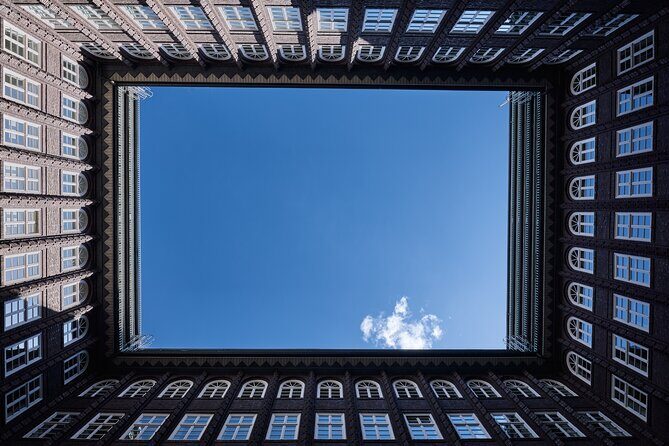
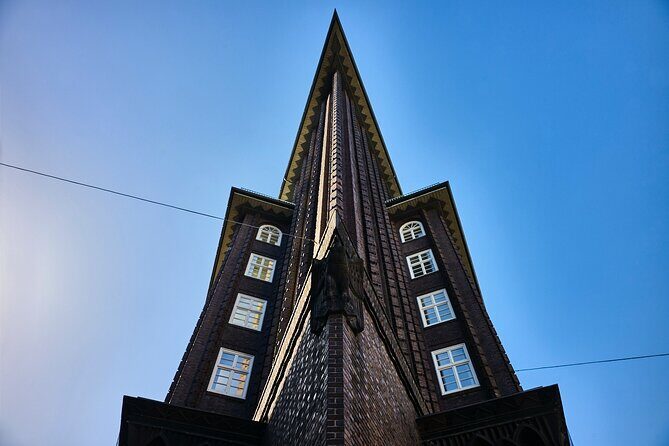
Next you move into Kontorhausviertel, the area tied to the former center of Hamburg merchants. This is where the tour leans into how modern trade took shape at the end of the 19th century—especially through the idea of business buildings and a brick-and-mortar world of selling, dealing, and managing goods.
A fun detail I’d call out: you look at a prima ballerina of the Kontorhäuser under her pretty ballerina skirt. It’s the kind of decorative feature you’d walk past without noticing. Here, it becomes part of the story, tied to the identity of the merchant quarter.
You also get a guided look at the Kontorhaus structures as the “merchant center” of the city. That explanation helps if you’re the kind of person who likes architecture but hates when tours only say pretty and move on. This one connects form to function. The buildings are not just scenery; they reflect the business culture that powered Hamburg’s growth.
Time-wise, this stop is about 30 minutes, which is long enough to see what’s in front of you without dragging you through every corner of a huge neighborhood.
Reading the Port Charter: Contradictions and the Language of the Harbor
Some tours stay safely in the tourist version of history. This one takes a slightly sharper approach. You start looking at the founding charter of the port with a critical eye and discover a contradiction or two. That matters because it teaches you how to read civic documents and city decisions as human choices, not just official myths.
You also get explanations of specific port roles: Schutenschupser and Ewerführer. These aren’t everyday words, and that’s exactly the point. The guide translates the terms into what they meant in day-to-day harbor operations, so the port history stays grounded in real labor and real movement of goods.
This is also where the story widens in a memorable way. You find out why there are references like coffee barons and Persians in Hamburg. I like moments like this because they give the city texture. Hamburg’s port wasn’t only German merchants and local trade. It was shaped by international commerce and the people who connected to it.
You’ll also hear about Westphalen—why it has to do with Hamburg and why workers lived there, including that they lived in a castle. That’s a detail you’re unlikely to piece together on your own, and it adds a human scale to the grand port narrative.
One consideration: this portion is concept-heavy. If you prefer pure sightseeing with minimal explanation, you may want to pace yourself and take quick pauses. The good news is the tour is structured into short time blocks and keeps moving.
Speicherstadt: Red-Brick Gorges and Trade From Hanseatic Cogs to Containers
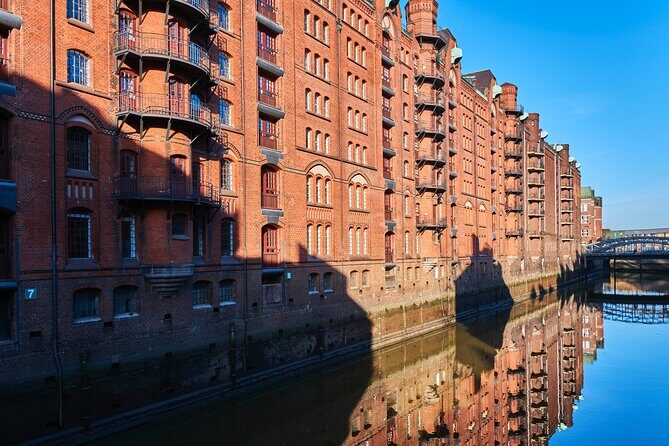
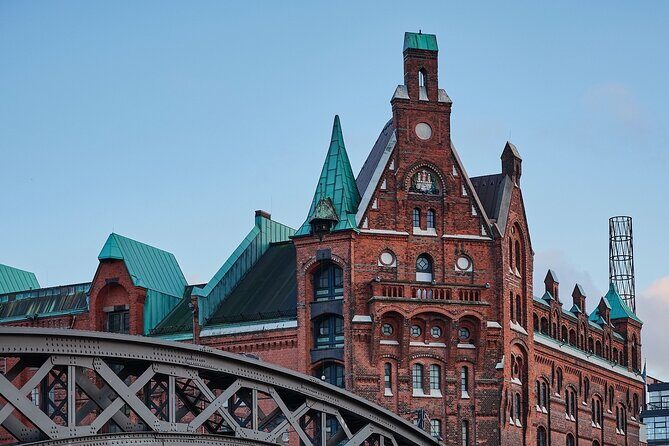
The final major stop is Speicherstadt, Hamburg’s warehouse district, famous for its red-brick streets and canal-and-warehouse layout. Here, you spend time “walking into the stories” behind the brick-lined harbor world—often described as red-brick gorges—and you connect what you see to Hamburg’s port history.
The guide helps clarify how maritime trade evolved. You go from the era of a Hanseatic cog to the logic of a modern container ship. That span can feel abstract, but the way it’s presented gives you a timeline you can visualize. You’re shown that the city’s warehouse world wasn’t static. It changed as shipping changed.
You also get a clearer sense of what made Speicherstadt important in the first place. You’re not just hearing that it was a warehouse zone. You’re learning what it did for the flow of goods and how that shaped Hamburg’s position in trade.
This stop is about 30 minutes, and the rest of the tour time fills in the walking between locations so you aren’t stuck in one place too long. If you’re short on time in Hamburg but want the UNESCO core, this structure is a strong fit.
You can also read our reviews of more private tours in Hamburg






Price and Logistics: What $208.28 per Group Buys You
Let’s talk value, because this price can look different depending on how you travel.
The tour costs $208.28 per group for up to 15 people, and it lasts about 2 hours. That means your cost per person can be very reasonable if you’re coming with others, since the guide time is shared. In contrast, if you’re traveling solo, you might find it pricier than a standard group walking tour, simply because you’re paying for the whole group slot.
What you do get for that price is the private setting and a focused route through UNESCO-linked areas of Hamburg. It’s not a generic overview. It’s structured around three thematic zones, with the guide explaining the meaning behind what you see—like the ballerina detail in Kontorhausviertel, the port charter contradictions, and the role-based harbor terms.
Two more logistics points that matter day-to-day:
- Private transportation isn’t included, so plan to reach the start at Hammaburg-Platz on your own.
- The meeting point is near public transportation, which is helpful when your day is packed and you don’t want to waste time searching for parking.
Finally, the tour uses a mobile ticket, which saves you from last-minute paperwork stress.
Who This Tour Fits Best (And Who Might Want a Different Plan)
This experience is best for people who like history but don’t want it delivered like a lecture. You’ll enjoy it if you like:
- learning how merchant and port culture formed Hamburg
- noticing architectural details and getting the story behind them
- understanding specific harbor terms and roles, not just broad trends
- getting a short, high-meaning route through UNESCO areas
It also seems like a solid choice for families. One of the strongest signals from the available feedback is that the tour worked well with kids aged 12 and 16, and they still found it entertaining.
If you’re the type who prefers quiet self-guided wandering, this may feel a bit too structured. But if you want a guided route that explains the why behind the what, you’ll probably feel satisfied.
Ending at St. Annenplatz: A Convenient Finish for More Hamburg
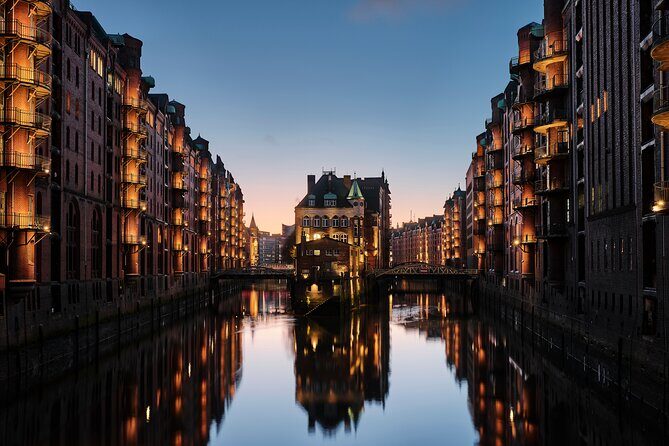
You finish at Sankt Annenplatz, right by the border between Speicherstadt and HafenCity. That placement is practical. You’re not left back in some far-off starting area. You end near a logical next step if you want to keep walking, grab food nearby, or continue exploring the harbor edge.
It’s also a nice way to round out the day. You start with origins and Hamburg’s naming roots, move through merchant quarters and port logic, and end in the warehouse district that connects it all to maritime trade.
Should You Book This Private UNESCO Tour?
I’d book this tour if you want a compact way to understand Hamburg’s UNESCO World Heritage areas with real explanation and a private-group feel. The strongest reasons are the guide approach and the way the tour makes details matter—from port charter contradictions to the specific names of harbor roles, and even the small ornamentation in Kontorhausviertel.
I’d think twice if your main goal is passive sightseeing with minimal walking and explanation. This is guided and you’ll cover ground, plus there’s no transportation included—so shoe choice and weather planning matter.
If you match the vibe, it’s a smart use of a couple hours in Hamburg.
FAQ
FAQ
How long is the Hamburg UNESCO private city tour?
It runs for about 2 hours (approx.).
What is the starting and ending point?
The tour starts at Hammaburg-Platz (Altstadt, 20095 Hamburg) and ends at Sankt Annenplatz (St. Annenplatz, 20457 Hamburg), on the border between Speicherstadt and HafenCity.
How many people are in the private group?
It is private, and your group is the only group taking part. The tour is priced for up to 15 people.
Do I need an admission ticket for the stops?
The tour details list the themed areas (Domplatz, Kontorhausviertel, and Speicherstadt) as admission ticket free.
What ticket type is used?
You’ll receive a mobile ticket.
Is private transportation included?
No. Private transportation is not included.
Is free cancellation available?
Yes. You can cancel for a full refund up to 24 hours before the experience’s start time.
Can I bring a service animal?
Service animals are allowed.
Is the meeting point near public transportation?
Yes, the meeting point is near public transportation.
Who is this tour best suited for?
Most travelers can participate, and it works well for people who enjoy guided history and learning the meaning behind what they’re seeing in the UNESCO port districts.
If you want, tell me your travel dates and whether you’re coming solo or with a group, and I’ll help you judge whether the per-group pricing is a good fit for your plan.