REVIEW · PASSAU
Passau Private Walking Tour With A Professional Guide
Book on Viator →Operated by Global Guide Services · Bookable on Viator
Passau has three rivers and big baroque drama. This private walking tour is a smart way to see the top sights fast, with a local guide who keeps things tailored to your group. I like that you walk the Royal Promenade while the guide ties the route to the Prince-Bishopric era and legends linked to Barbarossa and Empress Elisabeth Sissi, also known as Sissi.
You get about 1 hour 30 minutes of history and viewpoints, including St. Stephan’s Cathedral and the climb up to Veste Oberhaus. The main catch is that admission tickets aren’t included, so budget for any entry fees at stops that charge. Based on guide feedback for people like Leonie and Petra, you can also expect a friendly, practical style with helpful local suggestions such as where to eat and what to shop for.
In This Review
- Key Reasons to Consider This Passau Private Walk
- Why This Passau Tour Feels More Like a Local Walk Than a Checklist
- Starting at Domplatz: The Best Way to Get Your Bearings Fast
- St. Stephan’s Cathedral: Baroque Scale and the Pipe Organ You’ll Remember
- The Royal Promenade, Barbarossa Steps, and Sissi’s Trace
- From the Former Bishop’s Residence to Town Hall History
- Luitpold Bridge to Veste Oberhaus: The View That Makes the Climb Worth It
- The Three Rivers Meeting Point: Where Passau Gets Its Name and Feel
- Price and Value for a Private Group Up to 15
- The Tour Style You Should Expect From Leonie and Petra
- Who This Passau Private Walking Tour Is Best For
- Should You Book This Passau Private Walking Tour?
- FAQ
- How long is the Passau private walking tour?
- Is this tour private?
- What language is the tour offered in?
- Where does the tour start?
- Where does the tour end?
- Do I need transportation?
- Is the walking difficulty easy?
- Are admission tickets included?
- What is included in the tour price?
- Can I cancel for free?
Key Reasons to Consider This Passau Private Walk
- Private group only, so your guide can slow down, speed up, or answer questions in real time
- Royal Promenade + historical legends, with Barbarossa and Sissi woven into the walk
- St. Stephan’s Cathedral focus, including the scale of the baroque building and Europe’s major pipe organ
- Danube crossing and fortress views, via the Luitpold Bridge and the Veste Oberhaus overlook
- Easy walking pace, with options to customize what you pay attention to on the spot
Why This Passau Tour Feels More Like a Local Walk Than a Checklist
This is one of those Passau experiences where the format matters. A private guide means you’re not stuck listening to a one-size-fits-all spiel while you’re trying to hear over the group. Here, you can ask questions as they come up, and you can spend more time where your interests tug you—architecture, river history, or the stories behind the Prince-Bishopric era.
The second thing I like is the time length. At about 1 hour 30 minutes (sometimes stretching closer to 2 depending on pacing), the route is long enough to connect the dots between places, but short enough that you won’t feel dragged across town. If you’re in Passau for a day and want a strong “orientation plus highlights” experience, this fits well.
There’s also an underrated benefit: since it’s offered in English and starts right in the historic center, it’s an easy add-on for most schedules. No complicated planning, no transfers needed—just meet at the cathedral square and go.
You can also read our reviews of more walking tours in Passau


Starting at Domplatz: The Best Way to Get Your Bearings Fast
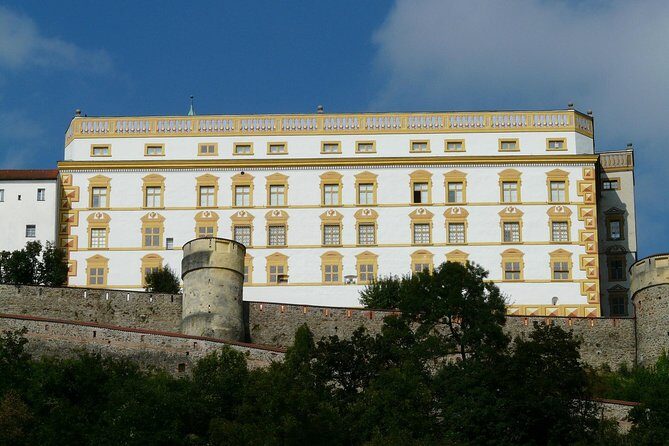
The tour begins at Domplatz, the cathedral square in Passau’s Alstadt area. Starting here is practical because it anchors everything. From the first minutes, you’re set up to understand how the city’s religious power, river geography, and civic buildings connect.
From there, you’ll follow the Royal Promenade route, which the guide frames with major historical threads—especially the Prince-Bishopric era. That context helps the city feel less like a set of pretty buildings and more like a system: a bishop’s authority, a strategic location on the Danube, and the cultural identity that grew from it.
If you like walking tours that give you a sense of place—where you are, why it mattered, and what to notice next—this opening does that. And since the walk is rated easy, it’s not the kind of start that makes you wish you had brought different shoes.
St. Stephan’s Cathedral: Baroque Scale and the Pipe Organ You’ll Remember
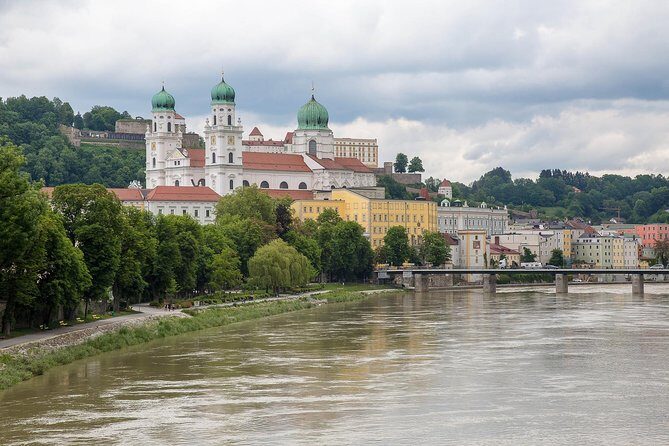
St. Stephan’s Cathedral is the centerpiece. This is described as the largest baroque cathedral north of the Alps, and it’s also home to the largest pipe organ in all of Europe. Even if you’re not the type to get emotional about organs, this stop works because it’s a real landmark with a clear “wow” factor.
Here’s what you should expect from the guide-led approach: you won’t just be staring at the building like a postcard. The guide’s job is to point out how baroque design is meant to move you—through scale, dramatic proportions, and the way the space feels when you take it in from the right angles. With the pipe organ fact in your head, you’ll likely notice more than you would on your own.
Potential drawback: cathedral visits can come with rules and varying access depending on the day. The good news is that this tour is built around the exterior experience and the surrounding area, and it’s still a strong choice even if you only catch parts of the interior you can access easily. Just remember that admission tickets aren’t included, so if there’s a fee for a specific area you want, plan for it.
The Royal Promenade, Barbarossa Steps, and Sissi’s Trace
One of the tour’s strengths is how it turns a walk into a story. As you move along the Royal Promenade, the guide references the era of the Prince-Bishopric state and connects it to big-name historical figures tied to Passau’s cultural influence. You’ll hear about Barbarossa and Empress Elisabeth Sissi, and those references give shape to what you’re seeing.
Why this matters: when you hear why a city became important—politically, spiritually, and culturally—you start matching buildings to meaning. A bridge isn’t just a place to cross; it’s part of a defensive and transportation story. A town building isn’t just pretty; it’s part of how the city organized power near the river.
If you’re the kind of traveler who wants a story with your photos, this is a great fit. If you’d rather have pure architectural description with minimal history, you can still steer the guide on the spot and focus on the details that interest you most.
From the Former Bishop’s Residence to Town Hall History
After the cathedral area, the route continues toward the former Bishop’s Residence area, then moves on to the town’s civic heart near the Town Hall. This portion of the walk helps you see the shift from religious authority to civic identity—still tied to the same power structure, but expressed differently in the city’s buildings.
When you pass the town hall, it’s framed as a building with deep roots, including the fact that parts of it date to the late 14th century along the river. You’ll also notice a 19th-century tower featuring the largest carillon in Bavaria. Even if you don’t catch music from the carillon itself, the guide’s explanation helps you understand why that feature mattered.
A practical tip: take a moment near the riverside-facing views. Carillons and towers can feel like “background details” until you pause and line up what you’re looking at with how the guide describes their role. A short pause makes the explanation stick.
You can also read our reviews of more guided tours in Passau
Luitpold Bridge to Veste Oberhaus: The View That Makes the Climb Worth It
Then comes the highlight sequence: you cross the Danube via the Luitpold Bridge, walk up the path to Veste Oberhaus, and get a big-picture view.
Veste Oberhaus is described as the fortified residence of the bishop of Passau. That’s the kind of detail that changes how you look at a view. You’re not just admiring scenery; you’re seeing why a ruler would want that exact vantage—control, visibility, and command over the river valley.
For most people, this is the moment the tour becomes memorable. The walking is still easy overall, but you’ll be moving upward for the viewpoint. It’s a good kind of effort: short enough to stay comfortable, long enough to feel like you earned the panorama.
On the way back, the guide helps you connect the dots again, including what to notice near the rivers meeting.
The Three Rivers Meeting Point: Where Passau Gets Its Name and Feel
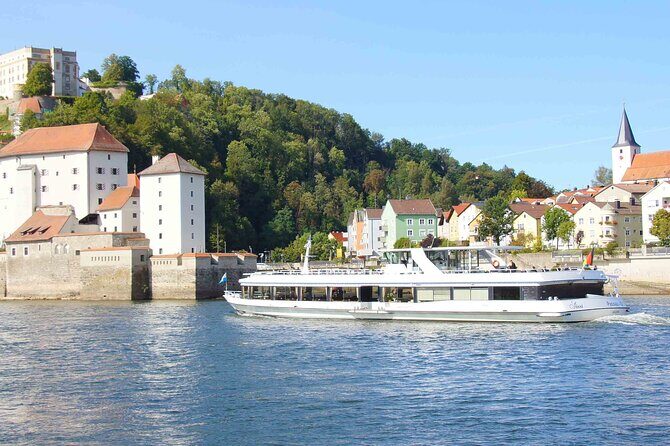
One of the tour’s more unique details is the chance to admire and photograph the tip of land where three rivers join to form the Danube. That joining point is part of what makes Passau distinctive, and hearing it explained while you’re standing in the exact spot makes it land harder than reading it later.
When the guide brings you back across the same bridge to get this angle, it’s not just repetition. It’s a “look again with meaning” moment. You’ll likely spot how the different waterways shape the town’s layout and why the river mattered for trade, travel, and the city’s strategic importance.
If you like photos, this is where your camera will do something useful besides record. Pause, frame the rivers, and let the guide point out where the city’s geometry changes.
Price and Value for a Private Group Up to 15
The price is $351.80 per group, with capacity up to 15 people. That’s how you should judge value here: this isn’t priced like a solo ticket—it’s priced like a guided rental of your guide’s time.
Here’s the math in plain terms:
- If you fill the group to 15, it’s about $23 per person.
- If you come as a small group of 2 or 3, the per-person cost climbs quickly.
So who gets the best deal? Families, friend groups, and couples traveling with another couple. If you’re traveling solo, you’ll still get a quality private experience, but you’ll want to be honest with yourself about whether the cost fits your travel style.
What makes the cost easier to stomach is the private format. You’re paying for tailored storytelling, not just movement between attractions. And the guide can customize what you focus on, which is one of the best ways to make a short tour feel longer.
The Tour Style You Should Expect From Leonie and Petra
In the feedback you’ve got for this tour, the guide experience is the standout theme. Names like Leonie and Petra show up with praise for being friendly, fun, and effective at explaining Passau.
Petra, in particular, is credited with practical extras like dinner recommendations and shopping tips. That matters because Passau evenings can feel like a blank page if you don’t know what to look for. A guide who knows the city can turn your tour into the start of your next meal and your last shopping stop.
You can ask for those kinds of suggestions directly during the walk. If you want beer hall vibes, a quiet riverside meal, or something classic but not tourist-busy, ask. The tour is built around conversation, not just marching.
Who This Passau Private Walking Tour Is Best For
This tour is a strong match if you want:
- An easy-paced orientation to Passau’s historic center
- A private guide who can customize what you pay attention to
- The main Passau “story” in a short amount of time, from the Prince-Bishopric era to river geography
It’s also a good fit for mixed ages. The activity level is easy, and it’s listed as suitable for any age. You won’t be dealing with long detours or complicated transport.
Where I’d be cautious: if you’re hoping for a deep, hours-long museum-style experience, this route is more about highlights and connections. It’s built to keep momentum and help you see the city’s logic quickly.
Should You Book This Passau Private Walking Tour?
I’d book it if you want a high-value overview of Passau’s most important landmarks—especially if you care about how the buildings connect to the river and to the Prince-Bishopric era. The combination of St. Stephan’s Cathedral, the Danube crossing, and the Veste Oberhaus viewpoint gives you the right mix of “big wow” and clear explanation.
I’d think twice only if you’re traveling with no interest in history or if you’re very budget-sensitive as a small group, since the price is set per group rather than per person.
If you’re flexible and ready to ask your guide what you should notice next, this tour is the kind of experience that makes Passau click fast—and keeps you looking around at everything like it has a reason.
FAQ
How long is the Passau private walking tour?
It runs for about 1 hour 30 minutes (approximately).
Is this tour private?
Yes. It’s a private experience, and only your group participates.
What language is the tour offered in?
The tour is offered in English.
Where does the tour start?
The meeting point is Domplatz, 94032 Passau-Alstadt, Germany.
Where does the tour end?
It ends in central Passau near 94 Passau, Germany.
Do I need transportation?
No transportation is needed; it’s a walking tour.
Is the walking difficulty easy?
Yes. The activity level is listed as easy, and it’s suitable for any age.
Are admission tickets included?
No. An admission ticket is not included.
What is included in the tour price?
You get a local guide with your group only, plus a private guided tour. You can also customize focus areas with your guide on the spot.
Can I cancel for free?
Yes. Free cancellation is available up to 24 hours in advance for a full refund.