REVIEW · DRESDEN
Dresden: Albertinum Museum Entry Ticket
Book on GetYourGuide →Operated by GetYourGuide Tours & Tickets GmbH · Bookable on GetYourGuide
One ticket, and art time-travels fast. The Albertinum is a joy because it pairs major works across painting and sculpture, with Rodin’s The Thinker as your opening moment. I especially like seeing how Caspar David Friedrich fits into a broader sweep from Romanticism to today, but note the 2nd floor is closed from 07th to 17th April for technical construction.
If you like your museums to feel like a conversation instead of a checklist, this one delivers. You’ll move through the Galerie Neue Meister and the Skulpturensammlung, watching themes like East meets West and today meets tomorrow play out through works that span the 19th century to the present.
In This Review
- Key things that make this Albertinum entry ticket worth your time
- Albertinum entry ticket basics: what you can expect to see
- Your visit starts with Rodin’s The Thinker (and why it matters)
- Romanticism in Dresden: the payoff with Caspar David Friedrich
- Painting meets sculpture: how the Galerie Neue Meister and sculpture collection work together
- Sculpture standouts you’ll want to find: Lehmbruck, Diecker, and more
- Tony Cragg’s cube: contemporary sculpture that plays with meaning
- A simple way to plan your route so you don’t miss the best parts
- Price and value: is $16 a good deal for Albertinum?
- Practical notes before you go: shoes, cameras, and the April closure
- Should you book the Albertinum Dresden ticket?
- FAQ
- How much is the Albertinum Museum entry ticket?
- How long is the ticket valid?
- What does the ticket include?
- What famous artworks will I see?
- Is there a cancellation option?
- Is pay later available?
- Is the museum wheelchair accessible?
- What should I bring to the museum?
- Is any part of the museum closed in April?
- Can children enter for free?
Key things that make this Albertinum entry ticket worth your time

- Start with Rodin’s The Thinker: it’s the first major work you’ll encounter, and it sets the modern stage.
- Romanticism to Contemporary, in one route: you get a full sweep without hopping across town.
- Caspar David Friedrich’s works: a standout anchor for anyone who loves 19th-century German art.
- 19th-century to 1800+ sculpture focus: the sculpture collection begins from 1800 onwards.
- Modern sculpture materials you can actually feel in your head: Tony Cragg’s cube is made from wood, fabric scraps, and loose-leaf binders.
- A simple, flexible ticket format: valid for 1 day (check available starting times).
Albertinum entry ticket basics: what you can expect to see
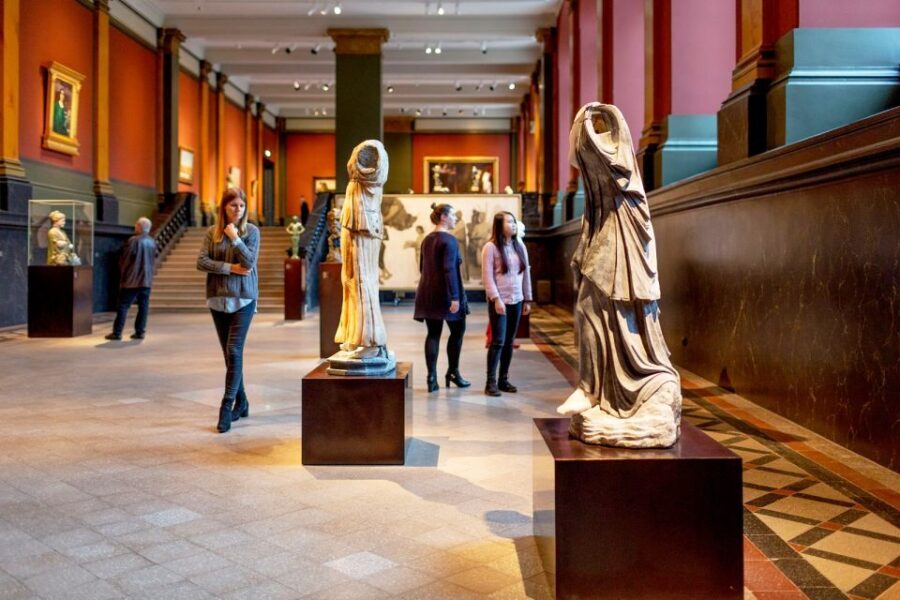
This is an Albertinum entry ticket for Dresden, priced at $16 per person. It’s valid for 1 day, with starting times based on availability, so you can plan around your day rather than forcing your schedule into a strict tour rhythm. The ticket is built for self-paced viewing inside the museum spaces that cover both the Galerie Neue Meister (New Masters Gallery) and the Skulpturensammlung (Sculpture Collection).
What makes this ticket more than just admission is the range and the mix. You’re not only looking at paintings or only sculptures. The point is that painting meets sculpture, and the collection keeps sliding forward through time—from the 19th century to the present—so you can feel how styles and ideas change.
Also, the museum is wheelchair accessible, which matters in a place like this where you’ll likely spend time looking closely at works rather than moving at speed.
A few more Dresden tours and experiences worth a look


Your visit starts with Rodin’s The Thinker (and why it matters)
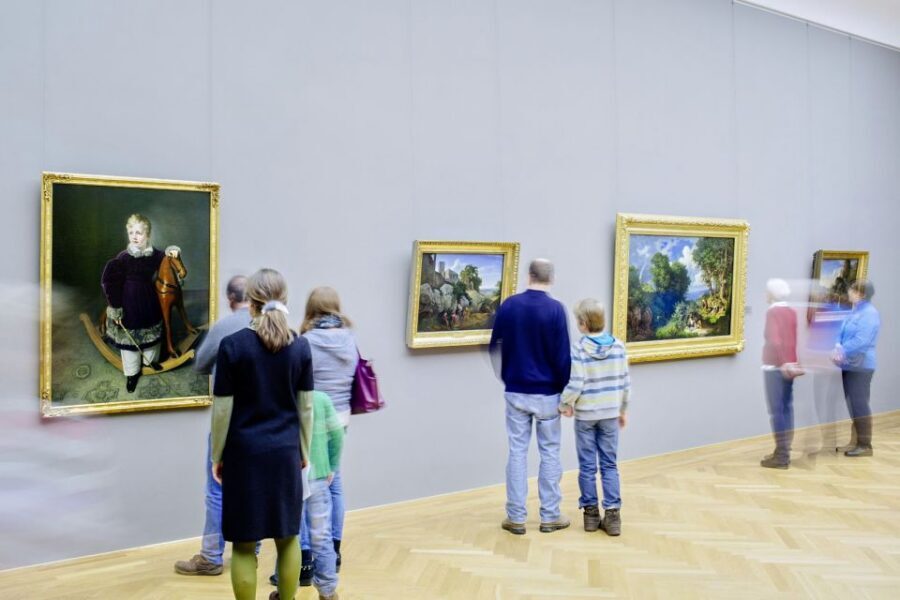
The first artwork you’ll see is The Thinker by Auguste Rodin. That choice is smart. Rodin isn’t just famous; the way the museum frames him helps you understand the jump from older traditions into 20th-century ideas. The museum information notes him as a trailblazer for artistic styles that crystallized in the 20th century.
So when you see him right away, you’re not just admiring a sculpture. You’re getting a kind of visual handshake with the rest of the collection. It’s like the museum is saying: keep your eyes on form, on emotion, and on how artists break rules over time.
Practical tip: give yourself a few extra seconds here. The museum opens with a heavyweight, and if you rush, you miss the chance to set your viewing mindset for everything after.
Romanticism in Dresden: the payoff with Caspar David Friedrich
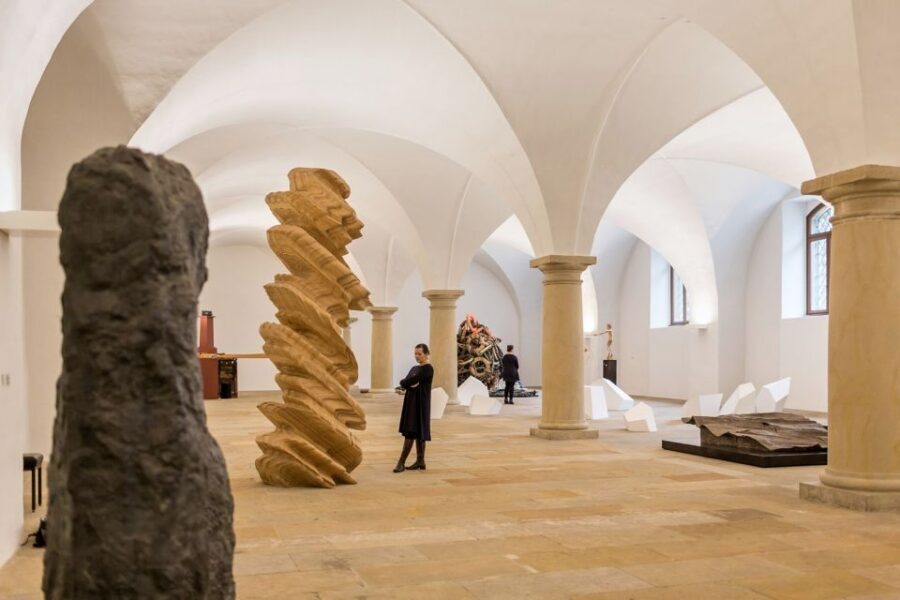
I love a museum that doesn’t treat Romanticism like a museum exhibit behind glass. Here, you get major works by Caspar David Friedrich, a key German Romantic artist. That’s the kind of name that can anchor your whole visit, because once you catch Friedrich’s way of seeing, you start noticing how later artists shift tone, mood, and meaning.
The Albertinum’s sweep from Romanticism to Contemporary periods means Friedrich doesn’t live in isolation. Instead, you can compare his emotional and symbolic approach to what comes later in the collection. Even if you don’t know every title, the connection between how art thinks and how art changes over time becomes easier to spot.
If you’re the type who likes to trace a theme across centuries, this is one of the easiest ways to do it without buying multiple tickets or building a complex plan.
Painting meets sculpture: how the Galerie Neue Meister and sculpture collection work together
The museum is basically built around a friendly concept: painting meets sculpture. You’ll see works in the Galerie Neue Meister and also move into the Skulpturensammlung, where sculpture spans a long arc (including works from 1800 onwards).
This combo is valuable because your brain starts working differently when you alternate media:
- In painting, your eye tends to follow composition, light, and narrative space.
- In sculpture, you notice weight, surface, gesture, and form you can almost feel.
That’s why this museum works so well for people who want more than passive looking. It’s not only about what’s famous. It’s about how the museum lets you compare different artistic tools side by side as you progress through time.
And since the museum concept is described as East meets West and today meets tomorrow, the experience isn’t stuck in one political or stylistic lane. You’ll be nudged to see how Germany’s art scene—and modern art more broadly—reflects shifting ideas and changing culture.
Sculpture standouts you’ll want to find: Lehmbruck, Diecker, and more
Sculpture is where the Albertinum can really surprise you, because it’s not only about traditional bronze greatness. You’ll meet a mix of sculptural styles and approaches—some emotionally intense, some formal and experimental.
A few specific works called out in the museum description include:
- Wilhelm Lehmbruck’s Kneeling Woman (1911)
This piece is a classic example of early 20th-century sculptural emotion: the body becomes a vehicle for mood and meaning. If you like when sculpture feels human and vulnerable rather than monumental, don’t skip it.
- Birgit Diecker’s Seelenfänger
This is one of those works that’s easy to appreciate even if you don’t know the full context. When the museum highlights it, it’s a signal that the piece fits the bigger theme of how contemporary art engages with emotion and idea.
- Auguste Rodin’s The Thinker
Yes again, but for good reason. He’s the starting point, but he also stays relevant as you move forward through 19th-century and later forms.
If you’re short on time, I still recommend focusing on the sculpture areas instead of treating them like an afterthought. The museum’s identity really comes through when you let your eyes switch between mediums and eras.
You can also read our reviews of more museum experiences in Dresden






Tony Cragg’s cube: contemporary sculpture that plays with meaning
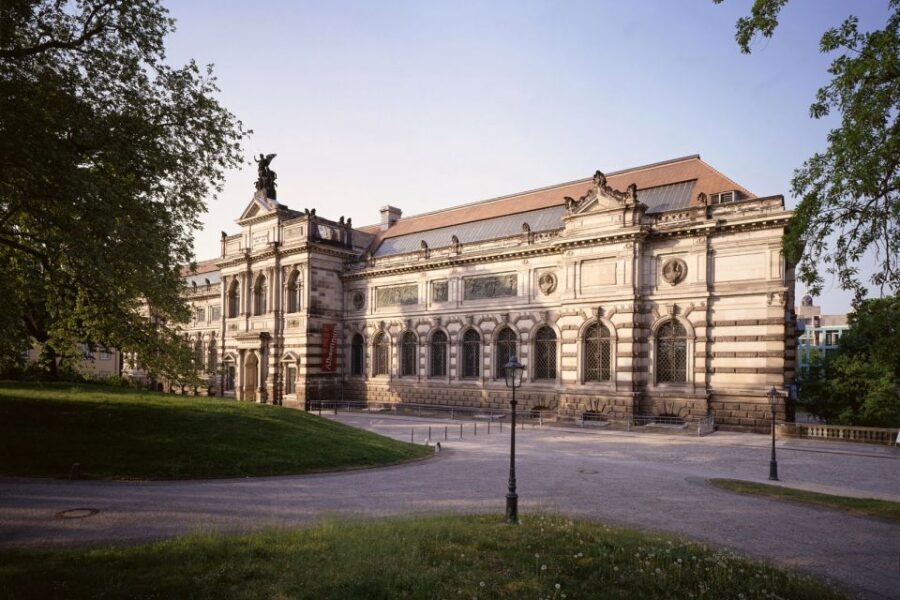
One standout modern work highlighted in the museum description is Tony Cragg’s mathematically stacked cube made from wood, fabric scraps, and loose-leaf binders.
This kind of art can feel intimidating if you expect everything to be smooth and polished. Instead, Cragg’s material choices make the piece feel close to real life—messy, practical, and built from the stuff of everyday objects and paperwork. The mathematically stacked idea also hints that play and order can coexist, which is a big part of what contemporary sculpture often does at its best.
When you see a sculpture like this inside a museum that also includes Romanticism and earlier 19th-century works, it stops being random modern art. You start to see a question running through the building: what counts as art, and how far can form stretch without losing meaning?
A simple way to plan your route so you don’t miss the best parts
This ticket doesn’t come with a rigid checklist, so the main risk is spending too long in one room and then rushing the rest. I recommend you treat the visit like two passes with a quick decision halfway through.
Here’s a practical approach that fits the way the museum is described:
- Start where the museum starts: The Thinker
Let it set your mood. Rodin is your anchor for how the collection connects older and modern artistic thinking.
- Pick your main theme: Romanticism or contemporary
If Caspar David Friedrich is your priority, go looking for the strongest Friedrich works early so the emotional weight is fresh. If contemporary sculpture is your priority, make sure you reach the modern room(s) where works like Tony Cragg appear.
- Use the painting/sculpture switch as your pacing tool
Alternate between Galerie Neue Meister and sculpture areas. It keeps your brain from tiring and helps you compare how form and meaning change.
- Then do a second pass for contrast
If you focused first on Romanticism, your second pass should give you more time for modern sculpture. If you started with modern sculpture, let your second pass slow down for Friedrich and the Romantic atmosphere.
Because your ticket is valid for 1 day, you don’t have to force everything into a tiny time window. But you also don’t want to over-stretch and end up tired, staring at walls. Comfortable shoes help a lot here.
Price and value: is $16 a good deal for Albertinum?
At $16 per person, this ticket is priced like a museum visit should be: not cheap enough that you’ll shrug, not expensive enough that you need to negotiate with yourself.
The value comes from three things you actually get:
- A broad art timeline, from the 19th century up to the present.
- Both painting and sculpture, with major names and themes that connect them.
- Sculpture coverage from 1800 onwards, which is a meaningful span, not just a couple of displays.
Also, the museum has a strong overall rating of 4.5 based on 149 reviews, which suggests people generally feel they got what they came for. One simple response captured in the rating pattern is that people liked it a lot, and the highlights in the museum description line up with the kind of works that tend to land well: Rodin, Friedrich, and contemporary sculpture that’s visually inventive.
If you’re doing Dresden on a day with multiple stops, this ticket makes sense because it’s focused. You’re not paying to wander. You’re paying to see a collection with a clear identity.
Practical notes before you go: shoes, cameras, and the April closure
A few straightforward things will make your visit smoother.
Bring:
- Comfortable shoes
You’ll be standing and looking for stretches of time.
- A camera
The ticket includes admission to artworks across a wide range, so there’s plenty to capture.
Plan around the April closure:
Due to technical construction work, the 2nd floor is closed from 07th April until 17th April. That means your route may be shorter than usual, and some galleries might not be accessible during those dates. If your visit falls inside that window, I’d adjust expectations and focus on the sections that are open.
Check opening hours close to your dates:
The local partner’s official website is where you’ll find the latest opening hours for all museums. This matters because schedules can shift.
Kids:
Children under 17 can enter for free when accompanied by an adult. You still need to book a child ticket.
Should you book the Albertinum Dresden ticket?
I think you should book this ticket if you want a museum day that doesn’t lock you into one style. You’ll get a strong mix: The Thinker to start you off, Caspar David Friedrich for Romanticism, and modern sculpture examples like Wilhelm Lehmbruck, Birgit Diecker, and Tony Cragg for the present-day feel.
Skip it, or reconsider timing, if your travel dates fall during the 2nd-floor closure (07th–17th April) and you know you specifically planned around works you expected to see upstairs. In that case, you can still enjoy the collection, but your visit may be less complete than planned.
For most people, though, this is a smart, value-forward way to experience Dresden’s museum side without turning your day into a logistics puzzle. At $16, you’re not betting big. You’re buying access to a collection built around real artistic contrasts.
FAQ
How much is the Albertinum Museum entry ticket?
The price is $16 per person.
How long is the ticket valid?
The ticket is valid for 1 day. Starting times depend on availability, so you’ll want to check what’s offered when you book.
What does the ticket include?
It includes entry to the Albertinum, access to artworks from Romanticism to Contemporary periods, and the sculpture collection from 1800 onwards.
What famous artworks will I see?
You can expect to see Rodin’s The Thinker (noted as the first work you encounter), plus works including Caspar David Friedrich, Wilhelm Lehmbruck’s Kneeling Woman (1911), Birgit Diecker’s Seelenfänger, and Tony Cragg’s stacked cube made from wood, fabric scraps, and loose-leaf binders.
Is there a cancellation option?
Yes. There is free cancellation if you cancel up to 24 hours in advance for a full refund.
Is pay later available?
Yes. You can reserve now & pay later, so you can book without paying immediately.
Is the museum wheelchair accessible?
Yes, the Albertinum is wheelchair accessible.
What should I bring to the museum?
Bring comfortable shoes and a camera.
Is any part of the museum closed in April?
Yes. Due to technical construction work, the 2nd floor will be closed from 07th April until 17th April.
Can children enter for free?
Yes. Children under 17 can enter for free when accompanied by an adult, but you need to book a child ticket.