REVIEW · BERLIN
Never Again Sachsenhausen Concentration Camp
Book on Viator →Operated by Rude Bastards Tour Berlin · Bookable on Viator
Sachsenhausen forces you to look closely. This 4-hour trip from Potsdamer Platz brings you to the Memorial and Museum Sachsenhausen, where you’ll study the camp’s layout through models, then move through key areas on your own. What makes it especially compelling is the way the guide, Siobhán, explains what you’re seeing with a progressive, feminist lens and a steady, sensitive tone that still leaves you feeling educated, not shattered.
Two things I really like about this experience are the mix of structured context and space to explore, and the way the story is explicitly connected to the present. You’re not just looking at ruins or reading dates. You’re shown how the mechanisms of racism, control, and denial evolved, including links to today’s far-right scene. One consideration: if you want a strictly neutral, purely academic presentation with no political framing, this may feel too pointed.
In This Review
- Key highlights you’ll actually notice
- Why Sachsenhausen Still Matters (and Hits)
- Getting There: Potsdamer Platz Start and a Real 4-Hour Flow
- Visitors’ Center and Camp Layout Models: Learning the Machinery of Control
- Independent Time Through Barracks and Kitchen, Plus Connections to Today
- The Infirmary: Racism, Eugenics, and the Abuse of Medical Power
- Price and Value: Paying for Access, Time, and Meaning
- What to Expect From the Guide Experience (and Why It Works)
- Who This Tour Fits Best (and Who Might Want Another Option)
- Should You Book This Sachsenhausen Tour?
- FAQ
- How long is the Never Again Sachsenhausen Concentration Camp tour?
- What is the price, and what does it include?
- Is the tour offered in English?
- Where does the tour start and end?
- Do I need my own public transport ticket?
- Can I cancel for free?
- What’s the group size?
Key highlights you’ll actually notice
- A guide-led context plus independent walking through barracks and the kitchen
- Siobhán’s sensitive, feminist-informed commentary, respectful without feeling heavy-handed
- Camp layout explained with physical models in the visitors’ center
- Clear links to the present, including far-right influence in Germany
- The infirmary section on eugenics and Nazi medical crimes, explained with care
- Small group size (max 15) keeps questions and pace manageable
Why Sachsenhausen Still Matters (and Hits)
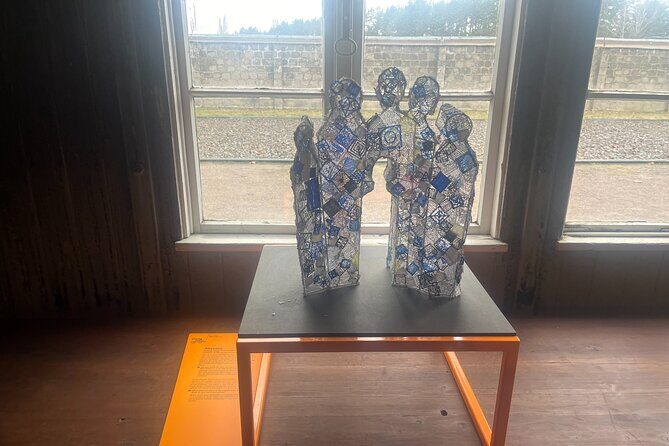
Sachsenhausen isn’t the kind of place you can experience casually. Even if you’ve read about concentration camps before, the site’s design makes the violence feel engineered. This tour helps you understand that difference. You’re not only learning that atrocities happened; you’re learning how systems were built to control bodies, break people, and enforce an ideology that treated some lives as expendable.
You’ll also get the camp’s full “timeline” picture, not just the Nazi chapter. Sachsenhausen is described as a Nazi “model” concentration camp, later a Soviet “special” camp, and eventually used as a pro-communist, anti-fascist propaganda tool. That matters because it shows how authoritarian systems repurpose places, narratives, and institutions. It’s grim, but it’s also clarifying.
The emotional tone is handled with real care. In practice, that means you’ll be guided into the worst subjects—racism, the abuse of women’s bodies, eugenics, and medical experimentation—without the guide turning away or acting like numb facts are enough. The goal is not shock for shock’s sake. It’s recognition, understanding, and the harder work of connecting past cruelty to patterns you can spot today.
You can also read our reviews of more tours and experiences in Berlin.


Getting There: Potsdamer Platz Start and a Real 4-Hour Flow
This experience starts at Potsdamer Platz 10, 10785 Berlin, and it ends back at the meeting point. The whole thing runs about 4 hours, which is a smart length for Sachsenhausen. Enough time to learn the main story and see the key areas, without turning it into an exhausting marathon.
The group is capped at 15 travelers, so you’re less likely to feel like you’re being herded. And because it’s in English with a mobile ticket, you can keep your planning simple: you won’t be relying on a paper pass, and you’ll have confirmation after booking.
A practical note: the walking can feel real. The tour includes a walk from the train area toward the visitors’ center, and the rest of the site exploration also involves moving around outdoors. The guidance lists a moderate fitness level requirement, so wear shoes you trust. Bring a layer too. Berlin weather changes fast, and you’ll be standing still at times.
You also need to plan for your own basics. Snacks and bottled water are not included, and you’ll need to bring or buy them separately. There’s also no public transport ticket included for the ABC zone, so you’ll want to have that handled before you go.
Visitors’ Center and Camp Layout Models: Learning the Machinery of Control
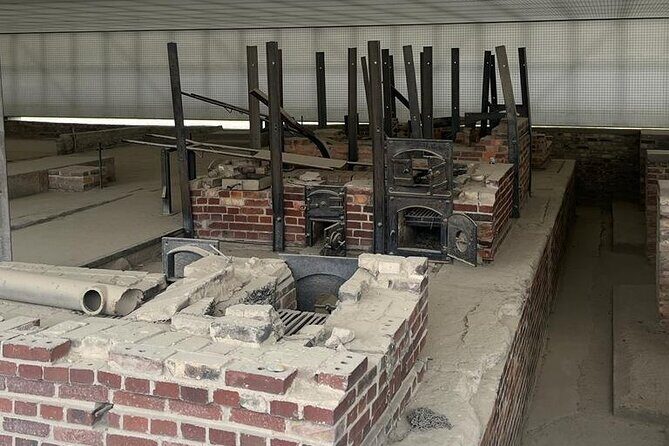
Your first real “lesson” happens at the Memorial and Museum Sachsenhausen visitors’ center. This is where the tour’s pacing does something useful: it gives you a mental map before you wander.
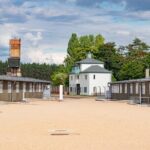
You’ll see detailed models explaining the physical structures that supported control and reinforced the Nazi idea of superiority over prisoners. That matters because camp design isn’t random. When you understand the layout—where power concentrated, where movement was restricted, how the space enabled surveillance and punishment—the site stops feeling like a collection of separate buildings. It becomes an operating system.
From there, you’ll also learn about the site’s disturbing transformation over time. The tour points to how a former SS training camp later became the Brandenburg police academy. That transition is important, because it underlines a hard truth: institutions don’t always vanish after they commit crimes. Sometimes they shift uniforms, change official narratives, and keep structures—sometimes even personnel traditions—alive in new forms.
This first stop is also the best moment to reset your expectations. This isn’t a “quick highlight tour” made for photo ops. You’re being asked to absorb structure, intention, and human consequences at the same time. The guide sets a respectful tone early, and you’ll carry that tone forward through the rest of the visit.
Independent Time Through Barracks and Kitchen, Plus Connections to Today
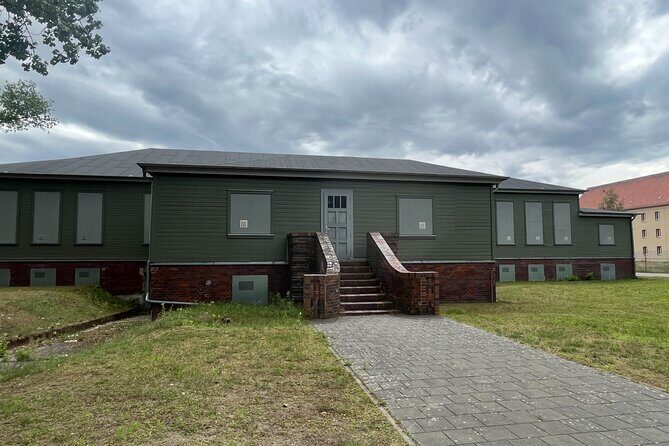
After the structured context, the tour moves into autonomous exploration of major areas, including the prisoners’ barracks and the camp kitchen. This is a smart design choice. It lets you slow down when something feels important to you. You can linger where your questions grow, and you can move on when you feel you’ve taken in what you need.
It’s also the section where the tour makes its present-day connections most direct. You’ll hear about attacks connected to Neo-nazi Holocaust denial, and how the memorial relates historical denial and intimidation to ongoing political realities. The tour doesn’t treat history as sealed in glass. It links denial, propaganda, and harassment to the way far-right ideologies keep trying to rewrite the past for political gain.
You’ll also get explicit mention of the AfD, a German far-right group, as part of those modern connections. The point isn’t to turn Sachsenhausen into a current-events debate. The point is to show the continuity of tactics: how movements exploit anger, how they test the limits of public memory, and how they use simplified stories to protect themselves from accountability.
One more thing I appreciated in how this is framed: it includes a careful balance of realism and emotional management. The subject matter is absolutely heavy—there’s no sugarcoating the brutality and suffering associated with the camp. Yet the guide keeps the group steady. Some reviews describe moments of appropriate levity—not jokes at the expense of victims, but human pacing so people can keep listening without burning out emotionally.
The Infirmary: Racism, Eugenics, and the Abuse of Medical Power
If you’re the kind of visitor who wants to understand how cruelty scales from ideology to practice, the infirmary stop is where that clicks.
Here, you’ll confront the depths of racism and the use of scientific language to justify dehumanization. The tour focuses on how control extended to women’s bodies, how eugenics was treated as policy, and how Nazi doctors used prisoners as lab rats for career advancement. The language is stark, because the crimes are stark. But the delivery is framed to maintain respect for victims and clarity about what happened.
This section is valuable because it explains the danger of expertise without ethics. You can know history dates and still miss the mechanism: how professional status, institutions, and medical tools were turned into instruments of harm. The infirmary makes that connection feel unavoidable.
It also reinforces why the tour’s modern lens matters. When you understand how propaganda and racism were “scientized,” you start noticing how those same themes reappear in different outfits. The tour’s overall approach nudges you toward the question that lasts after you leave: what would you recognize today if it tried to use similar logic again?



Price and Value: Paying for Access, Time, and Meaning
At $31.29 per person for about 4 hours, this tour offers a solid value when you look at what’s included. You get admission connected to the memorial site, plus a donation for the memorial is part of the cost. That’s not just a box checked by the provider—it supports the preservation of public memory and helps keep educational resources working.
You’re also paying for the human element: a guide who can explain what you’re seeing in context and adjust to the group. With a max of 15 travelers, you’re not just buying entry and hoping for the best. You’re getting a guided interpretation plus time to explore on your own.
What isn’t included is equally important for your planning. Snacks, bottled water, and an ABC-zone public transport ticket are not included. That means you should budget a little extra and show up ready to last the full 4 hours without feeling rushed. Bring a small pack with water if you can, or plan to buy it nearby.
A quick practical tip: since the tour can involve some walking and standing, factor in comfort more than you think you need. The less you’re distracted by sore feet or thirst, the more you’ll actually take in the explanation and the site’s layout cues.
What to Expect From the Guide Experience (and Why It Works)
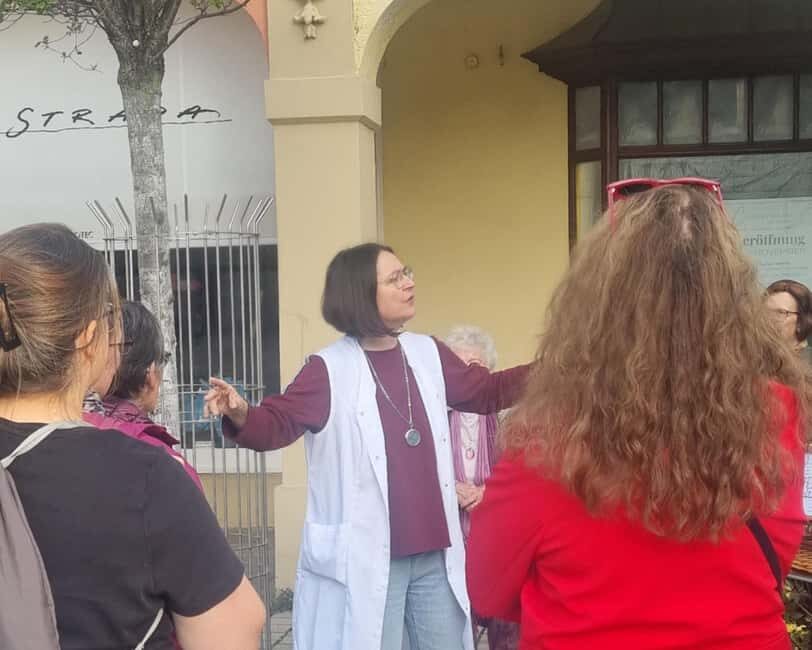
This tour’s best asset is how it balances explanation with restraint. The guide’s approach is described as attentive, adapted to the group, and careful with a sensitive topic. The commentary is also described as filtered through a progressive, feminist lens, and in practice it’s not presented as a lecture that bullies you into agreement. It’s more like a framing tool: you’ll notice the focus on racism, gendered control, and the ways power operates through ideology.
You can also see how the guide manages emotional weight. Visitors leave the experience feeling educated rather than broken, which is a big deal at Sachsenhausen. If you’ve been worried that a camp visit will turn into numb overwhelm, this structure helps: context first, then space to observe, then a final stop that ties everything back to harmful systems.
And if you prefer tours where you can ask questions or where the guide reads the room, the small group size supports that. Reviews also mention that the outfitter was patient and communicative when people had travel snags, which tells me this provider tries to keep things running smoothly when Berlin travel is messy.
Who This Tour Fits Best (and Who Might Want Another Option)
This is a strong match if you want more than a passive walk through a memorial. You’ll likely enjoy it if you care about how history connects to the present, and if you appreciate a guide who treats political context as part of understanding what happened.
You’ll probably also like the split format: explanation at the start, then self-guided exploration in the middle. That keeps you from feeling trapped in a single pace, and it gives you time to linger with your own reactions.
This might not fit as well if you prefer an explicitly neutral tone and don’t want any present-day comparisons or feminist/progressive framing. The tour makes those connections on purpose. If that kind of approach turns you off, you might find the experience more frustrating than enlightening.
Should You Book This Sachsenhausen Tour?
Book it if you want a respectful visit that explains camp structures and the evolution of Sachsenhausen across different regimes, and if you value a guide who connects the cruelty of the past to patterns you can recognize now. The small group limit, the admission included, and the donation component make the price feel less like a “tour tax” and more like support for the memorial plus meaningful interpretation.
Skip—or at least think twice—if you’re searching for a purely factual, strictly academic walk-through with minimal political framing. This tour doesn’t hide that ideology and power are central to the story. For many people, that’s exactly what makes it worth the time.
If you do book, plan like you’re going for a real, emotional educational experience: wear comfortable shoes, bring water or snacks since they’re not included, and give yourself time to process after you return to Potsdamer Platz.
FAQ
How long is the Never Again Sachsenhausen Concentration Camp tour?
It lasts about 4 hours.
What is the price, and what does it include?
The price is $31.29 per person. Admission for the memorial is included, and there’s also a donation for the memorial included.
Is the tour offered in English?
Yes. The tour is offered in English.
Where does the tour start and end?
It starts at Potsdamer Platz 10, 10785 Berlin, Germany, and ends back at the same meeting point.
Do I need my own public transport ticket?
Yes. A public transport ticket for the ABC zone is not included.
Can I cancel for free?
Yes. You can cancel up to 24 hours in advance for a full refund. Free cancellation applies only if you cancel at least 24 hours before the start time.
What’s the group size?
The tour has a maximum of 15 travelers.