REVIEW · MUNICH
Munich Residenz Palace, Museum and Treasury Private Tour
Book on Viator →Operated by Rosotravel - Wawel Castle and other Tours · Bookable on Viator
Munich’s royal rooms feel built for gossip. This private tour ties together the Residenz with nearby Old Town sights, so the story lands in the right places, not just in a museum hall.
Two things I really like: you get an entrance ticket to the Residenz Palace/Museum/Treasury as part of the tour, and you also travel at a human pace with a licensed history expert guide instead of moving with big crowds.
One thing to consider: the Treasury is temporarily closed until further notice, and some parts of the complex can involve long rooms and stairs, depending on what’s open during your visit.
Key points to know before you go
- Odeonsplatz and Marienplatz context fast: you start the day with key squares before heading into the palace world.
- Tickets are handled for you: Residenz Palace, Museum, and Treasury entry is included.
- Cuvilliés Theatre is optional, but special: Elector Maximilian Joseph III’s lavish opera house and Mozart’s Idomeneo premiere connection.
- Frauenkirche can be included on longer tours: the devil’s footprint legend is part of the stop when that version includes it.
- Private car transfers only in the 3-hour option: the shorter versions focus more on walking.
In This Review
- Munich Residenz in a Private Pace: What This Tour Gets Right
- Price and Duration: Picking the Right Option (2 to 5 Hours)
- Where You Meet and How to Start Smoothly at Maximilianstraße 6
- Old Town Stops That Set the Stage: Marienplatz, St. Peter’s, and Hofgarten
- Cuvilliés Theatre: Royal Opulence and Mozart’s Idomeneo Link
- Frauenkirche and the Devil’s Footprint Legend
- Odeonsplatz and Theatine Church: Power, Putsch, and a Sense of Place
- Residenz Palace, Museum, and Treasury: Where the Wittelsbach Story Really Clicks
- What the Treasury Closure Means for Your Visit
- Private Car Transfers in the 3-Hour Version: Worth It or Not
- How to Make Your Guide Work Best for You
- Should You Book This Munich Residenz Private Tour?
- FAQ
- Is the entrance ticket to the Residenz included?
- Does the tour include Cuvilliés Theatre tickets?
- Are there car transfers from my hotel?
- Where do I meet the guide?
- Is the Treasury always open?
- Is Frauenkirche included?
- What should I do the day before the tour?
Munich Residenz in a Private Pace: What This Tour Gets Right
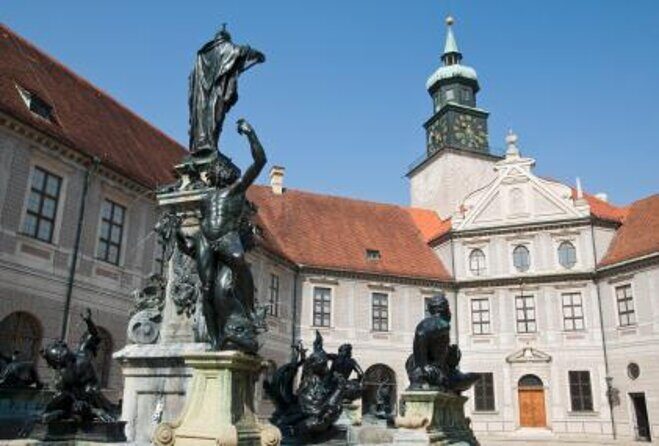
If you only have one half-day in Munich and you want the “big royal” stuff done well, this tour is built for that. You’re not just ticketed into a palace—you’re walked through the city spaces that helped shape those rulers, then guided through the rooms and collections they left behind.
I like that the tour mixes big-name monuments with real museum time. You’ll see the New Town Hall and Old Town Hall at Marienplatz, pause at the oldest church in the city (St. Peter’s Church), and then shift gears into the Residenz, where art, power, and politics all show up in the rooms.
You also get an honest advantage of a private format: your guide can slow down where you care. Some people want art and room design; others want the political timeline from Renaissance through Rococo and Neoclassicism, and the museum context helps you connect those eras.
Price and Duration: Picking the Right Option (2 to 5 Hours)
This tour costs $280.44 per person and runs about 2 to 5 hours, depending on the version you book. The price isn’t just for “a guide near the entrance”—it’s for guided time plus included tickets, and that matters at the Residenz where self-guided wandering can eat up hours.
Here’s how I’d think about the time options:
- 2-hour: best if you mainly want the core Residenz experience and minimal walking through the surrounding highlights.
- 3-hour: the same general idea, but this version includes private car transfers with pickup and drop-off. Just note that the quoted transfer time is about 1 hour included, and it can run longer depending on where you stay.
- 3.5-hour: adds Cuvilliés Theatre.
- 5-hour: adds the most extras, including Cuvilliés Theatre and Frauenkirche (Munich Cathedral), plus extra time in the broader surroundings.
If you hate rushing through rooms, I’d lean toward the 3.5- or 5-hour option. In a palace this large, “short” can quickly start to feel like you’re skipping.
You can also read our reviews of more private tours in Munich



Where You Meet and How to Start Smoothly at Maximilianstraße 6
Meet your guide at Maximilianstraße 6, right outside Chanel. The key detail: don’t go into the store—your guide is waiting in front of the main entrance.
This start matters because one big complaint people have with tours like this is simple miscommunication. So make it easy on yourself: arrive a few minutes early, stand where the group would clearly gather, and keep an eye on your tour email instructions the day before.
Also good: the starting point is near public transportation, so even if the transfer isn’t included for your version, you can still reach the meeting spot without fuss.
Old Town Stops That Set the Stage: Marienplatz, St. Peter’s, and Hofgarten
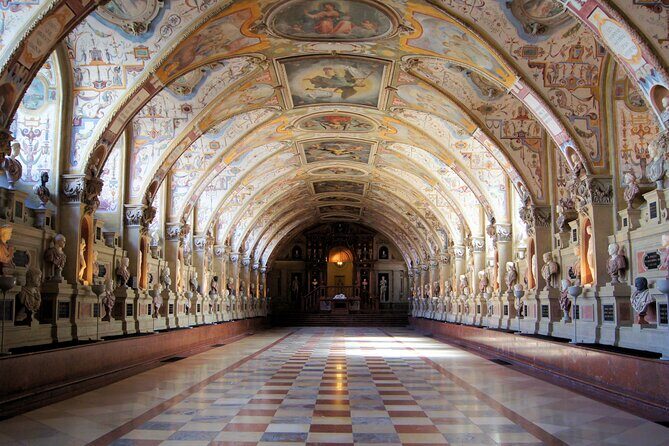
The tour doesn’t toss you straight into the palace. It gets you oriented with a walk through Munich’s center so the Residenz doesn’t feel like a standalone “thing.”
At Marienplatz, you follow your guide into the city-center square where you can admire the New Town Hall and the Old Town Hall. You’ll also see the Fischbrunnen (Fish’s Fountain) and pause at St. Peter’s Church, noted on the tour as the oldest church in the city. Even if you don’t go inside, that stop gives you the right time-and-place context before royal walls start talking.
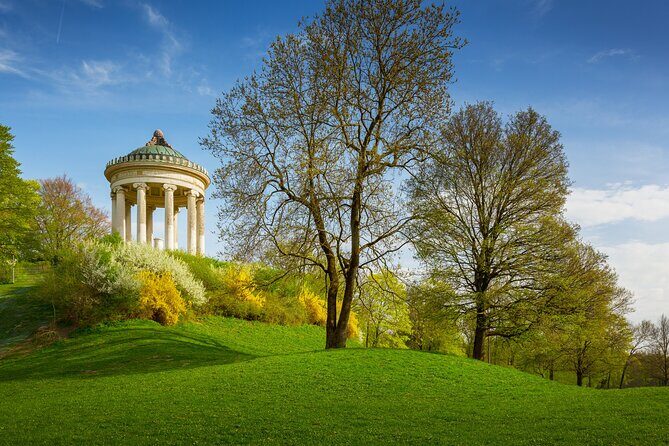
Later, you move into Hofgarten, the formal court gardens tied to the royal residence. This isn’t just a pretty pause. It also helps you spot the broader “court complex” feeling, with mention of Bavarian Government buildings, the Marstall Theater, and the Grand State Opera in the surrounding view.
If you like your sightseeing to connect to real geography, these short stops are well chosen. If you’d rather go straight into the palace, you may find the city squares feel like warm-up. Still, they help your brain map where power sat in the city.
Cuvilliés Theatre: Royal Opulence and Mozart’s Idomeneo Link
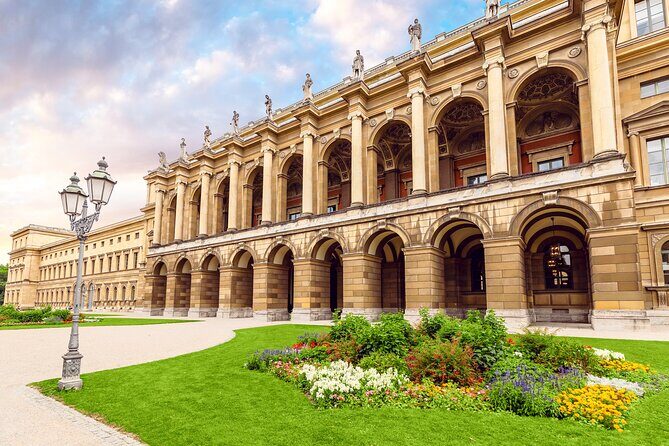
Cuvilliés Theatre is the standout add-on for many people because it’s one of those places where the building itself teaches you something. In the tour, you’ll visit the Residenz area alongside Cuvilliés Theatre, with time for the auditorium where Elector Maximilian Joseph III built a new opera house.
The big payoff here is the contrast between what rulers wanted on stage and what you see later in the Residenz rooms. The theatre’s opulence is described in the tour as part of that ambition, and your guide ties it to productions and to the first performance of Mozart’s Idomeneo that premiered here.
Practical note: theatres can be sensitive to access and scheduling. But the tour includes the theatre ticket on the versions that add it (3.5 and 5 hours), so you’re not left trying to solve the logistics on your own.
Frauenkirche and the Devil’s Footprint Legend
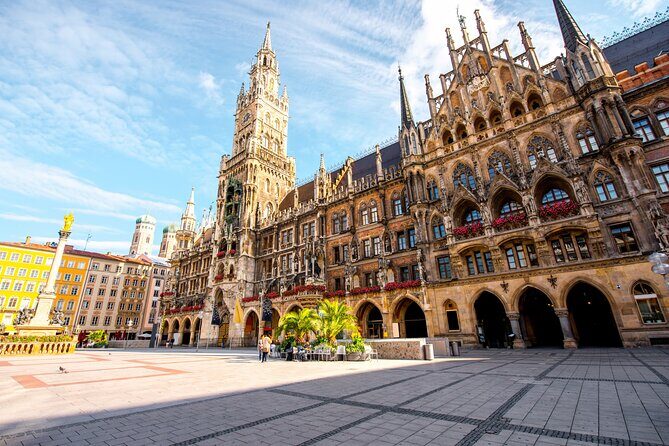
On the longer versions (the 5-hour tour), the itinerary includes a stop at Frauenkirche, Munich Cathedral. The best reason to include it isn’t just the architecture—it’s the legend your guide shares about the devil’s footprint.
That kind of story might sound like a trivia detour, but it actually works here because Munich’s famous landmarks are wrapped up in faith, fear, and power. Even if you’re not big on legends, the stop is short and gives you a real sense of how people historically explained what they couldn’t control.
If you’re tight on time, you’ll likely choose the 2- or 3-hour versions and skip this. That’s a fair trade—just know what you’re giving up.
You can also read our reviews of more museum experiences in Munich






Odeonsplatz and Theatine Church: Power, Putsch, and a Sense of Place
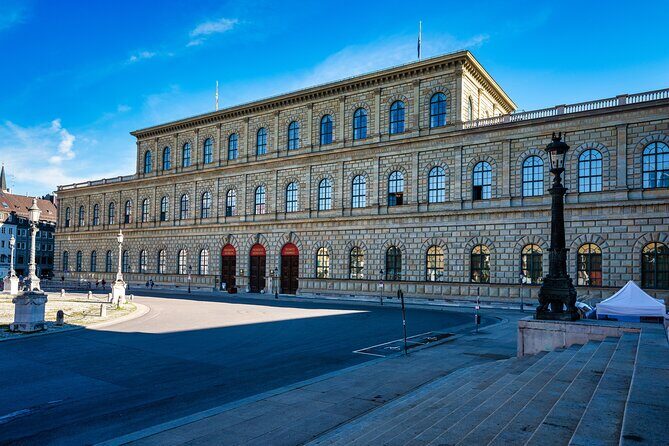
Toward the end of the walk portion, the tour shifts to Odeonsplatz, where you see Feldherrnhalle and the Theatine Church. This is also where your guide covers the Beer Hall Putsch, described on the tour as an infamous event that took place here.
I like this stop because it gives you a modern historical thread that sits alongside everything else you’re seeing. The Residenz tells you about rulers and court culture; Odeonsplatz reminds you that political conflict doesn’t stay in the past—it reappears in new forms in public squares.
If you prefer quiet, contemplative stops, this area can feel more “important and busy” depending on the day. But the narration usually helps the walk feel purposeful rather than crowded.
Residenz Palace, Museum, and Treasury: Where the Wittelsbach Story Really Clicks
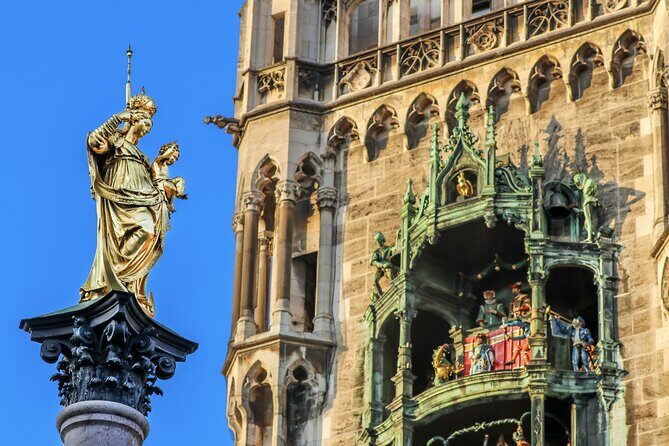
This is the heart of the tour, and it’s also where the included ticket turns the whole thing from “nice guide” into “real value.”
You’ll follow your guide through the Residenz, described as the royal residence of Bavarian kings, dukes, and electors from 1508 to 1918. Your guide’s job is to help you see the building like a timeline: Renaissance, early Baroque, Rococo, and Neoclassicism show up across different rooms and design choices.
The tour also frames it as an art-and-power museum. As a museum, it’s presented as exploring ideas tied to humanism, the Counter-Reformation, the Enlightenment, and even concepts like the divine right of kings and constitutional monarchy. That’s useful because without it, you might just admire rooms and move on.
Then there’s the part people often remember most: the Treasury. The tour describes it as filled with crown jewels and royal insignia, plus goldsmith’s works, swords, goblets, and other expensive items. That’s exactly the kind of collection that makes court politics feel physical—you can see what wealth and symbolism looked like, not just what people claimed.
A good guide also helps you avoid a common trap: trying to take in every room. This place is huge. The private format helps you focus on what matters and understand why those particular rooms and objects were chosen.
What the Treasury Closure Means for Your Visit
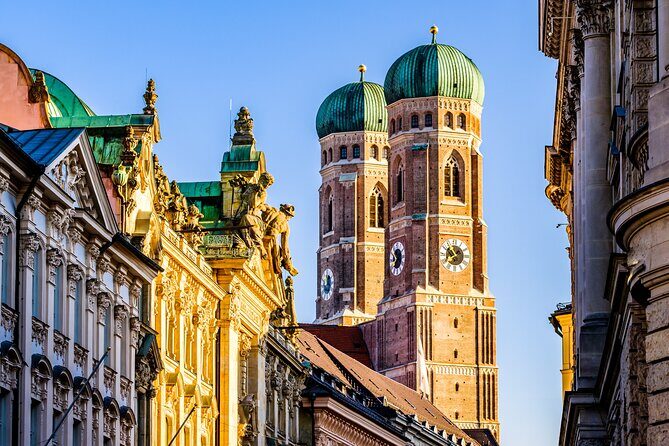
One important caution: the tour notes that the Treasury is temporarily closed until further notice. That’s not a minor footnote. If the Treasury is your main reason for booking, double-check what’s open on your dates (your confirmation email and any updates you receive day-of are the safest guide).
If the Treasury is closed when you arrive, you may still get plenty from the palace and museum portion. But the “crown jewels” element could be reduced, and you might feel like you paid for something you can’t fully see.
This is also one reason to consider longer versions if you can. With more time, there’s more room for your guide to adjust what you can access.
Private Car Transfers in the 3-Hour Version: Worth It or Not
Only the 3-hour tour includes private car transfers between your Munich accommodation and the Residenz, with pickup and drop-off. The tour frames it as ideal when you don’t want long walks or public transport.
From a practical point of view, it can be worth it if:
- you’re staying a bit far from the Residenz area,
- you’re traveling with limited mobility,
- or you just want to protect your energy for museum time.
But keep expectations realistic: the tour says the quoted transfer time is about 1 hour and may take longer depending on your location. So the 3-hour version may not feel like “three hours inside.” It can be “two-ish hours sightseeing plus transport time.” If you don’t mind walking and you want maximum museum focus, the walking-focused options can feel more efficient.
How to Make Your Guide Work Best for You
A private tour lives or dies on how you use it. Here are a few ways to get more out of the time you’re paying for:
- Start by telling your guide what you want most: room design, palace politics, art, or the theatre connection to Mozart’s Idomeneo.
- When you reach big set pieces like Marienplatz, Hofgarten, or the Residenz rooms, ask how they connect to each other. That’s where the guide’s storytelling really pays off.
- Wear shoes you can walk in. Even with taxis in one version, the overall flow includes walking between major spots and moving through large interior spaces.
Also, keep an eye on your phone for the mobile ticket and check your email the day before. The tour specifically asks you to do that, because those instructions can affect how smoothly you enter.
Should You Book This Munich Residenz Private Tour?
Book it if you want a guided, ticketed tour that ties the Residenz to Munich’s surrounding monuments, and you’ll appreciate time spent understanding what you’re seeing—not just scanning rooms.
I’d especially recommend it if:
- you’re drawn to the Residenz as a multi-era palace (Renaissance to Neoclassicism),
- you want the Cuvilliés Theatre stop and the Mozart premiere connection,
- or you prefer a private pace so you don’t get herded.
Skip or reconsider if:
- you’re mainly focused on the Treasury, since it’s temporarily closed until further notice,
- or you’re trying to do the absolute cheapest/shortest option and expect to see everything.
If you book, choose the duration that fits your style. More time usually means fewer rushed corners and a better chance your guide can work around access changes. In a palace this big, that peace of mind is worth something.
FAQ
Is the entrance ticket to the Residenz included?
Yes. Tickets to the Residenz Palace, Museum, and Treasury are included with the tour.
Does the tour include Cuvilliés Theatre tickets?
Cuvilliés Theatre tickets are included for the 3.5-hour and 5-hour tours.
Are there car transfers from my hotel?
Private car transfers between your accommodation and the Residenz are included only with the 3-hour tour.
Where do I meet the guide?
The meeting point is Maximilianstraße 6 (80539 Munich) in front of Chanel. The guide will be waiting in front of the main entrance, and you should not enter the store.
Is the Treasury always open?
No. The tour notes that the Treasury is temporarily closed until further notice.
Is Frauenkirche included?
Frauenkirche is included only in the 5-hour tour version.
What should I do the day before the tour?
Check your email the day before the tour to receive important information.