REVIEW · MAINZ
Mainz: The Gutenberg Museum – World Museum of the Art of Printing
Book on GetYourGuide →Operated by mainzplus GmbH · Bookable on GetYourGuide
Type, ink, and history in one hour. This Mainz Gutenberg Museum tour turns Johannes Gutenberg into a real person, and you’ll get hands-on context for why printing changed everything. Two moments I especially like are the live printing press demonstration and the chance to see two originals of the Gutenberg Bible in the treasury.
I also like the pacing and group size: up to 25 people, led in German by trained guides who know how to make the mechanics and the story click. One practical consideration, though: the tour price covers the guidance, but you’ll still need to pay museum admission on-site (and that same ticket also applies to the Natural History Museum in the same building).
In This Review
- Key moments to look for
- Gutenberg Museum in Mainz: why this one-hour format works
- Getting to know Gutenberg without getting lost in dates
- The live printing press demonstration: where the whole idea clicks
- The treasury and the Gutenberg Bible originals: see them with time in mind
- Guides, language, and group size: how to plan if German is a factor
- Price and logistics: the smart way to think about value
- Where this tour fits best in your Mainz day
- Before you go: what to watch for once you’re inside
- Should you book the Gutenberg Museum guided tour in Mainz?
- FAQ
- How long is the Gutenberg Museum guided tour?
- Is museum admission included in the price?
- What’s included with the $18-per-person experience?
- Is the printing press demonstration included?
- Will I see Gutenberg Bible originals during the tour?
- What language is the tour guide?
- How big are the tour groups?
- Is the experience wheelchair accessible?
- Can I visit the Natural History Museum in the same building with my admission?
Key moments to look for
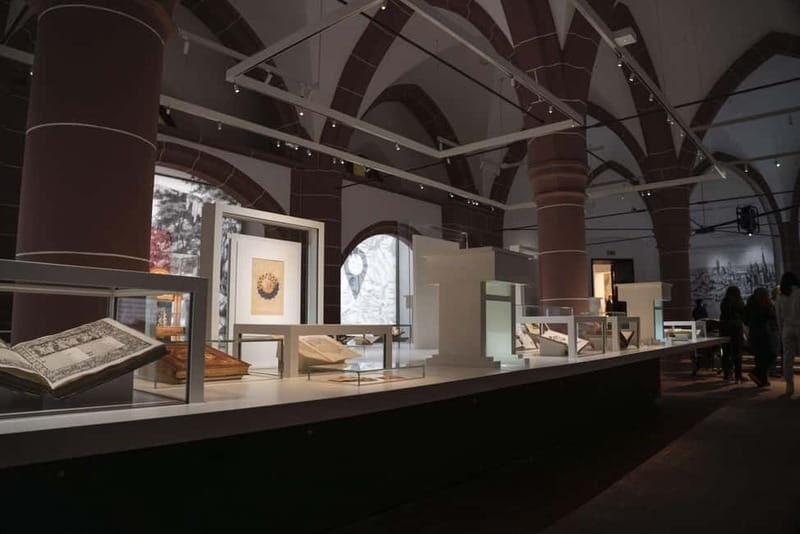
- Live printing press demonstration that shows how Gutenberg-style printing worked, not just photos and labels
- Gutenberg Museum guided route that keeps the big story clear in about an hour
- Treasury visit with two Gutenberg Bible originals you can focus on slowly
- Guides like Frau Jucknat and Walter who have a knack for explaining Gutenberg clearly
- German-led tour format with some content shown in its original language
Gutenberg Museum in Mainz: why this one-hour format works
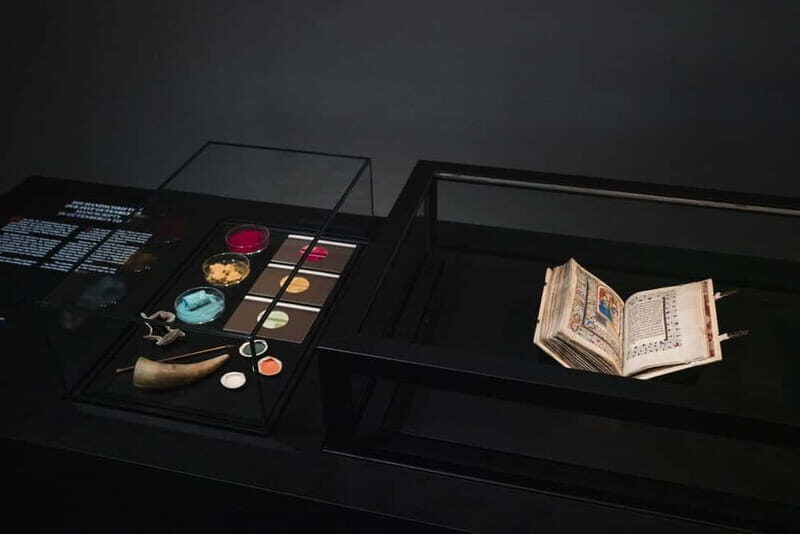
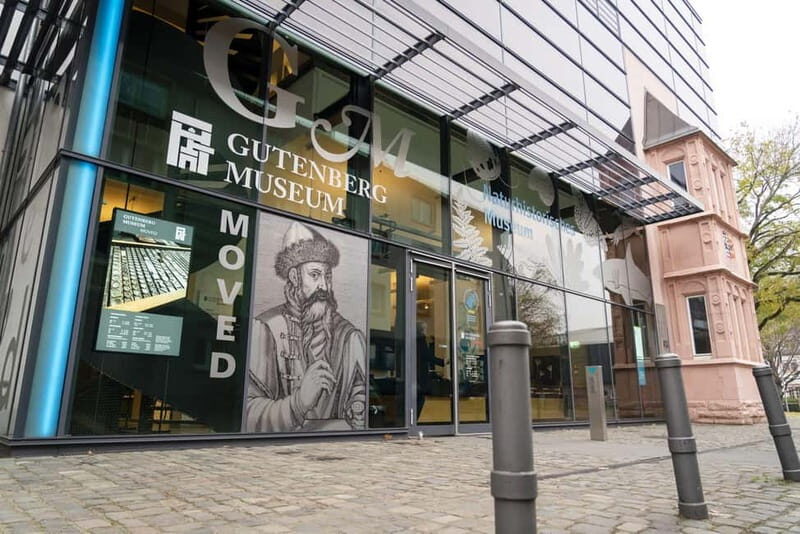
Mainz is where Gutenberg’s printing story has an anchor, and this museum is built to make that story understandable fast. A guided one-hour experience is a smart choice here because printing history can sprawl; a good guide keeps you on the key threads without turning it into a textbook.
I like that the tour isn’t only “look at artifacts.” It’s set up around cause and effect: Gutenberg’s life leads to his methods, his methods lead to printed pages, and those pages lead to a media revolution. You’ll leave with a clearer mental model of how printing changed what ordinary people could access—information moved faster, and it could be copied more reliably.
Also, the museum itself is part of a multi-museum building. That matters for planning: your time inside isn’t the only decision you’ll make. You can add the Natural History Museum later using the same on-site admission ticket, if you’re in the mood for a change of pace.
You can also read our reviews of more museum experiences in Mainz
Getting to know Gutenberg without getting lost in dates
The tour’s core goal is pretty simple: help you understand Johannes Gutenberg’s life and work in a way that connects the person to the process. You’ll hear his background and see how his technical ideas fed into his output. For many people, that’s the biggest “aha” moment—Gutenberg isn’t just a name on a spine; he’s the driving force behind a new way to reproduce text.
What I find especially useful is how a trained guide can translate historical significance into plain language. Instead of a list of inventions, you get a story with momentum: why printing mattered, what Gutenberg tried to solve, and how the resulting technique changed communication. If you’re the type who likes to understand the logic behind historical breakthroughs, you’ll probably enjoy this format.
And because the tour is guided, you’re less likely to get stuck staring at displays that look impressive but don’t automatically explain themselves. A guide can point you toward what to notice—materials, methods, and the practical “how did they do that?” angle that makes printing history feel real.
The live printing press demonstration: where the whole idea clicks
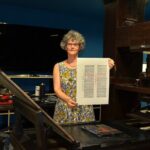
One highlight is the demonstration at the printing press. This is the part that turns “printing history” into a process you can picture. You’re not just reading about ink, type, and impressions—you get to see the technique explained clearly while it’s happening.
Even if you don’t speak German perfectly, this is the section where things usually become intuitive. Printing is visual and mechanical: you can track the steps, the arrangement, and how the final page comes into view. The guide’s explanations help you connect what you see to why Gutenberg’s approach was such a turning point.
I also like that the press demo creates a natural transition. After the demonstration, the museum’s artifacts and documents tend to make more sense. You start to understand why specific items exist, not just that they’re famous. That’s a big deal in a museum setting: it’s one thing to admire objects; it’s another thing to understand what problems they were built to solve.
The treasury and the Gutenberg Bible originals: see them with time in mind
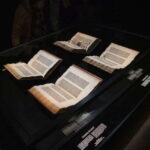
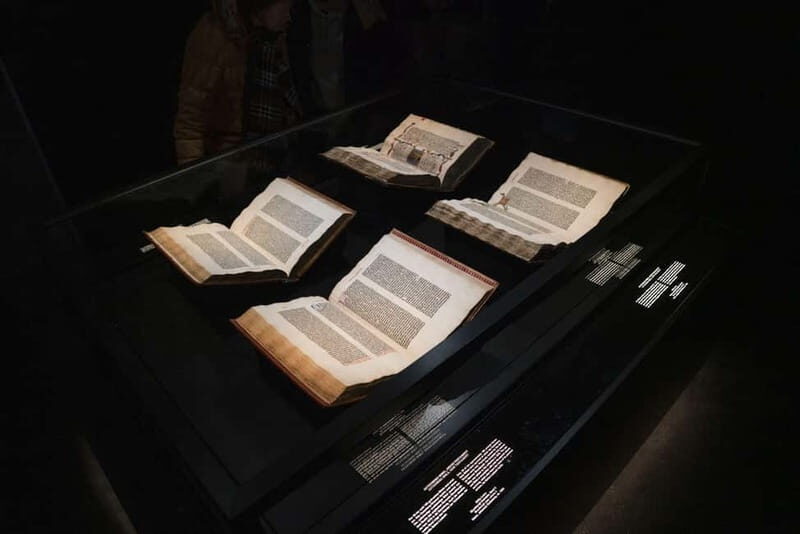
The tour ends with a visit to the museum’s treasury, where you’ll see two original copies of the Gutenberg Bible. This is the “hold onto your hat” moment for book people and history nerds alike. It’s also the part where I’d encourage you to slow down, because seeing originals can shift your perspective instantly.
Printed documents like these aren’t just old—they’re evidence of an entire workflow. When you see originals in a treasury setting, you naturally start noticing things that you might miss with replicas: the craftsmanship, the physical reality of the pages, and the sheer achievement behind getting that output. A guided stop helps here too, because it’s easy to stare and forget to ask yourself what you’re actually looking at.
The value of this treasury visit is that it anchors the story in something tangible. Gutenberg’s life is fascinating, but the Bible originals are the proof of concept: the printing method produced a landmark result. For you, that can turn the whole tour into a more satisfying arc, because the process (press demo) meets the outcome (the Bible originals).
Guides, language, and group size: how to plan if German is a factor
The tour is led in German, and some content may be shown in its original language. In practical terms, that means you’ll get the best experience if you’re comfortable reading a little German or you don’t mind following along with a mix of explanation and observation.
One thing I appreciate: the groups are capped at 25 participants, with at least one participant minimum. That size is usually manageable for a guide to keep attention and clarify questions. It also means the tour doesn’t feel crowded and rushed in the way bigger groups sometimes do.
The quality of the guiding matters here, and the feedback I see points to that. Guides like Frau Jucknat and Walter are praised for making Gutenberg approachable and entertaining. That’s a big deal because Gutenberg museums can become overly technical if the guide doesn’t know how to translate the topic into story.
If you’re worried about language, here’s how to make it work: let the visuals do half the job. The press demonstration and the treasury are where your eyes can carry you, even if some sentences move faster than you’d like. Your job is to pay attention to what’s being shown and why the guide is drawing your focus.





Price and logistics: the smart way to think about value
The tour is priced around $18 per person for a roughly one-hour guided experience. But the key line to understand is this: museum admission isn’t included in the tour price and must be paid on-site.
That’s not automatically a deal-breaker. In fact, paying admission separately can still be good value, because the ticket also covers the Natural History Museum in the same building. If you’re the kind of traveler who likes filling gaps between major sights, that combined-ticket setup can stretch your time.
Still, I recommend you do a quick “total cost check” before you decide. One practical drawback that shows up is confusion around tickets—people paying for the guided portion and then needing to line up or purchase museum admission afterward. If you’re traveling with a group and want to save time, try to plan your entry so you’re not doubling up on waiting.
A second detail: there can be different ticket categories (for example, family pricing), and if you’re eligible, it’s worth making sure you select the right one. The tour itself delivers the guided time, but you’ll want your museum ticket sorted to avoid losing momentum once you arrive.
Where this tour fits best in your Mainz day
This is a solid “midday brain break” type of activity. It’s short enough to slot between other sights, but substantial enough that you’ll feel you learned something meaningful rather than just passed through galleries.
I think it’s best for you if you like:
- book history, printing, or media history
- museums where the guide explains rather than just points
- hands-on or process-based exhibits (the press demo is the star)
It may feel less ideal if you want an unguided, self-paced browse only. The tour’s value is in interpretation. If you’d rather wander freely and stay as long as you want at each case, you might prefer a standalone ticket. But if you want a guided story in about an hour, this format is very workable.
Also, if you’re traveling with kids, consider whether the German language will be manageable for your crew. Some families do great with museums like this because the visuals carry the day—especially during the press demonstration—but it depends on how comfortable your group is with non-English explanations.
Before you go: what to watch for once you’re inside
Because part of the experience depends on what’s shown in the original language, come with a simple mindset: follow the big structure. Gutenberg’s story, the printing mechanics, and the Bible originals. If you keep those three anchors in your head, you’ll stay oriented even if some explanation is moving quickly.
Bring patience for the rhythm of museums. The treasury visit is a high-focus stop, and the experience works best when you treat it like a “slow look” moment, not a photo-stop competition. If you’re taking photos, use common sense and follow any rules you see at the exhibits.
Finally, if you’re scheduling other things in the same building, remember your admission can cover more than just this museum. If your energy dips after the press demo, the Natural History Museum option gives you a clean switch of theme without changing locations.
Should you book the Gutenberg Museum guided tour in Mainz?
I’d book this tour if you want a clear, time-friendly way to understand Johannes Gutenberg and why his printing method mattered. The press demonstration and the Gutenberg Bible treasury visit do the heavy lifting, and the guided route helps you connect the dots instead of just admiring artifacts.
I’d hesitate only if German-led tours are a struggle for you and you need full-depth explanation in English. In that case, you might still enjoy the visuals, but you may feel you’re catching only part of the meaning.
Overall, this is a strong value for the guided hour—just add museum admission to your plans and double-check the full cost so you’re not surprised on arrival. If you get that part right, you’ll walk out with a much more human understanding of how printing changed the world.
FAQ
How long is the Gutenberg Museum guided tour?
The tour lasts about 1 hour.
Is museum admission included in the price?
No. Museum admission is not included and must be paid on-site.
What’s included with the $18-per-person experience?
You get a 60-minute guided tour of the Gutenberg Museum with trained guides.
Is the printing press demonstration included?
Yes. Part of the tour includes a demonstration at the printing press.
Will I see Gutenberg Bible originals during the tour?
Yes. The tour includes a visit to the treasury where two original Gutenberg Bible copies are on display.
What language is the tour guide?
The tour guide is German, and some content may be shown in its original language.
How big are the tour groups?
The group is at least 1 person and up to 25 participants per group.
Is the experience wheelchair accessible?
Yes, it is wheelchair accessible.
Can I visit the Natural History Museum in the same building with my admission?
Yes. The admission you pay on-site also applies to the Natural History Museum in the same building.