REVIEW · MAINZ
Mainz: guided evening tour of the Rhine riverbank/old town in German and English
Book on GetYourGuide →Operated by mynft-fine-art.com · Bookable on GetYourGuide
Mainz at night feels like the city is doing a story-time voice. This Rhine riverbank-to-old-town guided walk turns the lights on the skyline, then ties what you see to real characters and events—from Johannes Gutenberg to Napoleon Bonaparte—with an easy pace. I love how you get both water views and cathedral-hill drama, and I also like that the guide keeps it practical, with tips for what to do next in Mainz. The main consideration: churches are closed at night, so you won’t go inside.
Expect a loop that runs 90 minutes at a leisurely pace, with German and English guide commentary. You’ll walk past standout landmarks like the Theodor Heuss Bridge and the High Cathedral of St. Martin, plus the older St. Johannis area and the half-timbered streets around Kirschgarten. One small heads-up for planning: your meeting point is specifically on the Hilton-side Rhine terrace, and that hotel has more than one terrace—so arriving a few minutes early helps you avoid confusion.
If you want an efficient way to get oriented (especially on a working day when you don’t want a long day tour), this is a strong pick. The overall feedback score is 4.9 from 106 reviews, and it shows: the walk is praised for clear know-how, engaging anecdotes, and solid follow-up recommendations from guides (Andrew is named in one review for being a big source of Mainz tips).
In This Review
- Key things to know before you go
- Meeting on the Rhine at the Hilton: Start Easy, See the Bridge Fast
- Theodor Heuss Bridge: A 10-Minute Chapter of Mainz by Night
- From Rheingoldhalle to Jockel-Fuchs-Platz: Learning the City’s Social Map
- Eisenturm and Heiliggeist: Stepping Through Mainz’s Old Corners
- Liebfrauenplatz and the Domplatz Area: Cathedral Hill Energy Without the Hustle
- High Cathedral of St. Martin: The Viewpiece You’ll Remember
- Alter Dom St. Johannis, Leichhof, and the Half-Lit Layers of Old Mainz
- Kirschgarten: Half-Timbered Mainz and a Peaceful End Point
- Price and value: Is $20 for 90 minutes a fair deal?
- Pace, languages, and what you should bring
- Who this Mainz night walk suits best
- Should you book this Rhine-to-old-town night tour?
- FAQ
- Where do we meet for the tour?
- How long is the tour?
- What languages are offered?
- What are the main highlights along the route?
- Can we visit churches inside during the evening?
- What’s included in the ticket price?
- Is the tour wheelchair accessible?
- What’s the cancellation option?
- Can I reserve without paying right away?
Key things to know before you go
- Rhine riverbank start: You begin right by the water near the Theodor Heuss Bridge view.
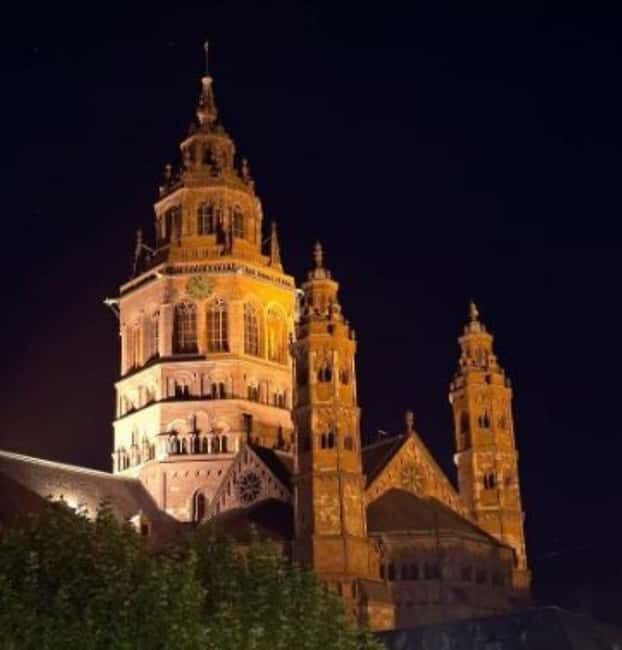
- Illuminated landmarks: Evening lighting makes the cathedral hill and older church areas feel cinematic.
- Cathedral hill viewpoints: High Cathedral of St. Martin is a major visual anchor of the route.
- Half-timbered Kirschgarten: Late Middle Ages charm where the walk finishes.
- Short stops, steady rhythm: Lots of narration, but the pace stays comfortable for 90 minutes.
- No night interior visits: You’ll see exteriors and walk the spaces between them.
Meeting on the Rhine at the Hilton: Start Easy, See the Bridge Fast
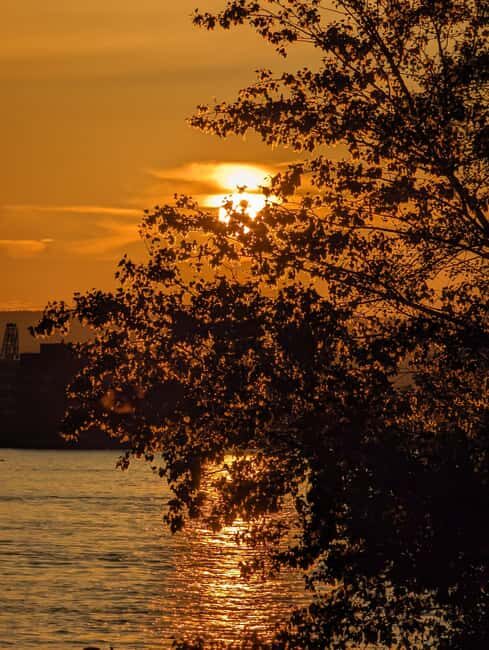
You meet on the Rhine-side terrace in front of the Hilton Hotel in Mainz, facing toward the river, the bridge, and the boat landing stage. This is a smart start because you begin with context right away. The Rhine shapes Mainz—geography, trade, and the whole sense of where power and people moved through the city.
I like that the meeting spot is simple to locate once you know what to look for: Hilton terrace facing the water and the Theodor Heuss Bridge. In one piece of feedback, a practical note stood out: the Hilton has two terraces (front and back), so show up a few minutes early and confirm you’re at the right one.
There’s no need to sprint to the tour’s first “big moment.” You’re given enough time to get your footing, take in the river air, and get a feel for the direction you’ll be walking. At night, that riverfront orientation matters. It helps you understand why later you’ll be climbing toward the cathedral hill and why old Mainz grew the way it did.
You can also read our reviews of more guided tours in Mainz



Theodor Heuss Bridge: A 10-Minute Chapter of Mainz by Night
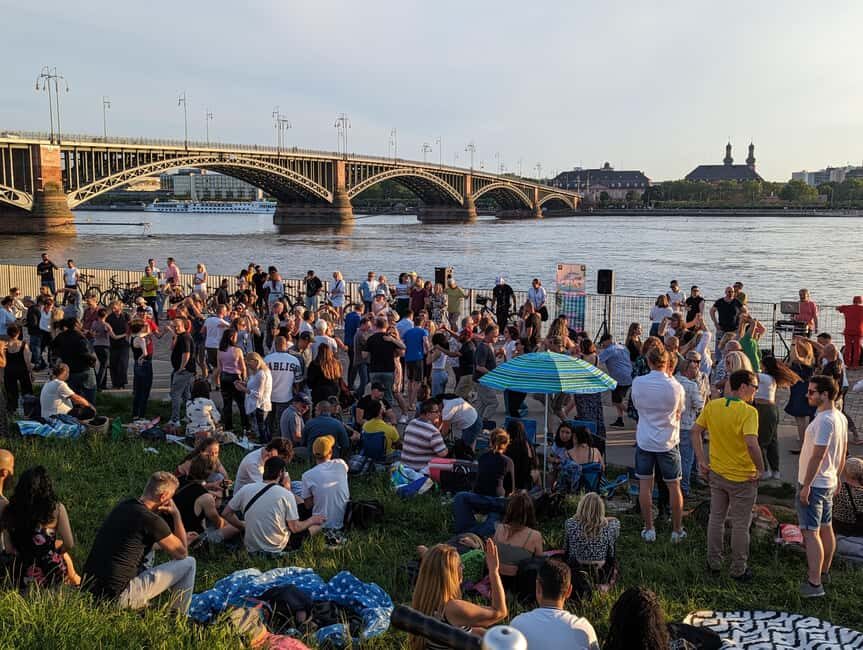
One of the first guided stops is the Theodor Heuss Bridge. Even if you’ve seen bridges in other cities, what changes here is the timing. At night, the bridge becomes a visual frame: a way to read the city’s layout while the lights reflect off the water.
This part works for two types of visitors. If you’re the kind of traveler who likes quick wins, you get a landmark in the first stretch. If you’re the kind who wants story connection, this bridge sets up the tour’s theme: Mainz as a Rhine city that kept evolving while staying tied to the river.
The narration here is also a warm-up. You’re not dumped into long history lectures. You’re guided into the idea that Mainz didn’t appear overnight—Romans to modern times are part of what you’ll hear as you move.
From Rheingoldhalle to Jockel-Fuchs-Platz: Learning the City’s Social Map
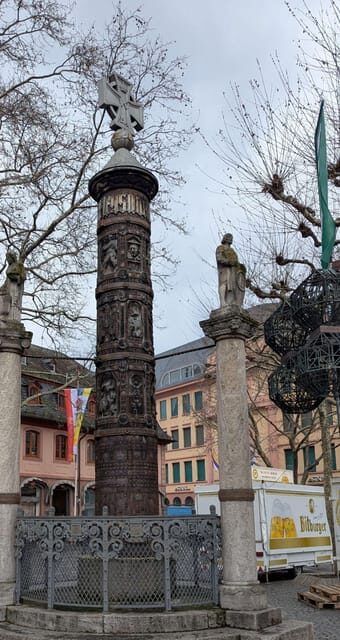
After the bridge, the walk turns toward central river-adjacent buildings and squares. You’ll pause near Rheingoldhalle Mainz and then at Jockel-Fuchs-Platz. These are short stops, but they matter because they teach you how to “see the city” instead of just passing it.
Rheingoldhalle is one of those places you might notice from the river and then ignore. With a guide, you start reading it as part of the city’s cultural and public-life timeline. Jockel-Fuchs-Platz offers a different angle: a place where you can get a better sense of how foot traffic moves and how old and newer city functions sit side by side.
I like routes like this because they don’t require you to know Mainz already. You’re learning while walking, not filling in homework afterward.
Eisenturm and Heiliggeist: Stepping Through Mainz’s Old Corners
Next comes Eisenturm and then Heiliggeist, with a longer storytelling moment at Heiliggeist. In a 90-minute tour, this is where the pacing becomes most noticeable: the guide slows slightly where there’s visual and historical interest to justify it.
The benefit for you is simple. Exterior details that look similar in daytime become easier to pick out when someone points them out in context. Towers, church-adjacent spaces, and the way buildings line up are easier to understand when you’re standing where the guide can connect architecture to the human story.
And because this is an evening walk, you’re also getting a feel for how Mainz looks after dark—how older structures still hold presence even when interiors are closed. The churches are closed at night on this tour, so think of this as a “see it, read it, understand it” experience rather than a “go inside and linger” one.
Liebfrauenplatz and the Domplatz Area: Cathedral Hill Energy Without the Hustle
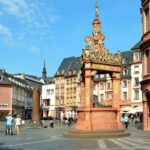
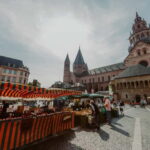
Liebfrauenplatz is one of the tour’s key stops, with guided time devoted to it. From here, you move toward the cathedral zone and the Domplatz area, where the group pauses at the Wochenmarkt area on Domplatz.
Even if you’re not there for shopping, the market setting helps you understand Mainz as a living city. Places like this aren’t just monuments; they’re daily meeting points. At night, you don’t get the same market bustle you’d see in daytime, but you still get the spatial logic—where people naturally gather and where the city funnels movement.
This section also sets you up for the big visual payoff: the High Cathedral of St. Martin and the cathedral hill. The route is designed so the cathedral doesn’t hit you too early. You approach it with your brain already tuned to how the city “layers” move from river to old center.



High Cathedral of St. Martin: The Viewpiece You’ll Remember
The High Cathedral of St. Martin and its cathedral hill are a highlight for a reason. From the right angles at night, cathedrals don’t just look old—they look purposeful, like they’re still steering the city’s identity.
This stop is valuable even if you’re not a hardcore cathedral fan. It’s the tour’s best moment to get a landmark-scale sense of Mainz. You learn to connect the geography (cathedral hill) to the history (why major institutions tend to sit where visibility and status matter).
Also, the guide’s storytelling here tends to tie back to the wider timeline—Romans to modern days. This is where you’ll likely hear more about Mainz’s famous historic figures, including Johannes Gutenberg, and how the city’s significance wasn’t just local. Mainz is one of those places where big names show up because conditions and networks existed here.
No interior access is part of the trade-off, but you still get meaningful value: you’re seeing the exterior and the setting, which is the heart of an evening illumination walk.
Alter Dom St. Johannis, Leichhof, and the Half-Lit Layers of Old Mainz
After the cathedral zone, you continue past the old cathedral area of St. Johannis and toward the Leichhof region. You’ll get guided time at Alter Dom St. Johannis, and that’s one of the tour’s best “scale shift” moments.
Here’s why it works: cathedral hill is grand and dominant. St. Johannis and nearby spaces feel closer and more intimate by comparison, even from a distance. You’re walking through a part of Mainz where the vibe turns toward older urban texture—architecture that has had centuries to settle into the city’s daily flow.
The tour doesn’t present this like a checklist. It’s more like a guided walk through layers: Roman influence and later periods show up in the way the city is arranged, and the guide’s anecdotes help you connect what you’re seeing to what happened.
If you’re the kind of traveler who likes a city to make sense, this is the section that clicks. You’ll start to feel why Mainz earned its importance along the Rhine and why certain places kept getting re-used, re-built, and reinterpreted.
Kirschgarten: Half-Timbered Mainz and a Peaceful End Point
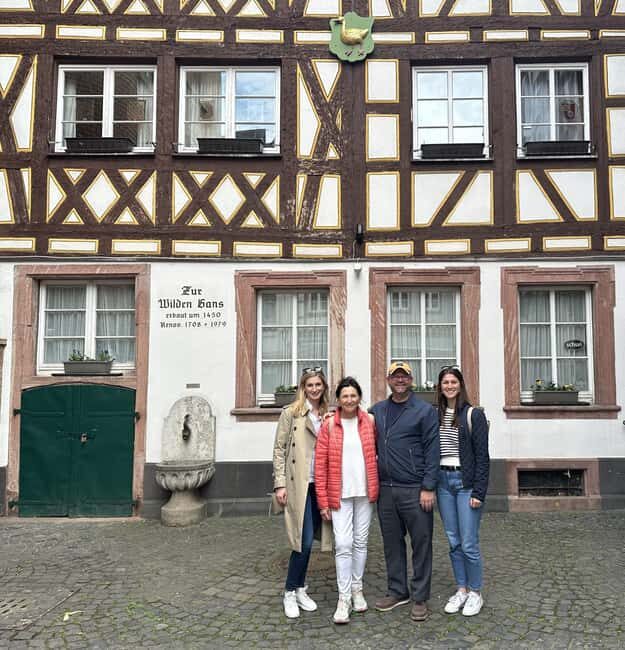
Kirschgarten is where the walking tour ends, and it’s also one of the biggest visual rewards of the evening. This is a neighborhood area known for half-timbered houses from the late Middle Ages, and the night lighting helps them look especially characterful.
What I like about this finish is the emotional pacing. You end your walk on charm and atmosphere rather than on another major “institution stop.” After 90 minutes of history and landmark viewing, Kirschgarten feels like a soft landing.
It’s also a practical finish point. You’re in a place where you can transition easily into your own evening plans—something the guide is ready to help with. The tour description notes that the guide will be happy to recommend where to stop for refreshments at the end, which is exactly what you want after a guided walk. You get suggestions tailored to the vibe of the route you just walked.
And if you’re curious about the stories you’ve been hearing, this is where you can slow down and let the architecture do the talking. Half-timbered buildings at night don’t need a narrator to be impressive; the narration just makes you notice more.
Price and value: Is $20 for 90 minutes a fair deal?
For about 90 minutes and a live guide in German and English, $20 per person is a pretty strong value—especially if you’re trying to maximize limited time in Mainz. You’re paying for three things: direction (so you don’t wander aimlessly), interpretation (so the sights mean something), and timing (so you see the illuminated city rather than daytime-only angles).
Could you do parts of this on your own? Sure. You can walk the river and visit cathedral zones independently. But the practical advantage is that the guide connects the dots—Romans to modern times, plus major names like Gutenberg and Napoleon—while you’re already moving through the spaces where those stories make sense.
For the money, you also get a tight structure. The route includes multiple guided pauses, not just a casual stroll with a few comments. That makes the experience feel like an efficient way to learn without turning your evening into a school lecture.
Pace, languages, and what you should bring
The tour runs at a leisurely pace, designed for about 1.5 hours. That matters because Mainz evening weather and river areas can feel cooler than you expect. Bring a light layer even if the daytime felt warm.
Language options are German and English, so you can pick the session that matches your comfort level. Also, the tour is wheelchair accessible, which is a meaningful detail if you need that flexibility.
One more practical reality: since churches are closed at night, this is not a tour that depends on interior viewing. So don’t plan your schedule around “going inside.” Plan around the walk and the exterior sights, especially the cathedral hill and the older St. Johannis area.
Who this Mainz night walk suits best
This tour is especially good if you:
- Want an easy, structured way to get oriented in Mainz in the evening
- Like illuminated city walks and want landmark context without a long day plan
- Prefer guided anecdotes over reading plaques alone
- Need a flexible plan that fits around dinner and your next day activities
It’s also a good pick if you’ll be in Mainz for a short stretch. You get both the Rhine riverbank perspective and the old-town core in one evening, which is a time-saver.
Should you book this Rhine-to-old-town night tour?
I’d book it if your goal is to understand Mainz quickly and enjoy it visually at night. The combination of Rhine views, the cathedral hill moment, and the half-timbered ending in Kirschgarten gives you a full “day-to-night city picture” in just 90 minutes.
If you specifically want to tour interiors after dark, then you might feel disappointed, because you won’t be going inside churches on this route. But if you’re happy with exteriors, guided interpretation, and a comfortable pacing rhythm, this tour looks like a great value and a very low-stress way to see the city with meaning.
FAQ
Where do we meet for the tour?
You meet on the Rhine riverbank on the terrace in front of the Hilton Hotel in Mainz, toward the banks of the Rhine and the Theodor Heuss Bridge.
How long is the tour?
The tour takes about 90 minutes at a leisurely pace.
What languages are offered?
The live tour guide offers German and English.
What are the main highlights along the route?
Key highlights include the Theodor Heuss Bridge, the High Cathedral of St. Martin and cathedral hill, Kirschgarten with half-timbered houses, and the Old St. Johannis Cathedral area and the Leichhof.
Can we visit churches inside during the evening?
No. The tour notes that churches are closed at night, so it isn’t possible to visit them inside.
What’s included in the ticket price?
You get a guided walking tour from the Rhine to the old town, history and anecdotes about Mainz, and impressions of the illuminated city at night, plus help with a recommended place to stop for refreshments at the end.
Is the tour wheelchair accessible?
Yes, the tour is listed as wheelchair accessible.
What’s the cancellation option?
Free cancellation is available up to 24 hours in advance for a full refund.
Can I reserve without paying right away?
Yes, you can reserve now and pay later.