REVIEW · MAINZ
Guided tour in Mainz on the Rhine in german and english
Book on GetYourGuide →Operated by mynft-fine-art.com · Bookable on GetYourGuide
Mainz hits you fast: Rome, art, and church steps in one walk. You get a tight 2-hour Mainz on the Rhine circuit that starts with real Roman bones and then swings into the city’s older spiritual heart. I like how the pace is brisk enough to feel efficient, but the stops are long enough to ask questions and get context.
What I really enjoyed were the Roman excavations around the Römisches Theater area and the later visit to the Chagall windows at St. Stefan/St. Stephan. The guide’s style comes through in the reviews: people point out that questions get answered, and that the storytelling feels personal and place-based.
One heads-up: the tour leans fairly Roman-heavy, so if your main goal is deep dive history of other periods (including Carnival), you might want to add something on your own after the walk.
In This Review
- Key highlights you’ll actually care about
- Meeting at Luther Church: Finding the Roman Theater in plain sight
- Römisches Theater to Altstadt: Mainz’s Roman opener, then the city takes over
- St. Ignatius, Kirschgarten, and the Domplatz market moment
- Alter Dom St. Johannis and Ludwigsstraße: Tracing Mainz’s shifts
- The Chagall Windows at St. Stephan: where the mood turns
- Fastnacht season highlight: a Carnival nod built into the route
- German/English guiding and the Q&A culture
- Duration and walking rhythm: two hours that don’t feel rushed
- Price and value: is $20 for this walk fair?
- Who should book this Mainz on the Rhine walk
- Should you book this tour?
- FAQ
- How long is the Mainz guided tour?
- Where does the tour start and where does it end?
- What are the main things included in the tour?
- How much walking is there?
- Is there a Fastnacht (Carnival) highlight?
- Is the tour wheelchair accessible and in English?
Key highlights you’ll actually care about
- Römisches Theater start: You begin where Mainz’s Roman story becomes physical.
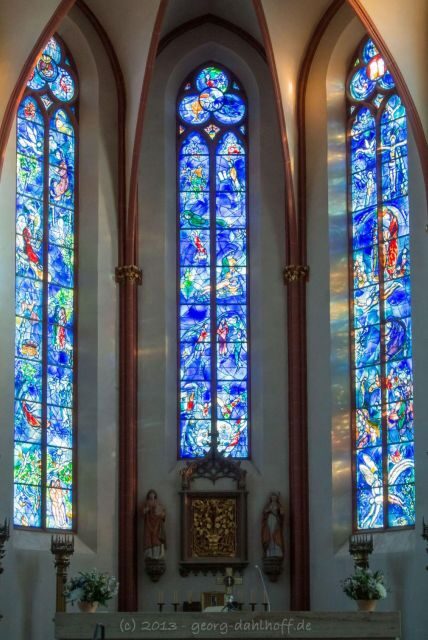
- Chagall windows at St. Stephan: Art inside a working church, seen with local framing.
- Church-and-square rhythm: Quick stops that build a clear city map.
- Roman archaeology visits by arrangement: Not just “look and move on.”
- Fastnacht season bonus: You’ll get a Carnival highlight when it’s happening.
- German live guiding with English availability: Check your departure for the language mix.
Meeting at Luther Church: Finding the Roman Theater in plain sight
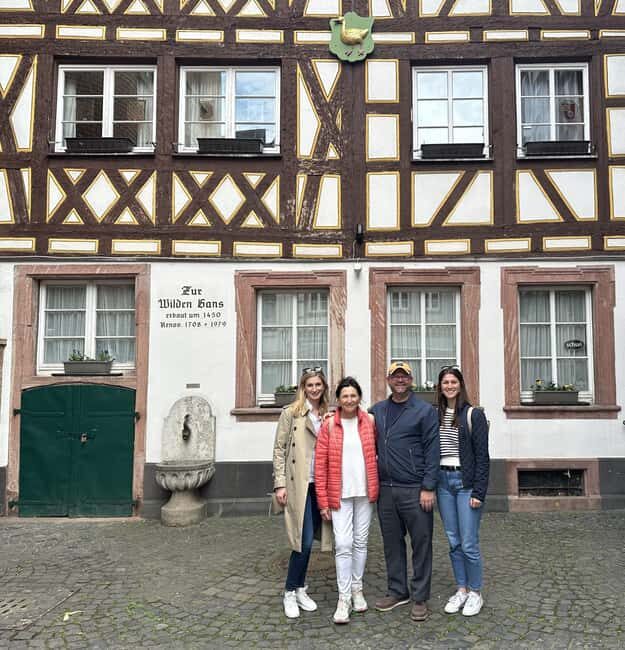
You’ll meet at the steps of the church above the Roman Theatre, identified as Luther Church. That choice is smart. It anchors you immediately in the “Mainz layered on layers” feeling—because the Roman site is right there in your first minutes.
This start also helps you get your bearings fast. Even before you learn facts, you’re orienting to where the city’s center flows: from the Roman Theater area toward the Altstadt and the Domplatz zone. If you arrive early, take 2–3 minutes to look around the steps and surrounding streets. You’re about to walk a line of major stops, and that first glance helps everything click later.
You can also read our reviews of more guided tours in Mainz


Römisches Theater to Altstadt: Mainz’s Roman opener, then the city takes over
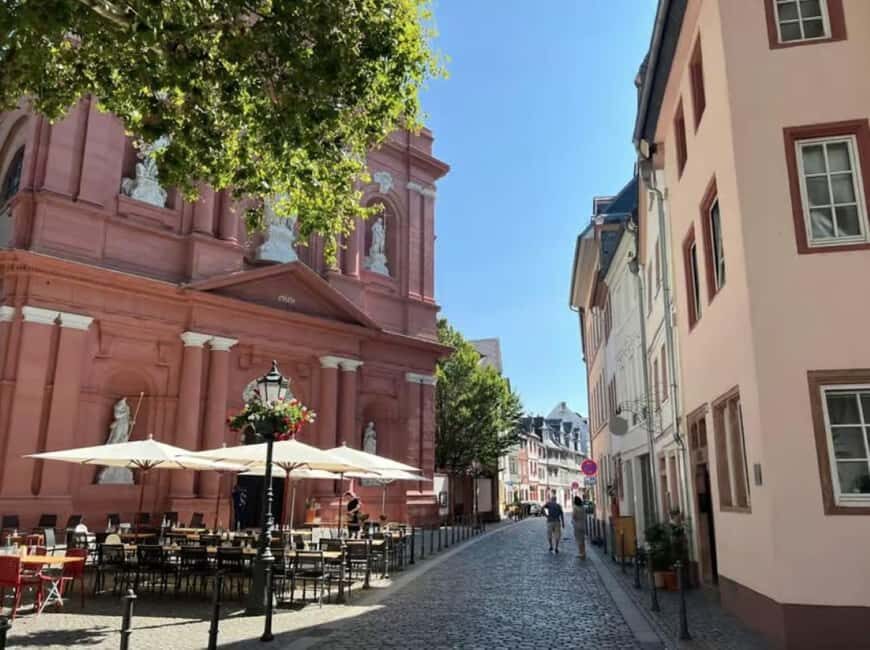
The tour begins at the Römisches Theater for about 25 minutes. This isn’t the kind of “Roman ruins from a distance” situation. You’re guided through what you’re seeing, and why Mainz mattered in that period. Expect the guide to translate the stones into a story you can hold—how the theater fits the city and why it still shapes how you move through the center.
Next comes the Altstadt section for roughly 30 minutes. This is where the walk starts to feel like a real city stroll, not a museum route. You’ll connect the Roman beginning to the medieval and church-centered Mainz you’ll keep seeing. The draw here is pacing: Roman first, then the lived-in streetscape.
Potential drawback: if you’re only here for modern Mainz vibes, this early Roman emphasis may feel like “wait, when do we get to the fun.” On the flip side, I think it’s worth it—because it makes later church art and squares feel like part of one long continuity, not separate attractions.
St. Ignatius, Kirschgarten, and the Domplatz market moment
After the Altstadt, you’ll move through a string of meaningful stops, each short and focused. You’ll spend about 15 minutes at the Parish of St. Ignatius, then continue to Kirschgarten for about 15 minutes. These aren’t random street-name breaks. You’re building a sense of where community life and spiritual life sit in the city’s layout, and how that shapes Mainz’s “center of gravity.”
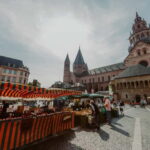
Then you get to the Domplatz Wochenmarkt for around 10 minutes. Even if you don’t linger to shop, the market stop is useful because it places you in current-day Mainz. It’s not just architecture; it’s people and routines. If your timing lines up with the market being active, you’ll see why the city square remains a magnet.
A practical thought: markets can be busy and unpredictable. In a group walk like this, the goal is to glimpse and understand, not to shop for long. If you care about browsing, plan to return later on your own after the tour finishes.
Alter Dom St. Johannis and Ludwigsstraße: Tracing Mainz’s shifts
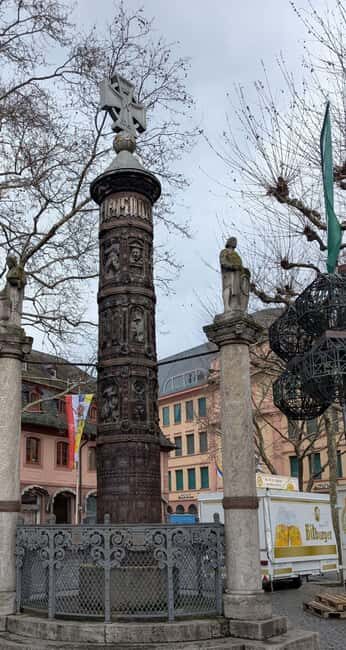
You’ll then see Alter Dom St. Johannis (about 15 minutes). This stop is valuable because it teaches you to read what changes over time—how sacred places evolve, and how Mainz’s identity keeps getting rebuilt. Even without going ultra-technical, the guided explanation helps you notice details you might otherwise skip.
From there the route moves along Ludwigsstraße (about 10 minutes) and then Ballplatz (about 10 minutes). These shorter segments matter more than they look. They stitch the longer landmark stops together so you understand the spacing and the way streets funnel you toward the Domplatz area and the church zone.
If you like walking routes that leave you with a mental map afterward, these little connector stops are exactly what you want. You’re not just collecting photos—you’re learning how the city flows.
The Chagall Windows at St. Stephan: where the mood turns
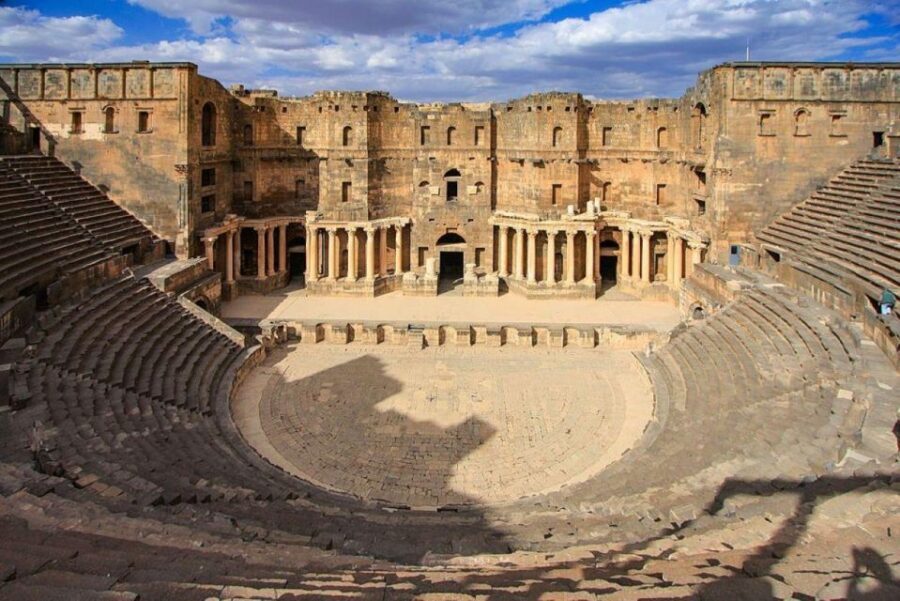
The emotional highlight comes near the end. You’ll visit St. Stefan/St. Stephan for the Chagall windows experience, guided and arranged as part of the tour. This is where Mainz stops being “Roman and church exteriors” and becomes a place where you can see a specific artistic viewpoint tied to faith.
The tour includes time at Kath. Pfarramt St. Stephan (about 20 minutes), and you finish at St. Stephan’s Church. That finish matters. When you end at the church itself, you can linger quietly for a few minutes if the mood hits. Even if you’re not a museum-person, seeing artwork like this in a working religious space tends to land differently than a standard gallery viewing.
Why it works: after a route heavy on stone history, the Chagall windows give you color, symbolism, and a different kind of time travel—one that’s about meaning more than dates.


Fastnacht season highlight: a Carnival nod built into the route
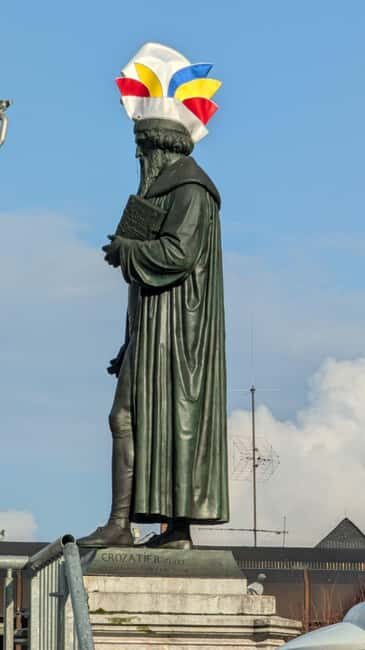
If you book during Fastnachtszeit, you’ll get a Fastnacht highlight included in the experience. The tour won’t turn into a full Carnival lecture (at least not based on how it’s structured), but you can expect the guide to weave in seasonal context where it fits the route.
This is a good thing to plan around. Carnival in the streets is one of Mainz’s signatures, but it changes how places feel. If you want the full story of Carnival history, you might need extra time on your own—yet the tour still gives you a starting thread that connects the city’s landmarks to what’s going on right then.
German/English guiding and the Q&A culture
The live tour guide is German, and the experience is advertised as available in English as well—so it’s smart to double-check your selected departure language. Either way, what you’re buying for your time isn’t just sight-seeing. It’s a guided conversation with someone who knows how to connect dots.
The reviews give a clear picture of what works: people repeatedly mention that every question got answered and that the guide’s delivery felt authentic. One guide name that comes up is Andreas, praised for strong knowledge and for sharing enthusiasm for the city. That matters because Mainz can be hard to “decode” quickly unless someone points out what to notice.
Practical tip: come with 1–2 questions you actually care about, like what kind of Roman presence Mainz had or what the Chagall windows represent in context. Even short Q&A moments can turn a decent tour into a memorable one.
Duration and walking rhythm: two hours that don’t feel rushed
The tour runs 2 hours. Walking time is described as about 60 minutes, though you may feel you’re “walking more” because you move between multiple short stops. The good news: each segment is short—many are 10–15 minutes—so you’re not stuck in one long stretch where your feet lose interest.
This format is ideal if you want a classic city overview without committing to a whole day. It’s also a friendly length for pairing with lunch or an afternoon on the Rhine.
If you’re the type who likes to see everything slowly, you may want to budget extra time afterward—especially around the church areas and Domplatz, where you can stop on your own.
Price and value: is $20 for this walk fair?
At $20 per person, this tour feels like value if your priorities match the highlights. You’re not just getting a stroll with generic commentary. You’re getting a guided walk that includes specific visits and arranged access—most notably the Roman excavations and the Chagall windows at St. Stephan.
The value equation works because:
- The route bundles major sites into a compact 2-hour window.
- The guide helps you understand what you’re looking at, especially around the Roman elements.
- The Chagall windows visit is a standout, and those kinds of art-and-church moments are usually where tours feel most “worth it.”
Where it may not be the best fit: if you want a heavier emphasis on political history or Carnival history beyond a quick highlight, the Roman focus could feel limiting. In that case, you might use this as your quick Mainz orientation and then tailor the rest of your day.
Who should book this Mainz on the Rhine walk
This tour is a great fit if you want:
- A short orientation walk through Mainz’s core.
- A mix of Rome + churches + meaningful art.
- A guide who answers questions and keeps the storytelling anchored to place.
- A route you can finish and immediately continue exploring on foot.
It may be less ideal if:
- You’re coming mostly for Carnival history depth and less for Roman/archaeology and church stops.
- You dislike any tour that includes multiple church interiors/exterior holy-place explanations.
Should you book this tour?
I’d book it if you want the most efficient way to understand Mainz’s layers—Roman Theater roots, center-square life, then the artistic payoff at St. Stephan’s Chagall windows. The price is reasonable for what you get, and the repeated praise for the guide’s answers and authenticity is exactly what you want in a guided walk.
If your personal “must-do” is primarily modern Mainz or a full Carnival story, consider booking it anyway but plan one extra activity afterward that goes deeper into the topic you care about most.
FAQ
How long is the Mainz guided tour?
The tour lasts 2 hours.
Where does the tour start and where does it end?
You meet at the steps of the church above the Roman Theatre (Luther Church). The tour ends at St. Stephan’s Church.
What are the main things included in the tour?
You’ll get a guided walk through Mainz, with visits arranged for the Roman excavations and the Chagall windows in Mainz, plus multiple church and holy-place stops.
How much walking is there?
You’ll walk for about 60 minutes during the 2-hour experience, with shorter guided segments and stops along the way.
Is there a Fastnacht (Carnival) highlight?
Yes. During Fastnachtszeit, the tour includes a Fastnacht highlight.
Is the tour wheelchair accessible and in English?
It is wheelchair accessible. The tour is listed as available in German (and English is indicated as well), so check your selected time to confirm the language for your departure.