REVIEW · LEIPZIG
Leipzig City Tour 2.0: entertaining on the go mobile projections
Book on Viator →Operated by Stadtstromer - Stadtführungen Leipzig: zu Fuß • Segway • Scuddy · Bookable on Viator
Leipzig City Tour 2.0 turns a normal walk into a moving story. You follow a set route while mobile projection scenes and handy headsets connect major places to the ideas behind them.
I like how it mixes history and modern Leipzig in one flowing route, so the city feels like it’s still thinking today. It also runs on a tight 1 hour 30 minutes pace, with enough stops to stay interesting without dragging.
One thing to consider: it’s technology-led. If you’re not excited by a guided soundtrack and projection moments at each stop, you may prefer a more old-school walking tour instead.
In This Review
- Key highlights at a glance
- Leipzig City Tour 2.0: Time-Shift Learning With Mobile Projections
- Headsets, Photos, and the “Look Around” Advantage
- Starting on Richard-Wagner-Straße: Quick Setup, Clear Flow
- Stop-by-Stop: Rail Beginnings to Leipzig’s Biggest Square
- The city intro moment that sets the tone
- Where Germany’s long-distance rail story starts
- Passages and courtyards: the city’s secret shortcuts
- 1989 peaceful revolution: important context, no church visit
- A column with a question mark answer
- Leipzig’s first skyscraper: still special today
- The largest inner-city square in Germany
- Between Augustusplatz and Marktplatz: More Than Just a Link
- A house tied to robes
- A surprising sculpture from the GDR era
- Leipzig’s Passenger System, Snacking, and the Trading Mindset
- Passenger system today: connected to Hansa-Hof
- Even today, you can still snack there
- Stock market irreplaceable in a commerce city
- Old Town Hall and Market Square: Hidden Layers Under Your Feet
- Built on old foundations
- Market square to the tin can
- Price and Value: Why $18.97 Can Make Sense Here
- Who This Tour Fits Best (and Who Might Skip It)
- Should You Book Leipzig City Tour 2.0?
- FAQ
- How long is the Leipzig City Tour 2.0?
- How much does it cost?
- Is the ticket mobile?
- Where do I meet for the tour?
- How many people are on the tour?
- Will I go inside a church during the 1989 segment?
- What tech does the tour use?
- Is public transportation nearby?
- Is service allowed?
- Is there free cancellation?
Key highlights at a glance
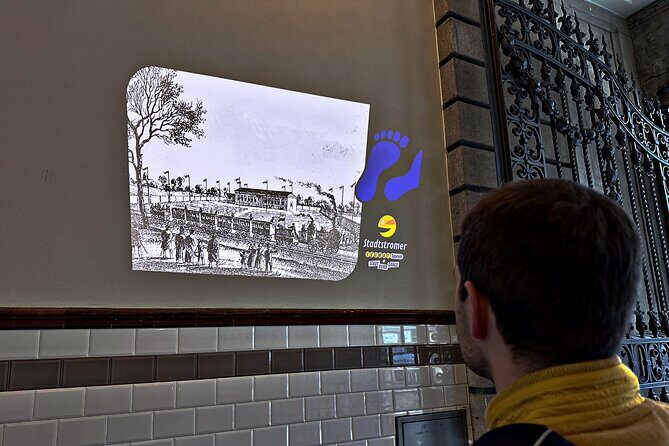
- Mobile projections on the move that bring key moments to life where they happened
- Headsets for freer looking and photos while you stay with the group
- 1989 peaceful revolution context without going inside a church
- City “passages” and courtyards explained as a real part of the urban layout
- Stops built around big symbols: a first skyscraper, a major inner-city square, and the Old Town Hall area
Leipzig City Tour 2.0: Time-Shift Learning With Mobile Projections
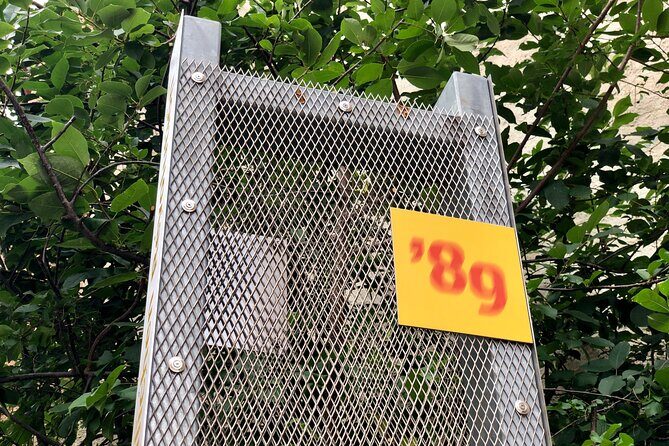
This tour works because it doesn’t treat landmarks like stop-and-pose objects. It connects each place to a specific question: where did travel begin, why is that column there, what does a building name have to do with robes, and why a sculpture feels surprising in the GDR era. The route is basically a sequence of answers you pick up in the street.
The mobile projections are the heart of it. You’re not just hearing facts. Visual scenes pop into focus at the right moments, making the past feel “located,” not floating somewhere in a textbook. You get the sense of Leipzig changing over time, then snapping back into today as you move along.
I also like the pacing. About 90 minutes keeps it doable even if you’re juggling a full day of museums, restaurants, or trains. And the group size cap (up to 30) helps it feel like a real guided experience rather than a moving crowd with no conversation.
Possible drawback: because it’s projection-driven, you’ll want to stay attentive at each stop. If you wander off to take pictures early, you can miss the point of that stop’s story.
You can also read our reviews of more city tours in Leipzig



Headsets, Photos, and the “Look Around” Advantage
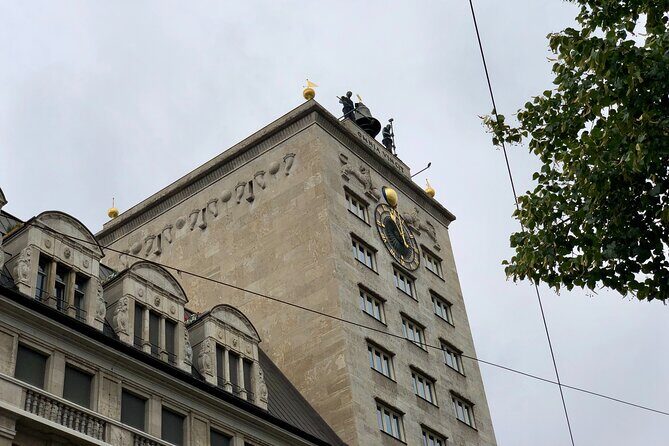
A lot of multimedia tours still force you to face forward the whole time. This one gives you something better: modern headsets designed so you can look around freely and still capture photos without losing the narration.
That matters in a city like Leipzig, where the fun is often in the details—passages, courtyards, and sightlines between squares. With a headset, you can glance up, check the building angles, and keep listening at the same time. You’re not stuck with your head down.
Also, the tour is built for people who want more than one level of information. If you’re the type who likes a quick mental map—who connects street corners to stories—you’ll appreciate the way the tour keeps returning to “why this place is important” rather than only naming what it is.
Starting on Richard-Wagner-Straße: Quick Setup, Clear Flow

You’ll meet at Richard-Wagner-Straße 13, 04109 Leipzig, Germany, and the tour ends back at the meeting point. That simple loop is practical. You don’t have to rebuild your route at the end or wonder how you’ll get back.
The tour is also described as near public transportation, which helps if you’re mixing it with other stops in the city center. And since it’s designed for most people to participate, it tends to work well as a first city tour—especially if you’re trying to understand Leipzig’s layout fast.
One more practical note: you’re using a mobile ticket, and you’ll receive confirmation at the time of booking. That’s useful if you prefer light planning on travel days.
Stop-by-Stop: Rail Beginnings to Leipzig’s Biggest Square
Below is how the route “reads” as you walk. I’m going to focus on what each stop tries to teach you—because that’s what makes the tour worth your time.
The city intro moment that sets the tone
The tour starts with a promise: they show the city of Leipzig in a unique way. This first segment matters because it teaches you how to watch the rest of the tour. Instead of expecting random facts, you start expecting connections—between street layout, structures, and turning points.



Where Germany’s long-distance rail story starts
Next up is a big claim: from here started the first German long-distance railway. Even if you already know Leipzig as a rail hub, this stop gives the topic a sharper origin point. It reframes the city’s growth as something planned and directional—not just “rail happened here.”
What you can do with this stop: use it to understand why certain areas feel like “connections” rather than isolated blocks. The tour keeps returning to movement—people, goods, and ideas.
Passages and courtyards: the city’s secret shortcuts
Then you get Leipzig’s signature urban texture: the passages and courtyards that shape the cityscape. This is one of those topics that’s easy to nod at until you learn how it functions. The tour doesn’t just point them out; it helps you see them as part of how Leipzig moves and trades.
If you enjoy walking through semi-private spaces—places that aren’t quite streets but also aren’t indoors—this section is a highlight.
1989 peaceful revolution: important context, no church visit
You’ll also learn about the origin of the peaceful revolution 1989. And there’s a clear boundary: they do not go to church. That’s useful if you’re worried about a walking schedule that includes longer indoor time or places where entry rules can slow things down.
This stop is best approached with an open mind. The tour’s job here is to connect a political turning point to the setting you’re standing in, so it stops feeling abstract.
A column with a question mark answer
Then comes a straightforward mystery: why is the column there? That kind of stop is exactly where projection tours shine—because the “why” is often hard to infer just by looking at a monument.
You’ll get an explanation, and it should make the column feel like a statement in the city’s ongoing conversation, not just a photo backdrop.
Leipzig’s first skyscraper: still special today
After that, you’ll hear about the city’s first skyscraper and why it still offers something special today. This is a nice contrast to the older urban parts you’ve been seeing. It gives you a reminder that Leipzig has modern ambition inside a historic core.
Practical takeaway: when you see a tall building in a center like this, try to remember what the tour emphasizes—how that choice reflects the city’s era, needs, and confidence.
The largest inner-city square in Germany
Next is the big open space: the largest inner city square in Germany. Squares can feel generic when you rush them. Here, you’re guided to see the square as an important stage, not empty real estate.
This is also a good moment to pause mentally and check your bearings. By the time you reach this scale of space, you’ve already learned enough street logic to understand how the rest of the city connects.
Between Augustusplatz and Marktplatz: More Than Just a Link
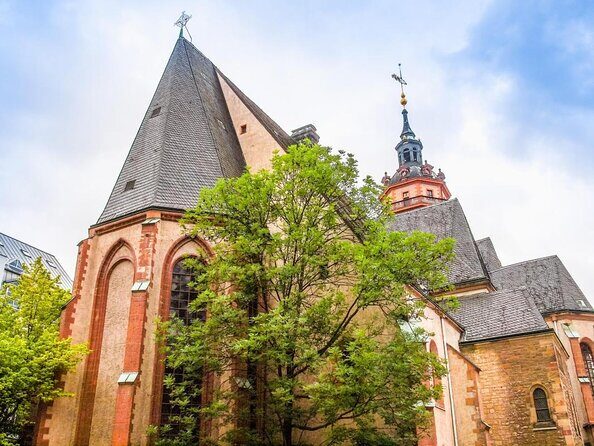
The tour doesn’t treat routes between major squares as boring “getting from A to B.” One stop explicitly frames a connection between Augustusplatz and Markplatz as more than a pathway. That wording is key. You’re being shown how movement in Leipzig has its own identity.
A house tied to robes
There’s also a stop about a house and what it has to do with robes. I like these kinds of stories because they make the city’s naming habits feel personal. Leipzig isn’t only labeled by official facts; it’s labeled by what people did, wore, or traded.
If you’re the type who enjoys wordplay and local storytelling, you’ll likely enjoy this stop.
A surprising sculpture from the GDR era
Another memorable part: a sculpture that is astonishing because it was still erected in the time of the GDR. That’s a strong prompt. It encourages you to notice how public art can signal something bigger than aesthetics—how messages survived political limits.
You’ll leave with a new habit: looking at statues as evidence of an era’s thinking, not just decorations.
Leipzig’s Passenger System, Snacking, and the Trading Mindset
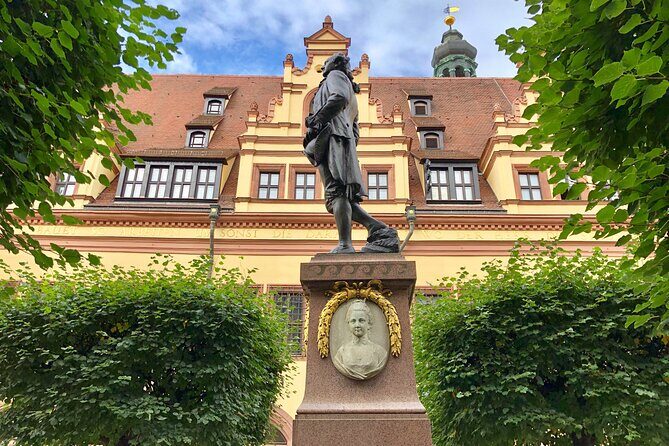
One of the tour’s smartest ideas is that it connects architecture to daily behavior. That’s where Leipzig can feel most alive.
Passenger system today: connected to Hansa-Hof
As part of the Leipzig Passenger System, the tour brings you to a place connected to Hansa-Hof. Passages often act like hidden arteries. They’re not just pretty corridors—they’re practical ways to move, meet, shop, and keep going in weather.
Even today, you can still snack there
And yes, there’s a stop that straight-up points out that even today you can enjoy a snack there. That detail matters. It tells you the tour isn’t only academic. It’s steering you toward the kind of “use the city” moments that make a visit feel normal.
If you’re wondering whether Leipzig tours lead to anything beyond photos, this is a clear yes.
Stock market irreplaceable in a commerce city
Then the storyline shifts into economics: in a city of commerce, the stock market was irreplaceable. This helps Leipzig click as a business city as well as a cultural one.
You’ll probably start noticing how marketplaces aren’t only places of transactions; they’re places of power, information, and timing. The tour nudges you to think that way.
Old Town Hall and Market Square: Hidden Layers Under Your Feet
In front of the Old Town Hall, the marketplace has hidden a lot. That’s a great line because markets are often treated as one-layer spaces. This part suggests there’s more going on beneath the surface—historical layers you might miss if you only browse stalls.
Built on old foundations
You’ll also see the idea of buildings being built on old foundations. When a tour points out foundation history, it turns “old city center” from a slogan into something you can feel.
It’s also a helpful reminder: cities keep reusing their own ground, not starting over every time.
Market square to the tin can
Finally, the tour connects the market square with the tin can. That nickname alone is a clue that this stop is meant to be memorable. It’s likely included because the structure or connection feels unusual enough to ask questions—exactly what this tour is good at.
If you like quirky urban details, this end stretch can land well.
Price and Value: Why $18.97 Can Make Sense Here
At $18.97 per person for about 1.5 hours, the value depends on what you want. If you’re looking for a quick highlights walk, you might find cheaper options. But if you want a guided route where projections + headsets turn each stop into a mini story with a reason behind it, the price starts to feel fair.
The best argument for the cost here is the format. You’re paying for more than spoken narration. You’re paying for a tech setup designed to keep you oriented and engaged while you’re moving—plus a route built around specific themes: rail origins, 1989 context, city symbols, and trading life.
And with a maximum of 30 people, you’re not likely to feel like background noise in a huge group.
Who This Tour Fits Best (and Who Might Skip It)
This tour fits especially well if you:
- Want a fast way to understand Leipzig’s center in a single outing
- Like visuals that tie history to street-level locations
- Prefer headsets over trying to keep up by staring at a guide
You might consider skipping if you:
- Don’t want a tech-led format or you’d rather roam independently
- Prefer long indoor stops and deep museum-style explanation
Should You Book Leipzig City Tour 2.0?
If your goal is to get your bearings quickly and learn Leipzig in a way that feels modern, I’d book it. The combination of mobile projections, headsets, and a route built around clear “why” questions makes it more engaging than a plain walking tour.
Also, the vibe seems consistently positive. Reviews praise the friendly greeting, modern equipment, and the way the time frame feels just right. One guide name that came up is Mario Jung, and his role seems tied to the smooth, practical tour experience.
My simple rule: if you like guided learning that’s active (not lectures), this is a strong choice.
FAQ
How long is the Leipzig City Tour 2.0?
It runs for about 1 hour 30 minutes.
How much does it cost?
The price is $18.97 per person.
Is the ticket mobile?
Yes, it’s listed as a mobile ticket.
Where do I meet for the tour?
The meeting point is Richard-Wagner-Straße 13, 04109 Leipzig, Germany.
How many people are on the tour?
The tour has a maximum of 30 travelers.
Will I go inside a church during the 1989 segment?
No. The tour notes that they do not go to church.
What tech does the tour use?
It uses modern headsets so you can look around freely and take photos, plus multimedia projections to tell the stories.
Is public transportation nearby?
Yes, it’s described as near public transportation.
Is service allowed?
Service animals are allowed.
Is there free cancellation?
Yes. You can cancel up to 24 hours in advance for a full refund, based on local time.