REVIEW · HAMBURG
Hamburg: Speicherstadt and Hafencity Guided Tour
Book on GetYourGuide →Operated by Hamburg-Stadtführung · Bookable on GetYourGuide
Hamburg’s harbor tells a two-era story. This short, guided walk connects Speicherstadt warehouses and Hanseatic trade with the bold modern landmark of Elbphilharmonie, then you roll right into Hafencity’s newer architecture. I also like how the tour doesn’t just point at buildings; it explains why Hamburg looked the way it did, with the Pfeffersäcken merchants story and the Dutch Brook courtyards making the trade-driven everyday life feel real.
One thing to plan for: it can mean a good chunk of time outside along the waterfront and terraces, so chilly weather can turn comfortable sightseeing into stiff-neck survival. If it’s cold, dress like you’ll be standing still for moments at a time, not just walking through.
If you want a tight, high-value hit of Hamburg—history first, then future—you’ll probably like the flow here. At a 2-hour duration and $16 per person, it’s built for people who want the big sights without losing a whole day to transit and ticket lines.
In This Review
- Key highlights worth marking on your mental map
- Getting oriented at Sandtorkai 74 (and starting smoothly)
- Elbphilharmonie first: why starting here works
- Speicherstadt: how the warehouses tell the Hanseatic story
- Following the Pfeffersäcken: trade people, not just monuments
- Dutch Brook courtyards: the “cathedral feel” with a business brain
- Kaiser area + passing the Miniaturwunderland, coffee roasting, and spice museum
- Magellan Terraces: viewpoints that bridge past and present
- Hafencity after the old port: seeing the contrast on purpose
- Price and time: $16 for 2 hours, and how to judge the value
- Who this tour is best for (and who should choose differently)
- Should you book Hamburg’s Speicherstadt and Hafencity guided tour?
- FAQ
- FAQ
- How long is the Hamburg Speicherstadt and Hafencity guided tour?
- How much does the tour cost?
- What language is the live guide?
- Where does the tour meet?
- What main places will we see?
- Are entrance fees included?
- Is the tour wheelchair accessible?
- Can I cancel or pay later?
Key highlights worth marking on your mental map
- Speicherstadt warehouses explained: how the storage-and-trade system shaped the city
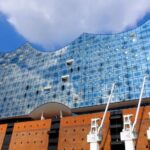
- Elbphilharmonie from multiple angles: the abstract facade as a harbor “crown”
- Pfeffersäcken merchant footsteps: you learn who drove the money and trade
- Dutch Brook inner courtyards: the “cathedral-like” trade spaces, not religious ones
- Hafencity contrast: modern, environmentally minded design right after the old port world
Getting oriented at Sandtorkai 74 (and starting smoothly)
Your tour starts at Sandtorkai 74, at the corner of Sandtorkai/Kaiserkai. The meeting point is on the square in front of the stairs, right by the white wall with the hole in the middle. That last detail is helpful—when you’re scanning faces for a group, you’ll have something fixed to look for.
This kind of waterfront start matters. Hamburg can feel like “walk, turn, walk, repeat,” so having a clear anchor location means you spend your first 5 minutes looking at buildings, not wandering for your guide. And since this is a 2-hour tour, you want to be on time so the route doesn’t get shortened.
Language is German, so if your German is basic, don’t panic—good guides usually keep explanations clear even when they’re speaking fast. The more you can catch key terms about trade and architecture, the more the story will click.
You can also read our reviews of more guided tours in Hamburg



Elbphilharmonie first: why starting here works
A lot of Hamburg tours start in the historic core. This one flips the order by leading you from Elbphilharmonie into the older port world. I like that. The building is the perfect visual “before and after” marker: modern design right over the harbor, then you backtrack into the trade engine that built the city.
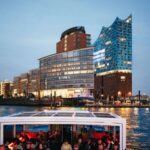
You’ll get a guided look at Elbphilharmonie, including how its abstract front reads like a crown over the water. Even when you’re only seeing parts from outside while you move, it still hits. It’s not just a photo stop. The tour uses it as a framing point: Hamburg as a working port today, and Hamburg as a trading powerhouse in the past.
Practical note: this area is often exposed. In winter, you’ll want layers you can keep on and still move comfortably in. One review flagged that an “outside tour” in ice-cold conditions wasn’t fun, which makes sense—architecture explanations are great, but you can’t warm up your hands while holding your phone.
Speicherstadt: how the warehouses tell the Hanseatic story
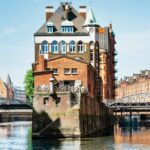
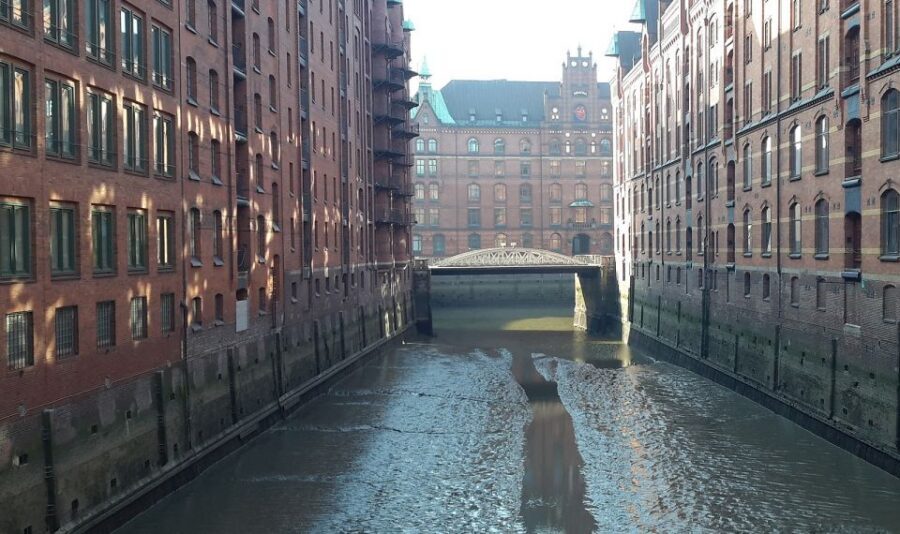
Then the tour shifts into Speicherstadt, and that’s where you’ll feel the city’s “trade brain.” The Speicherstadt isn’t presented as a pretty postcard neighborhood. It’s explained through the logic of the Hanseatic League and the purpose of the warehouses.
This is one of the most praised parts of the experience: the explanations are detailed and tied to what the buildings were actually for. The warehouses weren’t just storage; they were tools for commerce—controlled space, money-handling, and the ability to move goods through a powerful maritime network.
What you’ll walk through here isn’t random. You’re guided so you can start noticing patterns: the way trade structures the streets and sightlines, and how the built environment supports everyday business. It’s a nice mental switch from “old buildings” to “working systems.”
Following the Pfeffersäcken: trade people, not just monuments
After the Elbphilharmonie-to-merchant-to-warehouse setup, the route slows enough for context to land. You’ll follow in the footsteps of the Hanseatic merchants called the Pfeffersäcken. The name alone is a clue that this tour wants to talk about goods and money, not just dates.
You’ll hear how this world ran on commerce and cash. The tour specifically points out that the spaces you’ll see around Dutch Brook look almost church-like—people sometimes assume they’re religious. Here, you’re coached to see them as the opposite: trade and money set the daily rhythm.
That reframing is worth it. Once you understand that the architecture is built to support business life, you stop treating courtyards as decorative and start treating them like functional social hubs for merchants.
Dutch Brook courtyards: the “cathedral feel” with a business brain
One of the most distinctive parts is the stop at the inner courtyards on the Dutch Brook. The tour describes these as “cathedral-like,” but the key point is the interpretation: it was not a church, even if the shapes and scale can trick your eye.
This is the kind of detail that turns a guided walk into actual learning. You’re not just hearing that Hamburg was important—you’re watching how that importance looks in the space. Courtyards like these also give you a natural reset from the street-level pace. You get a moment to look up, breathe, and connect what you’re seeing with what the guide is explaining.
If you’re a fan of architecture but don’t want a lecture, this is a good middle ground. The story is what makes the buildings readable.



Kaiser area + passing the Miniaturwunderland, coffee roasting, and spice museum
Between the big anchors—Elbphilharmonie, Speicherstadt, Hafencity—you’ll pass a handful of stops that give Hamburg some flavor beyond pure architecture.
You’ll go from the Elbphilharmonie toward the Kaiserkai area, and you’ll pass Miniaturwunderland, noted here as the world’s largest model railway. Even if you don’t go inside, the fact that it’s part of the route is a clue: Hamburg likes playful detail, not only heavy history.
Then you’ll also pass the old coffee roasting plant and the spice museum, with the tour including time associated with the coffee roasting stop. One review pointed out that a roughly 15-minute shopping break there was too long and wished for more explanation about where the coffee beans come from and how the roasting process works.
So here’s how I’d adjust expectations: treat the coffee stop as an intermission and a chance to look around, not as your deep technical coffee seminar. If you’re the type who loves process details, you may want to ask your guide direct questions. The review that praised the guide’s openness to questions suggests that pressing for specifics can pay off.
Either way, the inclusion of coffee and spice connects neatly to the merchant story. These weren’t random cultural stops—they’re linked to what the Pfeffersäcken economy was about: goods, trade, and routes.
Magellan Terraces: viewpoints that bridge past and present
A key “in-between” moment is the Magellan Terraces, described as being right across from the Speicherstadt. This is your chance to get a wider view and understand how the old port area sits relative to the harbor.
Viewpoints matter because they prevent the tour from becoming only inward-looking. After walking courtyards and warehouse-like spaces, stepping into a terrace perspective helps you picture movement—how ships, goods, and people connect across the water.
Also, if you’re planning photos, this is where your shots usually get better. Courtyards are angled; terraces let you capture bigger context. Just watch the weather. Terraces can be wind tunnels in Hamburg.
Hafencity after the old port: seeing the contrast on purpose
After you’ve spent time in the Speicherstadt world, the tour jumps to Hafencity, the newest and most modern part of Hamburg. This contrast is a big part of the tour’s value. You don’t end with just another pretty building. You end with a question: what comes after trade warehouses?
Hafencity is presented as a place that shows what’s architecturally possible today, including sophisticated and environmentally friendly buildings. Even without extra technical jargon, you can sense the shift: from storage for global commerce to design and planning for present-day life.
I like endings like this. It prevents the experience from turning into only nostalgia. You finish with a sense of how Hamburg still thinks about the waterfront as a working stage for the city’s future.
Price and time: $16 for 2 hours, and how to judge the value
At $16 per person for a 2-hour guided tour, the value is strong—especially because the guide work is the main “product” here. The listing notes professional city guide, and the reviews back up that the explanations are strong, specific, and answer questions well.
What you’re buying, in plain terms, is an organized route plus interpretation. Instead of figuring out what Speicherstadt is and why it matters by yourself, you get the Hanseatic League framing, the Pfeffersäcken merchant story, and the Dutch Brook courtyard interpretation. That’s the stuff you’d otherwise miss if you just wandered.
Two small things to keep in mind on value:
- Entrance fees aren’t included. If any stops you want require tickets, you may need to pay separately.
- You’re walking through multiple zones, so the route assumes you’re okay with a short, efficient pace and outdoor exposure.
Still, for $16 and 2 hours, it’s one of the more efficient ways to connect the harbor’s past and present without committing to a full day.
Who this tour is best for (and who should choose differently)
This tour suits you if:
- you want a short Hamburg experience that hits the core icons
- you enjoy guided storytelling tied to place (not just a list of sights)
- you like architecture when it comes with a purpose
It may be less ideal if:
- you hate cold-weather outdoor walking (at least part of this route will be outside)
- you want deep technical detail at the coffee stop rather than a quick break and a guided overview
For families, it can work because the route passes Miniaturwunderland and mixes history with everyday trade goods. For couples and solo travelers who want structure, it’s also a great “starter tour” that gives you a mental map for the rest of your trip.
Should you book Hamburg’s Speicherstadt and Hafencity guided tour?
I’d book it if you want the best kind of Hamburg tour: one that explains why the city looks the way it does, not just what it looks like. The Speicherstadt warehouse-to-Pfeffersäcken story, paired with Hafencity’s modern contrast, makes the 2 hours feel purposeful.
If you’re traveling in winter or with limited tolerance for wind and cold, dress for it and expect some outdoor exposure. And if coffee and spice history matters to you, come prepared to ask questions during that coffee roasting stop—you’ll likely get better answers if you engage.
FAQ
FAQ
How long is the Hamburg Speicherstadt and Hafencity guided tour?
The tour lasts 2 hours.
How much does the tour cost?
The price is $16 per person.
What language is the live guide?
The tour is guided in German.
Where does the tour meet?
Meet at Sandtorkai 74, at the corner of Sandtorkai/Kaiserkai, on the square in front of the stairs and near the white wall with the hole in the middle.
What main places will we see?
You’ll cover Elbphilharmonie, Speicherstadt (including the Dutch Brook courtyards and Pfeffersäcken story), and then move on to Hafencity. The route also passes Miniaturwunderland, an old coffee roasting plant, the spice museum, and the Magellan Terraces.
Are entrance fees included?
No. Entrance fees are not included.
Is the tour wheelchair accessible?
Yes, it is listed as wheelchair accessible.
Can I cancel or pay later?
Yes. You can cancel up to 24 hours in advance for a full refund, and there is a reserve & pay later option.