REVIEW · HAMBURG
Hamburg: Private – Town Hall, Speicherstadt, Elbphilharmonie
Book on GetYourGuide →Operated by Schoenes Hamburg · Bookable on GetYourGuide
Hamburg history fits in two hours. This private route packs Hamburg Rathaus glory, the city’s port-era leftovers, and modern architecture into one smooth walk.
I especially love how the tour explains the buildings as living parts of the city’s power and trade, not just pretty facades. You’ll also get clear guidance on what to look for as you move from stop to stop.
My second big favorite is the stop at the St. Nikolai memorial ruins—wartime destruction turned into a place for memory. It hits harder because you’re standing right where the story connects to Hamburg’s everyday geography.
One thing to consider: the whole experience is only 2 hours, so the pacing stays efficient. If you want long breaks for photos, coffee, or wandering off-route, you’ll need to plan extra time before or after.
In This Review
- Key highlights you’ll feel right away
- A private Hamburg route that actually works in limited time
- Starting at Hamburg Town Hall: power, money, and ornate details
- St. Nikolai memorial ruins: where WWII history becomes part of the streets
- Deichstrasse merchant houses: 17th-century charm still surviving the war
- Speicherstadt’s UNESCO warehouse district: port trade in red brick
- HafenCity’s modern planning contrast before the big finale
- Elbphilharmonie: what to notice at the end of the timeline
- Price and value: what $294 per group buys you
- The guide factor: Jutta’s style makes the history stick
- Who this tour is for (and who should tweak the plan)
- Should you book this Hamburg private tour?
- FAQ
- How long is the Hamburg private tour?
- What does the tour cost?
- What’s included in the price?
- What sights are covered?
- What languages are available for the guide?
- Is transportation to the meeting point included?
- What are the booking and cancellation terms?
Key highlights you’ll feel right away
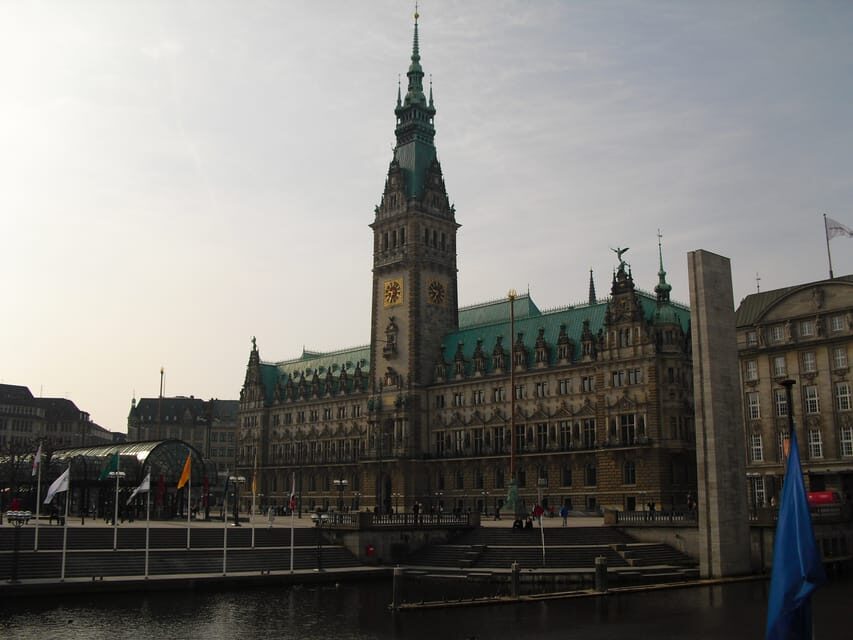
- Neo-renaissance Rathaus outside and inside focus, with a quick look at how the city governs
- St. Nikolai WWII memorial ruins and what they mean in the urban landscape
- Nicolaifleet views from Trostbrücke (you may catch it unless it’s low tide)
- Speicherstadt UNESCO warehouse district with red-brick streets and port history
- HafenCity modern planning contrast before you reach the concert-hall era
- Elbphilharmonie exterior photo stop at the end of the timeline
A private Hamburg route that actually works in limited time
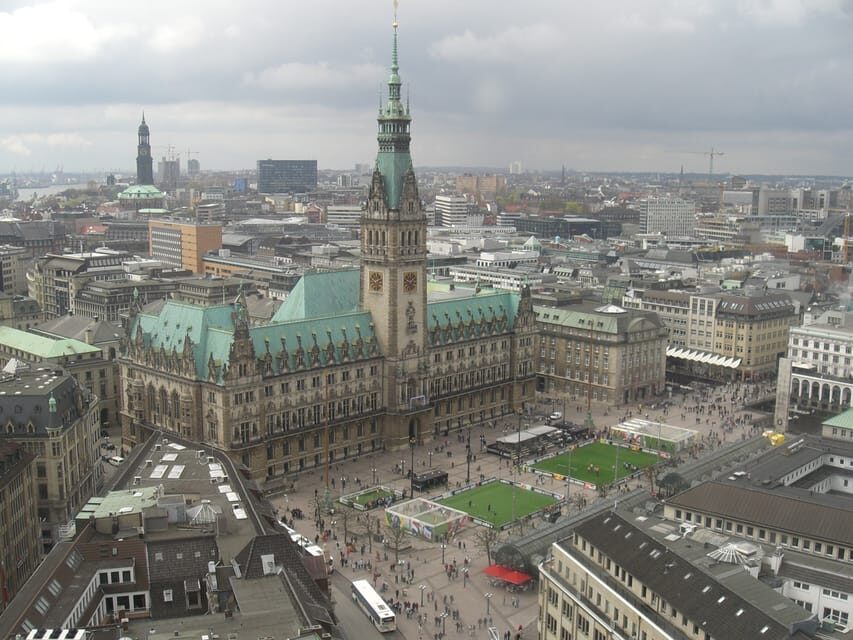
Hamburg can feel like a lot of city at once. This tour is built for time-crunched visitors who still want meaning, not just motion. You cover several centuries in a compact walk: civic power, maritime trade, wartime loss, and today’s architecture project all within a single 2-hour window.
The private format matters. When you’re not stuck behind a big group, your guide can adjust pacing and explain what you care about most—architecture details, street history, or the human side of the WWII memorial. The guide also runs the experience in German, English, Spanish, or French, which is handy if your group isn’t all the same language.
My advice: treat this tour like a quick “map + context” session. After it, you’ll know where to go next on your own—whether that’s coffee, a longer look at the warehouses, or an extended walk through HafenCity.
You can also read our reviews of more private tours in Hamburg



Starting at Hamburg Town Hall: power, money, and ornate details
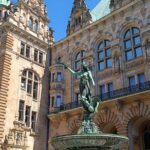
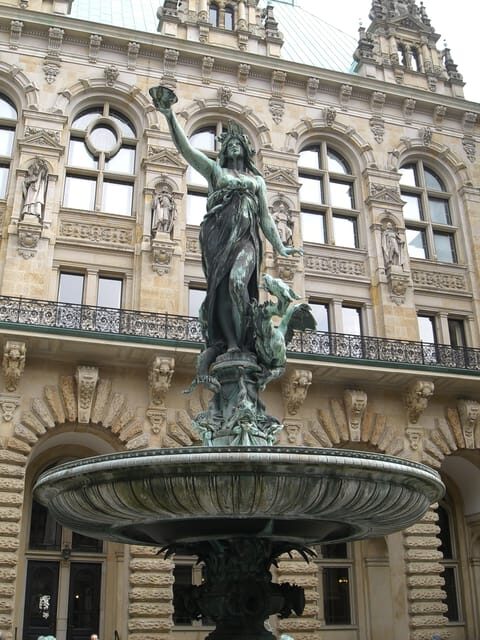
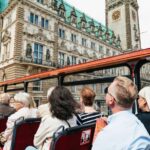
You begin in front of the Hamburg Rathaus, a neo-renaissance building that signals wealth and confidence from the start. Even before you step into the story, the architecture does the talking: proportions, ornament, and the grand entrance hall all point to how seriously Hamburg has always taken civic life.
A short stop includes a photo moment and a guided visit of about 15 minutes. Then you head toward the Hamburg Chamber of Commerce area, which has its own connection to Hamburg’s older commercial identity. The tour frames these locations as the city’s centers of decision-making—where trade and government have always been intertwined.
What I like here is the practicality. Instead of sending you off with a lecture, the guide points out specific visual cues in the Rathaus and explains how the building’s role evolved over time. If you’re the type who usually walks past facades, this is the part that helps you see what you’re looking at.
St. Nikolai memorial ruins: where WWII history becomes part of the streets
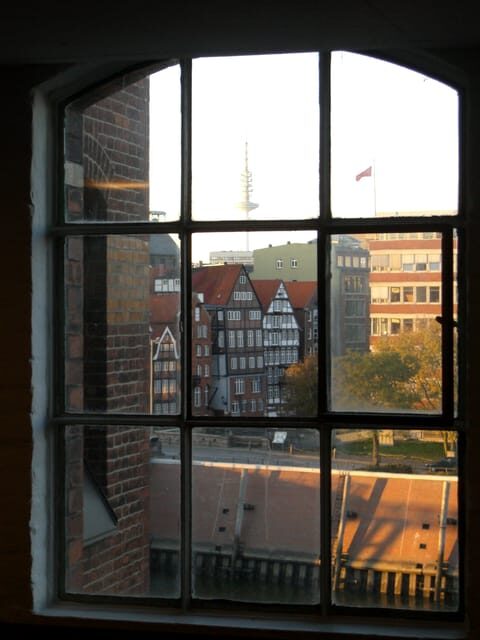
Next comes the Tro stbrücke area and the story of Nicolaifleet, Hamburg’s early port reminder from the 12th century. You’ll pause for photos and a short guided moment, and then you get a view of the waterway from a bridge—though the tour notes that visibility can depend on tides. If it’s low tide, you may see less water than you expect.
Right after that, you reach the St. Nikolai memorial stop. This is where the tour turns from trade and architecture into something more emotional. The church you’ll see is a ruin, and the guide explains that it was destroyed during WWII, with the remaining structure serving as a memorial for that impact.
If you only do one historical stop on this tour, make it this one. The best part isn’t just knowing dates—it’s watching how the city grew around a place meant to keep memory alive. You’re not visiting a museum panel in the abstract; you’re walking through the same kind of space Hamburg residents live with.
Deichstrasse merchant houses: 17th-century charm still surviving the war
After the memorial, the tour moves you into Deichstrasse, a street with protected merchant residences. This is one of those moments where the city’s layers show clearly. The guide highlights the 17th-century merchant housing along the street and emphasizes that this part of Hamburg retains its character despite WWII destruction.
You get about 15 minutes here with photo stops and guided time, which is enough to notice street rhythm and building style without feeling rushed. The guide also helps you understand what you’re looking at: merchant houses are not just old buildings. They’re a clue to how wealthy trade families lived, worked, and displayed status along key routes.
Practical bonus: the tour route is lined with everyday food options. You may find opportunities to grab ice cream, stop for a meal, or even try whiskey tastings along the way. The tour doesn’t force you to do anything extra, but it’s useful when you’re planning your day so you don’t waste time later hunting for a quick bite.
Speicherstadt’s UNESCO warehouse district: port trade in red brick
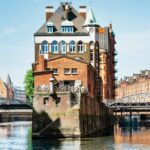
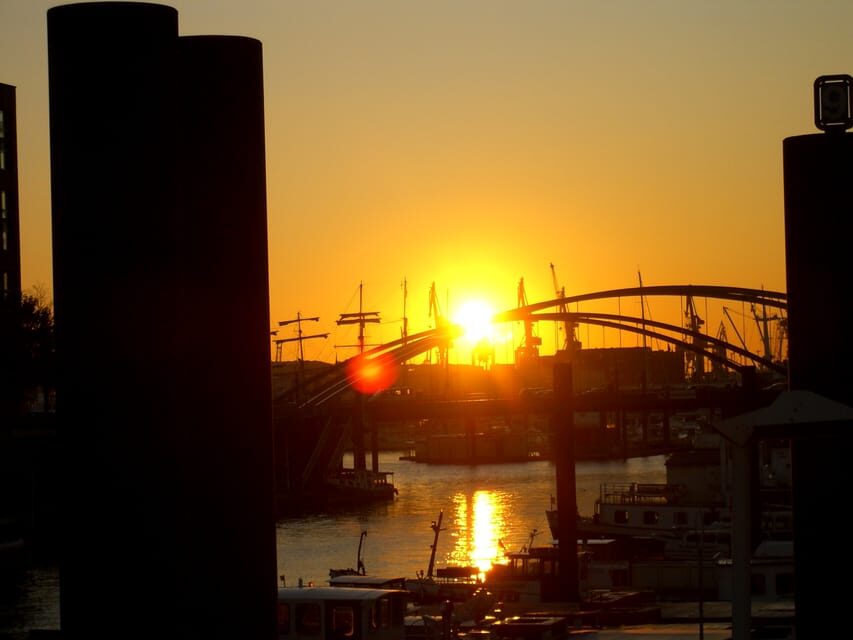
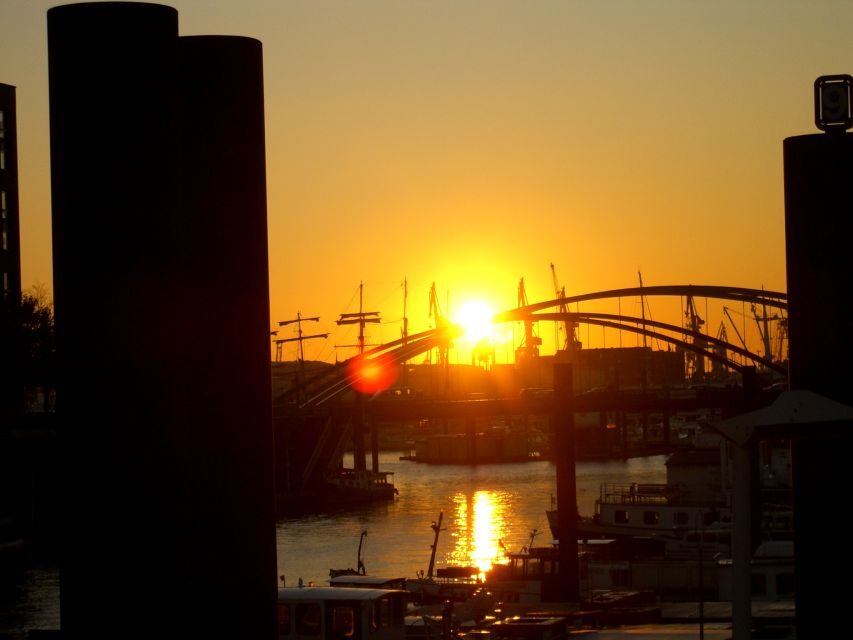
Then you step into Speicherstadt, the UNESCO-recognized warehouse district. This is the 19th-century layer of the story: goods arriving by flat ships, stored in brick warehouses, and moved through a port system that shaped Hamburg’s growth.
Your stop here includes a brief guided visit (about 10 minutes) and time for photos. The guide also suggests you might visit a coffee roastery inside the district. Even if you don’t stop for coffee, the idea is smart: it helps you turn a historic area into a place you can actually enjoy on foot, not just look at from a distance.
What I like most about Speicherstadt on this tour is the timing. You’re coming straight from memorial and merchant-house streets, so the switch to red brick warehouses feels like a logical step, not a random change of scenery. The guide keeps explaining how the port network connected all these parts.




HafenCity’s modern planning contrast before the big finale
From Speicherstadt you move toward HafenCity, Europe’s large-scale city-planning project on the harbor edge. This part is about contrasts. HafenCity represents today’s Hamburg choices—redevelopment, modern architecture, and a different way of using waterfront space.
You’ll have a short photo stop and guided time (about 10 minutes). The goal isn’t to memorize every building. It’s to understand what the city replaced, what it redesigned, and why Hamburg wanted a modern face on its waterfront.
If you’re an architecture fan, this stop helps you connect the dots. You can see how the city goes from storage-era infrastructure to new civic-minded planning. If you’re not, don’t worry. The guide keeps it readable and points out the most obvious things to notice quickly.
Elbphilharmonie: what to notice at the end of the timeline
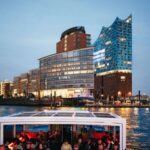
The tour ends at the Elbphilharmonie, the concert hall inaugurated in 2017. Even if you’re not attending a concert, this final stop is worth it. The building’s architecture is bold and instantly recognizable, and it’s a fitting ending after so much port and civic history.
You’ll have about 15 minutes for a photo stop and guided explanation. The guide frames it as the 21st-century chapter of Hamburg: a world-class venue hosting concerts with top-level musicians.
My practical tip: come out of this stop with a plan for what you’ll do next. If you’re still curious about Elbphilharmonie, check what’s playing during your stay. If you’re more into the waterfront, extend your walk around the harbor area after the tour so you’re not stuck rushing to fit everything into two hours.
Price and value: what $294 per group buys you
The price is $294 per group for up to 15 people, and it runs 2 hours with a professional guide. For a private tour, that can be surprisingly good value because you’re not paying per person. If your group fills closer to the maximum, the per-person cost can feel very reasonable for a guide-led route through major landmarks.
Transportation to the meeting point isn’t included. That’s normal for city walking tours, but it matters for budgeting. You’ll also want comfortable shoes, since you’re moving across multiple districts in a short time.
What makes the pricing feel fair is the mix of stops: Rathaus, the WWII memorial ruin, merchant streets, UNESCO warehouses, HafenCity planning, and Elbphilharmonie architecture. You’re not just seeing one “theme.” You’re getting a timeline of the city’s identity in one guided loop.
The guide factor: Jutta’s style makes the history stick
One of the most consistent strengths is the guide’s delivery. The name Jutta comes up in excellent feedback for a reason: she tells the story with humor, stays flexible, and uses visual aids like photos to show Hamburg’s evolution. That photo-support piece is more useful than it sounds, because it helps you connect today’s streets to what came before.
If your group includes people who prefer English, you’ll appreciate that the tour can be delivered in English. Jutta has been noted for making an all-English group feel comfortable and engaged, even when the topics turn serious at the memorial ruins.
This kind of guiding style matters because it changes how fast the tour feels. A tightly timed 2-hour walk can drag. With a good guide, it feels like a sequence of “clicks” where each stop explains the next.
Who this tour is for (and who should tweak the plan)
This experience is a great fit if you:
- Want a private, guided overview of Hamburg’s major highlights
- Like architecture and city planning, but also want context for WWII history
- Are traveling in a group of friends or family (private group up to 15)
- Prefer a structured timeline instead of wandering with a map
It’s less ideal if you:
- Want lots of downtime for shopping or long cafe stops during the tour
- Plan to linger for long inside visits at every stop (the tour time per stop is short by design)
- Are hoping for flexibility to completely change neighborhoods mid-tour
If you’re not sure, here’s a good approach: book this for your first day or first half-day in Hamburg. Then, after you have the story, decide what you want to repeat on your own.
Should you book this Hamburg private tour?
Yes, if you want a clean, efficient introduction that connects Rathaus, Speicherstadt, and Elbphilharmonie into one coherent story. It’s the kind of tour that helps you stop seeing landmarks as isolated stops and start seeing them as parts of the same city.
If your priority is a slow pace or heavy indoor time, you might need to add your own extra hours before or after. But for most people visiting Hamburg for a short stay, this hits a strong balance: big sights, clear explanations, and a guide who knows how to keep the day moving without losing meaning.
FAQ
How long is the Hamburg private tour?
It lasts 2 hours.
What does the tour cost?
It costs $294 per group, up to 15 people.
What’s included in the price?
A professional tour guide is included for the 2-hour experience.
What sights are covered?
You’ll see Hamburg Town Hall, the Chamber of Commerce area, Nicolaifleet/Trostbrücke photo viewpoints, the St. Nikolai memorial ruins, Deichstrasse merchant houses, Speicherstadt, HafenCity, and finish at the Elbphilharmonie.
What languages are available for the guide?
The live guide is available in German, English, Spanish, and French.
Is transportation to the meeting point included?
No. Transportation costs to the meeting point are not included.
What are the booking and cancellation terms?
You can cancel up to 24 hours in advance for a full refund, and you can reserve now and pay later.