REVIEW · HAMBURG
World War 2 Hamburg Private Guided Tour
Book on Viator →Operated by Experience Hamburg Tours · Bookable on Viator
Hamburg’s WWII scars show up in unexpected places. This private, English-language tour walks you through the lead-up to the Nazi era and the devastation that followed, using real locations like repurposed bunkers, memorial squares, and today’s parks. I especially liked the private pacing (your guide keeps the group on track and you can ask questions anytime) and the route through meaningful stops rather than just reading plaques.
One consideration: this is emotionally heavy material, so you’ll want to go in with the right mindset and comfy shoes for a steady 5 hours. Hamburg has some outdoor time too, and the story sticks with you—Sarah and Evan’s explanations make that clear fast.
In This Review
- Key takeaways before you go
- Entering Hamburg’s WWII story before the bombs
- Bunkers and survival architecture you can still see
- Planten un Blomen: a pretty park with a brutal past
- Memorials that show how remembrance works in Hamburg
- Grindel: Jewish life, deportations, and institutions
- Decoy city center and the aftershocks of colonial thinking
- St. Nikolai Memorial: church ruins, Neuengamme, and the view
- Price and value for a 5-hour private group
- Should you book this WWII Hamburg private tour?
- FAQ
- FAQ
- How long is the World War 2 Hamburg Private Guided Tour?
- Is this tour available in English?
- What is the group size for this private tour?
- Where do I meet the guide?
- Where does the tour end?
- What kind of ticket do I receive?
- Are admissions included at every stop?
- Is St. Nikolai Memorial’s museum or tower ticket included?
- Is public transportation nearby?
- Is there anything about fitness or walking?
- Are service animals allowed?
Key takeaways before you go
- Private group (up to 15) with an English guide so you can ask questions and adjust the pace
- Repurposed WWII bunker sites and other surviving WWII structures, not just “look and leave” stops
- Planten un Blomen gets explained beyond the scenery, including executions and a displaced persons camp
- Grindel’s Jewish history is treated locally and specifically, including places tied to deportations and institutions
- You’ll connect WWII events to earlier policies like antisemitism, propaganda, and changes in Hamburg’s governance
- One important site has extra ticket costs (St. Nikolai’s tower/museum entry isn’t included)
Entering Hamburg’s WWII story before the bombs
You start near a war memorial at Schleusenbrücke, and right away the tour aims at a common mistake: thinking WWII history begins in 1939. The first stop at Laeiszhalle shifts your attention to the interwar years, including lesser-known parts of WWI, the hyperinflation of the 1920s, and how antisemitism gained force. The message is simple and useful: when politics, money, and propaganda shift, the next steps often get easier for authoritarian leaders.
A big plus here is how the tour connects dates to cause-and-effect. If you’ve ever wondered why people followed the Nazi party so quickly, this is the part that makes it make sense—without excusing anything. You’ll also see how the Treaty of Versailles is presented as part of the atmosphere that helped extremism grow.
Then the tour moves to Sievekingplatz, where you get the 1930s story from the angle of institutions—Hamburg’s judicial and political systems, and what happens when those structures start failing the public. This stop is shorter, but it sets the tone for the rest of the route: power changes, then violence follows.
You can also read our reviews of more guided tours in Hamburg


Bunkers and survival architecture you can still see
At Feldstraße, the tour points out one of Hamburg’s largest WWII bunkers—today it’s being repurposed as a skyline garden. That contrast hits hard. You’re standing where people endured one of the city’s most brutal eras, and now it’s calmer, greener, and designed for modern use. For me, that’s exactly why a guided tour helps: you don’t just admire a transformation. You understand what made the structure necessary.
From Feldstraße you also get the scale reminder at Turmbar. It looks like a water tower, but it’s one of the 2,000-plus bunkers built in Hamburg during WWII. That number can feel abstract until a guide frames it for you in plain language—how a city becomes a fortress when war turns total. If you’re the kind of traveler who likes concrete details (not just big-picture statements), this is a strong pair of stops.
Practical tip: these are exterior stops with short time slots, so bring a phone or camera only if you’re comfortable photographing while your guide is actively explaining. You’ll get more value by listening first.
Planten un Blomen: a pretty park with a brutal past
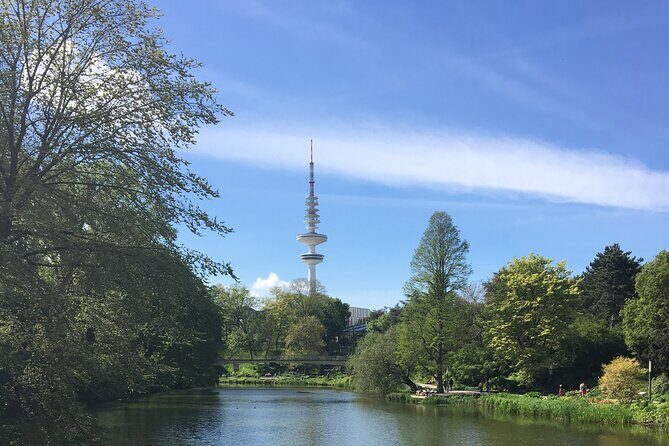
Next you reach Planten un Blomen, one of Hamburg’s most scenic public spaces. It’s the kind of place where you could easily assume everything is peaceful now. That’s exactly why this stop matters. Your guide explains how the area served darker purposes during WWII, including executions, a propaganda project, a human zoo, and a displaced persons camp.
This is the emotional center of the tour for many people, and it’s handled in a way that feels educational rather than sensational. You’ll likely find yourself slowing down at sightlines and imagining how that same ground looked under different rules. The park’s beauty doesn’t get erased—it gets recontextualized.
If you’re traveling with teens or multiple generations, this is where guided explanation really earns its keep. The tour can help younger visitors understand why the past is still “in the present,” even when buildings and uses change.
Memorials that show how remembrance works in Hamburg
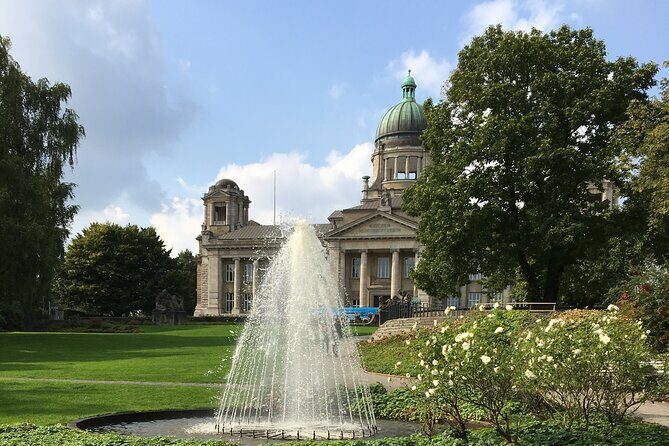
After the park, the tour shifts into remembrance culture, starting with Kriegerdenkmal am Dammtordamm. This location is tied to multiple war memorials from different periods, shaping not just the space, but how people in modern Hamburg practice remembering. You’ll see how different eras demand different kinds of symbols—and how those symbols influence what visitors notice today.
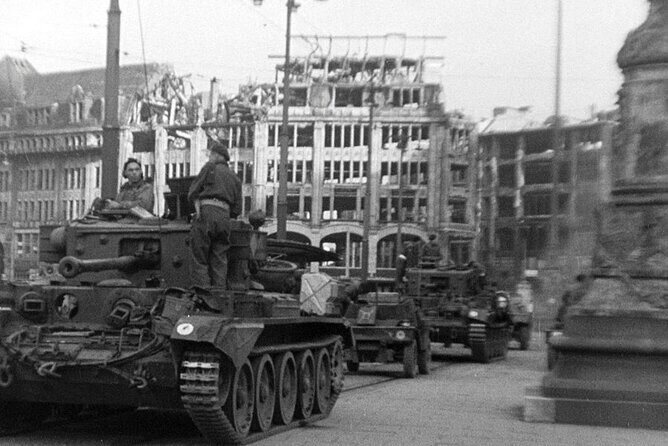
Then you move to Rathausmarkt, the square of Hamburg’s town hall and a literal seat of power. Here, the tour explains how the Nazi party used the space during WWII, which helps you understand that propaganda wasn’t only posters and speeches. It was also about where people stood, what they saw, and which messages were placed in front of the public.
Rathausmarkt also carries visible traces of memory: memorials tied to political opposition, the book burnings of 1933, and WWI propaganda in Nazi Germany. That set of details is useful when you’re trying to connect WWII-era cruelty to earlier stages of cultural control.
One small drawback: because the tour works through several concentrated sites, you’ll want to stay focused. If you get mentally tired, the guide’s ability to answer questions can keep you engaged—this is where private format matters.
Grindel: Jewish life, deportations, and institutions
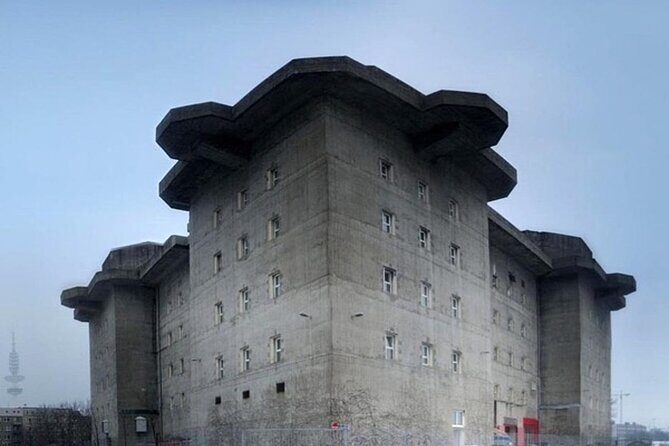
The longer stop is in Grindel, and it’s one of the most meaningful parts of the whole experience. You learn that the area once held a Jewish community with everyday life and local institutions, then you get the war-era turn: what changed, who was targeted, and what’s left in the neighborhood today.
The tour highlights specific topics, including:
- the place tied to the deported Jewish persons of Hamburg
- Kristallnacht in 1938
- book burning in 1933
- the Born Synagogue
- the Talmud Torah School
Even without going into extreme detail, the tour makes the history feel local rather than generic. You’re not hearing WWII as an abstract “Europe story.” You’re seeing how Hamburg’s streets and institutions were involved.
This is also where my favorite review detail clicks. In one story, Sarah explained events in a way that helped the big picture feel real, including how Germans tried to fool the British and how monuments connect back to the war. Another review praised Evan for tailoring the tour for three generations, which is exactly the kind of situation where Grindel’s mix of sensitive and factual content needs careful pacing.
If you’re sensitive to heavy topics, you’ll still likely appreciate how the guide frames Grindel: first life, then rupture, then aftermath.
You can also read our reviews of more private tours in Hamburg



Decoy city center and the aftershocks of colonial thinking
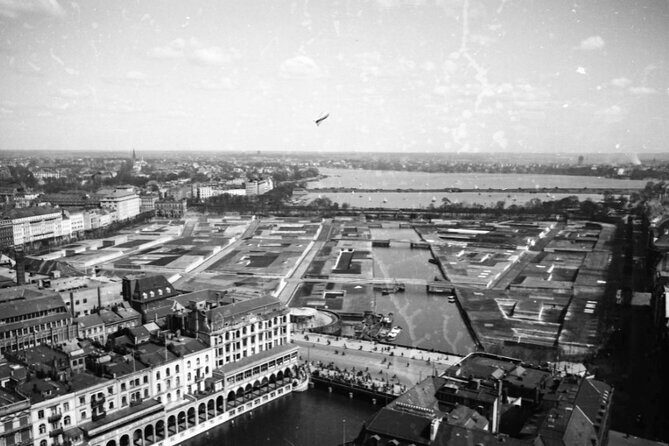
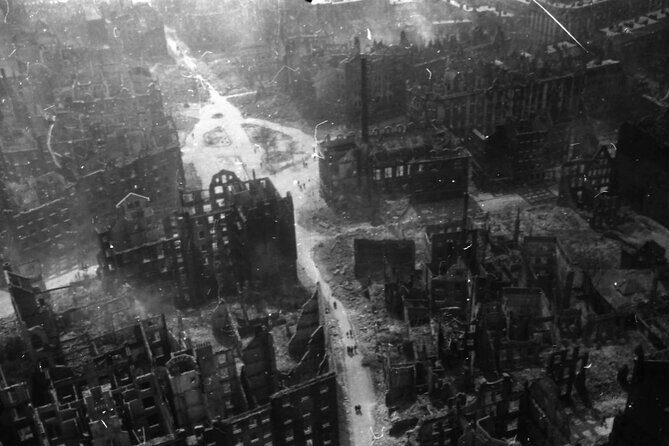
At Jungfernstieg, the guide explains Hamburg’s attempt to build a decoy city center to avoid bombings during WWII. It’s a fascinating point because it shows war wasn’t only about ships and planes. It was also about deception—what people think they’re seeing, and what attackers want them to believe.
Then you head to Afrikahaus, a leftover from Germany’s colonial period. This stop helps connect WWII-era crimes to earlier patterns of racism and segregation. Your guide frames colonial history as essential for understanding racial segregation and genocide in Nazi Germany. For many visitors, this is the “wait, that matters too?” moment, because the Nazi story often gets told as if it started from nowhere.
This combination—decoy bombing tactics plus colonial roots—makes the tour feel more complete. You’re not only tracking WWII events; you’re tracking how ideologies were trained over time.
St. Nikolai Memorial: church ruins, Neuengamme, and the view
You finish at the St. Nikolai Memorial area. This church serves as a memorial to victims of war and the rule of terror, and it’s tied to the remains of the former church bombed during the 1943 destruction of much of Hamburg. The site includes memorials connected to the bombing of Hamburg, victims of the Neuengamme concentration camp, and reconciliation between post-war Germany and the UK.
There’s also a museum, plus a tower with an elevator. If you choose to go up, the ticket isn’t included in the tour price. Still, it’s a great option. A city view from the tower can give you a strange kind of clarity—where the skyline looks calm, but the memorial tells you what used to be here.
For travelers who like a strong closing moment, St. Nikolai works well. It ties together the theme of power, suffering, and remembrance in one place.
Price and value for a 5-hour private group
The tour price is $714.85 per group, designed for a group size of up to 15. That sounds high if you’re comparing it to a walking tour for two. But in the private format, the math shifts: you’re paying for a guide who leads one route, controls the timing, and adapts to your group’s interests—things you can’t buy with a generic audio app.
You should also consider what you get that’s hard to replicate:
- a guided explanation at multiple WWII-linked locations
- time spent answering questions in real time
- a sequence that connects the interwar period to later policies and war outcomes
Also, this is offered in English and uses a mobile ticket, which keeps things simple once you arrive.
Two practical notes that affect “value”:
- St. Nikolai’s tower/museum entry is not included, so budget for that if you want the view
- plan on a moderate fitness level. The tour includes several stops across the city, and it’s paced for steady walking and listening rather than long sit-down breaks
If you’re traveling as a family or in a small group who wants control over pacing, the cost becomes easier to justify.
Should you book this WWII Hamburg private tour?
Book it if you want a guided, location-based WWII story that starts before 1939 and keeps tying history to what you can see today. I’d also recommend it if you care about the “how” of the Nazi era—propaganda, institutional changes, cultural control, and the local geography of persecution. The private format is the real selling point: you won’t feel like you’re rushing through stops with no chance to ask questions.
Skip it (or consider a different style of tour) if you’re hoping for a light, casual sightseeing day. This tour spends real time on executions, persecution, deportations, and terror, so you’ll want to go in prepared.
FAQ
FAQ
How long is the World War 2 Hamburg Private Guided Tour?
The tour lasts about 5 hours.
Is this tour available in English?
Yes. The tour is offered in English.
What is the group size for this private tour?
It’s a private tour for your group only, with pricing set per group up to 15.
Where do I meet the guide?
The meeting point is Denkmal für die Gefallenen beider Weltkriege, Schleusenbrücke 1, 20354 Hamburg, Germany.
Where does the tour end?
The tour ends at the WW2 bunker on Feldstraße 66, 20359 Hamburg, Germany. You can also request a drop-off at a location of your choosing.
What kind of ticket do I receive?
You’ll get a mobile ticket.
Are admissions included at every stop?
All listed stops are marked free admission except St. Nikolai Memorial, where museum and tower time is not included.
Is St. Nikolai Memorial’s museum or tower ticket included?
No. Admission for the museum and tower is not included, and the tower has an elevator.
Is public transportation nearby?
Yes, it’s near public transportation.
Is there anything about fitness or walking?
The tour recommends a moderate physical fitness level.
Are service animals allowed?
Yes, service animals are allowed.