REVIEW · MUNICH
Color Rush: From Old Town to Spray-Painted Cards (Max. 12)
Book on GetYourGuide →Operated by Philipp's Munich Tours · Bookable on GetYourGuide
Munich turns creative when you add spray paint. This small-group tour starts at Marienplatz and pairs classic landmarks with hands-on street art in the city’s south. I love how Philipp blends architecture stories with quick photo stops, and I love the small-group pace that keeps it friendly even when you’re walking fast.
The workshop part is the real hook: you make six spray-painted postcards. You’ll step into a heated shipping container at Bahnwärter Thiel, use professional stencils, and leave with a souvenir that’s actually personal, not just a postcard you bought at a shop.
One thing to plan for: it’s still a walk-and-stand experience through winter Old Town streets, so wear comfortable shoes and expect some stairs and uneven ground. Also, it’s not set up for people with mobility impairments or wheelchair users.
In This Review
- Key highlights you won’t forget
- From Marienplatz Fischbrunnen to Bahnwärter Thiel: the tour’s smart swing
- How 150 minutes turns sightseeing into something you make
- Marienplatz to Frauenkirche: your Old Town starting line
- Quick practical tip
- Alter Hof and the State Opera zone: architecture with stories attached
- Viscardigasse and the Residenz area: where postcard framing starts making sense
- Odeonsplatz and the short metro hop south
- Bahnwärter Thiel workshop: heated, hands-on, and very doable
- What “your postcards” actually means
- What you take home: a souvenir with real meaning
- The value: is $42 fair for a guide, materials, and a full creative session?
- Getting to the start and what to bring (so you enjoy it, not suffer)
- Who should book this, and who might skip it
- Should you book Color Rush in Munich?
- FAQ
- Where does the tour start and what’s the meeting point?
- How long is the Color Rush experience?
- How big is the group?
- What languages are offered?
- What do I make during the tour?
- Where does the spray-paint workshop happen?
- Is spray-painting equipment included?
- What should I bring?
- Is transportation included?
Key highlights you won’t forget
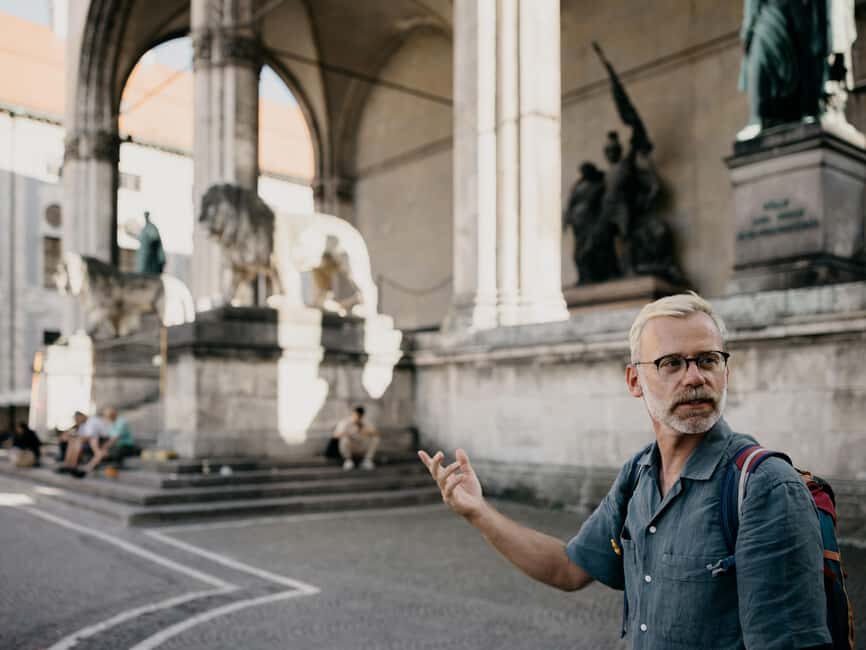
- Marienplatz to Old Town photo stops with a built-in creative plan, guided by Philipp
- Six postcard scenes framed during the walk, then turned into stencils later
- Heated shipping-container graffiti workshop at Bahnwärter Thiel in Munich’s south
- Full supplies included: spray paint, stencils, postcards, envelopes, and protective gear
- Official guide + architect perspective, with stories that explain more than the postcard view
From Marienplatz Fischbrunnen to Bahnwärter Thiel: the tour’s smart swing
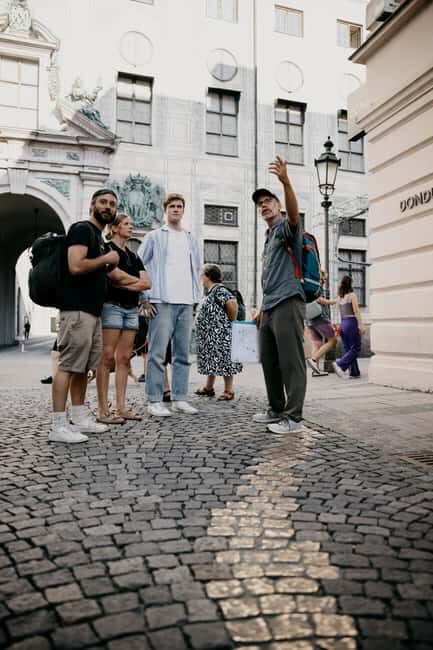
This is one of those Munich experiences that doesn’t try to do everything. It does two things well: you get your bearings in the Old Town, then you switch gears and create street-art souvenirs in the “crazy south” at Bahnwärter Thiel.
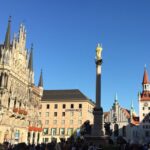
You start at the Fischbrunnen on Marienplatz, Munich’s central meeting point and a constant reference point for the city. If you’ve ever felt like Munich is all beer halls and formal facades, this tour quietly challenges that idea by pairing famous buildings with alleyway atmosphere—and then backing it up with real spray painting.
At just 150 minutes and capped at max 12 guests, the timing works. You’re not stuck in a long lecture, and you’re not rushed through the Old Town just to get to the fun part.
You can also read our reviews of more tours and experiences in Munich.
How 150 minutes turns sightseeing into something you make
The format is clever. Instead of treating photos as a passive activity, the guide frames six iconic views during the walk. Those scenes become the basis for your stenciled postcard designs in the workshop.
That changes the way you look at the city. You’re not just asking, Where am I? You’re asking, What could I turn into art? You’ll notice angles, facades, and details you might otherwise skip while staring at the biggest landmark.
The tour is also bilingual-friendly. Philipp runs the experience in English and German, and Spanish is available as well. You can move at your own comfort level, but the group stays tight enough that it feels like a guided hangout with purpose.
And yes, your feet will do some work. That’s the main trade-off for getting both history-walk energy and an active art session in the same trip window.
Marienplatz to Frauenkirche: your Old Town starting line
From Fischbrunnen, the walking route quickly anchors you in the heart of Munich. Marienplatz isn’t just pretty. It’s the square where Munich’s Old Town rhythm shows up fast—meeting point, orientation tool, and a place you’ll likely pass again later in the city.
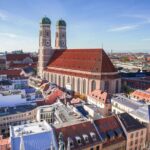
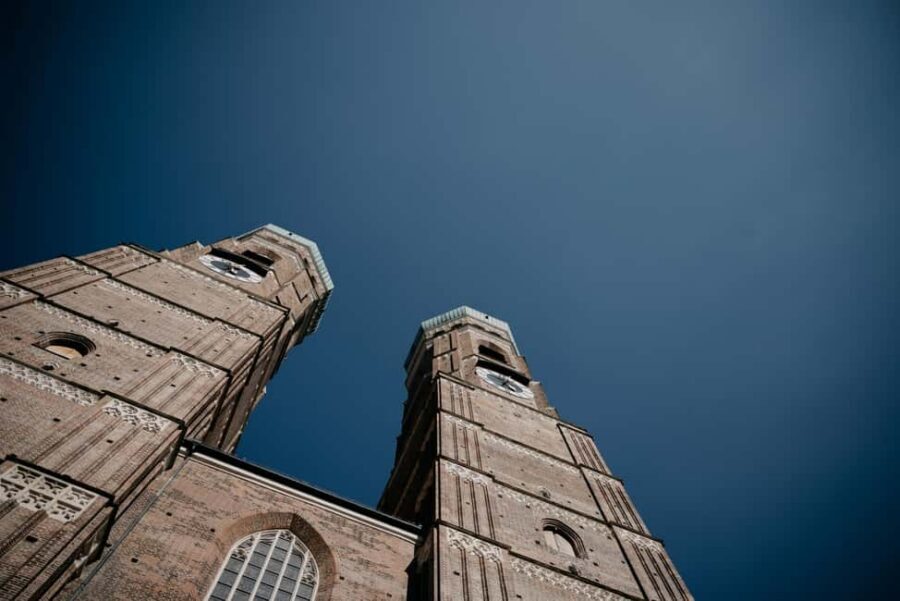
Next comes the Frauenkirche. You’ll get a photo stop there, which matters because it sets the visual tone for what comes next. The church area is one of those places where your first glance gives you the skyline idea, but your second glance starts teaching you what to look for: massing, symmetry, and how the streets funnel attention toward the main landmark.
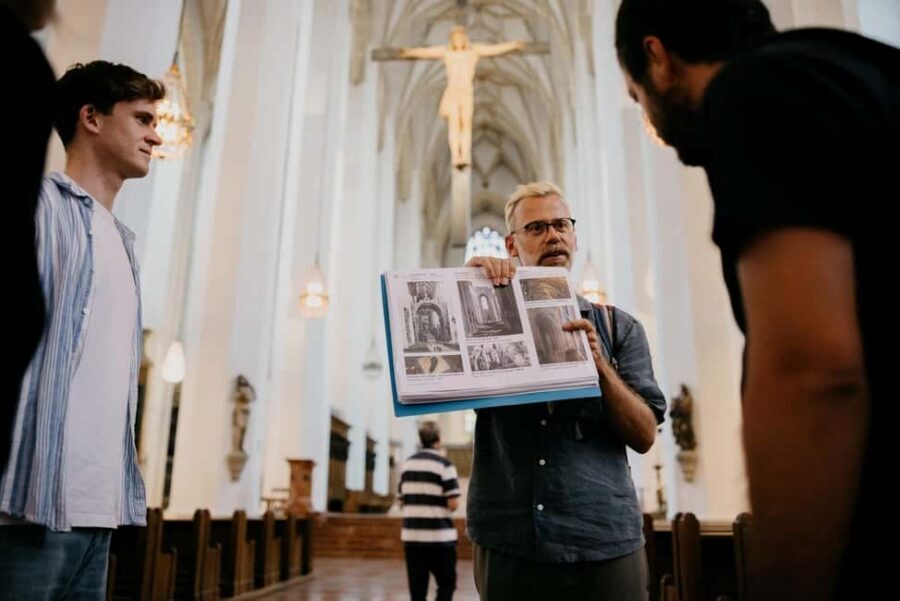
This is also where Philipp’s guide style tends to click. The tour isn’t only about pointing. It’s about helping you understand why these buildings belong to Munich’s identity, not just its tourist map.
Quick practical tip
If you’re visiting in colder months, do what the tour encourages: wear warm layers and plan for winter wind around open squares. Bring your camera, but also keep one hand free. You’ll be moving from stop to stop with purpose.
Alter Hof and the State Opera zone: architecture with stories attached
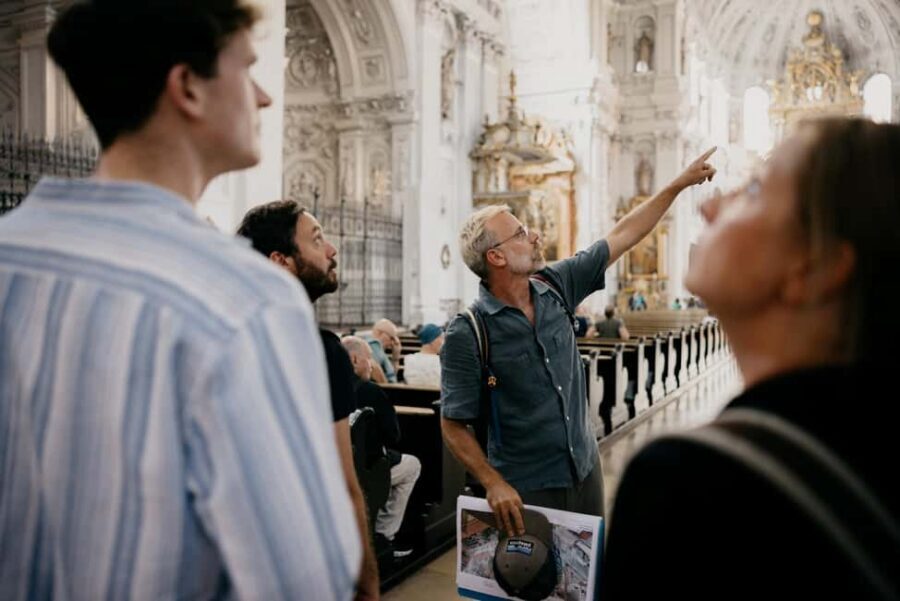
You then head toward Alter Hof, where you’ll visit the area connected with the past rulers of Munich. This is the kind of stop that rewards even a short visit, because the Old Town here feels compact—like you can almost feel the old power center in the way streets and buildings relate.
From there, you make your way toward the Bavarian State Opera. Even if you don’t attend a performance, you’ll recognize it as part of Munich’s formal cultural face. The payoff on a walking tour is that you don’t need to book a ticket to learn what the building represents in the city’s larger story.
Philipp also brings humor and encouragement to the group. That matters when the day shifts from “look and listen” into “make something.” If you tend to freeze when you’re asked to be creative, you’ll likely appreciate a guide who keeps the pressure low and the experience fun.


Viscardigasse and the Residenz area: where postcard framing starts making sense
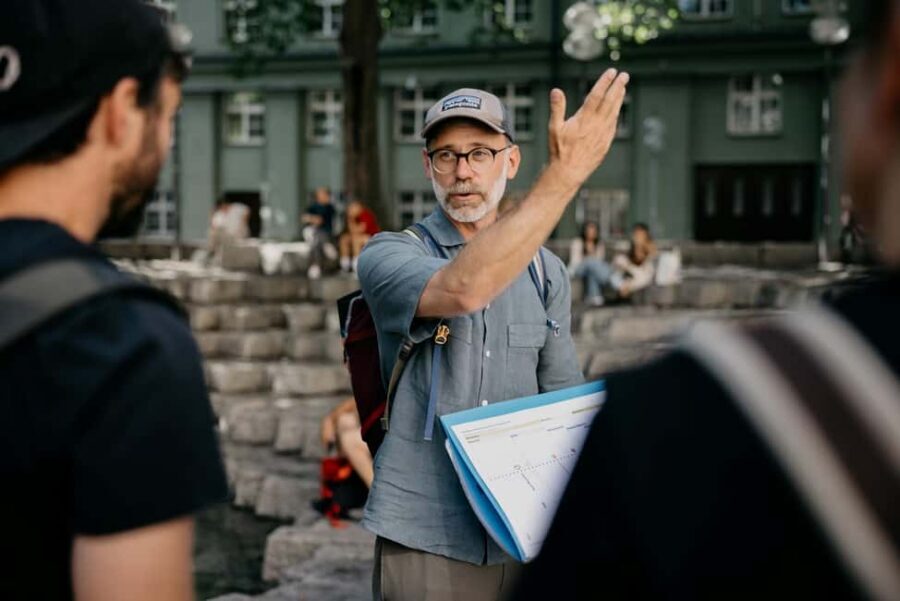
The tour moves through Viscardigasse, a street that feels made for wandering. It’s narrow enough to slow you down and notice the details, but it’s still very much within the flow of Old Town sightseeing. This is the kind of place that can look ordinary in a quick bus view—and look great in person.
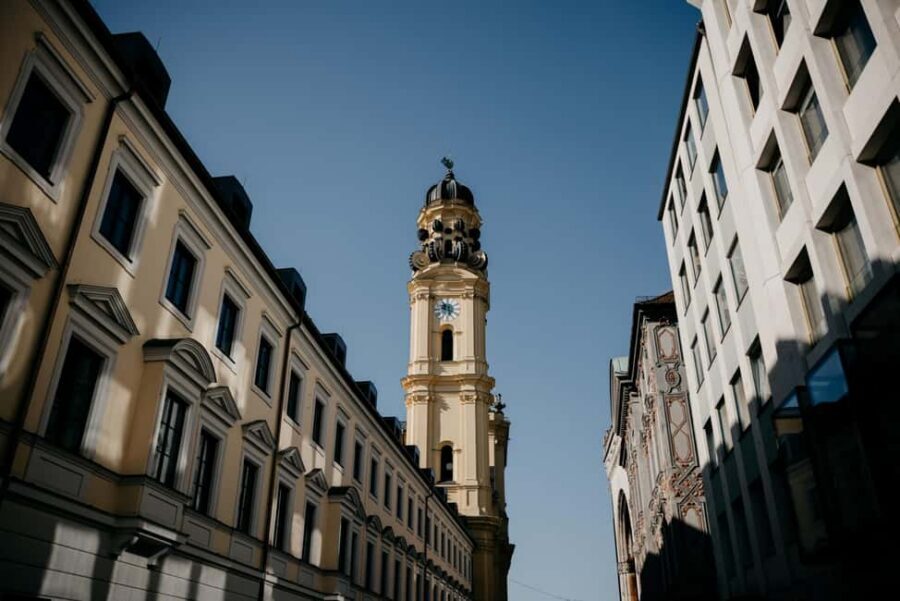
After that, you reach the Residenz and then later the Theatine Church. The Residenz stop is valuable because it gives you a sense of scale. You’ll see why this area isn’t just one building; it’s a whole royal complex that shaped the city.
Then the route continues toward the Theatine Church, another strong photo anchor. With this tour format, these stops aren’t only for your memory. They’re the visual input for your stenciled postcard set later at Bahnwärter Thiel.
If you’re the type who usually skips side streets because you think you’ll remember later, this tour flips that. You’re collecting specific scenes for a practical outcome, so you naturally pay closer attention.
Odeonsplatz and the short metro hop south
You’ll also reach Odeonsplatz. Like many Munich landmarks, it’s one of those places where the architecture and the open space make you sit up straighter, even if you’re just standing there for a few minutes. It helps round out the Old Town loop so your postcards don’t feel like a single neighborhood theme.
Then comes the switch: a short subway/metro ride (about 5 minutes) taking you south. This transfer matters more than it sounds. It’s how the tour avoids being only Old Town sightseeing. You leave the traditional center and head into a different Munich mood—containers, street art, and an alternative-culture vibe.
It’s the kind of “change of scenery” that keeps the energy up right before the workshop.
Bahnwärter Thiel workshop: heated, hands-on, and very doable
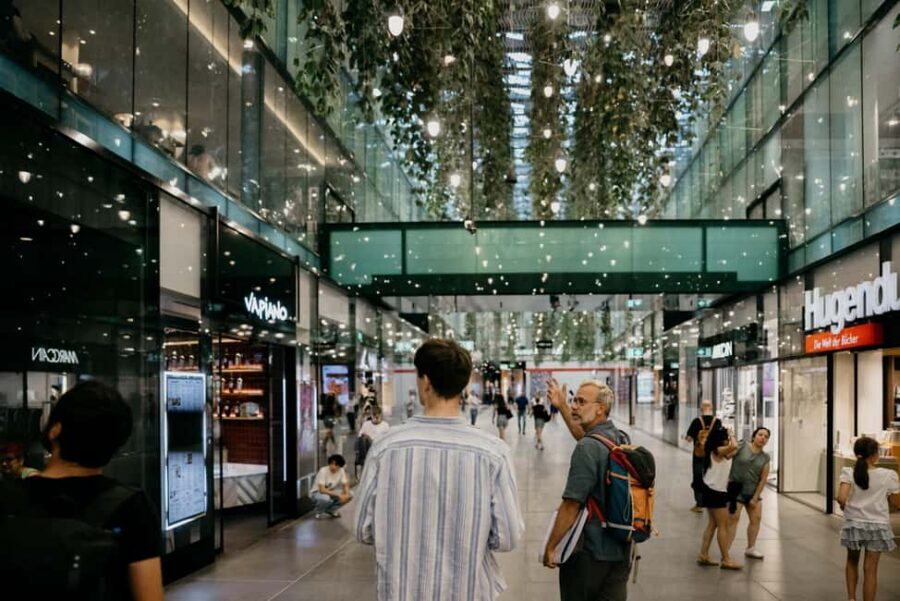
Bahnwärter Thiel is where you step into the creative core of the day. The tour’s creative part runs for about 1 hour, and you’ll work inside a heated shipping container—a big deal if you’re traveling in winter.
You’ll use professional stencils and spray paint to create six postcard designs. The supplies are included, so you’re not scrambling for materials or improvising with random cans. You also get safety glasses, protective gloves, masks, and clothing covers, which is exactly what you want for an activity like this.
The container setup makes the experience feel different from a typical city-art workshop. It’s functional. It’s controlled. And it makes it easier to focus on your stenciling rather than worrying about comfort.
What “your postcards” actually means
This isn’t a class where you copy a guide’s artwork. You’re creating your own set based on the framed views you collected earlier. That’s why the walk part matters. You’ll recognize the scenes as your own choices, not just the guide’s route.
When you’re finished, you get everything you need to send them: postcards and envelopes are included. So if you want to mail a note home, you can do it without extra shopping.
What you take home: a souvenir with real meaning
A normal souvenir is easy to forget. A spray-painted postcard you made yourself tends to stick around.
I like that the tour gives you a set—six postcards—instead of just one “look what I did” piece. That means you can:
- keep one or two as art
- mail a few to friends or family
- bring a couple home as a tangible memory of Munich beyond the usual photos
It also helps that the stencils keep the result graphic and readable. You get that street-art feel without needing to be an artist.
And if you’re traveling with someone who isn’t into intense sightseeing, this is a good compromise. One hour of making things can be more fun than another hour of standing at façades.
The value: is $42 fair for a guide, materials, and a full creative session?
At $42 per person for about 150 minutes, the price makes sense if you look at what’s included. You’re paying for:
- an official local guide, Philipp, with an architect’s lens
- professional art supplies (spray paint, stencils)
- protective equipment (glasses, gloves, masks, clothing covers)
- physical outputs (six postcards plus envelopes)
- a digital map with the guide’s favorite places to visit
You also avoid a common hidden cost: materials. Many DIY-style workshops charge extra for tools, then add fees for safety gear. Here, the supplies and protection are part of the deal.
Food and drinks are not included, so if you want a snack, you’ll buy it on your own. Also, transportation to and from the meeting point is on you. The tour itself, though, takes care of the core experience.
For me, the best value angle is the mix. You’re not paying for “Old Town plus free time.” You’re paying for a planned walk that directly feeds a hands-on craft session, all within a small group.
Getting to the start and what to bring (so you enjoy it, not suffer)
You meet at Fischbrunnen on Marienplatz. The simplest public transit route is U-Bahn or S-Bahn to Marienplatz station, then come up to the surface. The guide is easy to spot with a tablet over their shoulder.
What to bring is straightforward:
- comfortable shoes
- warm clothing (especially in winter)
- a camera if you want to capture the framed scenes
Not allowed: smoking.
And keep expectations realistic. This is not a sit-and-stretch tour. You’ll be walking from stop to stop, then standing and working during the spray-paint portion. The pace suits people who like moving through a city.
Who should book this, and who might skip it
This works best for you if:
- you want a practical introduction to Munich’s Old Town without spending a full day on it
- you like creative activities that produce a physical take-home item
- you enjoy a guided route with stories, not a self-guided scavenger hunt
- you travel as a couple or small group and want a shared experience
You might skip it if:
- you need wheelchair access or you have mobility impairments, since it’s not suitable for wheelchair users
- you’re very limited on walking time
- you’re visiting with someone who prefers passive sightseeing only
Also, it’s not suitable for people over 95 years, which is worth noting for trip planning.
Should you book Color Rush in Munich?
If you want Munich that feels both classic and a little rebellious, I’d book this. You get the recognizable sights you’ll see on postcards, then you make your own postcard set and take it home—created by your hands, not by a shop.
The biggest reason to choose it is the structure. The Old Town walk isn’t filler. It gives you the visual material for the workshop, so the day feels connected instead of random.
Just dress for winter walking, and you’ll end the tour with a souvenir that actually represents what you did. Not just where you stood.
FAQ
Where does the tour start and what’s the meeting point?
You meet at the Fischbrunnen on Marienplatz. The guide will be easy to spot with a tablet slung over their shoulder.
How long is the Color Rush experience?
The tour lasts about 150 minutes in total.
How big is the group?
It’s a small-group experience with a maximum of 12 guests.
What languages are offered?
The live guide offers English, German, and Spanish.
What do I make during the tour?
You create six spray-painted postcards of Munich’s iconic highlights using professional stencils.
Where does the spray-paint workshop happen?
The workshop takes place at Bahnwärter Thiel, inside a heated shipping container.
Is spray-painting equipment included?
Yes. The tour includes spray paint, stencils, envelopes, and the six postcards, plus safety glasses, protective gloves, masks, and clothing covers.
What should I bring?
Bring comfortable shoes, warm clothing, and a camera if you want photos of the stops.
Is transportation included?
No. Food and drinks are not included, and transportation to and from the meeting point isn’t included either.