REVIEW · BERLIN
Berlin Wall: City Tour of Divided Germany
Book on GetYourGuide →Operated by Paaßens & Kniestedt Berlin kompakt GmbH · Bookable on GetYourGuide
Berlin’s border lines still guide your feet. This Berlin Wall city tour turns famous landmarks into a clear picture of daily life under two hostile systems. You’ll follow the thread of how the wall shaped movement, politics, and ordinary routines across the city.
Two things I really like: the guide’s personal storytelling, with human details that make the sites feel less like postcards. And the route is practical—Friedrichstraße, the Spree toward parliament, Brandenburg Gate, then onward to Potsdamer Platz, the longest remaining wall stretch, and Checkpoint Charlie.
One thing to consider: this is a German-language tour, and in just 2 hours you’ll be walking at a steady pace. If you want lots of long stops on your own, you might feel a bit rushed.
In This Review
- Key Highlights Worth Your Time
- Why This 2-Hour Berlin Wall Tour Works Better Than DIY
- Meeting at Tränenpalast (Palace of Tears): Start With a Clear Angle
- Friedrichstraße Station: The Cold War Border Crossing You Can Still Feel
- Following the Spree to Parliament and the Government District
- Brandenburg Gate: The Border as a Symbol
- The Holocaust Memorial at the Former Death Strip: Place Matters
- Potsdamer Platz and the Tiergarten Triangle: Seeing the Split
- Longest Remaining Wall Stretch and Checkpoint Charlie: Classic Sights, Better Context
- Price and Value: Is $21 for 2 Hours Fair?
- Who Should Book This Tour (and Who Might Not)
- Should You Book the Berlin Wall: City Tour of Divided Germany?
- FAQ
- How long is the Berlin Wall city tour?
- Where do I meet the guide?
- What language is the live guide?
- What is the price per person?
- Is free cancellation available?
- Can I reserve and pay later?
- What should I bring?
Key Highlights Worth Your Time
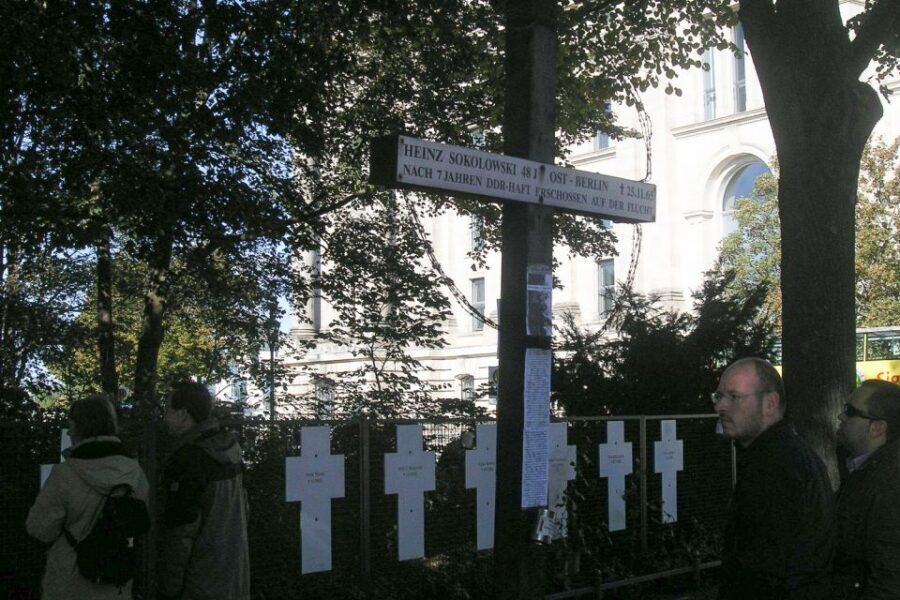
- Tränenpalast starts the story: a focused launch right by Friedrichstraße station.
- Friedrichstraße as the single border station: you see why this crossing mattered during the Cold War.
- Spree to parliament and government buildings: you understand how the border shaped power and planning.
- Brandenburg Gate paired with the death strip memorial: symbol and consequence, side by side on the same walk.
- Potsdamer Platz and the Tiergarten Triangle split: the division is visible, not abstract.
- Longest wall remains plus Checkpoint Charlie: classic points, explained with context instead of just photos.
Why This 2-Hour Berlin Wall Tour Works Better Than DIY
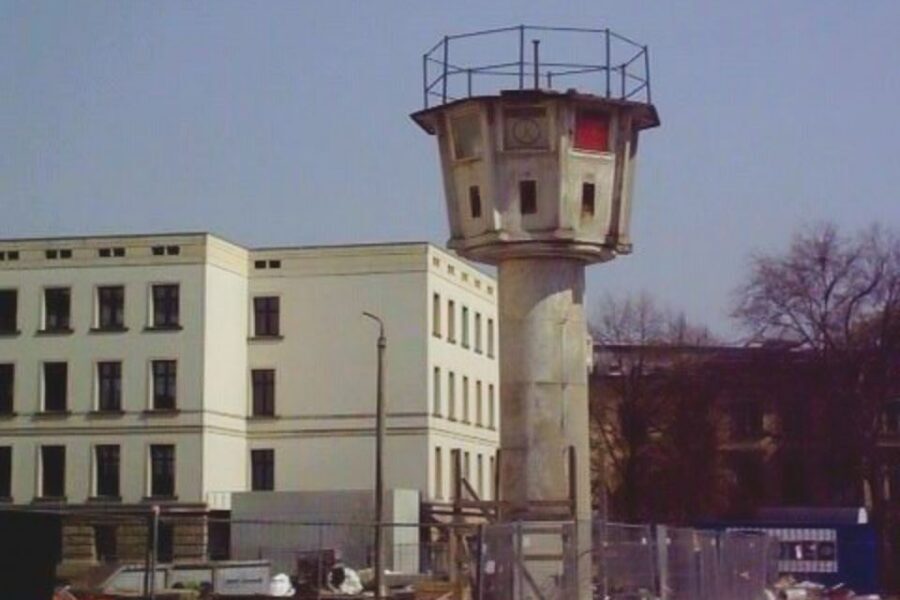
Berlin Wall sites can feel scattered. One day you’re near Brandenburg Gate, another near Potsdamer Platz, and somehow you never quite connect the dots. This tour stitches the story together with a timed walk—so you come away with a mental map of how the division affected the city as a whole.
At 2 hours, it’s designed for the moment most people have: limited time, big themes, and a strong desire to see more than just the obvious views. You’ll hit the “must-know” places, but the value is in the order and explanation—how each stop changes the meaning of the next.
And the tone matters. The strongest praise goes to the guide’s storytelling, with a personal feel. In some cases, tours have even run longer (one example notes the guide extended the tour by about an hour), which tells you the pacing is flexible when the group is engaged.
If you like history that’s tied to what people actually saw and did each day, this is the kind of tour that rewards attention.
You can also read our reviews of more city tours in Berlin

Meeting at Tränenpalast (Palace of Tears): Start With a Clear Angle
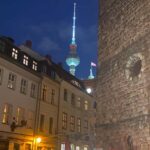
The meeting point is specific: meet at the entrance of Tränenpalast (Palace of Tears) in front of Friedrichstraße station on Reichstagufer, 10117 Berlin. Importantly, Tränenpalast has only one entrance, so it’s worth arriving a few minutes early and checking you’re at the correct spot.
I like starting here because it gives the tour a defined emotional and human context before you ever reach the bigger landmarks. It’s a good way to shift from tourist mode into story mode fast. You’re not just “going to sights.” You’re stepping into a framework for understanding what the border changed.
Practically, this start location is also convenient. Friedrichstraße station is a major reference point, so you’ll feel less guesswork in the beginning.
Friedrichstraße Station: The Cold War Border Crossing You Can Still Feel
One of the anchor stops is Friedrichstraße station, described as the single border station during the Cold War. That detail matters because it frames the station as more than architecture. It becomes a controlled gateway—where the meaning of arriving or leaving wasn’t just about convenience, but about rules.
As you’re shown the station area, the tour’s focus stays on daily life. That’s the difference between a stop that’s only about facts versus one that helps you picture lived experience. You’ll connect the idea of a border to what it does to routines—where people go, how movement is shaped, and how boundaries become part of the city’s rhythm.
Drawback to note: this is a walking tour. Even if you know Berlin well, give yourself permission to look around rather than only chasing the next photo.
Following the Spree to Parliament and the Government District
After Friedrichstraße, the route follows the Spree toward the parliament and government district, including buildings situated partly along the border strip. I like this stretch because it’s a shift from street-level movement (stations, crossings) to political space.
Seeing how government buildings sit in relation to the border zone helps you understand a simple point: division wasn’t only on the edges. It touched planning, authority, and the core spaces of decision-making.
Also, the waterline gives you a natural guide for orientation. If you’ve ever gotten lost trying to connect Berlin landmarks with your own route, this is how the tour keeps you from that problem—using the Spree as a visual thread.
Brandenburg Gate: The Border as a Symbol
Then comes the stop that many people already recognize: the Brandenburg Gate, where the border ran. That single line—where the border ran—turns a familiar landmark into something more pointed.
I like how this moment tends to work for two kinds of visitors. If you know Berlin history, you’ll appreciate the precise way the tour ties the symbol to location. If you don’t, you still get the central idea without needing a long lecture: this wasn’t just a backdrop. It was a boundary.
A practical note: plan your expectations for photos. The tour gives you the context, but you’ll still want to move with the group. If you linger too long, you’ll miss the next explanation as the route keeps flowing.

The Holocaust Memorial at the Former Death Strip: Place Matters
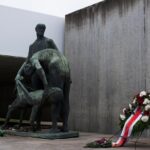
From Brandenburg Gate, you proceed to the Holocaust memorial located at the former death strip. This is a heavy stop, and the tour’s value here is in how the location itself supports understanding.
I recommend treating this segment a bit differently than the “photo points.” Even when you’re with a group, give yourself a moment to slow down and actually absorb the meaning of the spot. The former death strip framing is not casual—it’s the tour’s way of steering you toward consequence, not just boundaries.
Because the tour is time-limited, you won’t get unlimited quiet time. But you will get a structured visit that keeps the focus on why this site exists and how the border landscape overlaps with human tragedy.
Potsdamer Platz and the Tiergarten Triangle: Seeing the Split
Next is Potsdamer Platz, where the division is described as being particularly visible in the former Tiergarten Triangle. This is one of the most helpful stops for understanding the city visually, because it’s where the split stops being an idea and becomes a pattern you can spot.
I like that the tour calls out visibility. It’s one thing to hear about separation; it’s another to stand where the urban layout makes the split feel tangible. The Tiergarten Triangle framing gives you a reason to look at the way spaces relate to each other.
This stop is also a reality check about Berlin’s layers. Today, Potsdamer Platz is a place people rush through. The tour gives you the tool to see past the rush and notice the old division logic in the space.
Longest Remaining Wall Stretch and Checkpoint Charlie: Classic Sights, Better Context
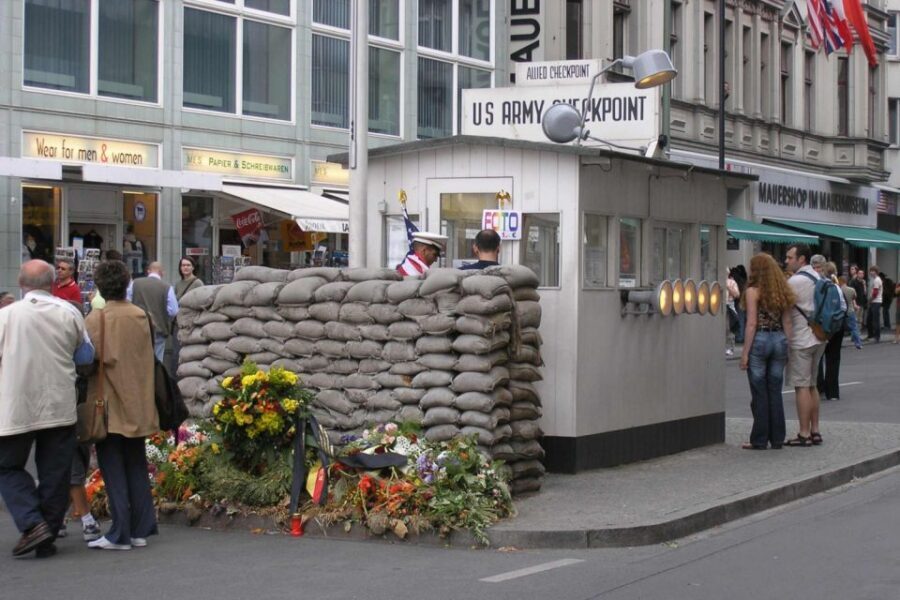
The route includes the longest remaining stretch of the wall, plus the world-famous Checkpoint Charlie. These are the kind of stops that can become “check the box” moments on self-guided trips. With a guide, they don’t have to.
The longest remaining wall stretch is valuable because it gives you something physical to anchor your understanding. You can point at what remains and connect it to what used to exist around it—especially when earlier stops already explained the border strip idea and the border’s role in daily life.
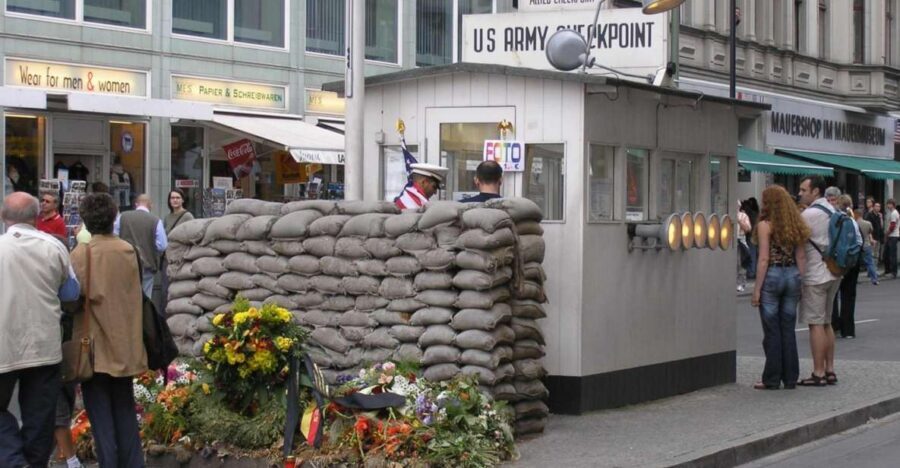
Then comes Checkpoint Charlie. Even if you’ve seen it in photos, the tour’s structure helps you interpret it as a crossing point shaped by division—not just a name for tourists to recall later. This is where many people feel the tour’s “story chain” click: you’re not just seeing a location; you’re seeing a function.
One more practical tip: this section is often where you’ll want the most attention to your surroundings. Keep an eye on where the group is heading and listen for how the guide connects one stop’s meaning to the next.
Price and Value: Is $21 for 2 Hours Fair?
For $21 per person with a live German guide and a 2-hour route, this tour is priced like a practical city walkthrough—not a high-end museum experience. The value is that you get multiple major Berlin Wall locations in one guided format, with explanations tied to everyday life and the fate of people affected by the division.
You’re not only paying for time. You’re paying for interpretation: how to connect Friedrichstraße, the Spree, government district proximity, Brandenburg Gate, the death strip memorial area, Potsdamer Platz’s split visibility, and wall remains into one coherent mental story.
The high rating (4.9) and the repeated praise for the guide’s quality suggest the tour’s strength is the human element—especially the personal narration. And in one mentioned case, the guide extended the tour by about an hour, which is a good sign of engagement and flexibility when the group wants more.
If you have limited time in Berlin and want a focused border story that doesn’t require piecing together multiple stops on your own, this is good value.
Who Should Book This Tour (and Who Might Not)
This tour is a strong match if you want:
- a guided walk that explains how division shaped daily life
- a route that links political places and crossing points
- a clear set of high-impact stops, with context so your photos mean more later
It may be less ideal if you:
- prefer to self-pace and linger long at individual locations
- need a tour in a language other than German
If you fall into the “I want it explained, but I’m okay walking” category, you’ll likely enjoy it.
Should You Book the Berlin Wall: City Tour of Divided Germany?
Yes, I’d book it if your goal is to understand the division through key places, not through a pile of disconnected facts. The tour’s greatest strength is the guide-led storytelling and the way the route ties together landmarks that otherwise feel like separate chapters.
Book it with comfortable shoes and a willingness to keep moving. If you’re comfortable following a German guide and you like getting context at the exact spot you’re standing on, this one makes your time count.
FAQ
How long is the Berlin Wall city tour?
The tour duration is 2 hours.
Where do I meet the guide?
Meet at the entrance of Tränenpalast (Palace of Tears) in front of Friedrichstraße station on Reichstagufer, 10117 Berlin, Germany. Please note Tränenpalast has only one entrance.
What language is the live guide?
The live tour guide speaks German.
What is the price per person?
The price is $21 per person.
Is free cancellation available?
Yes. You can cancel up to 24 hours in advance for a full refund.
Can I reserve and pay later?
Yes. You can reserve your spot and pay nothing today.
What should I bring?
Wear comfortable shoes.