REVIEW · BERLIN
Berlin: Secrets of Berlin Bike Tour
Book on GetYourGuide →Operated by Fat Tire Tours - Berlin · Bookable on GetYourGuide
Berlin on two wheels tells a different story. This Secrets of Berlin bike tour skips the biggest-photo stops and steers you into the city’s weirder, more lived-in corners.
I especially like the mix of street-level culture and real local places: Dead Chicken Alley street art and the courtyard feeling of Hackescher Höfe are the kind of details you won’t stumble on by yourself. The tour also earns points for structure, with a planned bell-tower climb at historic Zionskirche and stops tied to modern Berlin scenes.
One drawback to plan for: this is a bike tour, and it’s not suitable if you can’t comfortably ride. You’ll also want weather-ready clothing since the tour runs rain or shine.
In This Review
- Key Things You’ll Notice on This Bike Tour
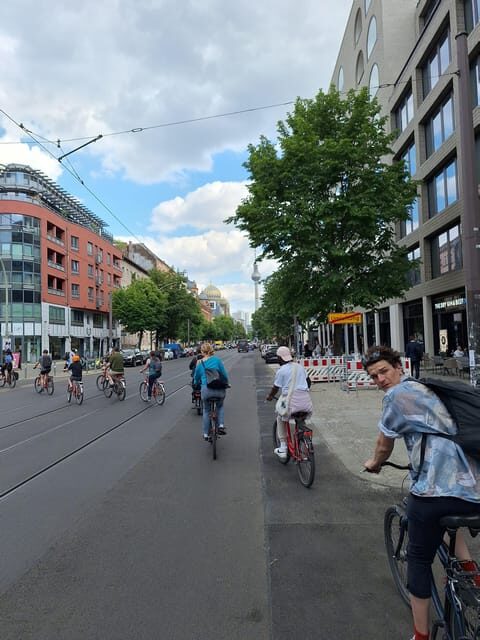
- Getting Started at Alexanderplatz and the TV Tower Base
- Why the Dead Chicken Alley Street Art Stop Changes the Whole Tour
- Zionskirche Bell Tower Climb: A View That Adds Context
- Hackescher Höfe Courtyards: How Berlin Hides Places in Plain Sight
- The Spree and Bode Museum: Seeing Big Culture Without the Museum Day
- Tacheles and Modern Berlin Art-Scene Energy
- People’s Theatre and Babylon Berlin: Where Pop Culture Meets City Life
- Mauerpark for a Breather and a Local-Feeling Stop
- Späti Refreshment Break: Plan for a Snack, Keep the Tour Flow
- Dirksenstraße Street Art: Matching the Story Told at Dead Chicken Alley
- Pace, Comfort, and What to Bring for a Rain-or-Shine Ride
- Price and Value: Is $47 Worth It?
- Who This Bike Tour Suits Best (and Who Might Want Something Else)
- Should You Book the Secrets of Berlin Bike Tour?
- FAQ
- Where does the tour meet?
- How long is the Secrets of Berlin Bike Tour?
- Is the helmet required?
- Is the Zionskirche bell tower included?
- Does the tour include food or drinks?
- What should I wear?
- Is this tour suitable for non-bike riders?
- Is there cancellation flexibility?
Key Things You’ll Notice on This Bike Tour
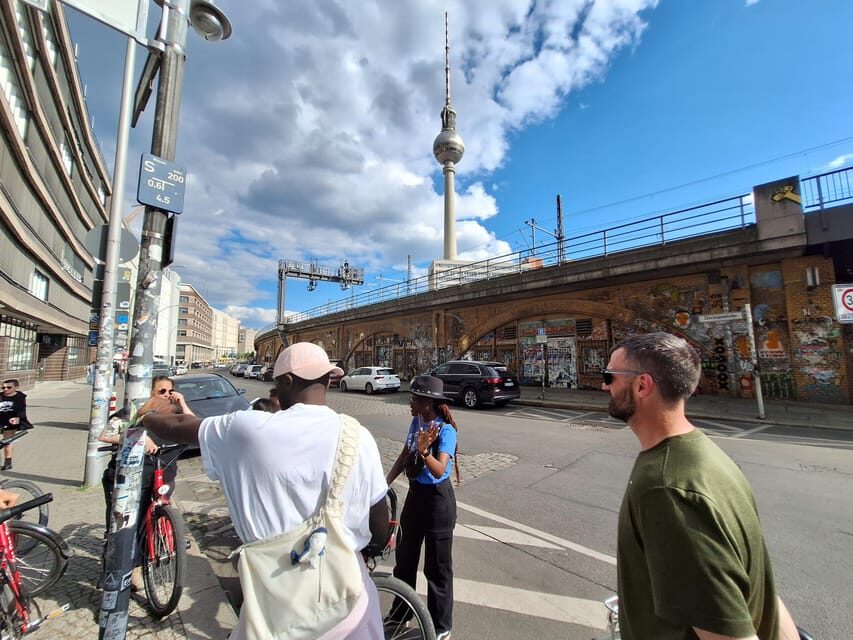
- Alexanderplatz start at the base of the TV Tower, so you get grounded fast
- Street art stops at Dead Chicken Alley and Dirksenstraße
- Zionskirche bell-tower entry included, with a proper climb payoff
- Hidden courtyards at Hackescher Höfe where Berlin feels like a neighborhood, not a postcard
- Modern culture stops linked to places like Tacheles and Babylon Berlin
- A Späti refreshment pause where you can grab a snack without derailing the route
Getting Started at Alexanderplatz and the TV Tower Base
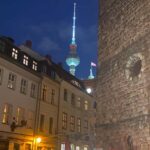
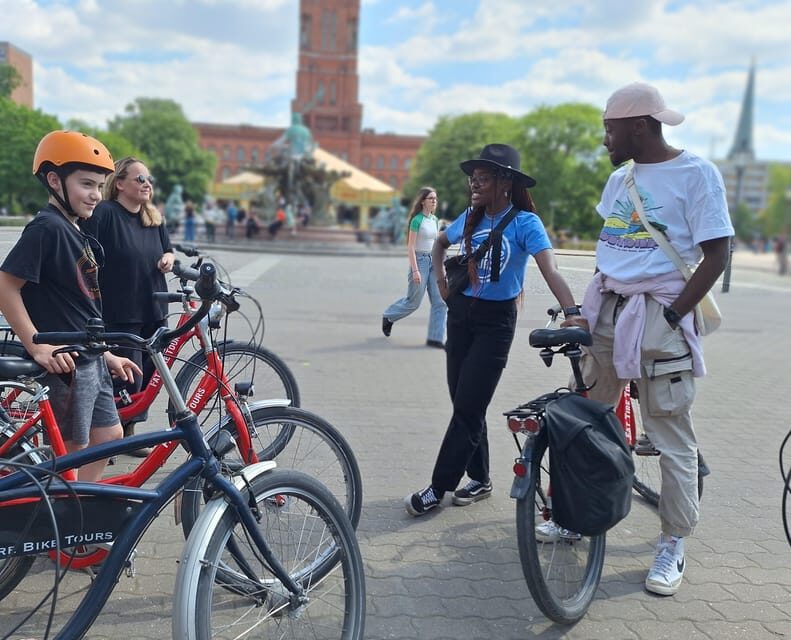
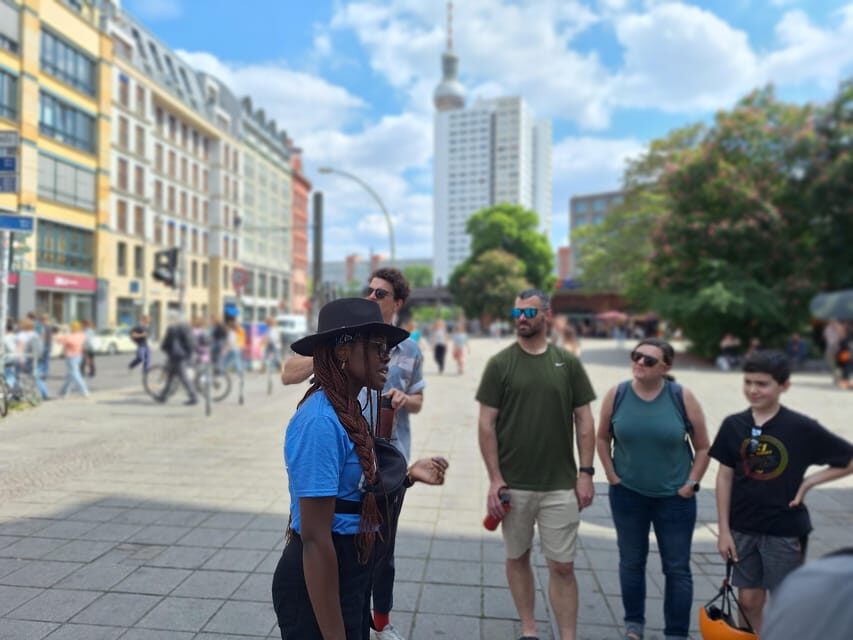
Your tour begins at the bike shop on Panoramastraße 1A, at the north side of Alexanderplatz, right at the base of the TV Tower. The directions are straightforward: you’ll find it between Doughnut Time and the Alex restaurant. If you’ve ever arrived in Berlin and felt a bit turned around, this kind of landmark-based meeting point helps you get your bearings quickly.
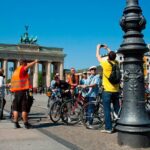
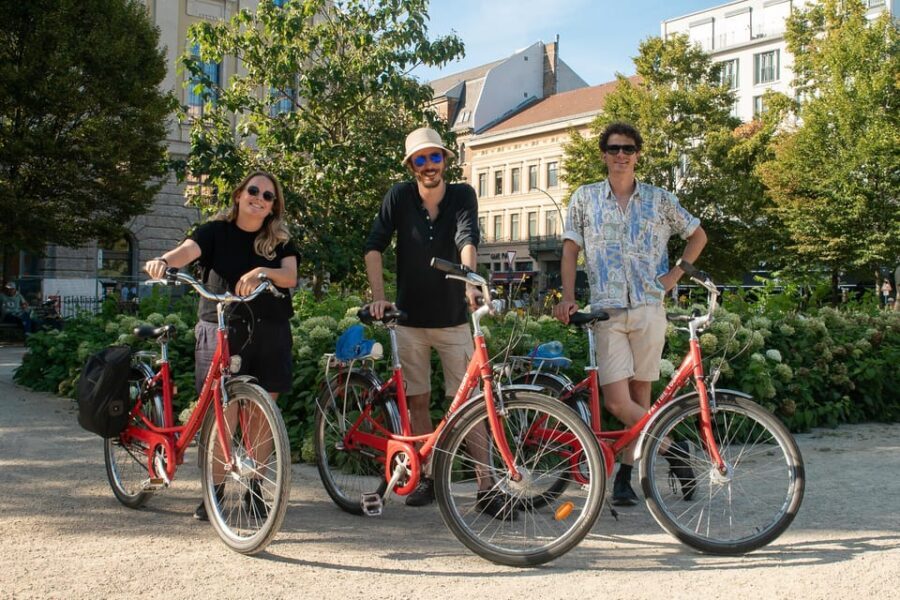
You’ll hop on a comfortable city-cruiser style bike. Helmets are provided, but optional, so you can decide based on your comfort level. This matters because the ride is about seeing Berlin up close, not racing through it.
The route focuses on a modern-capital rhythm, but it doesn’t ignore the past. You’ll pass key city stretches like the Spree area and then angle toward places that feel more personal than famous.
You can also read our reviews of more cycling tours in Berlin

Why the Dead Chicken Alley Street Art Stop Changes the Whole Tour
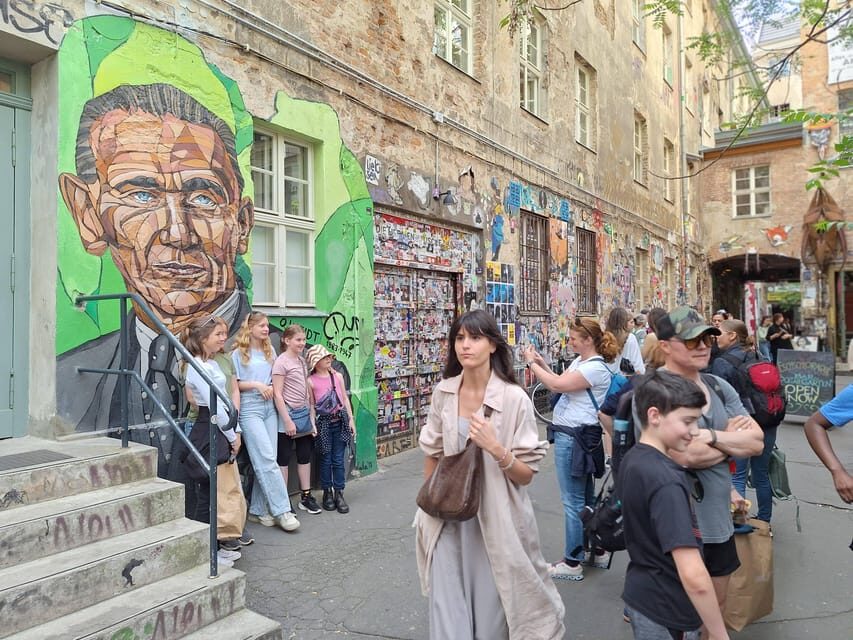
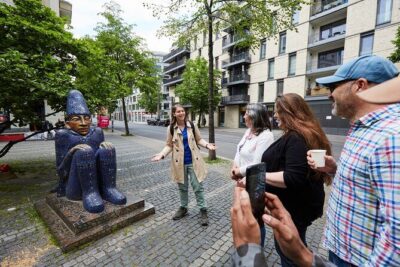
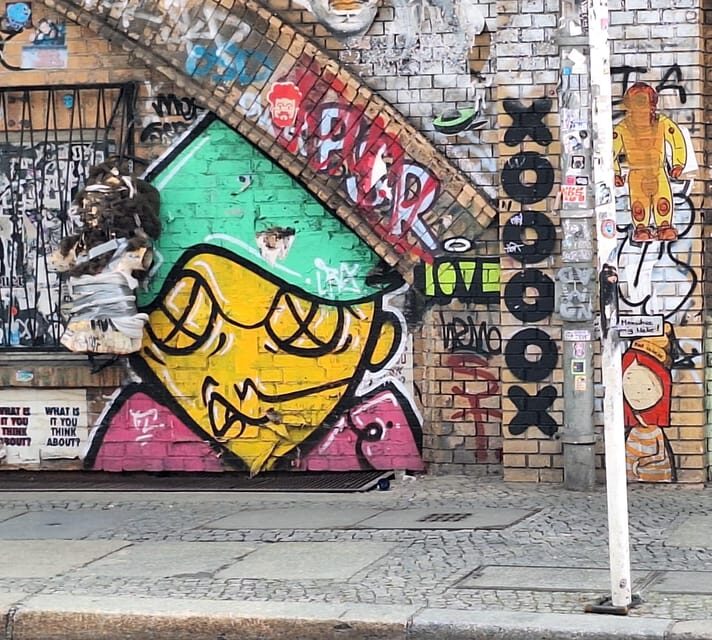
Dead Chicken Alley is the kind of Berlin stop that makes you stop pedaling. It’s known for street art that feels playful, political, and a little unapologetic, and the tour treats it like more than a quick photo stop.
What I like about this moment is that it sets expectations early. Instead of begging you to chase famous monuments, the tour trains your eyes to notice what Berliners put on walls, not just what they stand in front of.
You’ll also hit another street-art-focused area later along Dirksenstraße. Together, these stops give you a cleaner understanding of how street art functions in Berlin: not as background decoration, but as a public conversation.
Zionskirche Bell Tower Climb: A View That Adds Context
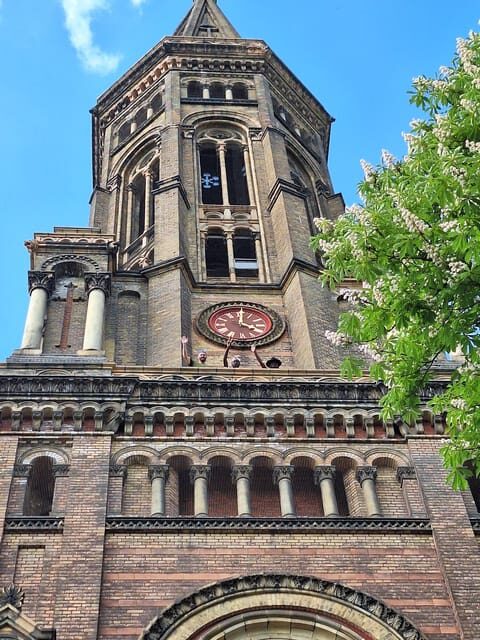
The highlight that feels most “tour-worthy” on a practical level is the bell tower climb at historic Zionskirche. Entry into the church is included, and the tour uses that access well. You’re not just seeing the exterior; you’re going up.
Why this works: a bell-tower view helps you connect the dots. Berlin can feel like a patchwork of eras and neighborhoods, and looking down from above gives you a better sense of where streets, parks, and districts relate. It’s also one of those experiences that turns a bike tour into something with real vertical payoff.
The climb is part of the itinerary flow, so it doesn’t feel random. Still, it’s worth noting for planning: expect a proper climb, and wear shoes that give you secure footing.
Hackescher Höfe Courtyards: How Berlin Hides Places in Plain Sight
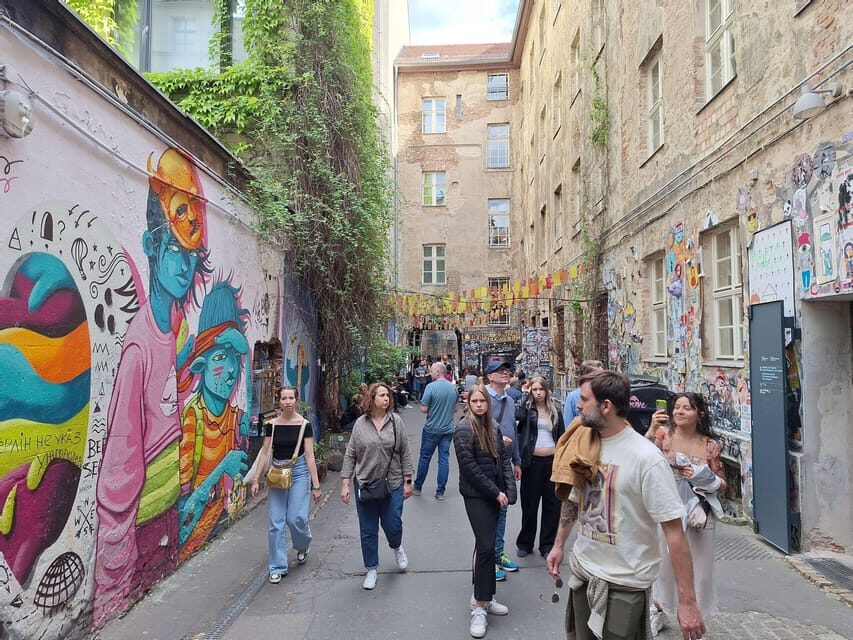
After you ride through the busier stretches, the tour gives you a quieter kind of discovery: the hidden courtyards of Hackescher Höfe. This is where Berlin’s urban design starts to feel personal. Courtyards can act like little time capsules, where you’re surrounded by buildings but removed from the main street noise.
This stop also teaches a useful travel lesson. If you only look at storefronts and street corners, you miss Berlin’s “in-between” spaces. Courtyards are a great way to see how the city is built for everyday wandering and small discoveries.
The tour also routes through Hackescher Markt, so you get the contrast: a lively hub vibe close by, then a calmer, more architectural experience just behind the scenes.
The Spree and Bode Museum: Seeing Big Culture Without the Museum Day
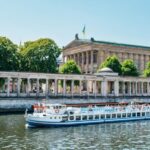
Before the tour deepens into street culture, there’s a stop at the Bode Museum along the Spree. You’re not told to spend hours inside, which is exactly why this works on a bike tour format.
You get the sense of Berlin’s museum power and architectural presence, while still keeping time for smaller, more local moments. If you’re trying to avoid a second full museum day, this is a nice compromise.
Think of it as wayfinding through Berlin’s major cultural axis. It helps you understand why certain neighborhoods feel like they attract visitors, while others feel like they belong to locals.
Tacheles and Modern Berlin Art-Scene Energy
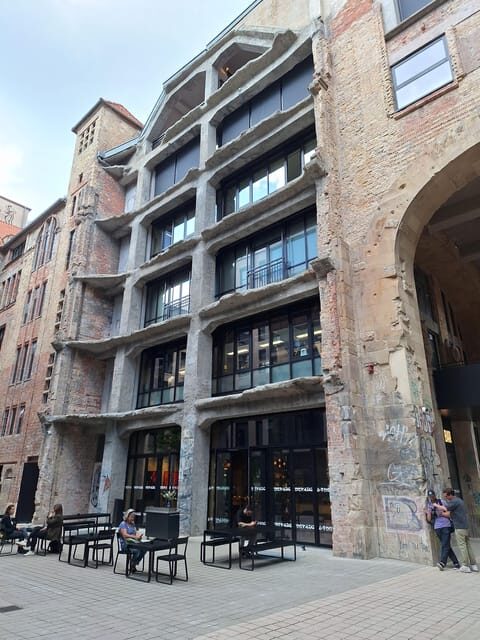
One of the more distinctive parts of the route is the stop at Tacheles, described as a local department-store-turned-art-collective. The value here isn’t only what you see, but the idea behind the place: repurposing buildings into creative community spaces.
In Berlin, that’s a big theme. The city has long turned unusual spaces into cultural scenes, and a site like Tacheles is a shortcut to understanding that mindset without reading for hours first.
If you like modern art culture, or you’ve heard people talk about Berlin as a creative city rather than just a historic one, this stop gives you a tangible reference point.
People’s Theatre and Babylon Berlin: Where Pop Culture Meets City Life
The tour also includes stops tied to what you’d call modern media energy, with references to the People’s Theatre and Babylon Berlin. Even if you’re not a super fan, these stops help you see Berlin through a contemporary lens.
Why that matters: Berlin is constantly reinventing itself, and pop culture is part of that reinvention. These stops give context for what you might recognize from screens, while also showing you the physical places in the city where that energy lives.
This is the tour’s way of connecting past and present. You climb a historic bell tower, then you ride into a scene shaped by modern creativity.
Mauerpark for a Breather and a Local-Feeling Stop
Mauerpark is another key pause point. It’s a place where Berliners spend time outside, and it’s also a convenient break in the ride rhythm. The tour brings you here as a stop, not just a ride-by, which helps you reset.
This is a good moment to slow down your internal pace. Bike tours can start to feel like a blur, especially if you’re trying to read every street sign. A stop like this helps you re-join the city instead of just moving through it.
If you’re the kind of traveler who likes to watch how people actually use public space, Mauerpark is the right kind of stop to include.
Späti Refreshment Break: Plan for a Snack, Keep the Tour Flow
You’ll get a refreshment stop at a local Späti, which is where Berlin’s quick grab-and-go culture shines. Costs for refreshments are not included, so you’ll pay for your own drinks or snacks.
I like this break because it’s practical. You’re out for about 210 minutes, so you’ll be glad to hydrate and refuel without derailing the route. It also gives you one of those small everyday experiences that makes Berlin feel real, not staged.
If you’re picky about what you drink, bring a water bottle mindset with you too. Even with the break, riding can work up a thirst faster than you expect.
Dirksenstraße Street Art: Matching the Story Told at Dead Chicken Alley
After Zionskirche and the courtyard time, you’ll encounter more street art hotspots, including Dirksenstraße. The tour keeps street art as a recurring theme, which is smart: one street-art stop can feel like an odd detour, but multiple stops show patterns.
Here’s the practical benefit for you: you start noticing the style differences, the messages, and the way different walls act like different public forums. By the time you see Dirksenstraße, you’re not looking blindly. You’re looking with better context.
Pace, Comfort, and What to Bring for a Rain-or-Shine Ride
This tour lasts about 210 minutes, which is long enough to feel like you covered real ground, but not so long that it turns into a full day commitment. You’ll be on a bike, so the comfort setup matters.
Bring weather-appropriate clothing. The tour runs rain or shine, and rain ponchos are available for sale before the tour departs. That last part matters: you won’t have to scramble for a solution at the last second.
For the bike: you’ll be using a comfortable city-cruiser style bike. Helmet is provided but optional. If you’re used to helmets, bring your own; if you’re not, the provided option still covers you.
Most importantly: this isn’t for people who can’t ride a bike. If you’re on the fence, be honest with yourself. The route includes climbs like the bell tower, and you’ll want your energy for both riding and sightseeing.
Price and Value: Is $47 Worth It?
At around $47 per person for a 210-minute guided bike tour, you’re paying for three things: transportation via a provided bike, an English-speaking guide, and included access to Zionskirche.
Here’s how I’d judge value. If the itinerary only covered big landmarks, you’d be comparing against typical sightseeing tours. But the route is built around specific Berlin experiences you can’t easily replicate on your own in the time you have—street art at Dead Chicken Alley, hidden courtyards at Hackescher Höfe, and a bell-tower climb with entry included.
Then there’s the guide element. English-speaking guidance is what turns a collection of stops into a story you can remember. In the reviews, I’ve seen the name Thor mentioned specifically, with praise for the guide’s explanations and focus on facts you’d struggle to figure out alone. That’s exactly what you want to pay for: local framing.
The one extra cost to plan for is the Späti refreshments. But compared with tours that tack on museum tickets everywhere, this one stays relatively controlled.
Who This Bike Tour Suits Best (and Who Might Want Something Else)
This tour is a strong match if you want Berlin without a checklist of the top ten tourist hits. I think it’s best for people who enjoy:
- Street art and modern culture
- Seeing neighborhoods like a local, not like a navigator app
- A mix of moving (by bike) and pausing (courtyards, parks, church entry)
It’s also a good first-timer tour. Starting at Alexanderplatz gives you a practical anchor, and the ride pattern can help you understand the city layout faster than wandering alone.
But if you’re coming to Berlin purely for major museum masterpieces or long indoor time, you may find this bike format too active. And if riding a bike isn’t comfortable for you, skip it.
Should You Book the Secrets of Berlin Bike Tour?
If you want Berlin with personality—street art with context, courtyards with that behind-the-scenes feeling, and a real viewpoint from the Zionskirche bell tower—this is an easy yes. The price feels fair because key experiences are included, and the stops are chosen to teach you how Berlin works, not just what to photograph.
I’d book it when you want a guided “logic map” of the city early in your trip, or when you’ve already seen the obvious sights and want something that feels more like Berlin is talking back. Just be sure you’re comfortable riding, and pack for rain since the tour goes rain or shine.
FAQ
Where does the tour meet?
The meeting point is at the Alexanderplatz shop on Panoramastraße 1A, on the north side of the TV Tower. It’s located between Doughnut Time and the Alex restaurant.
How long is the Secrets of Berlin Bike Tour?
The tour lasts about 210 minutes.
Is the helmet required?
Helmets are provided, but they are optional.
Is the Zionskirche bell tower included?
Church entry is included, and the tour includes climbing the bell tower.
Does the tour include food or drinks?
A refreshment stop at a local Späti is included, but the cost of refreshments is not included.
What should I wear?
Wear weather-appropriate clothing. The tour runs rain or shine, and rain ponchos are available for sale before departure.
Is this tour suitable for non-bike riders?
No. It’s not suitable for people who can’t ride a bike.
Is there cancellation flexibility?
Free cancellation is available up to 24 hours in advance for a full refund.