REVIEW · BERLIN
Berlin: GDR witness tour in small group
Book on GetYourGuide →Operated by Secret Tours Berlin · Bookable on GetYourGuide
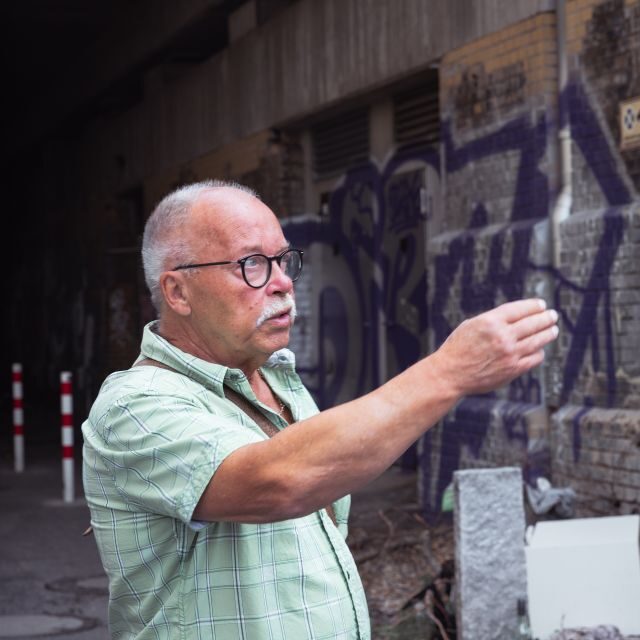
Stasi stories hit different when you can meet the person who lived them. This moving small-group Berlin tour is led by Karl-Heinz Richter (Kalle), a former political prisoner who tells you what life in the GDR really felt like, not what brochures say.
I especially liked two things: the first-hand escape attempt details at Friedrichstraße station, and how directly he connects his experience to the day-to-day pressure of Stasi control in East Germany. One consideration: a few people report that the story pacing and total time can vary, so it’s smart to plan your day with a little buffer.
In This Review
- Quick highlights
- Why a former political prisoner’s Berlin tour feels more real
- Meeting Karl-Heinz Richter (Kalle) and getting oriented
- Friedrichstraße station: the moment freedom turned into a failed jump
- Berlin-Pankow and Stasi pre-trial detention: what imprisonment started as
- Stasi interrogation methods and the pressure beyond prison walls
- Everyday GDR life: how control shaped ordinary decisions
- How the tour works in real life: duration, language, and pace
- Price and value: what $27 buys you here
- Who this Berlin GDR witness tour suits best
- Should you book this tour?
- FAQ
- How long is the Berlin GDR witness tour?
- Who leads the tour?
- What is the tour language?
- Is the tour wheelchair accessible?
- Does the tour run in bad weather?
- What’s included in the price?
Quick highlights
- Karl-Heinz Richter’s story in plain human terms You hear the GDR through one person’s choices, fear, and consequences.
- Friedrichstraße escape attempt He describes trying to jump onto a moving train after the Wall went up.
- Stasi pre-trial detention in Berlin-Pankow You get specifics about how confinement started and what the in-between phase felt like.
- Interrogation methods and the wider Stasi system You learn how Stasi pressure shaped more than prison walls.
- A small-group, moving format You stay close to the narrative and the relevant places in Berlin.
- Rain or shine The tour keeps going, so bring a real jacket and good shoes.
Why a former political prisoner’s Berlin tour feels more real
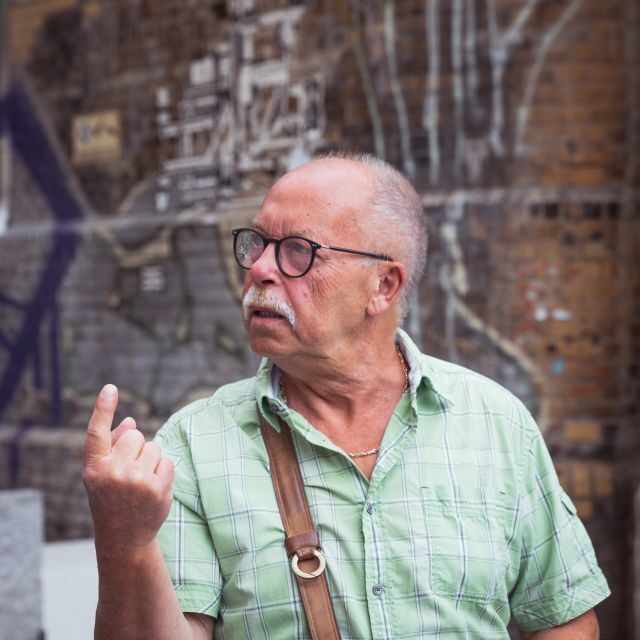
The GDR era is easy to turn into a school lesson: dates, names, and a few famous images. This tour works differently. You get a living witness—a man who was born in Brandenburg in 1946 and grew up in East Berlin—explaining how the system played out when you were actually stuck inside it.
The setting also matters. Berlin is not just a backdrop here. When you connect the story to real locations—especially the ones tied to his attempted flight—the timeline becomes personal, and the stakes get clearer fast.
That’s also why this tour isn’t only about history facts. It’s about human behavior under surveillance: what people did, what they avoided, and how ordinary routines could become risky.
You can also read our reviews of more tours and experiences in Berlin.



Meeting Karl-Heinz Richter (Kalle) and getting oriented
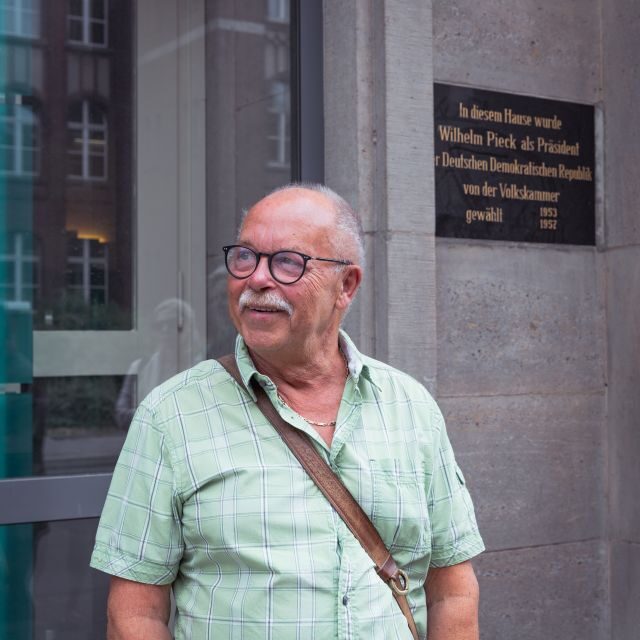
You’ll meet Karl-Heinz Richter, known as Kalle, and hear his story from the inside out. He grew up with his family in East Berlin, and the tour frames how life changed after the Wall was built—when trying to leave stopped being a matter of inconvenience and became a matter of danger.
Then comes the turning point. About three years after the Wall was built, Kalle planned to flee to the West. You learn that he didn’t just think about it—he acted, and he tried to do it at Friedrichstraße.
This kind of witness tour works best when you come ready to listen without expecting a polished script. It’s not a performance. It’s a person recounting events that left deep marks, including imprisonment connected to the Stasi.
Friedrichstraße station: the moment freedom turned into a failed jump
Friedrichstraße is the first major anchor of the story. Kalle tells you about his plan to leave East Germany by trying to jump on a moving train there. That detail is one of the most intense parts of what you’ll hear, because it shows the desperation and the risk in a very concrete way.
What I like about this section is how it turns the concept of the border into a physical act. It’s one thing to hear that the West was hard to reach. It’s another to hear how someone tried to make it happen in motion, right where you can still imagine the platform and the train schedule.
This part also gives you a better sense of how people measured time and opportunity. When you feel trapped, you don’t wait for perfect conditions. You go when you see a crack.
And yes, it’s heavy. But it’s also clarifying. You walk away understanding that escape attempts weren’t abstract rebellion—they were carefully timed decisions made under extreme constraints.
Berlin-Pankow and Stasi pre-trial detention: what imprisonment started as
The tour moves from the attempt to the aftermath, and that’s where the story gets even darker. Kalle spent several months in pre-trial detention in a Stasi prison in Berlin-Pankow after the escape failed.
This section matters because pre-trial detention is often where people lose control of everything. Not knowing the length, not knowing the process, and being processed through a security system designed to break patterns—those are not small details. They’re the reality behind the word prison.
From what you’ll hear on the tour, the Stasi presence didn’t just live in one building or one cell. It connected to interrogations, pressure, and the sense that you could be watched at any moment—not only after you were caught, but in the way society organized itself.
If you’re the type who likes to understand the mechanics, you’ll appreciate that the tour doesn’t stop at emotions. It also points toward the process the system used to decide what came next.
Stasi interrogation methods and the pressure beyond prison walls
A big part of the experience is learning about Stasi interrogation methods and how the Stasi influenced everyday life. The tour makes the point that the Stasi wasn’t only a “prison problem.” It was part of social reality.
Listen closely here. Even when Kalle talks about his personal experience, he also helps you understand the system’s logic: control through fear, control through uncertainty, and control through the idea that everyone could be connected to information gathering.
That’s why this tour is valuable even if you already know some GDR basics. You’re not only learning what happened to one prisoner. You’re learning how a surveillance state tries to shape behavior in advance, so you never even have to be arrested to be controlled.
This section also tends to be the most sobering. There’s no way around it. When a security apparatus can reach into daily life, the cost of mistakes becomes bigger than most visitors expect.




Everyday GDR life: how control shaped ordinary decisions
Kalle also reveals the truth about everyday life in East Germany, not just what happened during escape planning or detention. You’ll hear how the system affected routine living, and how staying safe often meant learning what you could say, where you could go, and how to interpret consequences.
One thing I find useful as you listen is to translate his story into “small scale” decisions. Not everyone in the GDR was in prison. Most people were doing regular things—work, transport, shopping, family life—and they still had to live under the possibility that the Stasi was watching.
This is where the tour becomes more than a personal tragedy. It becomes a lesson in how authoritarian control can become normal. Once the system becomes part of daily expectations, people adjust their lives quietly—often without realizing how much they’ve changed.
That’s also why the story feels powerful rather than just grim. It shows you the difference between being oppressed once and being shaped over time.
How the tour works in real life: duration, language, and pace
The experience runs for 2.5 hours and is a moving small group tour. The exact start times depend on availability, so check ahead and pick the slot that best fits your day.
Language is German, and the guide is live throughout. If your German is basic, you can still follow the overall story, but you may miss the nuance that makes witness tours land.
Timing is also worth noting. While the stated duration is 2.5 hours, a few people report it ended earlier. I’d plan your schedule as if it could run shorter or longer, then give yourself a buffer so you’re not rushing for your next booking.
The tour takes place rain or shine, so dress like you mean it. Bring a jacket, wear grippy shoes, and accept that Berlin weather doesn’t care about your itinerary.
Price and value: what $27 buys you here
This tour costs $27 per person, with a live guide included. That price can feel low for a topic this intense, and that’s exactly why it’s worth thinking about value carefully.
You’re paying for access to something rare: an account delivered by the person who lived the events. That’s different from a typical walking tour where you get facts and a few anecdotes. Here, the guide’s personal escape attempt and imprisonment make the experience feel grounded and direct.
At the same time, value depends on fit. If the tour runs close to the full 2.5 hours, $27 feels like a fair trade for a deeply human story and the context around Stasi control. If it ends significantly earlier, the cost-per-minute can feel harder to justify—especially for a topic you’ll want time to process.
Overall, I’d call it good value for visitors who want something more personal than a museum-style overview.
Who this Berlin GDR witness tour suits best
This is a strong match for you if you:
- Want a first-hand explanation of East Germany and not only secondhand summaries.
- Are interested in how the Stasi affected society, not just prisons.
- Prefer small-group conversations where a guide can focus on a coherent narrative.
It’s also a good choice if you like tours that connect story to place. The Friedrichstraße escape attempt and the Berlin-Pankow detention setting give the talk real anchors.
If you’re easily overwhelmed by heavy topics, be honest with yourself before booking. You’ll be hearing about inhumane detention conditions and Stasi pressure. It’s educational, but it’s not light entertainment.
And if you don’t speak German, plan on that being a limitation. The tour is in German, with no other language options stated in the provided info.
Should you book this tour?
If you want an authentic, human account of the GDR and you’re comfortable with serious content, I think you’ll likely appreciate this Karl-Heinz Richter witness tour. The main draw is simple: you hear his story directly, including his escape attempt at Friedrichstraße and his imprisonment in Stasi pre-trial detention in Berlin-Pankow.
I’d also book it with two practical mindsets: (1) go prepared for rain and walking, and (2) don’t build a tight schedule right after it, since time can vary.
If you’re looking for a lighter, purely historical overview with minimal emotional weight, you might prefer a different style of Berlin East Germany tour. But if you want the kind of experience that sticks with you because it’s personal, this one has the right ingredients.
FAQ
How long is the Berlin GDR witness tour?
The duration is listed as 2.5 hours. Starting times depend on availability.
Who leads the tour?
The tour is guided by Karl-Heinz Richter, also known as Kalle, a former political prisoner and Stasi victim who shares his first-hand experiences.
What is the tour language?
The live tour guide language is German.
Is the tour wheelchair accessible?
Yes, the tour is listed as wheelchair accessible.
Does the tour run in bad weather?
Yes. The tour takes place rain or shine.
What’s included in the price?
The tour includes the tour guide. Hotel pickup and drop-off are not included.