REVIEW · CHEMNITZ
Chemnitz: Private Guided Walking Tour
Book on GetYourGuide →Operated by Travmonde OÜ · Bookable on GetYourGuide
Chemnitz can feel like a plainspoken city with big ideas. In a tight 90 minutes, you’ll connect the dots between its industrial past, the giant Karl Marx Monument, and the modern architecture that grew from that same drive. The tour is great for a quick orientation on foot, but it may not be ideal if you have mobility issues, since it’s not suitable for wheelchair users.
What I liked most is how the guide ties together two themes that are easy to miss when you visit on your own: the city’s textile and machine industries, and the way modern design shows up right in the center. I also appreciate that you get a real local guide who answers questions and can adjust on the spot, which makes the experience feel less like a script and more like a conversation with the city.
If you’re the type who likes history you can actually see—brick by brick, street corner by street corner—this is a solid way to spend an hour and a half in Chemnitz.
In This Review
- Key highlights worth your attention
- Chemnitz in 90 Minutes: How Industry Shaped the City
- Meeting at Kunstsammlungen Chemnitz and Getting Your Bearings
- Karl Marx Monument and the Modernist Center
- The Theater Architects: Why Helmut Jahn and Co. Matter Here
- Red Tower: The 12th-Century Survivor in the City Center
- Textile and Machine Industries: What You’ll Notice on the Walk
- Price and Logistics: Is $280 Per Group Up to 15 Worth It?
- Guide Quality: Friendly, Flexible, and Built Around Your Questions
- Who Should Book This Chemnitz Walking Tour (and Who Should Skip It)
- Should You Book the Chemnitz Private Guided Walking Tour?
- FAQ
- How long is the Chemnitz private guided walking tour?
- What does the tour cost?
- Where do we meet?
- Is this tour private?
- What languages are offered?
- Are entrance fees included?
- Can the tour be customized?
- What should I bring?
- Is it suitable for wheelchair users or mobility impairments?
- Is free cancellation available?
Key highlights worth your attention
- Karl Marx Monument: big presence and clear context for understanding Chemnitz’s identity
- Textile and machine industry stories: what made the city grow, and what you can still spot today
- Modernist theater architecture: a design showcase linked to major architects
- Red Tower: the city’s 12th-century symbol and a survivor from earlier walls
- Small private group up to 15: personal guide time, with room to ask questions
Chemnitz in 90 Minutes: How Industry Shaped the City
Chemnitz is often described in terms of what it built, worked on, and exported. Walking it with a guide helps you see that story in the streets instead of treating it like a Wikipedia topic.
This tour works especially well if you want a fast but thoughtful overview. You’ll spend the time moving between major landmarks that make the city’s identity easy to grasp, then you’ll leave with a clearer picture of why industrial growth still influences what you see today—architecture, public space, and cultural focus included.
The vibe is practical. You’re not just chasing pretty views. You’re learning how a Central German industrial center turned its history into something you can read in buildings and monuments.
You can also read our reviews of more walking tours in Chemnitz

Meeting at Kunstsammlungen Chemnitz and Getting Your Bearings
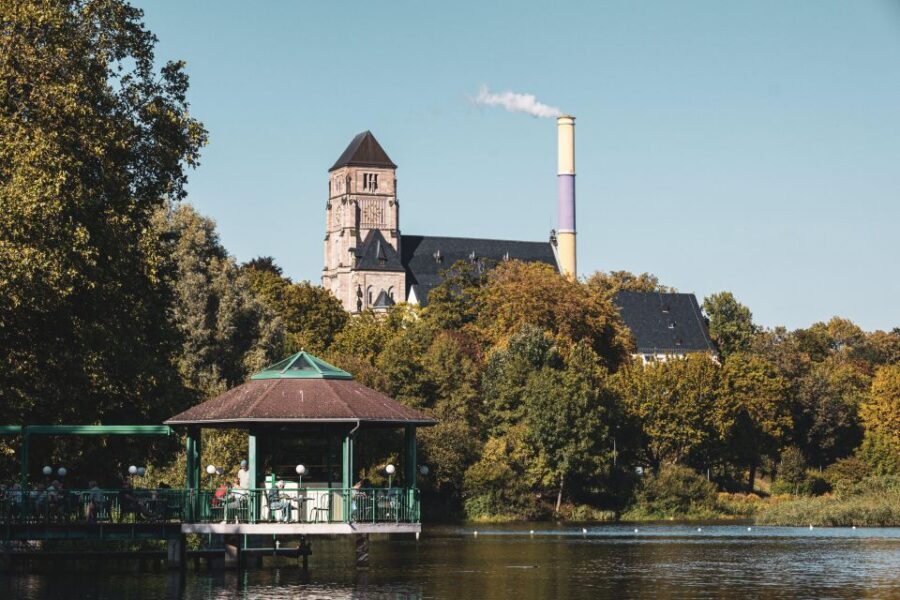
You start at the art museum Kunstsammlungen Chemnitz (Stollberger Str. 2, 09119 Chemnitz). Even if you don’t go inside, that starting point gives you a sense of the city’s mix: industry and culture side by side.
Expect your guide to set the frame quickly: Chemnitz grew to around 250,000 people during the industrial revolution, and the city kept that forward-leaning pattern into modern times. From there, the tour logic becomes clear—each landmark isn’t random. It’s a clue to how Chemnitz thinks about progress.
Bring comfortable shoes. This is a walking tour, so you’ll want to be ready for a steady pace over the 90 minutes.
Karl Marx Monument and the Modernist Center
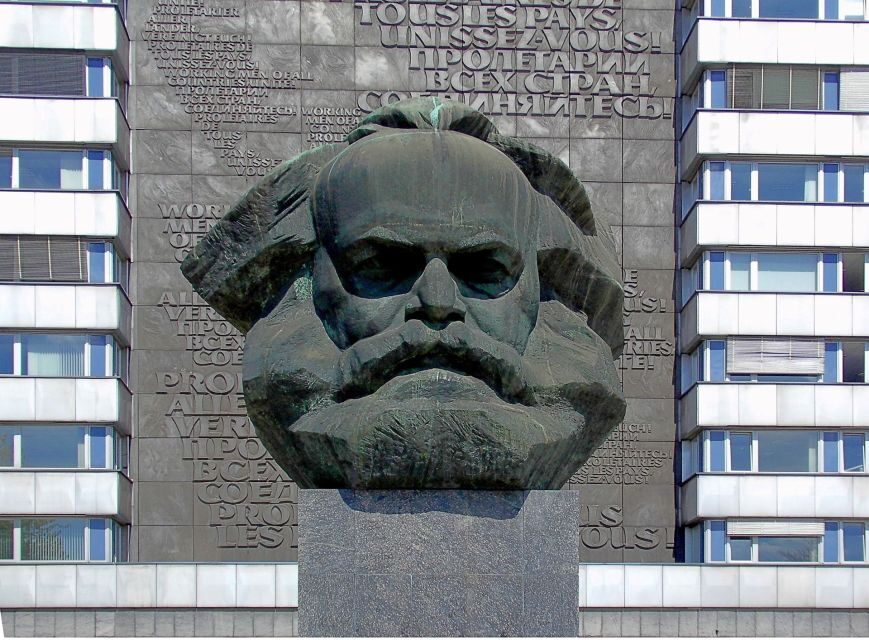
The star stop is the huge Karl Marx Monument. It’s not just a photo op. It’s a visual anchor that gives you immediate context for why the city carries the name Karl Marx City and how political and industrial identity can overlap in public space.
What I like about seeing a monument like this with a guide is how quickly it turns into a lens for everything else. Once you’ve got it in your head, you start noticing contrasts: solemn scale versus newer design language, old ideology versus newer architecture, and how the city communicates its story to passersby.
The tour also focuses on modernist ideas in the city center. Chemnitz isn’t only about the industrial era it came from; it’s also about what that era enabled and what people built afterward.
The Theater Architects: Why Helmut Jahn and Co. Matter Here
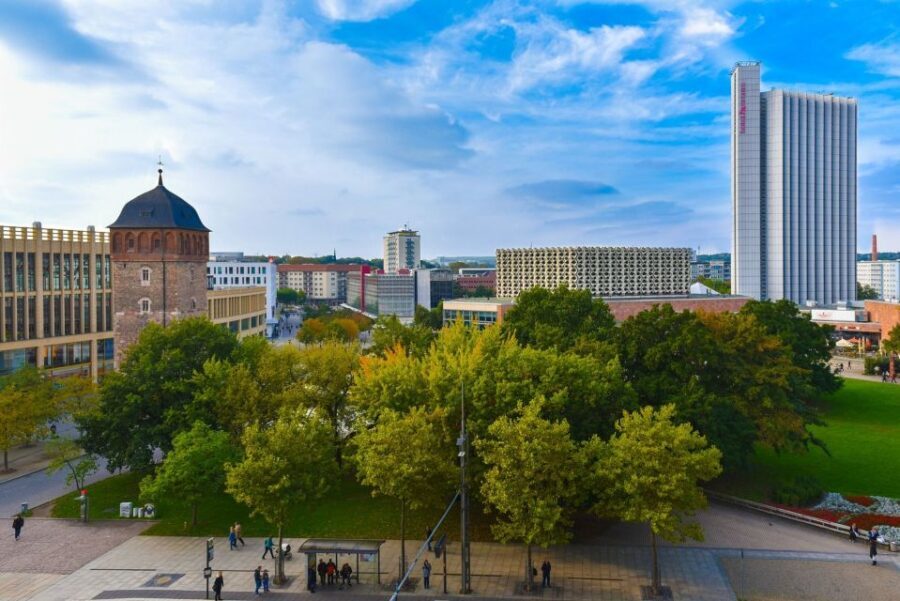
From the monument area, you’ll head toward the theater and its modernist architecture. This stop is a big deal on the tour because it ties a local story to well-known international names.
You’ll hear that architects such as Helmut Jahn, Hans Kollhoff, and Christoph Ingenhoven were involved in the development of a newer center. Even if you don’t know their work already, the point is simple: Chemnitz didn’t redesign its core in isolation. It attracted serious design attention and used that to shape how the city presents itself now.
This is one of the best stops for people who like “architecture with an explanation.” The guide helps you connect form to meaning—why a modern cultural building sits where it does, and how it signals a shift from purely industrial identity to civic and cultural confidence.
Red Tower: The 12th-Century Survivor in the City Center
Then comes the landmark that makes Chemnitz feel anchored in centuries. The Red Tower is the town’s symbol, built in the 12th century, and it’s still standing right in the city center.
This tower is especially valuable because it survived war and time, and it’s all that remains of the former Chemnitz city wall. In other words: you’re seeing a physical fragment of the old defensive edge of the city, not just a reconstruction or a themed monument.
I like how this stop balances the whole tour. The Karl Marx Monument and the modern theater represent ideas of the 19th to 21st centuries. The Red Tower brings it back to the medieval layer—so the city feels like it has multiple chapters, not one long single-story timeline.

Textile and Machine Industries: What You’ll Notice on the Walk
Chemnitz’s identity is strongly tied to textile and machine industries, and your guide keeps bringing those themes back throughout the route. This part matters because industrial cities can be hard to “read” if you only look for landmarks.
With the right explanations, you start noticing how industrial success creates more than factories. It influences jobs, education, civic priorities, and even the kind of bold architecture a city feels comfortable building.
You’ll get a sense of why Chemnitz flourished during the industrial revolution and why it kept that momentum into today. The tour approach makes the industrial heritage feel concrete: you aren’t just told it happened; you’re pointed toward what the city still shows.
A practical tip: if you’re interested in specific sectors—textiles, machinery, manufacturing—ask your guide early. The tour allows possible customizing on the spot, so you can steer the focus without turning the whole experience into a lecture.
Price and Logistics: Is $280 Per Group Up to 15 Worth It?
Here’s how I think about the pricing. It’s $280 per group, and the group cap is up to 15 people. That means your per-person cost can be very reasonable if you’re traveling with friends, a small club, or a family group that wants one guided thread through the city.
To make it concrete:
- If you fill the group (15 people), the cost works out to about $18–19 per person.
- If you book a smaller group (say 4–6 people), it feels more like a premium private experience.
Either way, the big value isn’t only the sites you see. It’s the fact that you get a local professional guide with your group the whole time, in either German or English. That’s the difference between “I saw a monument” and “I understand why that monument matters here.”
One more thing: entrance fees are not included. If you want to go inside any buildings during the walk, you’ll need to plan for those costs separately.
Guide Quality: Friendly, Flexible, and Built Around Your Questions
The best walking tours don’t just recite facts. They respond. This one includes a local professional guide who stays with your group the entire time, and there’s room for customizing on the spot.
In real use, guides such as Frau Wagner and Ramona are described as friendly, informative, and able to answer questions competently. You should expect that tone: approachable explanations, plus practical room for you to steer toward what you care about most.
That flexibility is handy in a city like Chemnitz. If you want more on industry and how it shaped architecture, you can ask for that. If you’re more focused on the modern buildings and the names behind the design, you can shift the emphasis.
Who Should Book This Chemnitz Walking Tour (and Who Should Skip It)
This tour is a good fit if you:
- want a quick, guided orientation in 90 minutes
- care about the connection between industry, monuments, and modern architecture
- like asking questions and getting answers in real time
- prefer a private-group pace rather than a large group tour
It’s also a solid choice if you’re someone who enjoys big-city history but doesn’t want a full-day commitment.
Skip it if you need wheelchair access or mobility accommodations. The tour is not suitable for people with mobility impairments and wheelchair users, so choose a different format if accessibility is a requirement.
Should You Book the Chemnitz Private Guided Walking Tour?
If you want an efficient and meaningful introduction to Chemnitz, I’d say yes. You get the key anchors—Karl Marx Monument, modernist theater architecture, and the Red Tower—and the guide ties them together with the city’s textile and machine industry story. That blend makes it more than a checklist.
Book it if you’re traveling with a small group and want real guide time. The pricing becomes especially attractive when you share the group cost, and the private format helps you keep your own interests in the driver’s seat.
Consider passing if you need an accessibility-friendly route, or if you already know the industrial and architecture themes inside out. In that case, you might prefer a more specialized tour or spending extra time exploring at your own pace.
FAQ
How long is the Chemnitz private guided walking tour?
The tour lasts 90 minutes.
What does the tour cost?
It costs $280 per group, up to 15 people.
Where do we meet?
You meet at Kunstsammlungen Chemnitz, Stollberger Str. 2, 09119 Chemnitz, Germany.
Is this tour private?
Yes, it’s a private group tour.
What languages are offered?
The live guide speaks German and English.
Are entrance fees included?
No, entrance fees are not included.
Can the tour be customized?
Yes, there is possible customizing on the spot with your local guide.
What should I bring?
Wear comfortable shoes, since it is a walking tour.
Is it suitable for wheelchair users or mobility impairments?
No, it is not suitable for people with mobility impairments or wheelchair users.
Is free cancellation available?
Yes. You can cancel up to 24 hours in advance for a full refund.