REVIEW · BERLIN
Berlin: Decolonial Berlin Castle/ Humboldt Forum Guided Tour
Book on GetYourGuide →Operated by deSta- Dekoloniale Stadtführung · Bookable on GetYourGuide
A museum tour that questions its own foundations. The Berlin Castle and Humboldt Forum get re-framed through a decolonial and Afrocentric perspective, with real historical threads connecting palace, science, and colonial extraction. You don’t just look at objects here—you look at the story that brought them to Berlin.
I especially like how the tour pairs palace history (about 500 years of it) with clear links to colonialism, so the building itself starts making sense. And I really value the way you analyze the ethnological collection using a guided approach plus an audio walk, turning what could be passive viewing into active, critical looking. One possible drawback: the topic is emotionally and politically charged, so if you prefer a purely celebratory museum tone, you may find the tone confrontational.
In This Review
- Key highlights worth your attention
- Why this tour’s angle changes how you’ll see the Humboldt Forum
- Meeting near the reconstructed Sanchi Gate, then settling in outside
- The 500-year palace story, but told with colonial context attached
- Humboldt brothers, missionaries, and the science behind empire
- Inside the ethnological collection: critical looking through an audio walk
- The decolonial approach: why it can be powerful, and why it can be polarizing
- Price and value: is $41 for 2 hours fair?
- Who should book this tour (and who might pass)
- Should you book deSta’s Decolonial Berlin Castle / Humboldt Forum tour?
- FAQ
- How long is the guided tour?
- Where do we meet?
- What language is the tour guide?
- What is included with the tour price?
- Is entry to the ethnological collection included?
- Is the tour wheelchair accessible?
- What should I bring, and what’s not allowed?
- Can I cancel, and is pay later available?
Key highlights worth your attention

- Afrocentric framing of the Humboldt Forum’s themes, not a side note
- Critical analysis of the ethnological collection through an audio walk
- Palace history with colonial context, including how the roof cross is read symbolically
- Humboldt brothers explained in terms of their scientific influence in German history
- Missionaries and colonial structures discussed as part of the system, not background noise
Why this tour’s angle changes how you’ll see the Humboldt Forum

The Humboldt Forum sits inside the bigger Berlin Castle complex, and that alone creates tension. This is a place shaped by state power, prestige, and collecting. What makes this guided tour different is that it refuses to treat those forces as neutral.
You’ll hear the palace history from a decolonial point of view, which means the tour doesn’t stop at dates and architecture. Instead, it keeps asking: Who had the power to name things, move things, and display things? And what did missionaries, scientists, and colonial institutions make possible?
That matters for your own visit because Humboldt Forum exhibitions can feel like standalone stories—sections of culture separated into tidy categories. This tour helps you see the connective tissue: colonial history, the ethics of collection, and how museums shape public memory. You’ll walk away with sharper questions for the galleries, not just a checklist of facts.
You can also read our reviews of more guided tours in Berlin



Meeting near the reconstructed Sanchi Gate, then settling in outside

You meet near the reconstructed Sanchi Gate (look for the white chairs to get your bearings fast). Plan on a calm start: the group sits outside for about one hour before heading into the museum.
That outside portion isn’t wasted time. It’s built to help you orient yourself before you step into a space where symbolism and context matter. If you’ve ever wandered a museum first and then wished you’d had a framework, this tour is designed to prevent that.
Practical note: wear comfortable shoes. Even though the core experience is the museum, Berlin weather can be stubborn, and you’ll be outside long enough that you’ll want layers.
The 500-year palace story, but told with colonial context attached
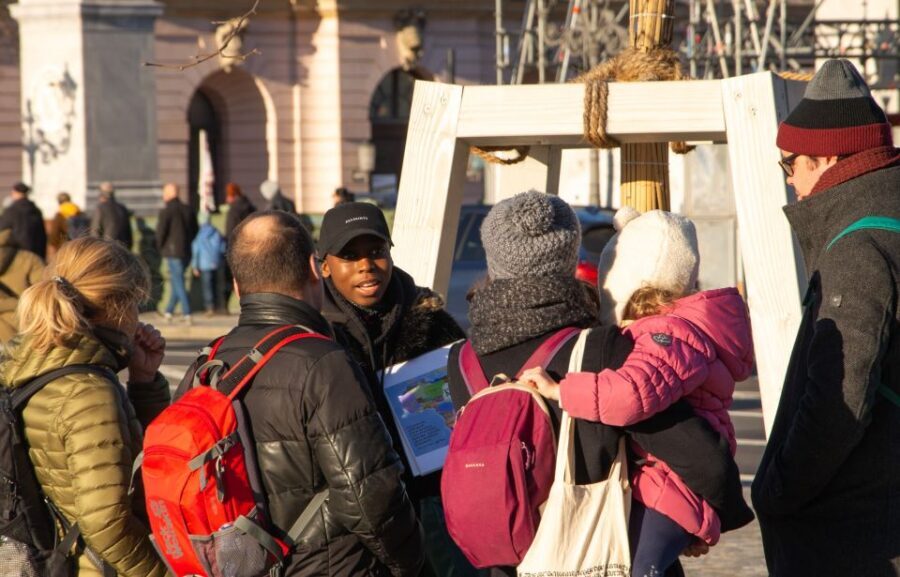
One of the tour’s main promises is palace history—about 500 years—but filtered through a Decolonial lens. That shift is more than academic. It changes how you interpret what you’re standing in front of.
Berlin Castle isn’t just a backdrop. During the tour, you’ll connect the palace’s role and symbolism to broader colonial structures. You’ll hear why this building matters in modern narratives, and how the castle and Humboldt Forum fit into Germany’s complicated relationship with empire and cultural authority.
A key moment is the discussion of the roof’s cross and its symbolic meaning. Even if you’ve seen the building many times, the cross usually reads as architecture or church-adjacent heritage on first glance. Here, you’re prompted to think about what such symbolism communicates in an institution that also displays ethnological collections tied to colonial collecting.
If you like historical interpretation that’s grounded in questions—not just vibes—this part will click for you.
Humboldt brothers, missionaries, and the science behind empire

You’ll also learn about the Humboldt brothers and why they’re considered important figures in German history as scientists. The tone here isn’t simply biography. The tour links their scientific status to the larger world that enabled colonial-era knowledge gathering.
That link matters because it’s easy to reduce famous scientists to good intentions or pure curiosity. This guided approach frames science as part of a system—one that benefited from exploration networks, colonial routes, and institutional support.
The tour also brings missionaries into the conversation in a direct way: you’ll learn more about the role various missionaries played in establishing colonial structures. That theme is important because missionary work is often treated as separate from politics. Here, you’ll see how religion, cultural contact, and power can overlap—and how that overlap shaped what was recorded, collected, and categorized.
You don’t have to agree with every interpretation to benefit. Even if you come in skeptical, hearing these links out loud gives you a stronger base for forming your own view later.
Inside the ethnological collection: critical looking through an audio walk
The centerpiece of the experience is the ethnological collection and the way the tour teaches you to look at it critically.
You’ll browse the ethnological collection inside the Humboldt Forum with an audio walk, while the guide frames what you’re seeing from a critical perspective. The goal isn’t to tell you which objects are good or bad. It’s to show how museum displays can carry colonial logic—through labeling, categories, implied histories, and missing context.
In practice, that means you’ll spend time learning how to read between the lines: what’s foregrounded, what’s treated as timeless, and what might be described without the full power story behind it. This is where the tour tends to satisfy people who dislike passive sightseeing. The structure encourages engagement rather than drift.
One more practical point: the tour includes entry to the ethnological collection, so you’re not juggling ticket math or figuring out which line to stand in. You’re just in the museum with a plan.
That said, one consideration: the time spent in the Forum itself can feel shorter than you want if you were hoping for a long, gallery-by-gallery walk. The overall concept is broader—palace context plus collection analysis—so don’t expect hours and hours inside every room.





The decolonial approach: why it can be powerful, and why it can be polarizing
A decolonial tour asks a specific kind of listener. It asks you to accept that history has winners and losers, and that cultural heritage isn’t automatically neutral just because it’s behind glass.
You might find this approach energizing if you enjoy tours that treat museums as living institutions with moral and political choices. The added Afrocentric insights can also make the material feel more grounded in perspectives that were historically dismissed.
But it’s also the type of tour where tone can matter. In this topic area, people’s comfort levels vary a lot. Some visitors expect a gentle discussion and get a firm, even blunt, critique of interpretation and legacy. If you know you prefer a strictly traditional museum narrative, this might feel uncomfortable.
My advice: go in with curiosity, not a checklist. If you can handle challenging perspectives, you’ll likely get more from this tour than from a standard guided walkthrough.
Price and value: is $41 for 2 hours fair?
At $41 per person for 2 hours, this tour sits in the mid-range for guided experiences in Berlin. The value question comes down to what you get for that time.
You get:
- a live English guide
- entry to the ethnological collection
- an extended pre-museum orientation outside (about one hour)
- a structured approach to critical viewing with an audio walk
If you’re the kind of person who reads labels and wants context, paying for a guide usually pays off fast. Berlin is full of self-guided options, yes—but the decolonial framing and the guided critical method aren’t things you can easily replicate just by walking in on your own.
Where value might feel weaker is if you specifically want more time inside the galleries. Since the tour covers both palace narrative and museum analysis, the museum portion is paced as part of the bigger story.
Who should book this tour (and who might pass)
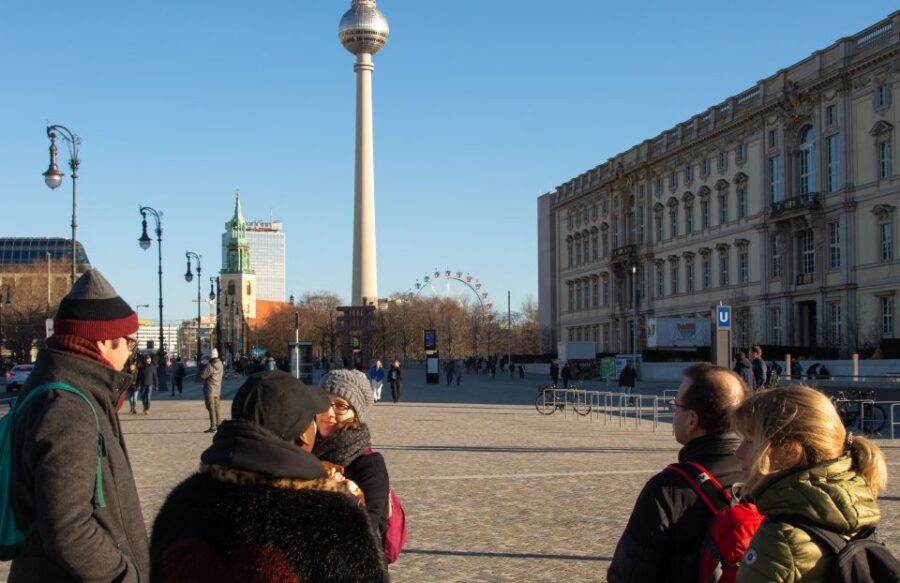
I think this works best for you if:
- you want to understand how museums connect to colonial history
- you like guided interpretation and an organized narrative
- you’re interested in German history through the lens of science, missionaries, and cultural power
- you want to approach the Humboldt Forum with questions ready, not only curiosity
You might consider passing if:
- you want a strictly factual, neutral walkthrough with minimal critique
- you dislike tours that challenge how history is currently presented
- you’re hoping for a long, uninterrupted museum session with deep object-by-object time
Also, it’s wheelchair accessible, so it’s a solid option if you want a guided structure rather than a DIY route.
Should you book deSta’s Decolonial Berlin Castle / Humboldt Forum tour?
I’d book it if you’re visiting Humboldt Forum for more than architecture photos. This tour is built to give you interpretive tools: a decolonial framing, Afrocentric insights, and a critical way to look at ethnological collections.
Before you go, do one simple thing: confirm the operator listed as deSta – Dekoloniale Stadtführung and make sure you’re at the correct meeting area near the reconstructed Sanchi Gate. One of the risks with any museum tour is missing the right event at the right time, and the meeting point is specific enough that you’ll be glad you double-checked.
If you want a thought-provoking, historically connected experience that treats the palace and the museum as one conversation, this is a strong choice for your Berlin day.
FAQ
How long is the guided tour?
The tour lasts 2 hours.
Where do we meet?
Meet your guide near the reconstructed Sanchi Gate, with white chairs available to sit.
What language is the tour guide?
The live guided tour is in English.
What is included with the tour price?
The tour includes the guide, entry to the ethnological collection, and time seated outside for about 1 hour before going into the museum.
Is entry to the ethnological collection included?
Yes, entry to the ethnological collection is included.
Is the tour wheelchair accessible?
Yes, the tour is wheelchair accessible.
What should I bring, and what’s not allowed?
Bring comfortable shoes and weather-appropriate clothing. Food and drinks are not allowed, and luggage or large bags are not allowed.
Can I cancel, and is pay later available?
Free cancellation is available up to 24 hours in advance for a full refund. Reserve now and pay later is also available.