REVIEW · BERLIN
Berlin City Tour with Hotel pick up and Drop off
Book on Viator →Operated by REMAZ TOURS GmbH · Bookable on Viator
Four hours can cover a lot of Berlin. This tour’s big win is the hotel pickup plus a tight route that hits the Reichstag area and other top sights without you wrestling transit. I also like how the day mixes royal showpieces (like Charlottenburg Castle) with the hard edges of 20th-century Berlin, including a Berlin Wall photo moment. One drawback to keep in mind: the quality of the live narration can vary, and if you want constant, detailed walk-and-talk energy, you may prefer a more walking-heavy option.
You start at 9:00 am, roll through central neighborhoods in a small group (up to 15), and get a lunch break at a German restaurant at your own expense. It’s a smart half-day plan for first-timers who want quick orientation, but it’s still only about four hours—so treat it as a highlights primer, not your full Berlin education.
In This Review
- Key points worth knowing before you go
- Hotel-door logistics and why this tour works for first-timers
- The 4-hour route: what you’ll actually see from the car
- Charlottenburg Castle: starting with baroque grandeur
- Reichstag and the Parliament dome area: Berlin’s political center
- Unter den Linden and Museum Island: classic avenues and museum power
- Bellevue Palace and Victory Column: symbols with big scale
- World War II and Cold War stops: what to expect (and how to get more out of it)
- Kaiser Wilhelm Memorial Church and Potsdamer Platz: the city after the breaks
- The Berlin Wall photo moment (and why that matters)
- Lunch stop: good timing, but plan your budget
- Guide and driver quality: what to watch for
- Price and value: is $343 worth it?
- Who this tour suits best (and who might want something else)
- Should you book? My practical take
- FAQ
- FAQ
- How long is the Berlin City Tour?
- What time does the tour start?
- Do I get hotel pickup and drop-off?
- Is lunch included?
- Is a mobile ticket provided?
- How many people are in the group?
- Is admission free?
- What is the cancellation policy?
Key points worth knowing before you go
- Door-to-door hotel pickup and drop-off saves real time in a big city
- A compact loop that strings together Charlottenburg, Unter den Linden, Museum Island, and Potsdamer Platz
- WWII and Cold War stops alongside classic monuments and rebuilt-looking landmarks
- Berlin Wall photo opportunity at one of the remaining wall stretches
- Small group size (max 15) keeps the ride from turning into a bus tour
- Admission ticket free is listed, but lunch is on your own
Hotel-door logistics and why this tour works for first-timers
Berlin is huge in a very “how is this city so spread out” kind of way. Even if you’re in great shape and love public transit, trying to cover the top sights in a single morning can turn into sprinting between stations, then realizing you missed your turn on the map. This tour is built to prevent that.
The core idea is simple: you get round-trip shared transfer and a tour escort/host, then you spend the four hours seeing the main attractions in one continuous sweep. The starting time is 9:00 am, which is perfect if you want to bank sightseeing early and leave the rest of the day open. For many first-timers, that alone is worth it. You’ll also appreciate that it ends back at your hotel, which takes the stress out of timing and navigation.
One more practical win: you get a mobile ticket. Berlin is full of places where tickets, lines, and phone screens collide. Having the ticket in your app helps keep things calm.
You can also read our reviews of more city tours in Berlin


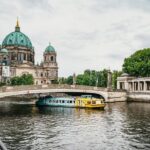
The 4-hour route: what you’ll actually see from the car
This isn’t just a list of stops—it’s a route designed to build a mental map of Berlin. You’ll ride past a string of landmarks so you can later connect dots on your own (or decide which neighborhoods you want to return to).
Charlottenburg Castle: starting with baroque grandeur
The tour begins at Charlottenburg Castle, a 17th-century baroque palace. Even from the outside, it gives you a feel for the city’s older layers—palace-era Berlin before the 20th-century ruptures. It’s a good opener because it sets a “this is not just modern graffiti and history museums” tone.
If you like big architecture and gardens, you’ll probably wish you had more time here. But as a starting point, it’s excellent. It also helps you psychologically shift gears: after this kind of visual statement, the later historical sites hit harder.
Reichstag and the Parliament dome area: Berlin’s political center
Next up is the Reichstag, the German Parliament building known for its striking dome. This is one of those stops where your brain already has context even if you’re not a politics person. The building is an anchor point for understanding modern Germany, and the surrounding area gives you an immediate sense of how Berlin positions itself today.
If you’re short on time, seeing the Reichstag from this kind of guided loop is a smart move. You get orientation in one go, instead of piecing it together later.
Unter den Linden and Museum Island: classic avenues and museum power
As you move along central routes, you’ll pass Unter den Linden Boulevard—tree-lined and iconic—and you’ll also see Museum Island. These places matter because they show Berlin’s “big civic space” side: broad avenues, major institutions, and a city that plans long sightlines.
Museum Island can be a lot to absorb if you’re trying to choose which museum to enter. The drive-by view helps you decide where you’ll want to spend real time later. You’ll get the map in your head even if you don’t go inside that day.



Bellevue Palace and Victory Column: symbols with big scale
You’ll also see Bellevue Palace and Victory Column. These are not random roadside decorations. They’re part of how Berlin communicates power and memory through monuments and official buildings.
Even if you don’t love columns or palaces, this part of the route helps you learn what the city is trying to say with space: where authority sits, where commemorations land, and how the city’s visual language changes as you move through different eras.
World War II and Cold War stops: what to expect (and how to get more out of it)

Berlin has a way of putting history on street corners. This tour leans into that. You’ll spot sites connected to the Third Reich and the Cold War, including Hermann Göring’s Aviation Ministry and the former site of Hitler’s Bunker.
This is also where guide quality really matters. When the narration is strong, these stops feel connected rather than scattered. When the narration is weaker, you may feel like you’re driving past names more than stories. One review flagged limited English and thin commentary, and I’d take that as a cue: bring curiosity, and ask your guide one good question early so you can gauge how much you’re getting.
If you want to get the most out of these sections without burning your day on extra reading, here’s a simple tactic:
- Before the next stop, look up the name for 30 seconds on your phone.
- Then listen for the “why this matters” sentence.
That way, even if your guide speaks fast or keeps it brief, you’re still building understanding.
Kaiser Wilhelm Memorial Church and Potsdamer Platz: the city after the breaks
You’ll also see Kaiser Wilhelm Memorial Church, which helps represent Berlin’s damaged-and-rebuilt reality. It’s a kind of monument that doesn’t try to hide what happened. That contrast is important in a city where so many layers overlap.
Then the route turns toward Potsdamer Platz, where modern architecture and a lively hub feel layered over earlier history. This stop is valuable because it shows you Berlin’s forward motion, not only its past.
The Berlin Wall photo moment (and why that matters)
The itinerary includes a lunch pause, plus a chance to take a unique picture at one of the remaining stretches of the Berlin Wall.
A photo opportunity sounds small, but it’s often the difference between knowing something exists and actually visualizing it. Berlin’s Wall story is huge, and seeing a real remnant helps you understand scale and location. It’s also a good moment to slow down and look around—what’s built nearby, what changed, and how the city now frames the memory in public space.
Lunch stop: good timing, but plan your budget
There’s a lunch stop at a hand-picked German restaurant, but food and drinks are not included. That’s not a dealbreaker—just plan ahead so you don’t feel surprised when the bill lands.
Because the tour lasts about four hours, lunch here is best seen as a reset, not a long meal. It’s practical: you digest the morning’s history, you take a break from the vehicle, and then you finish the loop with a calmer mind.
If you eat light before the tour starts, you’ll likely enjoy lunch more. If you go in hungry and expect the tour to provide a full meal, you’ll want to adjust expectations.
Guide and driver quality: what to watch for
The tour is only as good as the narration and pace you get in real time. In the positive experiences, guides like Selda and Phillip/Philip were praised for being accommodating, informative, entertaining, and professional. John was highlighted as a strong source of information, and Sara Kemmou earned specific credit for working in French (with help for Italian as well).
On the flip side, there were complaints about limited English and guides staying mostly at the level of naming buildings without much context. Another negative note mentioned feeling rushed and even dizziness from driving style.
So here’s what I’d do if you book:
- When you meet the guide/driver, ask one direct question about the next big stop. If you get real answers, you’re in good shape.
- If you prefer a calmer pace, mention it early. If you’re prone to motion sickness, also tell them right away.
- Wear shoes you can stand in easily. Even if the trip is mostly car time, you’ll likely pause for photos and quick looks.
Price and value: is $343 worth it?
At $343 for about four hours, this isn’t the cheapest way to see Berlin. The value comes from what you’re buying: time saved, a tight route, and hotel-door convenience.
Here’s how I think about the cost:
- You avoid taxi and transit stress, especially when you’re trying to string together far-apart landmarks.
- You get shared transfer and a guided escort, capped at 15 people—so you’re not stuck with a huge crowd.
- You’re also getting a built-in lunch break and a Wall photo stop.
If you’re traveling solo with strong motivation and you know how to use Berlin transit, a DIY day can be cheaper. But if you want low mental load—one meeting time, one route, one plan—this starts to make sense. For many first-timers, reducing friction is the real luxury.
Also, the listing says admission ticket free, which can help keep costs predictable once you’re already paying for the tour.
Who this tour suits best (and who might want something else)
This fits best if you’re:
- in Berlin for the first time and want a fast orientation loop
- short on time and want the main highlights without planning
- traveling with family members who benefit from car-based movement (one account praised comfort for a wide age range, including a young child and seniors)
- the type who likes history explained while you watch the city slide by outside the window
You might consider a different format if you’re:
- craving long walking segments and deep, slow explanations at each stop
- very sensitive to driving style or prone to motion sickness
- someone who expects highly detailed guided storytelling at every single viewpoint
Should you book? My practical take
I’d book this if you want the smart first step in Berlin: a half-day tour that gives you a workable mental map and a solid sense of major landmarks, history sites, and modern anchors like Potsdamer Platz. The hotel pickup/drop-off is the kind of convenience that makes the day feel easy, not rushed.
If you’re choosing based on history depth, I’d still book—but go in ready to ask questions and confirm the guide’s approach early. The experiences tied to strong guides (Selda, John, Sara Kemmou, Phillip/Philip) show what this tour can be at its best. If your guide’s English or storytelling feels thin, you’ll still come away with a clear route and enough visuals to guide your next independent visits.
FAQ
FAQ
How long is the Berlin City Tour?
It’s about 4 hours.
What time does the tour start?
The start time is 9:00 am.
Do I get hotel pickup and drop-off?
Yes. Pickup is offered from your hotel in Berlin, and the tour ends with drop-off back at your starting area.
Is lunch included?
No. Lunch is a stop at a German restaurant, but food and drinks are not included.
Is a mobile ticket provided?
Yes. The tour includes a mobile ticket.
How many people are in the group?
The tour has a maximum of 15 travelers.
Is admission free?
The information provided lists admission ticket free.
What is the cancellation policy?
You can cancel for a full refund up to 24 hours in advance of the experience’s start time.