REVIEW · FRANKFURT
Amazing walking Frankfurt with a local guide
Book on Viator →Operated by Oleg Dubinskii · Bookable on Viator
Frankfurt clicks into place fast on foot. This private, English-speaking walking tour with hotel pickup stitches together the city’s key sights in about 3 hours, from Römerberg to the European Central Bank. I love the door-to-door convenience and the way you can ask your guide why each place matters, not just what you’re looking at. One consideration: the schedule is tight, so you’ll want to choose between extra photo time and going a little deeper inside a few stops.
In the real world, that matters. If you’re on a layover or you want a quick but meaningful hit of both old Frankfurt and modern finance, this kind of walk is efficient. And with Oleg Dubinskii leading, the pace and explanations tend to feel personal, with time for questions along the way.
In This Review
- Quick hits before you go
- Why a private walking loop is great for layovers
- Römerberg and the Roemer square: where Frankfurt shows its layers
- Hauptwache: the famous square with baroque-to-modern architecture
- Zeil shopping street: a quick break that still feels local
- Dom St. Bartholomäus: Gothic grandeur and imperial power
- Paulskirche: Germany’s 1848 parliament in a memorial today
- The Iron Bridge and the Main River views
- Alte Oper: the Renaissance opera house in the middle of it all
- Katharinenkirche: baroque Lutheran charm near Hauptwache
- Liebfrauen near Zeil: a 14th-century church-and-monastery area
- Frankfurt Stock Exchange area: bull and bear outside the Borse
- European Central Bank and the big euro sign
- Bankfurt and Mainhattan: the skyscraper district mood shift
- The English-language theatre and the modern shopping heart
- Kleinmarkthalle: where food shopping feels like an activity
- Eschenheimer Turm: 15th-century city fortifications still visible
- Goethe-Denkmal: ending with a literary landmark
- Price and value: what $309.62 gets you for up to 2 people
- Pacing and practical tips so the walk feels easy
- Who this tour fits best
- Should you book this Frankfurt walking tour?
- FAQ
- How long is the Frankfurt walking tour?
- Is this a private tour?
- What group size is it for?
- Does the tour include hotel pickup and drop-off?
- What language is the tour in?
- Do I get a mobile ticket?
- Are entrance fees included for the sights?
- Are snacks included?
- Can I cancel for a full refund?
- Is it easy to reach the meeting area, and are service animals allowed?
Quick hits before you go
- Hotel pickup and drop-off: you start and end right where you’re staying
- A route that mixes eras: medieval squares, Gothic churches, then modern banking
- Admission tickets included at several headline stops
- Private group up to 2 with an English-speaking guide
- Market and shopping breaks built into the walk for real local flavor
Why a private walking loop is great for layovers
Frankfurt can feel like a “fly in, fly out” city, especially if you’re short on time. This tour is designed to fix that. You get a focused half-day walk that hits the main landmarks without you playing navigation roulette with trams, crossings, and parking lots.
The big practical win is the pickup and drop-off from your location in the city. That turns your time into sightseeing time. Instead of budgeting travel friction, you’re already walking, learning, and snapping photos. Even better, it’s a private tour for up to 2 people, so you’re not stuck listening to a group consensus when you’d rather linger at one spot.
The second win is the way the tour connects themes. You’re not only seeing churches and squares. You’re also moving into the part of Frankfurt that runs Europe’s money story, then back toward food markets and shopping. That mix is exactly what helps a short visit feel like you actually understand the city.
You can also read our reviews of more walking tours in Frankfurt



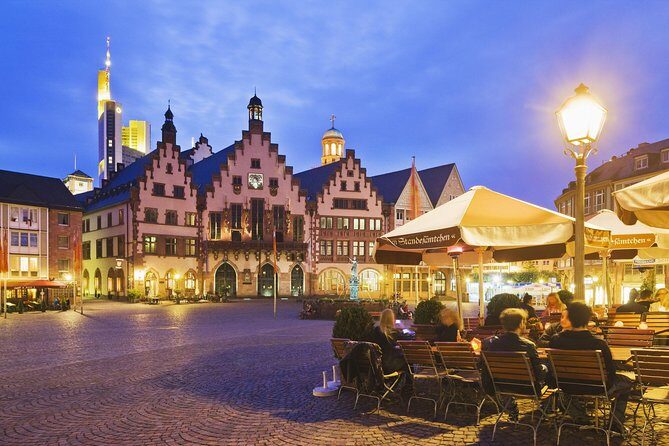
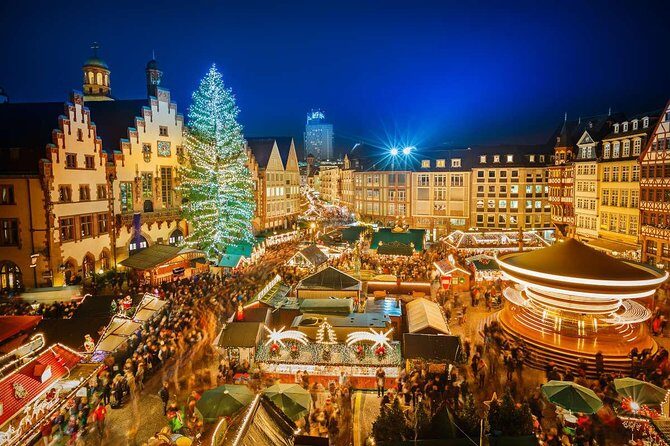
Römerberg and the Roemer square: where Frankfurt shows its layers
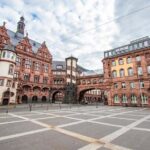
Your walk begins at the Roemerberg area, one of Frankfurt’s most recognizable squares. It’s a place where you get that neat sense of time overlapping: older elements sit close to newer urban life. You’ll hear the kind of explanation that turns the square from scenery into context, including the idea of polyphony in multiple languages tied to the square’s character.
What I like here is the setup. You’re starting in the “this is who we are” zone, not outside the city or in a random neighborhood. It’s an easy place to orient yourself, and you’ll quickly see the physical logic of how the old core works.
Possible drawback: because this is a highlight start, it can be photo-focused. If you’re the type who wants deep interior time, you’ll need to manage expectations from minute one.
Hauptwache: the famous square with baroque-to-modern architecture
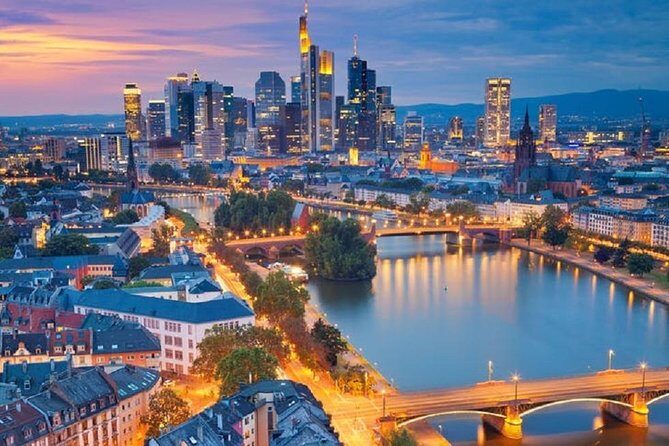
From there, you head toward the Hauptwache area. This square is famous for a reason: it gives you a quick architectural survey. You’ll spot different styles stacked together, including a shift from baroque influences to more modern urban forms.
This is the kind of stop that works well on foot because it’s not just one building. It’s streets, sightlines, and how people move through the space. Your guide’s job here is to slow you down just enough to notice details that you’d otherwise walk past.
What to watch for: architectural contrast. If you enjoy noticing design changes across centuries, this stop will feel like a mini lesson you can actually see.
Zeil shopping street: a quick break that still feels local
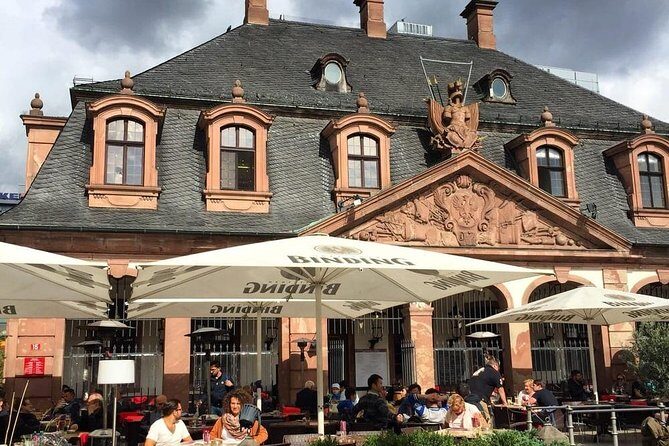
Next comes Zeil, Frankfurt’s best-known shopping street. It’s busy, yes, but it’s also practical. It gives you a sense of everyday Frankfurt life—shops, small cafes, and the kind of street energy that makes the city feel lived-in, not museum-only.
This stop is usually brief, but it’s valuable because it resets you. After churches and squares, walking along a major pedestrian shopping artery helps you feel where you are in the modern city map.
Dom St. Bartholomäus: Gothic grandeur and imperial power
Then you step into the Cathedral of St. Bartholomew, Dom St. Bartholomaus. This is a Gothic church built in the 14th century, but it sits on earlier church foundations, so it’s really about continuity as much as style.
Here’s what makes the explanation worth your attention: this site played a role in the Holy Roman Empire. Elections for emperor took place here starting in 1356, and later, emperors were crowned in the cathedral from 1562 to 1792. That’s the sort of timeline you’ll remember because it connects your walking route to the bigger European story.
Practical note: churches can mean stairs, uneven surfaces, and rules about where you can go. The tour includes admission at this stop, but you’ll still want comfortable shoes and a calm pace.
You can also read our reviews of more guided tours in Frankfurt




Paulskirche: Germany’s 1848 parliament in a memorial today
From the cathedral, you move to St. Paul’s Church (Paulskirche). This is a special pivot point for the tour: you shift from imperial power to democratic beginnings.
Paulskirche is associated with the first democratically elected parliament in Germany in 1848. Today, the building is used as a memorial site and an event center, including the setting for awarding the Peace Prize of the German Book Trade.
Even if you’re not a politics-history buff, this stop lands because it’s tangible. You’re standing at a place that changed how people imagined representation and public decision-making.
Time reality: it’s a short stop in a three-hour flow, so take your photos early and use the guide’s explanation to grab what you can. You won’t get a full museum-depth experience in a half day.
The Iron Bridge and the Main River views
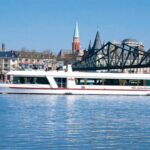
Then you get to the Iron Bridge, a pedestrian bridge built in 1869. It’s close to Römerberg and makes the route feel satisfying because you finally get an open view.
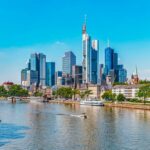
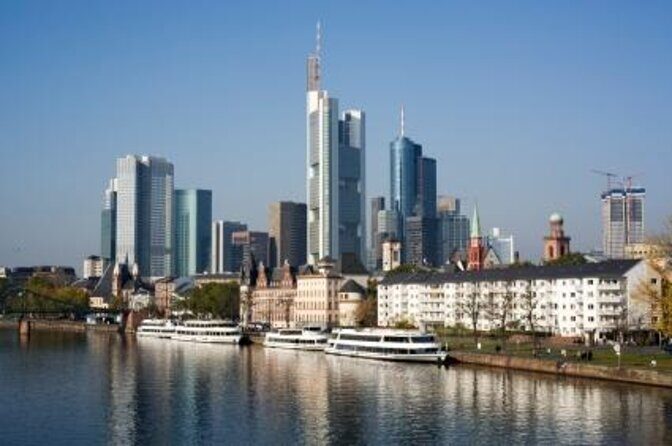
Expect skyline and river views over the Main. On the opposite side, Sachsenhausen comes into view—a district known for museums and historic pubs. This is a good moment to check your bearings: you’re learning how the city is shaped by its river, not just by buildings.
Why it’s worth your legs: a bridge is one of the rare places where you stop thinking in straight lines and start seeing Frankfurt as a whole system.
Alte Oper: the Renaissance opera house in the middle of it all
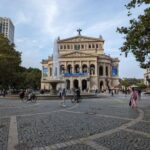
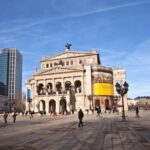
After that comes the Alte Oper, the Renaissance Opera building in a lively central square. It originally opened in 1880, and today it’s used for concerts of famous singers and also for congresses and other high-profile events.
This stop is visual. You’re looking at a landmark that’s meant for performance and public gatherings, even if you don’t go inside. The guide’s value here is pointing out how the building sits among surrounding activity, so you understand why it feels like a cultural anchor.
If you’re traveling with someone who likes architecture and “where big events happen,” this one usually clicks.
Katharinenkirche: baroque Lutheran charm near Hauptwache
Nearby, you’ll see Katharinenkirche, a Lutheran church with a baroque style. It was constructed between 1678 and 1681 on the site of a former monastery.
This is one of those stops that rewards attention to scale and details. The timeframe and the reuse of earlier sites add meaning without needing a long lecture.
Small caution: you’ll likely get more time for observing from the outside or brief interior moments than for a full stop-and-stare session.
Liebfrauen near Zeil: a 14th-century church-and-monastery area
Next is Liebfrauen, a Roman-Catholic church and monastery from the 14th century near Liebfrauen lane by the Zeil area.
This is a good contrast stop. Earlier, you were in a major Gothic cathedral tied to imperial ceremonies. Now you’re in a different religious footprint—older, more intimate, and tied to monastic space.
If you like the feeling of walking through parts of a city that still function, this stop works well.
Frankfurt Stock Exchange area: bull and bear outside the Borse
Then comes Borse Frankfurt, the Frankfurt stock exchange building, which is still in use. Outside, you’ll focus on the bull and bear statues.
This is where the tour earns its “both old and modern” promise. You’re standing in a place tied to markets and global finance, but you’re still in the open-air city fabric. Your guide’s explanation helps the symbols feel less like decoration and more like part of a real financial culture.
Tip: slow down for the statues. Even if you don’t know market history, the imagery is striking and easy to remember.
European Central Bank and the big euro sign
Next is the European Central Bank. You’ll see the large neon-colored euro statue in front of the entrance, and your guide will explain how this institution fits into the broader idea of European financial power.
This is a smart stop for first-time Frankfurt visitors because it answers a question you might not even ask out loud: what is this city doing beyond business airports and trade shows?
Why it matters: if Frankfurt feels “generic corporate” to you, this part helps you understand the reason the corporate world chooses this place.
Bankfurt and Mainhattan: the skyscraper district mood shift
Then you head toward the Main Tower area and the skyscraper district nickname Mainhattan. Your guide will point out how the neighborhood earned that moniker and what defines this “Bankfurt” zone today.
This segment is valuable because it shows you how Frankfurt grew into a modern financial city. It also gives you a different type of photo: not old façades and church stone, but vertical city views and the geometry of the skyline.
Time check: the tour includes a focused window here, so don’t expect a long tower visit unless you have time to extend later.
The English-language theatre and the modern shopping heart
Toward the later portion of the walk, you’ll see two more city-scale highlights: the largest English-language theatre in continental Europe, and the largest modern shopping mall in Frankfurt located in the city center.
These stops are quick but useful because they round out your sense of Frankfurt. You’re not only seeing historic religious spaces and finance offices. You’re also seeing how the city supports language diversity and modern retail culture.
If you’re tired, these are great “look, orient, and breathe” moments.
Kleinmarkthalle: where food shopping feels like an activity
Next is Kleinmarkthalle, a market hall where you can drop in for local and international food products. This is one of those places where your guide’s city knowledge can matter, even if you’re not there to do a full shopping spree.
I like this stop because it gives you a low-pressure option. You can browse, snack if you want, and take in the sights and smells without needing a strict itinerary.
Practical note: snacks aren’t included, so plan to buy your own if you want something to eat or drink.
Eschenheimer Turm: 15th-century city fortifications still visible
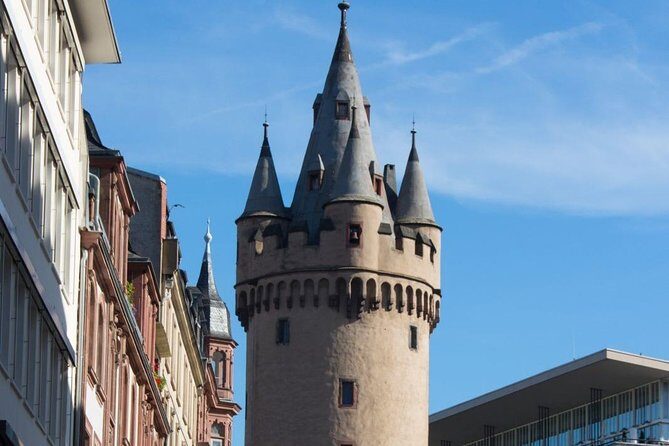
Then the walk moves back toward old defensive architecture with Eschenheimer Turm. You’ll see prominent examples of city fortification built in the 15th century.
Fortifications are different from churches and squares. They explain how cities protected themselves and how boundaries worked in earlier centuries. This is a great stop if you like the physical reality of history—stone that once guarded access points.
Why it’s a good finale: it gives the old city a practical feel, not just ceremonial.
Goethe-Denkmal: ending with a literary landmark
Finally, you see Goethe-Denkmal, tied to the birthplace of Germany’s famous author and poet. Even if you don’t know every detail of Goethe’s life, this ending works because it shifts from buildings to people.
It’s a nice close to a walk that started in a civic square and moved through empire, religion, democracy, finance, and modern life. You finish with a cultural figure, not a corporate billboard or a shopping corridor.
Price and value: what $309.62 gets you for up to 2 people
At $309.62 per group (up to 2), this isn’t a budget tour. But it also isn’t just someone walking you past postcards.
You’re paying for a few things that add up fast:
- Private guiding (you’re not sharing attention with strangers)
- Hotel pickup and drop-off from your location in the city
- A tight half-day route that’s built to work for short visits
- Admission tickets included at multiple major stops
If you’re traveling as a couple or with a close friend, splitting the group price can make it feel much more reasonable than per-person sightseeing options that require you to buy separate tickets and piece together multiple transport legs.
Where it may feel less worth it is if you’re already comfortable navigating the city on your own and you’re only interested in one or two sights. For a short layover, though, the time saved and the context added often justify the cost.
Also, this tour tends to get booked in advance (it’s commonly reserved about a month ahead). If you have firm dates, don’t treat it as an afterthought.
Pacing and practical tips so the walk feels easy
This tour is a walking experience. That’s the point. But that doesn’t mean you have to suffer.
Here’s how to set yourself up for a smooth 3-hour window:
- Wear comfortable, walkable shoes. You’ll be on foot through multiple districts.
- Bring a light layer. Even in a good season, outdoor squares and bridges can feel cooler than you expect.
- Plan around the fact that snacks aren’t included. If you want a drink or bite, you’ll need to grab it on your own during breaks or market time.
- Use the private format to your advantage. If you want more time at one stop (cathedral interior, market browsing, or bridge views), you should be able to ask for it.
If you’re the type who likes questions, this tour style is a good match. You’ll learn better when you can ask what you actually care about.
Who this tour fits best
This one is ideal for:
- First-time Frankfurt visitors who want the highlights without building a plan from scratch
- Layover travelers who need a compact, high-value route
- People who like a mix of architecture, civic landmarks, and modern finance
- Travelers who prefer a private, slower-feeling pace with room for questions
It might not be the best match if you want a long, museum-style day with extensive interior time at every stop. This is a “see it all fast” and “understand it quickly” approach.
Should you book this Frankfurt walking tour?
Yes, if your goal is to get your bearings fast and still come away with real context. The door-to-door pickup, the tight route, and the included admissions make it a strong value for a short visit—especially for couples.
Before you book, do one simple thing: decide what you want most—cathedrals and civic landmarks, or finance and modern districts. Then go in ready to spend your time well. If you do that, this tour is a smart way to turn a few hours in Frankfurt into a story you’ll actually remember.
FAQ
How long is the Frankfurt walking tour?
It runs for about 3 hours.
Is this a private tour?
Yes. It’s private, and only your group participates.
What group size is it for?
The price is per group up to 2 people.
Does the tour include hotel pickup and drop-off?
Pickup is offered, with door-to-door pickup and drop-off from any location in the city.
What language is the tour in?
The tour is offered in English.
Do I get a mobile ticket?
Yes, a mobile ticket is included.
Are entrance fees included for the sights?
Admission tickets are included for several stops listed in the experience.
Are snacks included?
No. Snacks are not included.
Can I cancel for a full refund?
Yes, free cancellation is available. You can cancel up to 24 hours in advance for a full refund.
Is it easy to reach the meeting area, and are service animals allowed?
It’s near public transportation, and service animals are allowed.