REVIEW · BERLIN
Welcome/Farewell SightseeingTaxi Tour +Transfer from/to the airport
Book on Viator →Operated by Gunter Bauer GAT-Productions · Bookable on Viator
Berlin moves fast, and this tour helps. You get a taxi sightseeing tour that pairs classic landmarks with the stories that explain why they look the way they do. It is also built around convenience, with welcome or farewell airport transfers from BER.
I especially like how Gunter Bauer keeps things practical: quick stops for photos, clear orientation, and enough context to help you plan the rest of your trip. I also like the comfort factor, including an air-conditioned car, onboard WiFi, and the simple fact that you are not juggling transit maps while you are still landing or packing.
One thing to consider: this is time-efficient. With around 1 to 3 hours, you will see a lot from short photo stops and quick viewpoints, not slow museum-style wandering at every stop.
In This Review
- Key Highlights You Can Actually Use
- A Taxi Tour That Gets You Oriented Fast
- Price and Value: What You’re Really Paying For
- Welcome vs. Farewell: How Pickup Works at BER and in Town
- What to Expect From the Route (Hint: It’s Short Stops, Big Stories)
- Brandenburg Gate to Unter den Linden: Berlin’s Public Stage
- Pariser Platz and the Rebuilt Center: Elegance with Complicated Edges
- Berlin Cathedral, Humboldt Forum, and Museum Island in One Loop
- Hackescher Markt to Jewish Life Streets: Smaller Berlin Moments
- Alexanderplatz, Red City Hall, and Nikolaiviertel’s Rebuilt Streets
- From Locks and Old Bridges to a Holocaust Memorial You Don’t Forget
- Potsdamer Platz After the Wall: Where Traffic Used to Roar
- Who Should Book This Taxi Tour (And Who Might Prefer Something Else)
- Should You Book This Taxi Tour?
- FAQ
- How long is the taxi sightseeing tour?
- Is pickup included from Berlin Brandenburg Airport?
- Can I get picked up from my hotel or apartment too?
- What language is the tour in?
- Do you provide WiFi and an air-conditioned vehicle?
- Are any stops free to access?
- Is it a private tour?
- Do you offer help for families with a child seat or stroller needs?
- Does the experience allow service animals?
Key Highlights You Can Actually Use
- Airport transfer included both ways: Your welcome pickup and farewell ride are part of the same experience package.
- Gunter Bauer’s history, explained clearly: You get the why behind the sights, not just what they are.
- Short photo stops where it matters: You get picture moments at the landmarks that define Berlin.
- Big-scope route, small-time footprint: You cover major areas without the stress of constant re-routing.
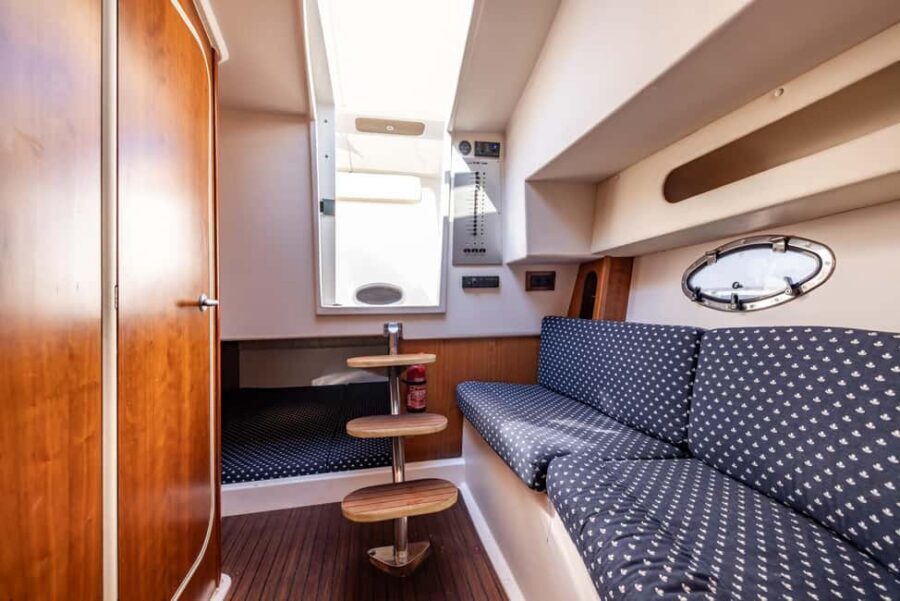
- Comfort + utility on board: Air-conditioning and onboard WiFi make the in-between moments easier.
- A mix of restored icons and harder truths: You see the polished center and also the Wall-era realities.
A Taxi Tour That Gets You Oriented Fast
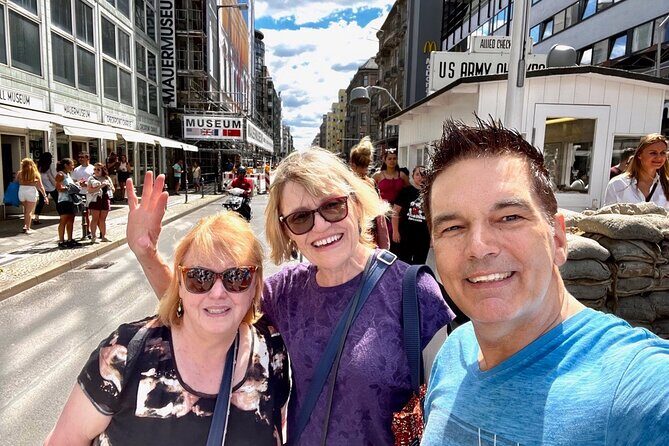
Berlin is a city of layers. In a normal day you walk, you read plaques, you compare maps—then you still feel like you are missing the bigger picture. This tour is designed to fix that by combining a taxi ride with a guided loop that introduces the city’s main eras.
The format is simple: you hop between major spots with brief stops for photos and quick explanations. You are not stuck in a lecture either. Gunter uses the ride time well, so you leave with a mental map and a better sense of what to prioritize later.
A few more Berlin tours and experiences worth a look

Price and Value: What You’re Really Paying For
At $171.52 per person, it may look like a splurge compared to a bus or walking tour. But your money goes further than it first appears.
You are paying for two pieces in one: the taxi ride (handled via the taxi tariff) plus the guided city portion (handled as a guided tour). Parking fees and onboard WiFi are included too. In real-life terms, you are buying convenience plus structured orientation, and that usually saves you time and hassle that you would otherwise spend figuring out transport on your own.
Welcome vs. Farewell: How Pickup Works at BER and in Town
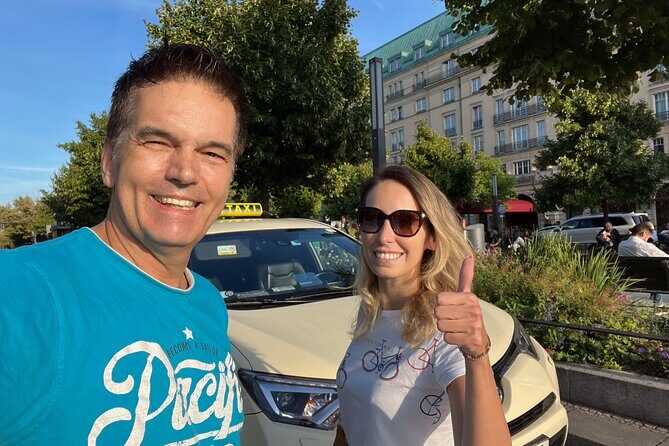
If you choose the welcome option, you get picked up from Berlin Brandenburg Airport (BER). You share your flight number and arrival time, and after landing you send a WhatsApp/SMS so Gunter can find you quickly once you collect your bags. The wait time is built in: he positions himself about 5 minutes from the arrivals hall in a free waiting spot, then you meet him in the 2nd lane (not the taxi queue lane).
For the farewell option, the idea is similar but the timing matters more. You come out onto the street only after you receive the WhatsApp/SMS from Gunter, and you include a cell number when booking. This avoids the classic airport stress problem of wandering outside with luggage while your ride is circling.
What to Expect From the Route (Hint: It’s Short Stops, Big Stories)
Because the total time is limited, the tour works in a particular way: you see a lot of Berlin’s most important places, but you do not get long wandering time everywhere. Some parts are stops; some parts are drive-bys depending on your interests.
That approach is useful when you want three things:
1) rapid orientation for your first days,
2) a context boost so your second day makes more sense, and
3) photo opportunities at landmarks you will want to remember.
It is also honest. If you love museums or want long indoor time, you will still need to plan those separately after the tour.
Brandenburg Gate to Unter den Linden: Berlin’s Public Stage
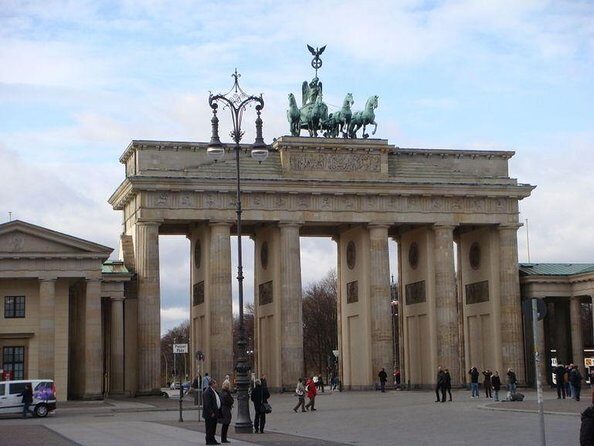
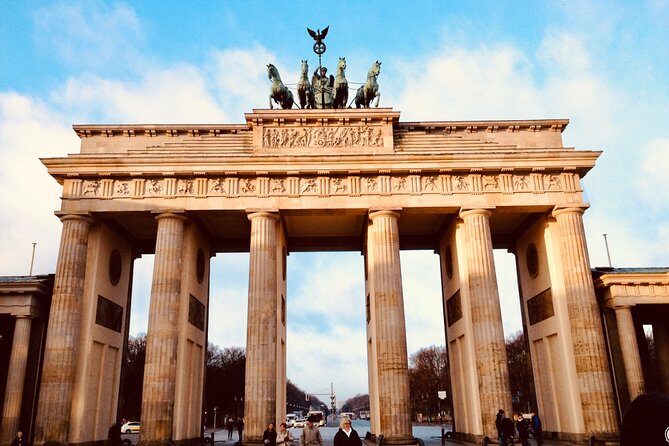
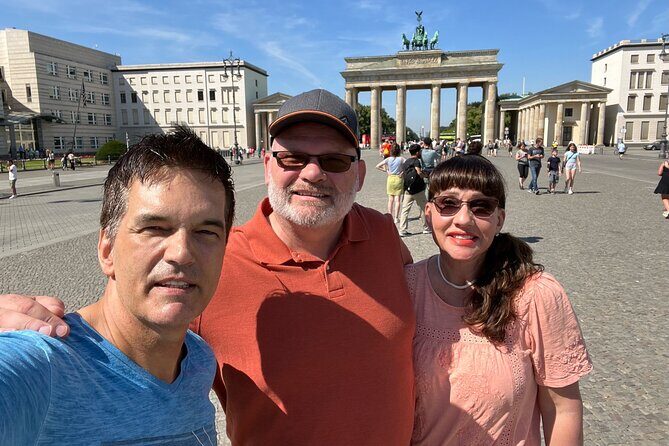
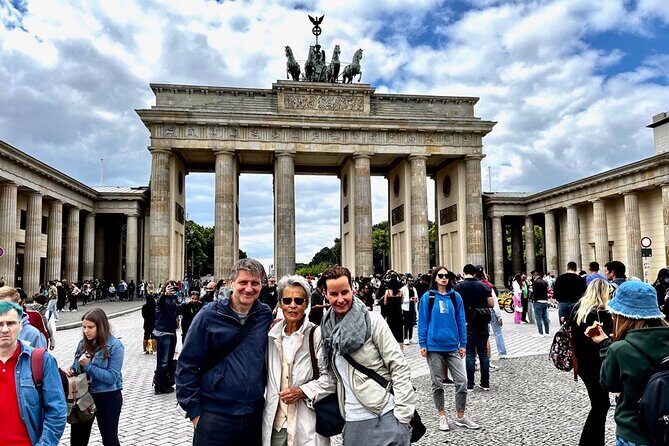
The day’s tone is set right away with the Brandenburg Gate, and the guide’s explanation helps you see more than a famous photo. The gate has shifted meanings across centuries—from a city gate to a Napoleonic trophy (the Quadriga taken to Paris), and later a symbol of German reunion after the Wall era left the area fenced and split.
You also get the key Wall-era idea: the city was physically separated, and monuments that seem symbolic today were once isolated, blocked, and surrounded by barriers. Standing there with the story in your head changes how the gate feels.
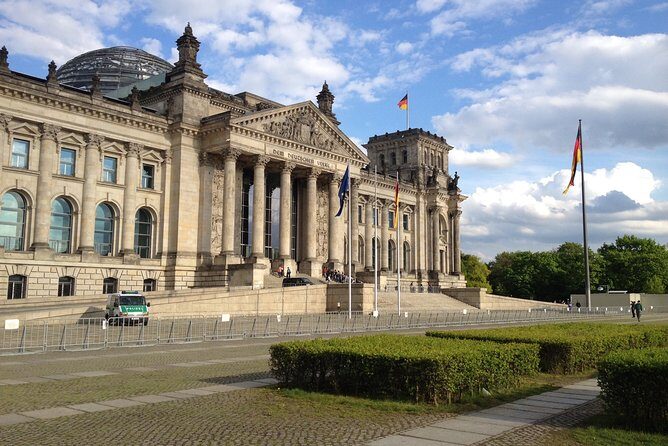
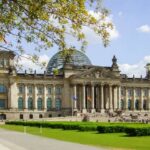
From there, the tour moves through the Parliament area and the governmental core, including exterior views of buildings where you can literally see modern Berlin’s identity formed from older power structures. You hear how the Chancellery sits at the top of its hierarchy—literally—and how the actual legislative work happens in committee spaces across a large glass building.
You also get a Wall-era contrast with the transit site that mattered for crossing between East and West. This station is described as one of the only places during the Berlin Wall period where travelers could continue onward from East to West Berlin. It also connects to the reality of surveillance, barriers, and Stasi observation walks—dark details that give context to why Wall history is not just about concrete and dates.
Then you roll into a grand boulevard scene: Unter den Linden. The tour explains how it started as a route tied to hunting grounds, then expanded into a major city axis lined with important institutions. Expect prominent façades, a feel for how the street became a formal spine of the city, and a calmer rhythm compared to the government zone.

Pariser Platz and the Rebuilt Center: Elegance with Complicated Edges
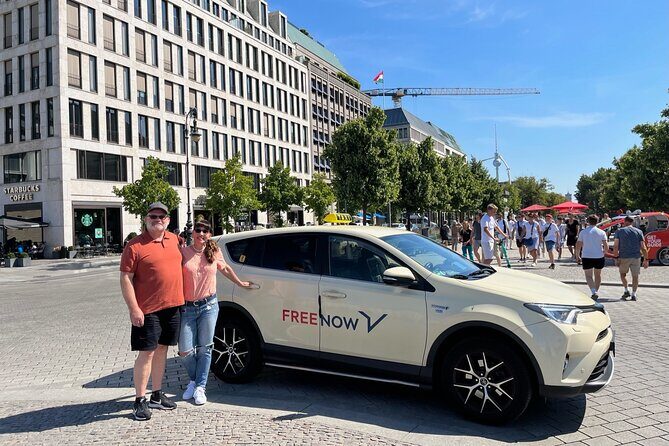
Pariser Platz is described as Berlin’s good room—the place where you expect the city to look its best. You feel that instantly, especially because the Brandenburg Gate anchors the view. But the tour does not let it stay pretty.
You learn how the square was shaped by war, demolition, and the way the city was divided. Even iconic buildings were not simply rebuilt to match the past. After reunification, the plan became modernized in materials and shape but aligned to earlier volumes, bringing back recognizable silhouettes while changing what was possible architecturally.
You also get an important lesson in how power expresses itself. The tour points out a massive Soviet-era representation building on the square—one that signaled the scale of influence during the Cold War and contrasted with the smaller embassy presence around it.
As you continue, you hit another fan-favorite area for architectural framing: the French and German cathedrals of the Gendarmenmarkt. The explanation makes it clearer: these were not the kind of cathedrals where bishops sit. They are built as parish-focused structures with an old-style cathedral look, and one side still has services in French.
Then the tour threads through the Forum Fridericianum zone and connects several landmark buildings into one bigger story. You get the idea of squares, palaces, and institutions arranged like a coherent civic stage. You also hear about book burning in the Nazi era connected to the square with its glass window—an image that sticks because it is both modern and painful.
A quieter but heavy stop follows: the Neue Wache memorial, associated with a figure made as a Pietà-style sculpture. The tour ties it to mourning for victims of war and terror. It is not a cheerful break. It is a reminder of why Berlin has to be learned, not just photographed.
Berlin Cathedral, Humboldt Forum, and Museum Island in One Loop
The route includes Stadtschloss Berlin, rebuilt as the Humboldt Forum (opened in the 2021–2022 window). The guide’s explanation is a big part of the value. You hear how the palace was burned out, then its silhouette remained a powerful symbol even after destruction. Later, political choices led to it being demolished again—then the post-reunification era brought a careful external reconstruction.
If you are the type who loves views, this area works well because the tour sets you up for the roof terrace viewpoint. Even when you are not entering everything, you get that sense of modern Berlin’s center being put back together with intention.
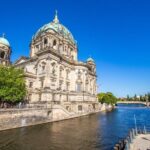
Another highlight is the Berlin Cathedral stop, described as a personal favorite for the guide because it does not try to look older than it is. The tour points out how Berlin’s short, compressed timeline is reflected in architecture that carries multiple layers at once—construction, destruction, rebuilding, and a determined effort to return to splendor.
After that, you reach the Museum Island concept: a UNESCO-protected cluster of museums formed on the northern tip of the Spree. The tour frames it as a result of evolving needs—new galleries, additions, and dedicated spaces for different collections. If you care about art and ancient civilizations, this part helps you choose what to visit later because it gives you the basic purpose of each major museum on the island.
Hackescher Markt to Jewish Life Streets: Smaller Berlin Moments
Not every part of Berlin is monumental. One of the strongest emotional contrasts in this tour is the shift to Hackescher Markt and the Hackesche Höfe area.
Here, the tour highlights the feeling of small-scale Berlin tucked into the middle of the downtown map. You get an explanation of how old Berlin was heavily altered by war and later rebuilding decisions, but how certain ensembles survived or were restored after reunification. The point is not nostalgia. It is a reminder that Berlin’s story is not only grand government spaces.
From there, the route moves into an area that once held dense community life, including Jewish presence tied to churches and other institutions nearby. The tour describes a former suburb zone with multiple congregations and historic burial sites, plus references to the Mendelssohn family burial. You also learn about the old synagogue community dynamics and how later plans for a new building were shaped by the bombs.
This stretch is valuable because it complicates the usual Berlin postcard. You are seeing where real communities lived, not only what states and empires displayed.
Alexanderplatz, Red City Hall, and Nikolaiviertel’s Rebuilt Streets
The tour also covers Alexanderplatz and the surrounding TV-tower zone, with context on how the square was designed in the GDR era as a socialist redesign with wide open space and modern buildings meant to express a new kind of power and planning. The tour mentions the idea of a grand Russian-prospect layout and compares it to the city’s older structure.
Near there, you visit the Red City Hall area, with historical notes on Berlin’s local government split during the division. The tour also points out that you can visit it for free and mentions at least a few room types, including a space with plaster casts of well-known statues. That small detail matters because it signals there is more to do here than just standing outside.
Then you shift to Nikolai Church and the Nikolaiviertel reconstruction vibe, described as classic old Berlin made with recognizable backdrops. The tour explains that the reconstructed neighborhood was created in the 1980s, even though fewer original buildings were available than what the appearance suggests. That honesty helps you enjoy the place without myths.
You get the garlic house connection and the sense of strolling past historic-feeling interiors and period-inspired spaces. Even if you do not go deep into each site, the tour’s framing helps you understand why this area feels like a staged postcard and still can be worth your time.
From Locks and Old Bridges to a Holocaust Memorial You Don’t Forget
The route includes a look at the oldest crossing site in Berlin, tied to a Spree crossing tradition and later development like a small lock and eventual replacement with a more modern double chamber lock setup. It is the kind of detail that makes Berlin feel like a working city with systems, not only monuments.
Then you head toward Hausvogteiplatz and the area connected with a former Jewish clothing district. The tour gives a clear explanation of why tailoring work became concentrated there and how restrictions shaped where skilled work could happen. You also get a sense of how restored surrounding areas now host modern living in what used to be a very specific economic niche.
Finally, the tour moves to the large stelae memorial field: the Memorial to the Murdered Jews of Europe, designed by Peter Eisenman. The guide describes the walk-through effect as confusing at first, then clarifies what the memorial represents through the visitor experience itself: insecurity, questions about escape, recruitment orders, and what was actually meant—details placed so the meaning becomes clear as you progress. There is also information in the basement, which matters if you want the story anchored with more context.
Potsdamer Platz After the Wall: Where Traffic Used to Roar
If you want the Wall’s impact in one final punch, this part does it. The tour describes the area as a wasteland while the Wall stood, including the idea of an inhumanly wide death strip and how much of the built environment was destroyed or cleared. It is hard to imagine how different it was before, when this area was described as Europe’s busiest traffic corridor in the roaring 1920s.
Then you see what happened after: development that created a modern district around major entertainment and shopping functions. The tour specifically mentions redevelopment tied to companies like Sony and Mercedes (then Daimler Chrysler), along with landmarks such as the Berlinale Palace and film museum-type destinations.
It is an ending that feels like Berlin itself: loss, clearing, and then a fast sprint into modern identity.
Who Should Book This Taxi Tour (And Who Might Prefer Something Else)
This tour is a strong fit if you:
- land at BER (or depart from there) and want one simple plan for getting into the city and back,
- want a first-day overview that helps you choose next steps,
- like history tied to real places, with quick stops instead of long waits,
- prefer comfort over sprinting between stations.
It might not fit as well if you:
- want long museum hours at each major site,
- dislike car-based pacing and prefer walking neighborhoods step by step,
- have the patience for lots of brief exterior views and photo moments.
Should You Book This Taxi Tour?
Yes—if you want Berlin to make sense quickly. The value is strongest for first-timers and for anyone using BER on either end of the trip. You get a practical mix: a taxi that keeps you comfortable, a guided route that gives context, and landmark stops designed for fast orientation and photo memories.
The tour is not pretending to replace a full day of museums or neighborhood wandering. Instead, it sets you up so those later days become easier to plan. If you want Berlin with less guesswork and more meaning, this is the kind of booking that pays you back the same day.
FAQ
How long is the taxi sightseeing tour?
It runs about 1 to 3 hours, depending on timing and how much you stop versus drive past.
Is pickup included from Berlin Brandenburg Airport?
Yes. The welcome option includes pickup from BER, and the package also includes the transfer back at the end.
Can I get picked up from my hotel or apartment too?
Yes. A farewell pickup from your accommodation is offered as well.
What language is the tour in?
The tour is offered in English.
Do you provide WiFi and an air-conditioned vehicle?
Yes. Both onboard WiFi and an air-conditioned vehicle are included.
Are any stops free to access?
Some major stops are described as admission ticket free, including areas like Brandenburg Gate, Pariser Platz, and parts of the palace/city-center sightseeing.
Is it a private tour?
It is a private tour/activity in the sense that only your group participates.
Do you offer help for families with a child seat or stroller needs?
A baby car seat (MaxiCosy) is available on request. Strollers are also accommodated, but you should account for reduced space for additional suitcases.
Does the experience allow service animals?
Service animals are allowed. Companion animal rules depend on size and may affect luggage space.