REVIEW · HAMBURG
St. Pauli Kieztour – Reeperbahn mittendrin
Book on GetYourGuide →Operated by St. Pauli Office · Bookable on GetYourGuide
Two hours on Hamburgs nightlife edge, with a local. I love that the tour is led by a St. Pauli resident, so you don’t just hear facts about the Reeperbahn—you get street-level context about daily life here. I also like the 400-year timeline approach, because it turns the usual nightlife stereotypes into something you can actually place on a map and in time.
One thing to consider: the tour is in German, so if you don’t follow German comfortably, you’ll likely miss a lot of the point.
In This Review
- Key highlights worth knowing
- St. Pauli in Two Hours: what the walk really feels like
- Finding the St. Pauli Office on Wohlwillstraße 1
- Reeperbahn after Dark: why the red-light strip has a past
- Große Freiheit and Davidwache: iconic names you can spot instantly
- Hans-Albers-Platz to Herbertstraße: where cultures collide
- Spielbudenplatz and the neighborhood pub stop
- Price Value Check: is $29 for 2 hours fair?
- Who should book this Kieztour (and who should skip)
- Should you book St. Pauli Kieztour? My take
- FAQ
- What is the meeting point for the St. Pauli Kieztour?
- How early should I arrive?
- How long is the tour?
- What language is the tour in?
- How much does it cost?
- What is included in the price?
- Are food and drinks included?
- Is the tour wheelchair accessible?
- Is this tour suitable for children?
- What are the cancellation rules?
- Can I pay later?
Key highlights worth knowing
- Local resident guidance that explains what the neighborhood is like now, not just long-ago stories
- 400-year St. Pauli history connected to today’s social and political themes
- Reeperbahn route with the main sights that fuel Hamburg’s most famous nightlife clichés
- Major landmarks you can find again later: Große Freiheit, Davidwache, Hans-Albers-Platz, Herbertstraße, Spielbudenplatz
- A final drink stop at a neighborhood pub close to where locals actually hang out
- Adult-oriented pacing (not suitable for kids under 16), which matters for planning your evening
St. Pauli in Two Hours: what the walk really feels like

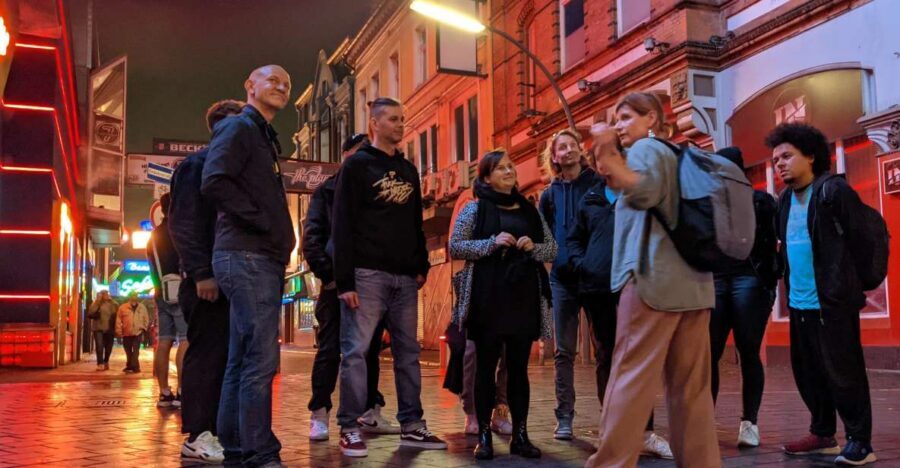
This is a short, high-impact neighborhood tour. In two hours, you’ll get a “greatest hits” route through St. Pauli—but with the important twist that it’s explained by someone who lives nearby. That changes everything. When you’re hearing about the area from street level, you start noticing details you might otherwise skip: the way certain corners feel more public, where the energy shifts, and why the neighborhood attracts the kind of crowd it does.
The tour also uses time as a guide. You’re not just told that St. Pauli is complicated—you’re given enough historical framing to understand why. The neighborhood is described as a clash of cultures right now, and the 400-year perspective helps connect that to how the area developed over generations.
If you’re expecting a quiet, polished city sightseeing loop, adjust your mindset. This is nightlife-focused Hamburg. The walk centers on the famous stretch and the landmarks around it, and it doesn’t shy away from the neighborhood’s reputation.
You can also read our reviews of more tours and experiences in Hamburg.



Finding the St. Pauli Office on Wohlwillstraße 1
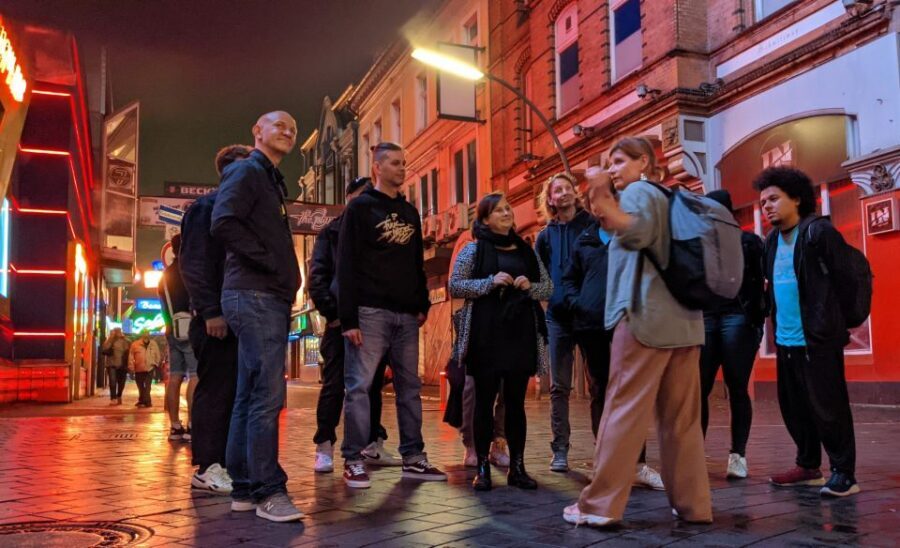
Plan to arrive early—this one starts with registration. You meet at the activity provider’s office, then you should register 15 minutes before the tour start time at the counter in the St. Pauli office on Wohlwillstraße 1, 20359 Hamburg.
That extra time is useful. You can get oriented, confirm you’re in the right place, and settle before the guide starts talking. It also keeps the group on schedule, which matters on a street where traffic and crowds can build quickly.
Language is another part of logistics, not trivia. The live guide speaks German, so if you’re traveling with even basic German skills, you’ll pick up more. If you’re not, go anyway—but be prepared to rely on the atmosphere, the landmark photos you’ll take, and the general story structure.
Reeperbahn after Dark: why the red-light strip has a past

The heart of the experience is the Reeperbahn area, where Hamburg’s “sinful mile” cliché comes from. But the tour’s real value is in the “why.” You learn about the neighborhood’s development over centuries and how that history connects to the present-day mix of lifestyles, entertainment, and public debate.
The Reeperbahn is famous for a reason: it’s visible, intense, and always changing. On this tour, you’re taught how that visibility came to be. Instead of treating the area as just a party street, you get a historical lens that makes the reputation make more sense. That’s especially helpful if you’re wondering how something so nightlife-heavy can also be part of a real residential neighborhood.
Also, pay attention to the social angle. The tour includes present-day sociopolitical developments, which helps explain why people care so much about how the district operates. It’s not just shock value. You get context that turns the walk into an informed observation.
Große Freiheit and Davidwache: iconic names you can spot instantly
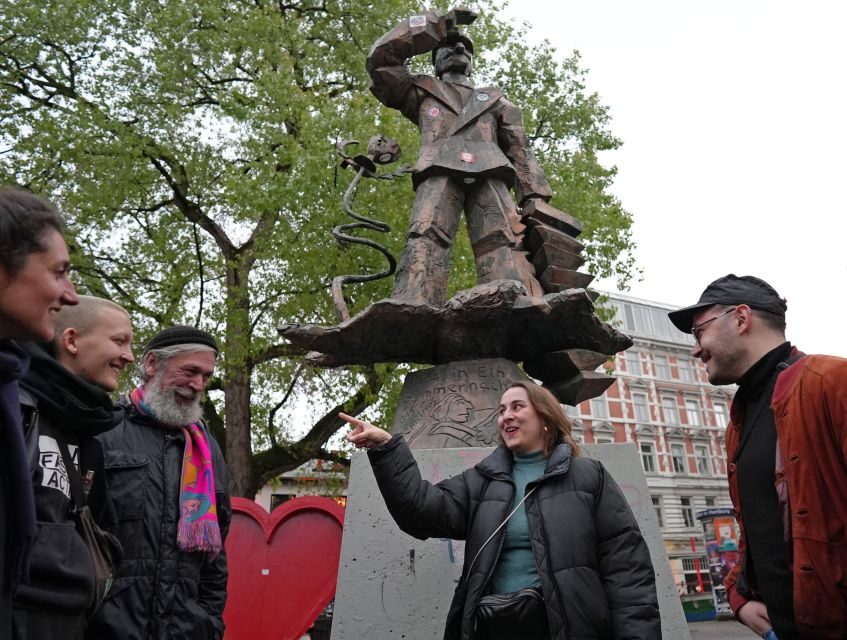
You’ll see Große Freiheit as one of the core landmarks of the area. This is the kind of place where a street name feels like a headline. Even if you’ve never been, the name carries weight because it’s tied to the neighborhood’s entertainment identity.
Next comes Davidwache, a landmark that’s described as part of the main highlight set. Places like this are useful on foot tours because they anchor the story. A building or checkpoint doesn’t just look familiar—it helps you understand how public space works in the district: who controls it, how it’s managed, and how visitors and locals interact in the open streets.
The practical takeaway: take a moment at each landmark to look up and around. You’re only on the route for a short time, so treat stops like mini checkpoints. If you later want to re-walk the area on your own, these are the spots you can use to navigate and orient fast.
Hans-Albers-Platz to Herbertstraße: where cultures collide
After Große Freiheit and Davidwache, the tour moves through more specific neighborhood nodes: Hans-Albers-Platz and Herbertstraße. This part matters because it reinforces what makes St. Pauli different from a standard nightlife zone. It’s not only about venues—it’s about a living neighborhood that holds multiple identities at once.
You’re told to expect a clash of cultures: alternative lifestyles alongside mainstream entertainment, and the push-pull between old St. Pauli locals and newcomers. That message becomes clearer as you walk. The street scene changes block by block, and the contrast is part of what the guide is pointing out.
One good habit here: slow down for a few seconds at each transition. When your guide talks about the neighborhood’s present, you’ll see why those transitions are not random. St. Pauli has edges—social and visual—and your eyes will start finding them.






Spielbudenplatz and the neighborhood pub stop
Toward the end, you’ll reach Spielbudenplatz, another key highlight. This is a natural place to feel the pulse of the area because it’s tied to St. Pauli’s entertainment identity. Even if you don’t know the venue names, the location has the energy of a meet-up point.
Then comes the finale: a neighborhood pub stop close to where locals gather. This is a small but smart addition, because it shifts the experience from walking and looking to sitting and listening. You’re getting a final taste of the local rhythm rather than rushing into a tourist bar line.
Important planning note: food and drinks aren’t included. So think of the pub stop as a chance to buy a drink if you want, not as a hosted free refreshment. If you’re budgeting, this is exactly where your evening spending will likely land.
Price Value Check: is $29 for 2 hours fair?
At $29 per person for a 2-hour guided walk, this is one of those prices that can feel low compared to the time and local framing you get. The cost isn’t just for walking around; you’re paying for a resident-led narrative, a historical thread stretching back hundreds of years, and a route that hits the biggest landmarks like Große Freiheit, Davidwache, Hans-Albers-Platz, Herbertstraße, and Spielbudenplatz.
The value comes down to your travel style. If you like understanding places instead of only taking photos, the resident angle and historical context make it worth it. If you mostly want a free-form stroll, you could do this area on your own. But you’d miss the guided connections between the neighborhood’s reputation, its historical development, and today’s social themes.
A practical way to judge it: if you can think of one question you want answered about St. Pauli—why it became what it is, how the district is viewed now—this kind of tour often pays off quickly.
Who should book this Kieztour (and who should skip)
This works best for adults who want a grounded look at Hamburg’s most famous nightlife district without reducing it to tabloid-level stereotypes. If you enjoy city history mixed with real-world social commentary, the 400-year framing and the guide’s local perspective will click fast.
It’s also a solid option if you want a structured way to see the main landmarks in limited time. You’ll cover the essentials and still end the tour with a place to sit, drink something, and continue the night.
Skip it if:
- You need an English-language tour, because the guide is German.
- You’re traveling with kids. It’s not suitable for children under 16.
- You want a quiet, family-friendly stroll. This is specifically a tour of nightlife and the red-light district area.
Should you book St. Pauli Kieztour? My take
Book it if you want St. Pauli in context—history, present-day social themes, and a guided walk that lands you at the right famous landmarks without wandering aimlessly. The resident-led approach is the difference-maker, and the short format is ideal for planning a full Hamburg evening.
Don’t book it if language is a barrier for you or if you’re looking for a kid-friendly sightseeing break. In those cases, you’ll get more from a general city tour where you can follow every word.
FAQ
What is the meeting point for the St. Pauli Kieztour?
Meet your guide at the activity provider’s office. The registration is at the counter in the St. Pauli Office on Wohlwillstraße 1, 20359 Hamburg.
How early should I arrive?
Please register 15 minutes before the tour start at the counter in the St. Pauli Office.
How long is the tour?
The duration is 2 hours.
What language is the tour in?
The live tour guide speaks German.
How much does it cost?
The price is $29 per person.
What is included in the price?
The tour includes a guided experience with a local guide.
Are food and drinks included?
No. Food and drinks are not included, though the tour includes a stop to grab a drink at a local pub.
Is the tour wheelchair accessible?
Yes, the tour is wheelchair accessible.
Is this tour suitable for children?
No. It is not suitable for children under 16.
What are the cancellation rules?
You can cancel up to 24 hours in advance for a full refund.
Can I pay later?
Yes. The option is reserve now & pay later, so you can book your spot and pay nothing today.