REVIEW · BERLIN
Small-Group Berlin Wall Bike Tour
Book on Viator →Operated by Berlin Bike Tour · Bookable on Viator
Berlin turns sightseeing into motion. This small-group Berlin Wall bike tour is a practical way to see the East-West story while you’re actually pedaling, and it focuses on the landmark belt of sites you keep hearing about. I love the small group size (up to 8) and the chance to ask questions, and I also like that the stops keep circling back to the Berlin Wall theme instead of feeling like random landmarks. One thing to consider: it runs in all weather, so you’ll want to dress for rain or cold and stay comfortable for the full 4 hours.
You’ll hit the big “wow” moments—Reichstag, Brandenburg Gate, Checkpoint Charlie—and then get the context that makes them click. And because it’s bike-based, you cover ground without feeling like you’re stuck shuffling between far-apart stops all day. My only caution: because the stops are short, you’ll get the essentials, not a slow, museum-like experience.
In This Review
- Key highlights worth your time
- Why this Berlin Wall tour works better than walking
- Meeting point near Bornholmer Straße: your start with real context
- Reichstag stop: get oriented fast
- Brandenburg Gate: the Wall story starts making shapes
- Topography of Terror: what you can learn without a full museum day
- Potsdamer Platz: a fast stop that helps you picture daily reality
- Palace of Tears: the border station museum effect, without the long detour
- Checkpoint Charlie: the name you know, explained in motion
- Memorial of the Berlin Wall: exhibitions you can’t fully read, but can understand
- Mauerpark: where the wall story turns into public space
- Platz des 9. November 1989: the moment matters
- Price and value: what $40.32 buys you in real terms
- Who this tour is perfect for
- Quick practical notes that affect your comfort
- Should you book the Small-Group Berlin Wall Bike Tour?
- FAQ
- How long is the Small-Group Berlin Wall Bike Tour?
- What does the tour cost?
- What’s the group size limit?
- What’s included in the price?
- Is admission required for the stops?
- What’s the cancellation window for a full refund?
Key highlights worth your time
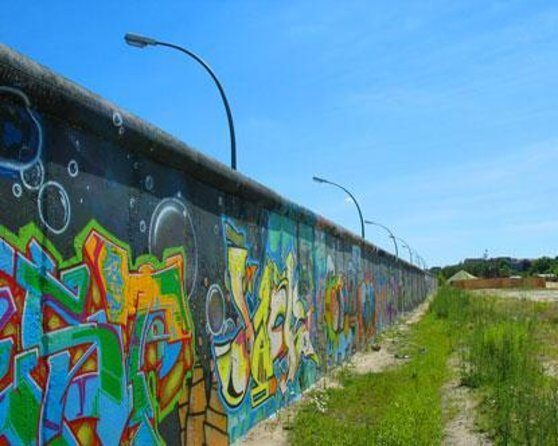
- Up to 8 riders means more guide attention and easier conversations
- Berlin Wall-focused route ties landmarks together with clear Cold War context
- Major sites in 4 hours (Reichstag, Brandenburg Gate, Topography of Terror, Checkpoint Charlie)
- Free admission at every stop listed, so you can focus on the information, not extra tickets
- All-weather operation keeps your plan steady if Berlin weather changes fast
Why this Berlin Wall tour works better than walking
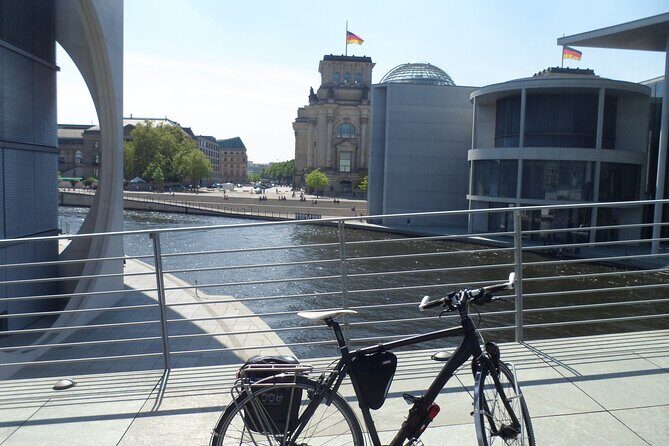
Berlin is flat, bike-friendly, and very used to people rolling through neighborhoods like they live there. This tour leans into that reality: you’ll see the Wall-era geography while moving through it, not just standing still and trying to picture the past. That motion matters. When you ride past former border zones and memorial areas, the city’s layout turns into a story you can feel in your body.
I also like the pacing. The stops are brief, but they’re targeted. You’re not spending your whole time at one location, and you’re not bouncing between places with no connection. The guide’s job here is to help you read Berlin like a map: what the Wall meant, where it cut, and what replaced it—parks, museums, and memorials.
Price is where this becomes especially easy to justify. At $40.32 per person for about 4 hours, it’s not just paying for a bike ride; it’s paying for a guide to connect the dots between stops that would be harder to interpret on your own.
One more plus: the tour includes both a local guide and a professional guide, so you get people who can talk place and context. In one standout review, Katryn was singled out for being both enthusiastic and knowledgeable, and that energy usually makes the short stops feel fuller rather than rushed.
You can also read our reviews of more cycling tours in Berlin

Meeting point near Bornholmer Straße: your start with real context
You’ll meet at BBT-Sightseeing & More at Bornholmer Str. 75, 10439 Berlin. The location matters because Bornholmer Straße sits in the north area of Berlin’s former border story, and it fits the tour’s theme right from the start.
The start time is 10:00 am, and the tour ends back at the same meeting point. That round-trip setup is a small but real convenience: you’re not trying to figure out how to get home mid-route after your sightseeing energy is already spent.
The tour also runs in all weather conditions, so plan on weather-proofing. Berlin can be bright one moment and chilly the next, so bring layers you can handle fast. If you forget, the guide won’t stop the tour just because the sky changes—so your comfort affects your attention.
Reichstag stop: get oriented fast
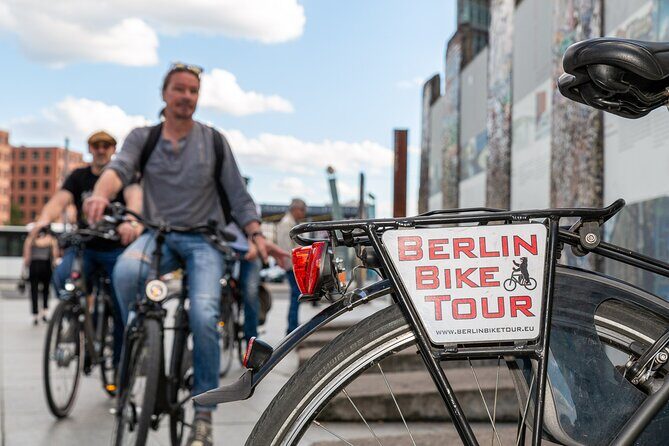
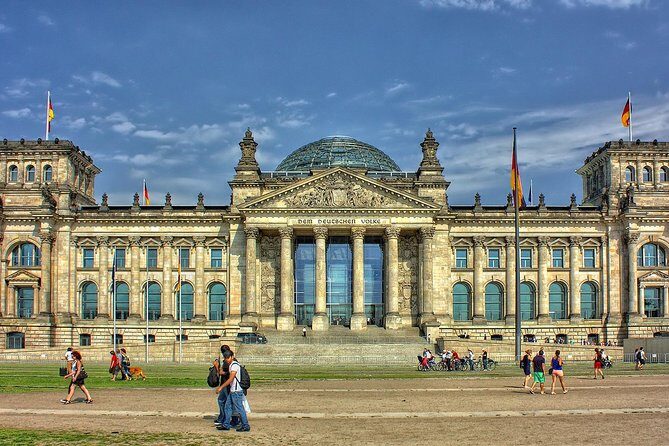
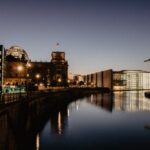
The first stop is the Reichstag Building. The time on site is short, but the payoff is big: it’s the kind of landmark that helps you understand why modern Germany talks about democracy so openly. Even if you’re not going inside, seeing it as the tour begins helps you mentally switch from Cold War geography to the present-day political heart of the city.
This is also one of those places where Berlin’s story feels layered. You’re starting your ride at a landmark that represents today, then you’ll move into sites that explain the “how did we get here” part. That order makes the Wall story easier to follow.
What to do with the 2 minutes you get: stand where you can see the building clearly, take a quick photo, and listen for the guide’s framing. If you try to read every detail on your own in that window, you’ll miss the meaning the guide is giving you.
Admission is listed as free for this stop, which is great. It means you can show up thinking about the information you’ll get, not extra costs.
Brandenburg Gate: the Wall story starts making shapes
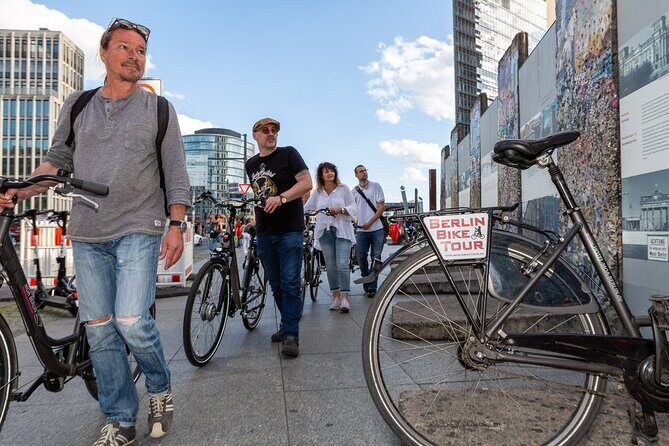
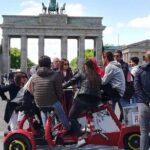
Next comes the Brandenburg Gate. This stop is also brief, but the guide uses it as a history anchor. It’s one of those spots that looks instantly recognizable from photos, but it’s easy to treat it like a monument without understanding what it stood for during the Cold War.
This is a moment to slow down just a notch. The Gate is famous, yes. But its value on this tour is that the guide can connect it to Berlin Wall history—helping you see that this wasn’t only a “place in a city.” It was a symbol in a divided world.
If you’re the type who likes to understand the big picture before you go microscopic, this stop will feel like the road map turning on.
Topography of Terror: what you can learn without a full museum day
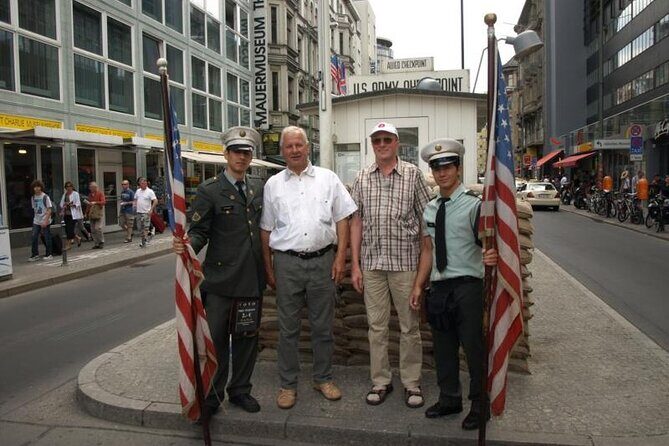
The tour then moves to Topography of Terror for about 5 minutes. With a location like this, the temptation is to want hours. But the goal here isn’t to replace a museum visit. It’s to give you a guided orientation so that if you ever do return for a deeper look, you’ll already know what to focus on.
What makes this stop work in a bike tour format is the “before and after” effect. You ride in, get the key points, and then keep moving toward other sites that echo the same themes of power, oppression, and the mechanisms of control.
Practical tip: if you’re the kind of person who reads signs slowly, you’ll still be able to catch the main ideas during the guided stop, but you might want to take your detailed questions into the rest of the ride. Use the guide’s explanations to decide what you want to study later.
Again, admission is listed as free for the stop, so you’re paying for the interpretation more than entry fees.

Potsdamer Platz: a fast stop that helps you picture daily reality
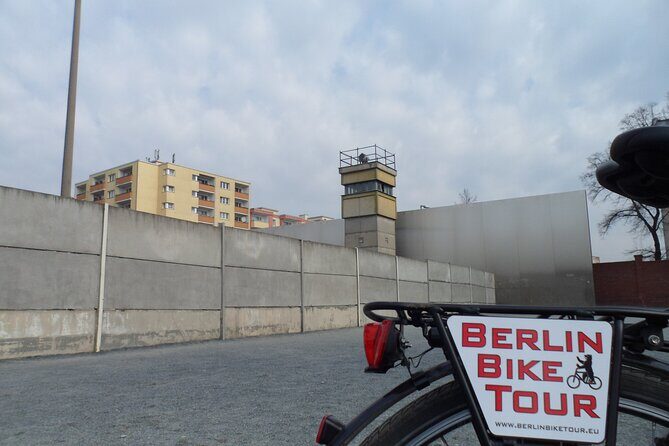
Next is Potsdamer Platz for about 2 minutes. This isn’t the longest pause, but it’s strategically placed. Potsdamer Platz helps you connect the Wall-era story to the urban logic of Berlin—how divisions affected movement, space, and how people experienced the city day to day.
This is one of those areas where Berlin today feels “alive,” but the tour’s framing helps you remember that modern bustle sits on top of old barriers and constraints. You’ll get the big picture quickly, and the bike ride between stops keeps the momentum.
If you’ve only ever seen Potsdamer Platz through the lens of shopping and nightlife, this guided context can shift your perspective fast.
Palace of Tears: the border station museum effect, without the long detour
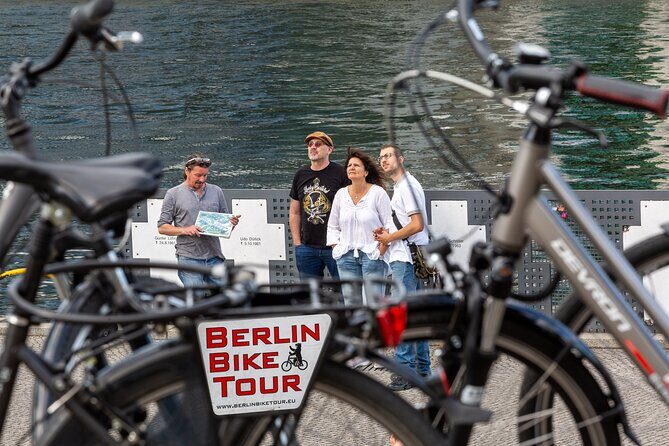
The tour includes a stop at the Palace of Tears, described as a former border station at Friedrichstraße, now a museum about daily life on both sides of the border. This stop is listed for about 3 minutes, which signals how the tour is designed: brief guided context, then let you choose if you want to return later for deeper reading.
This stop is valuable because it moves beyond politics and into people. Even in a short stop, the guide can help you understand the human side of crossing, waiting, and separation—things that abstract history never quite captures.
The trade-off is that you won’t be able to absorb everything the museum offers in a few minutes. But that’s not a flaw. It’s a sampler. You get the meaning of the place, then you can decide if you want to add time on your own afterward.
Admission is listed as free for this stop.
Checkpoint Charlie: the name you know, explained in motion
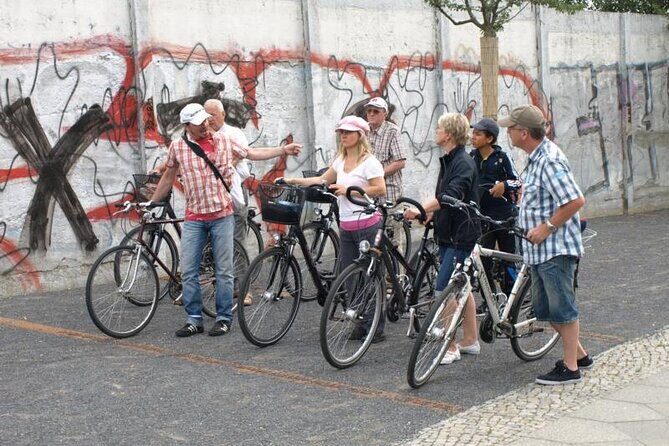
At about 4 minutes, you’ll stop at Checkpoint Charlie, described as the Cold War era’s most famous border station. If you’ve seen it in photos, movies, or travel guides, your brain already recognizes the scene. The tour value is that the guide helps you understand it as a system—where it fit in the bigger border structure and what the symbolism meant.
A bike tour approach helps here because you’re not stuck in one photo spot. You get the explanation, then you ride onward, and the city around Checkpoint Charlie starts to make more sense as part of the former division.
A good way to use this stop: ask yourself what the guide emphasizes—control, negotiation, movement, or the Cold War theater factor—then keep that lens in mind as you move to the next memorial sites.
Admission is listed as free.
Memorial of the Berlin Wall: exhibitions you can’t fully read, but can understand
Then comes the Memorial of the Berlin Wall, with about 10 minutes for exhibitions. This is one of the few stops long enough that you can actually slow down. The focus is on exhibitions about the Berlin Wall and former borderland.
Even though you won’t have a full museum session, 10 minutes is enough to catch the main themes. The guide’s job is likely to steer you toward the points that connect to what you’ve already learned—so your quick scan becomes a meaningful one, not just a visual blur.
This stop is where the tour feels most complete. Earlier sites give you landmarks and orientation. Here, you get the interpretive backbone.
If you care about details, you can use this as your “pay attention” time: look for the sections that match the story the guide has been telling you, not every single panel.
Admission is listed as free.
Mauerpark: where the wall story turns into public space
After the memorial, you’ll ride to Mauerpark for about 5 minutes. This is described as reclaimed borderland and now a famous park. That shift is huge. Berlin’s Wall story doesn’t end at division; it ends in transformation—people using the space for recreation, community, and everyday life.
This stop can feel a little different from the others, but it’s one of the most important. It helps you avoid the trap of seeing history as only grim and frozen in time. The city changed. The Wall line became parkland. That matters, and you’ll understand it better when you’ve already spent time on memorials and border stations.
Admission is listed as free.
Platz des 9. November 1989: the moment matters
The final stop is Platz des 9. November 1989, described as a former border station, the first one opened on November 9th. This stop is listed for about 15 minutes, the longest pause after the memorial.
That extra time signals what this moment represents: it’s the turning point. The guide’s explanation here is likely to tie together the route’s themes—how border access changed, how the Wall story moved from structure and control to sudden openness and transformation.
This stop is your chance to mentally “close the loop.” After seeing symbols, stations, and memorial exhibitions, you can look at this place and understand it as a real hinge moment—date-specific and connected to events that reshaped Berlin.
Admission is listed as free.
Price and value: what $40.32 buys you in real terms
At $40.32 per person for around 4 hours, this is priced like a well-thought-out guided orientation tour. You’re not paying for fancy add-ons. You’re paying for guide-led interpretation at multiple high-demand sites, delivered in a compact time window.
Here’s why that matters for value:
- You get a guided narrative across several landmarks that would take longer to piece together on your own.
- You save time by seeing many of the key Wall-era stops in one ride rather than scheduling separate museum visits.
- The group limit of up to 8 makes the “guided” part feel more personal than a big bus tour.
What’s not included is food and drinks. So you’ll want to plan your energy. Berlin rides are fun, but you don’t want to be thinking about snacks while you’re trying to follow the guide’s story. Bring a water plan and a small snack strategy.
Another value point: admission is listed as free at the stops. That doesn’t mean you skip the experience; it means your money goes toward context and time.
Who this tour is perfect for
This is a great match if you want Berlin Wall history with active logistics. You’ll likely enjoy it if you:
- like bikes and want to see more than just one neighborhood
- want the major landmarks but also want the connection between them
- prefer small groups where questions don’t feel like an interruption
- can handle a short stop style, meaning you’re okay with essentials now and deeper options later
It’s also ideal for first-timers who want a guided backbone. You’ll leave with a route you can recognize later, which makes independent exploring smoother.
If you’re the type who wants to spend an hour reading every exhibit panel, you might find some stops too brief. In that case, treat the ride as the setup, then pick one or two places for longer return visits.
Quick practical notes that affect your comfort
This tour operates in all weather conditions, so dress appropriately. That’s not just fine print—comfort changes how much you absorb, especially during a 4-hour ride.
You’ll want to start your day at the meeting point with a good sense of pace. Since stops are short, you should be ready to listen, look, and move on.
Also note: service animals are allowed, and the tour is near public transportation. Most people can participate, but bike tours do require basic comfort with cycling.
Should you book the Small-Group Berlin Wall Bike Tour?
If you want an efficient, well-framed Berlin Wall experience—one that connects landmark after landmark without bogging you down in tickets—this is an easy yes. The small group and the guide attention are the main reasons it feels worthwhile, and the stop choices keep the story focused rather than scattered.
I’d book it if you like active sightseeing and you’re okay with short, guided “orientation stops” instead of a full-day museum crawl. If you’re visiting Berlin for the first time and want a guided backbone for later exploration, this tour gives you exactly that.
FAQ
How long is the Small-Group Berlin Wall Bike Tour?
It runs for about 4 hours.
What does the tour cost?
The price is $40.32 per person.
What’s the group size limit?
The tour has a maximum of 8 travelers.
What’s included in the price?
You get a local guide and a professional guide.
Is admission required for the stops?
Admission is listed as free at the stops included on this tour.
What’s the cancellation window for a full refund?
You can cancel up to 24 hours in advance for a full refund. If you cancel less than 24 hours before the start time, the amount you paid won’t be refunded.