REVIEW · BERLIN
Rickshaw Tours Berlin – Groups of up to 16 people with several rickshaws
Book on Viator →Operated by Rikscha & Bier Bike & Party Beer Bike - Leo Rickshaw Tours · Bookable on Viator
Berlin on rickshaws feels like cheating.
This small-group ride threads together Brandenburg Gate, Reichstag/Bundestag, Wall-era landmarks, and the grand classic sights of central Berlin, often with just enough time to look, snap a photo, and move on. I especially like the way the tour builds in flexibility with music on request, so the vibe can match your group instead of feeling like a rigid lecture. One thing to keep in mind: in a service like this, the quality can depend a lot on the guide and the day’s timing.
What makes it work (for me) is the mix of headline history and city scenery, done at a pace that’s doable even when you have limited time. I also like that you’re not just staring out at the road: you get real photo opportunities, and the tour includes a photographer so you don’t have to keep handing your phone to strangers. The possible drawback is practical, not dramatic: with several rickshaws for up to 16 people, you may end up split up, and seating comfort can vary by how the group is assigned.
In This Review
- Key things to know before you hop on
- Why Berlin Works Best on Rickshaws (and Not Just Buses)
- Price and Value: What $53.10 Really Buys You
- The Route Starts at Brandenburger Tor (and Sets the Tone Fast)
- Reichstag/Bundestag: Germany’s Biggest Political Drama in One Stop
- German Chancellery and the Look of Modern Power
- Tiergarten: Soviet Memory Meets the Zoo’s Long Backstory
- Potsdamer Platz: Where Berlin Went Modern (and Kept Moving)
- Topography of Terror: Moving Through the Nazi-Era Control Hub
- Gropius Bau and the Art-Architecture Combo
- Berliner Mauer Memorial at Bernauer Straße: The Wall’s Human Reality
- Checkpoint Charlie and Friedrichstraße: Border Memory, Then Shopping Streets
- Gendarmenmarkt, Deutscher Dom, and Konzerthaus: Prussian-Era Grandeur
- Bebelplatz, Museum Island, and Berliner Dom: When Culture Meets Power
- Lustgarten and Alexanderplatz: Royal Pleasure Ground to East Berlin Energy
- Guide Quality and Driving Style: The Part You Can Control
- Who This Rickshaw Tour Is Best For
- Should You Book This Rickshaw Tour?
- FAQ
- How long is the rickshaw tour?
- Where does the tour start and end?
- Is pickup available?
- What language is the tour offered in?
- Is this a private tour?
- What’s included in the price?
- Are tickets for major attractions included?
- Is alcohol included?
- What weather conditions does the tour require?
- Are service animals allowed?
Key things to know before you hop on
- Up to 16 people, split across several rickshaws, so it’s a social group without becoming a giant bus crowd.
- Pickup within 2 km of the Brandenburg Gate keeps the start simple; beyond that, extra distance costs apply.
- Tickets aren’t included for several major sites, so you’ll mainly be doing street-level viewing and short stops.
- A tour guide rides with you, and music can be requested for the atmosphere.
- Photo help is included via a photographer, which is a big quality-of-life win on a 1–4 hour loop.
- Weather matters, because this is a rickshaw experience outdoors.
Why Berlin Works Best on Rickshaws (and Not Just Buses)
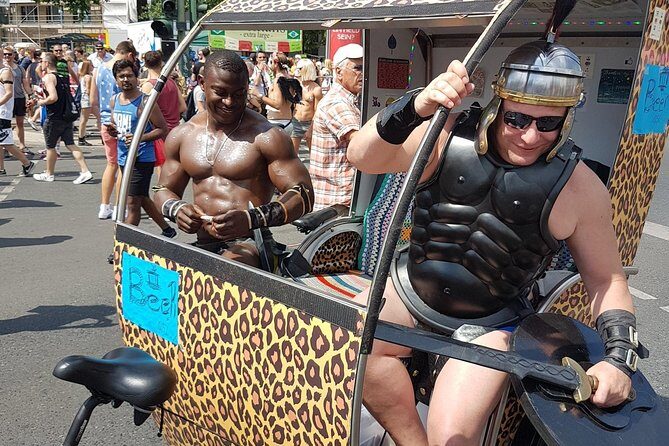
Berlin is flat in spots, wide in others, and full of monumental sightlines. A rickshaw tour fits that rhythm because you move through key areas at a human pace, with stops timed for seeing what you came for. You also get that quieter, closer feel than buses: you’re not boxed into one place while everyone watches the same window view.
Another smart part is the private setup. This is listed as a private activity for your group, and with a maximum group size of 16, it stays controllable—especially when your route needs several rickshaws instead of one long line.
You can also read our reviews of more tours and experiences in Berlin.

Price and Value: What $53.10 Really Buys You
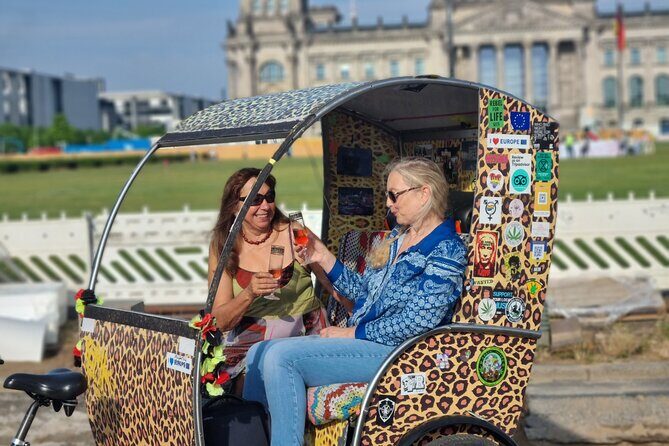
At $53.10 per person, the price isn’t just for transportation. You’re also paying for a guide with local context, private transportation, WiFi on board, and a photographer to help you capture the moment. If you’re traveling with a friend group or family, the split into multiple rickshaws can make the logistics feel easier than trying to coordinate taxis plus a walking tour.
Where the math changes: some of the big-ticket stops may require your own admission. The tour notes admission is not included for places like the Reichstag/Bundestag, Gropius Bau, the German Cathedral and Konzerthaus, plus museum buildings on Museum Island and the Berliner Dom. Meanwhile, several stops are listed as free, like Topography of Terror and multiple outer-city viewpoints.
If you want the best value, go in with this mindset: you’ll get excellent street-level orientation and history context, and then you can decide on the spot whether you want to buy extra tickets for a specific interior visit.
The Route Starts at Brandenburger Tor (and Sets the Tone Fast)
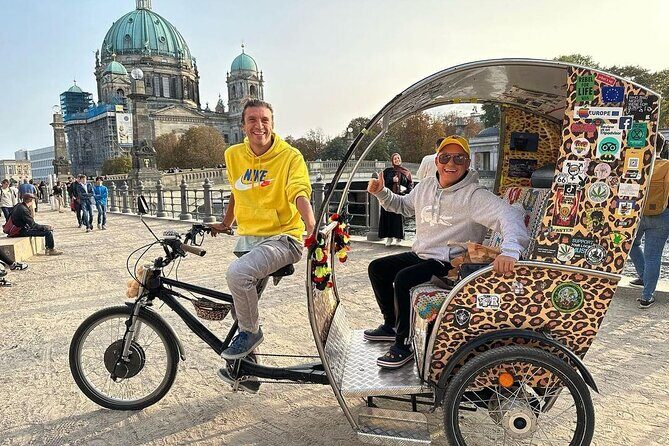
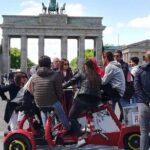
Your tour begins at Brandenburger Tor, a sandstone landmark built from 1788 to 1791 based on designs connected to classic Greek architecture. This is one of the best openers in Berlin because it’s instantly recognizable and historically layered in a way that’s easy to understand without a museum ticket.
Right away, you get a sense of why people love Berlin history tours: the city keeps reusing the same spaces for different eras. That matters here because the next stops sharpen the timeline, shifting from classicism into modern Germany’s political turning points.
Reichstag/Bundestag: Germany’s Biggest Political Drama in One Stop
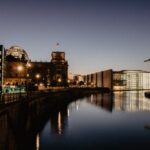
Next up is the Reichstag/Bundestag area. This building is tied to multiple turning points: the Republic being proclaimed from the west portal in 1918, the Reichstag fire in 1933, and later the symbolism of Soviet victory in 1945. The stop is short, but it’s the kind of stop that gives meaning to the architecture, not just the postcard view.
The catch: admission isn’t included, so you’ll likely be doing exterior viewing and listening to the story on the move. If you were hoping for an inside dome visit, you should budget extra time for a separate plan.
German Chancellery and the Look of Modern Power
The German Chancellery stop is a lesson in how buildings communicate. It’s described as a transparent and light-feeling structure despite its monumental scale, with glass surfaces and atrium-like spaces between administrative wings. Even in a quick stop, you can see why this area is often used as a symbol of postwar governance style.
Because the stop is brief and tickets are not included, I’d treat it as orientation. The win is that you come away understanding what to look for when you pass this area on your own later.

Tiergarten: Soviet Memory Meets the Zoo’s Long Backstory
The tour swings into the Tiergarten with a serious moment at the Soviet War Memorial. Flanked by two T 34 tanks, it centers on a bronze Red Army soldier statue and surrounding names on the pillars, with graves behind. This is not just “another monument.” It’s a reminder that Berlin’s history is layered in winners, losers, and competing narratives.
Right after that, the tour also brings in context about the Tiergarten’s evolution—starting from a hunting area and later reshaped by Peter Joseph Lenné into a public English-style park approach. That combination matters because it shows you Berlin isn’t only concrete and monuments; it’s also a city that built public green spaces while carrying heavy memories.
If you’re sensitive to emotionally heavy sites, pace yourself here. The good news: this stop includes enough structure that you’re not wandering alone trying to interpret everything.
Potsdamer Platz: Where Berlin Went Modern (and Kept Moving)

Potsdamer Platz is a quick jump to the city’s “new Berlin” identity. The tour frames it as a planned district that became a working mix of cinemas, cafes, and shops—something Berliners actually use, not just something designed for tourists.
This is a nice contrast after memorial-heavy parts of the day. You get to see how the city’s story includes rebuilding and reinvention, not only rupture.
A practical note: this area can be busy. Your rickshaw stops keep it efficient, but if your group prefers quiet sightseeing, you’ll want to pay attention to when you’re crossing open areas.
Topography of Terror: Moving Through the Nazi-Era Control Hub
Then comes Topography of Terror, listed as free. The tour explains the area as a central planning and control site for Nazi crimes, with key terror institutions operating here between 1933 and 1945. Even a short stop gives you a mental map of where “system” happened—offices, command, enforcement—not just street-level events.
Since admission isn’t the focus in a short rickshaw stop, you’ll get orientation and context. If you want more depth, this is one of those places where buying extra time for the site itself can turn a quick lesson into a full experience.
Gropius Bau and the Art-Architecture Combo
The Gropius Bau stop is listed as admission not included, which suggests you’ll be taking in the exterior and nearby setting. The tour describes it as dedicated to cultural history, contemporary art, and photography.
This is a good moment in the route because it lets the day breathe. After political and memorial content, a cultural stop feels like shifting from “past harm” to “present interpretation.”
Berliner Mauer Memorial at Bernauer Straße: The Wall’s Human Reality
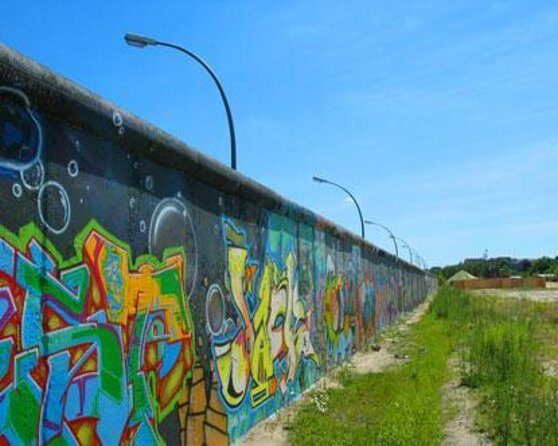
At Gedenkstätte Berliner Mauer near Bernauer Straße, the tour brings the Wall story down to specific, tragic escape attempts. The description focuses on the boundary between Wedding and Mitte, and how people tried to reach the free West after the Wall cut homes and streets in two. It also references the memorial’s inauguration in 1998.
This is one of the strongest stops for understanding Berlin’s division, because it explains the geography of separation. Even if your stop is brief, the concept sticks: the Wall wasn’t an abstract line on a map. It was something people lived next to.
Checkpoint Charlie and Friedrichstraße: Border Memory, Then Shopping Streets
Next is Checkpoint Charlie, once a well-known border crossing. The tour notes that transitions were restricted for foreigners and certain officials—so the place wasn’t just symbolic; it was controlled access.
From there, the route continues to Friedrichstraße, described as a north-south axis and a popular shopping mile after the Wall fell. This transition is useful because it shows the city’s shift from border control to everyday movement—often within only a few blocks.
Gendarmenmarkt, Deutscher Dom, and Konzerthaus: Prussian-Era Grandeur
The route slows into a classic-center feel with Gendarmenmarkt, created in the late 17th century. The tour explains how French Protestant immigrants (Huguenots) settled in the area, and how the square’s name evolved until it became Gendarmenmarkt.
Right nearby, you’ll also encounter the Deutscher Dom, where a permanent exhibition is described as tracking the historical development of liberal parliamentary democracy in Germany. Tickets are not included, so you’ll likely be looking from outside and using the stop time for orientation.
Then it’s onto the Konzerthaus, called a masterpiece of classicist architecture and tied to Karl Friedrich Schinkel. The tour notes that a comedy house opened here in 1776 and later became the Royal National Theater. If your group likes architecture, this stop is where the city starts to feel like an art book you can walk through.
Bebelplatz, Museum Island, and Berliner Dom: When Culture Meets Power
At Bebelplatz, the tour focuses on Nazi book burnings on May 10, 1933, describing how over 20,000 books were burned and naming several authors. The important part isn’t just the event; it’s the lesson that censorship attacks ideas, not paper.
Then the route touches Museum Island, a world-famous Spree and Kupfergraben location where archaeological collections and 19th-century art live. The starting point in the ensemble is described as the Old Museum, completed in 1830 based on Schinkel’s plans. Admission isn’t included, so this is another orientation stop—but it’s excellent if you want to know where the major museum cluster is without getting lost.
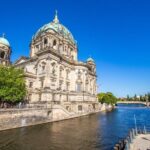
Finally, you reach the Berliner Dom, with its striking dome and a mention that climbing to the dome offers views over Berlin’s center and landmarks around the Spree and Lustgarten. Tickets are not included, so plan on outside viewing and short context rather than a full interior visit.
Lustgarten and Alexanderplatz: Royal Pleasure Ground to East Berlin Energy
Between Karl-Liebknecht-Straße and the Altes Museum, Lustgarten is described as a traditional pleasure garden with linden rows, a red granite bowl, and summer lawns where people relax. It’s a calm stop to reset your brain after history-heavy sites.
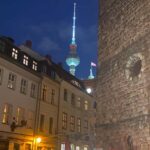
Then you finish at Alexanderplatz, described as central to east Berlin and one of the liveliest squares, with the TV tower, world clock, and the fountain of friendship between peoples. This is a good end point because it feels like a conclusion you can keep using after the tour—shopping, transport, and ideas for what to do next.
Guide Quality and Driving Style: The Part You Can Control
This is the one area I’d pay attention to before you assume everything will be perfect. The ride quality depends on the driver and guide pairing, and the day’s group management.
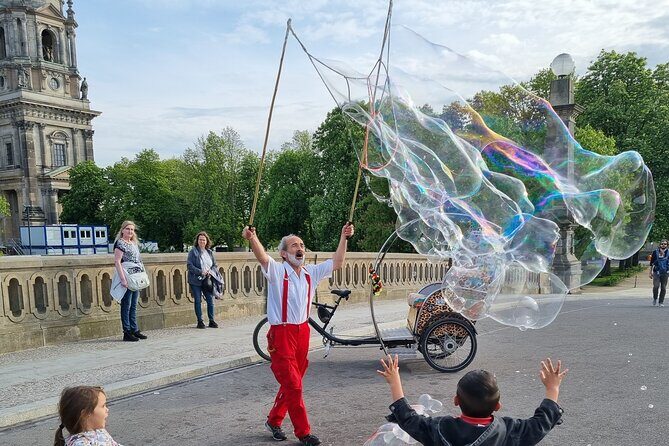
The positive pattern is strong: guides such as Hugo and Leo are described as fun and story-driven, with photo time and enough flexibility to match what your group wants to see. Some guides also handle tough weather well, keeping the mood going even when conditions turn.
The practical caution from the broader set of feedback: there have been instances of late pickup or no-show. I can’t sugarcoat that risk. If you book, set a clear meeting plan, arrive early at the start point, and keep your phone ready for last-minute coordination. If sound equipment gets turned up too loud, ask for it to be lowered right away—one guide compensation strategy was reported as using music/speakers when passengers wanted conversation.
Who This Rickshaw Tour Is Best For
This tour is ideal if you:
- want to cover a large chunk of central Berlin in 1–4 hours without doing a long walking slog
- like history that’s tied to specific places, not just general themes
- want a fun, photo-friendly format with a photographer helping capture the day
- are traveling with a mixed-age group that can’t handle hours of walking
It may be less ideal if you:
- plan to spend most time inside ticketed attractions at each stop
- are extremely sensitive to road driving and prefer very smooth pacing
- need guaranteed perfect punctuality from an operator that has had occasional coordination complaints
Should You Book This Rickshaw Tour?
If your goal is to get your bearings fast and see the headline Berlin sites with a guide, I’d say it’s a good bet—especially for the price and the fact that you’re not paying extra for guide help, WiFi, and photos. The route has real variety: classic monuments, political trauma sites, architecture, museums, and two “anchor squares” (Brandenburger Tor and Alexanderplatz) that help you map the city.
But if you’re on a tight schedule where a missed pickup would ruin your day, I’d treat this as a “plan A with a backup.” Arrive early, double-check meeting details, and consider pre-booking any inside ticket plans you care most about.
If you do that, this tour can be a fun, efficient way to get a strong first Berlin pass—without turning your day into a marathon.
FAQ
How long is the rickshaw tour?
The duration is listed as 1 to 4 hours, depending on the route timing and how your group moves between stops.
Where does the tour start and end?
It starts at Brandenburger Tor, 10117 Berlin, Germany, and ends back at the meeting point.
Is pickup available?
Yes. Pickup is included within a radius of 2 km from the Brandenburg Gate. More than 2 km may cost 10€ per km.
What language is the tour offered in?
The tour is offered in English.
Is this a private tour?
Yes. It’s listed as a private tour/activity, meaning only your group participates.
What’s included in the price?
Included items are WiFi on board, private transportation, music on request, a photographer, and a tour guide.
Are tickets for major attractions included?
Not always. Admission tickets are listed as not included for several stops such as the Reichstag/Bundestag and multiple museum/cultural buildings. Some stops are listed as free.
Is alcohol included?
No. Alcoholic beverages are not included.
What weather conditions does the tour require?
The experience requires good weather. If it’s canceled due to poor weather, you’ll be offered a different date or a full refund.
Are service animals allowed?
Yes, service animals are allowed.