REVIEW · BERLIN
One Up to 3 Rickshaws(6 GUESTS)-Taylor Made Rickshaw Berlin Tour
Book on Viator →Operated by Berlin-Rickshaw / Berlin-Excursions · Bookable on Viator
Berlin can feel huge.
This private rickshaw tour turns it into a tight, guided loop through the big-ticket sights—so you spend less time wandering and more time actually looking. I like the simple setup: a friendly, licensed guide in English keeps things moving while you choose to ride solo or share in pairs. The only real catch to plan around is that the Berliner Fernsehturm start point does not include admission, so if you want to go up, you’ll need to handle that ticket separately.
What makes this worth your attention is the balance of comfort and control. You get a driver for the day, WiFi onboard, and even a cozy blanket if you choose rickshaw transport—plus the freedom to steer the day toward what you care about most. It’s also designed for small groups (up to 6 people across as many as 3 rickshaws), so the ride doesn’t turn into a loud bus tour.
In This Review
- Key Highlights Worth Your Time
- Why a 3-Hour Rickshaw Circuit Beats Berlin Hop-On Hop-Off
- How the Tour Works: Pickup, WiFi, and Choosing Your Comfort Level
- Alexanderplatz and Berliner Fernsehturm: Fast Start, Big Views, Ticket Reality
- Museum Island and Unter den Linden: Historic Landmarks Without the Maze
- Bebelplatz to Gendarmenmarkt: Book Burning Memory Meets Beautiful Squares
- Wall-Era Berlin: Checkpoint Charlie, Topography of Terror, and the Holocaust Memorial
- Potsdamer Platz to Brandenburg Gate: Modern Rebuilding Meets Iconic Berlin
- Reichstag, Fuhrerbunker (Now a Parking), and Berliner Dom
- Price and Value: When $420.08 Makes Sense
- Should You Book This Private Rickshaw Tour?
- FAQ
- How long is the Berlin rickshaw tour?
- Is this tour private?
- Do you offer pickup, and where does the tour end?
- What language is the guide, and do I need paper tickets?
- Is WiFi included?
- Are entry tickets included for the sights?
- Can less mobile guests participate?
Key Highlights Worth Your Time
- A driver handles the navigation so you stay focused on landmarks instead of street-finding
- Private small group setup (up to 6 total) lets you ask questions without rushing
- WiFi and photo-friendly stops help you stay connected and capture angles easily
- Flexible sightseeing choices so you can spend more time where your interests land
- Lots of major stops in about 3 hours without turning it into a marathon on foot
Why a 3-Hour Rickshaw Circuit Beats Berlin Hop-On Hop-Off
Berlin is the kind of city where you can easily spend half a day just getting your bearings. This tour fixes that problem by putting you on wheels with a guide. The point is not slow travel—it’s smart movement: you see major landmarks back-to-back, and the guide handles the ordering so you don’t end up crisscrossing the map.
The rickshaw format also changes the mood. You’re not stuck shoulder-to-shoulder with strangers or forced into a strict group pace. You can ride alone or in pairs, which is great for couples, solo travelers who want conversation on their terms, or friends who prefer to keep the chat going without a full crowd around you. And because it’s private, you’re not waiting for slow walkers while the clock keeps ticking.
One more practical plus: you’re not locked into one rigid script. The guide can tailor the route based on what you’ve already seen and what you want to focus on. That matters in Berlin, where people often split their days between the Wall sites, museums, and the government district.
You can also read our reviews of more tours and experiences in Berlin.

How the Tour Works: Pickup, WiFi, and Choosing Your Comfort Level
The tour is offered in English with a professional licensed guide. You’ll also have a mobile ticket, and it’s set up with the kind of convenience that helps you start fast—especially if you’re bouncing between neighborhoods.
Timing is built around short, efficient viewing windows at each stop, roughly 5–10 minutes for most areas. That sounds brief until you realize the goal is orientation and highlights, not deep museum visits. If you want one or two places to become a longer visit later, this tour is an excellent first pass to help you decide where to go next.
Comfort is handled in a few ways:
- You can choose rickshaw transport or a mix depending on what makes sense for you.
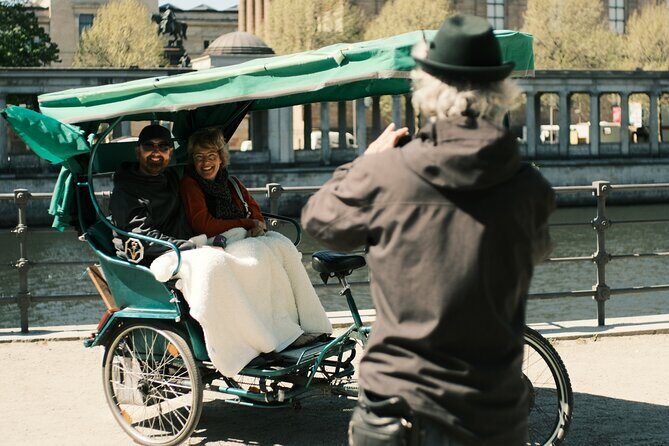
- If you ride by rickshaw, you can get a cosy blanket.
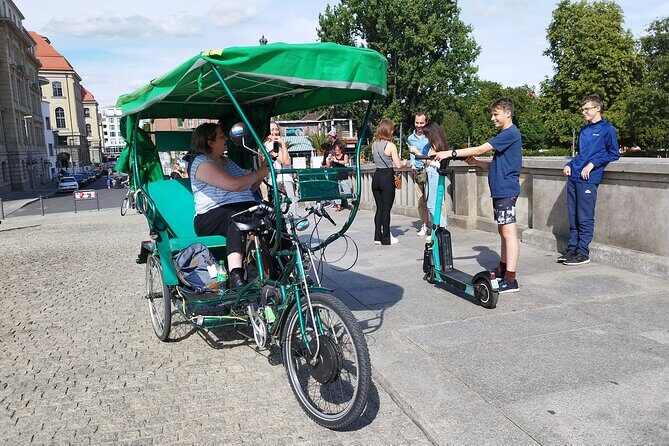
- You don’t have to walk much. In a few steps, you enter the rickshaw, and you can get very close to monuments without stepping out. The tour also notes you can even touch monuments, where appropriate.
And yes, it’s not just sightseeing in silence. Guides are praised for being friendly and very capable at explaining what you’re looking at. Some named examples show up in traveler notes, including Levent Aydin and Tille, both recognized for being helpful, energetic, and great at making the route feel thoughtful rather than rushed.
Alexanderplatz and Berliner Fernsehturm: Fast Start, Big Views, Ticket Reality
You kick off at Alexanderplatz, starting with Berlin’s tallest structure, the Berliner Fernsehturm (TV Tower). Even if you don’t go inside, it’s an instant landmark anchor—one of those “okay, now I get it” moments for Berlin geography.
This is also where you need to handle one important planning detail: admission for the TV tower is not included. The tour includes time at the start point (about five minutes), but you should assume you’re there to see it, not automatically enter it. If you’re hoping to ride up or pay for access, budget for that extra ticket and decide whether it’s worth it for your priorities.
Practical tip: if you’re the type who likes photos, arrive ready to shoot immediately. The guide can stop where it makes sense for pictures, and this is a natural spot to grab establishing shots before you move into the older, more historical streets of central Berlin.
Museum Island and Unter den Linden: Historic Landmarks Without the Maze
From the next areas near Rotes Rathaus and toward Museum Island, the tour shifts into classic Berlin sightseeing. You’ll pass the Red Town Hall, the Marien Church, the Neptunes Brunn (Neptune’s Fountain), and then arrive at Museum Island, a UNESCO World Heritage Site.
What I like here is how the tour gives you the “big picture” quickly. Museum Island is famous for its museum cluster, and you’ll get a visual sense of the whole complex—plus views toward Unter den Linden, the historic boulevard that makes Berlin feel like Berlin.
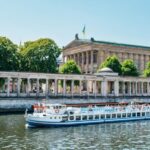
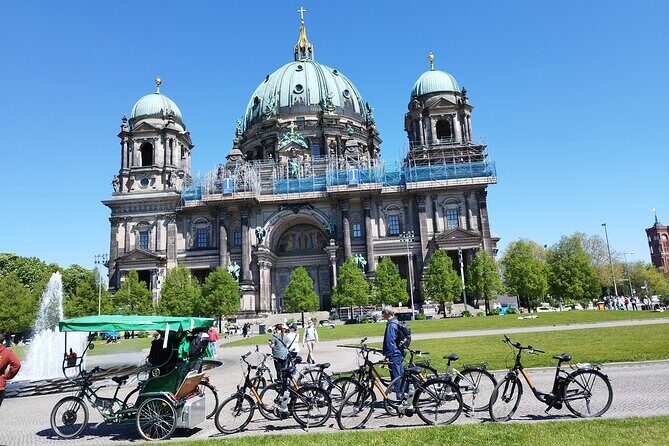
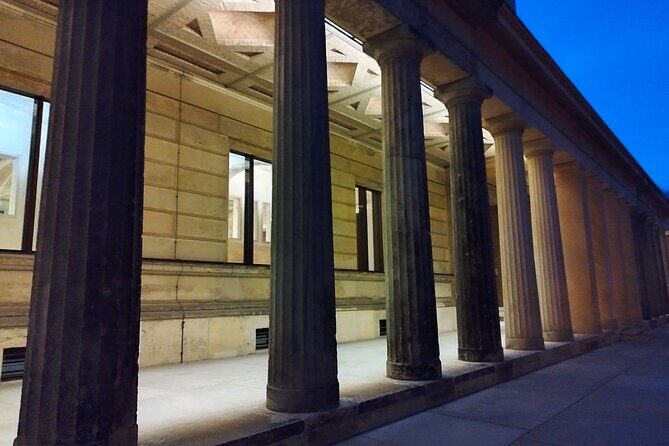
You’ll see the Berlin Cathedral in the broader mix, the unfinished reconstruction of the City Palace, and several museum exteriors:
- Old Museum
- Old National Gallery
- Pergamon Museum
- Bode Museum
Admission for this stop area is listed as free, which helps keep the tour moving efficiently. Even if you don’t step into any museums, you’ll leave with a clearer sense of what’s where—so your later museum choices feel less like guessing and more like intent.
One small consideration: because the viewing windows are short, it’s better to treat this section as orientation. If you plan to do museum interiors, you’ll want a separate time block after the tour.
Bebelplatz to Gendarmenmarkt: Book Burning Memory Meets Beautiful Squares
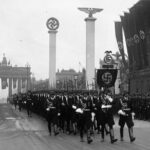
Then comes Bebelplatz, a serious stop placed right in the center of Berlin’s cultural landscape. It’s known as the Nazi book burning square, where 25,000 books were burned in 1933, and there’s a memorial in remembrance of that event.
This is one of those parts of Berlin that doesn’t play like a postcard. I like that the tour doesn’t just point at impressive buildings—it also marks the places where the city’s darker chapters are permanently visible. If you prefer your history straight, this works.
Nearby, you also pass Forum Fridericianum, including Humboldt University, the State Library, the State Opera, and St. Hedwig’s Cathedral (noted as the first Catholic church in Berlin). It’s a concentrated slice of the city’s educational, religious, and civic structures.
After that, the mood shifts to beauty with Gendarmenmarkt, one of the most striking squares in the center. Here you’ll see the former Royal Concert Hall and the domes facing each other:
- German Dom on one side
- French Dôm on the other
This stop is free for admissions and feels like a palate cleanser after the heavier Bebelplatz moment. It’s also a great place for photos from the rickshaw, since the square is open enough to frame grand architecture without sprinting across streets.


Wall-Era Berlin: Checkpoint Charlie, Topography of Terror, and the Holocaust Memorial
Now the tour moves into the Berlin Wall and its surrounding history. First up is Checkpoint Charlie, one of the most famous border crossings. The tour context notes it was a moment that nearly escalated to a major conflict, and that you’ll feel the weight of Cold War drama the instant you arrive.
Next is Topography of Terror, along the former border strip. You’ll see original parts of the Berlin Wall and the documentation center connected to National Socialism. The area is tied to the former headquarters of the SS and Gestapo, and it’s right near Martin-Gropius-Bau, where exhibitions have happened over time, including international shows connected to Ai Weiwei and David Bowie. The Prussian Parliament is also mentioned nearby as part of the broader view.
Then comes the Memorial to the Murdered Jews of Europe, also called the Holocaust Memorial. The details given matter: it opened in 2005 and commemorates the murder of more than 6 million Jews during National Socialism. This stop is free for admission, and the visit window is around 10 minutes—enough time to read, reflect, and absorb the layout without turning it into a long ceremony.
How to use this section well: don’t rush. Even if you feel pressured by time, give yourself a few quiet moments. These stops are less about ticking boxes and more about making the meaning stick.
Potsdamer Platz to Brandenburg Gate: Modern Rebuilding Meets Iconic Berlin
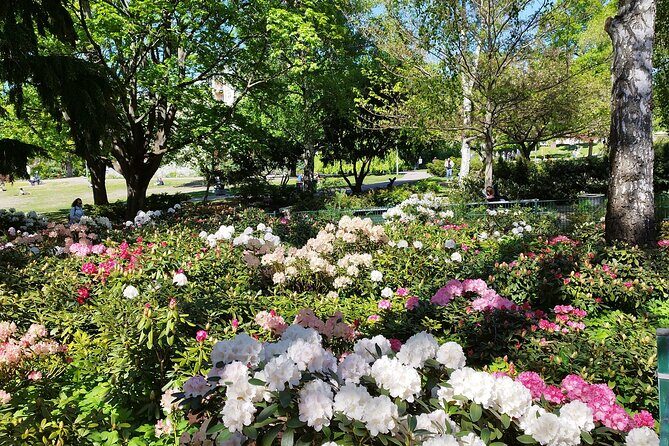
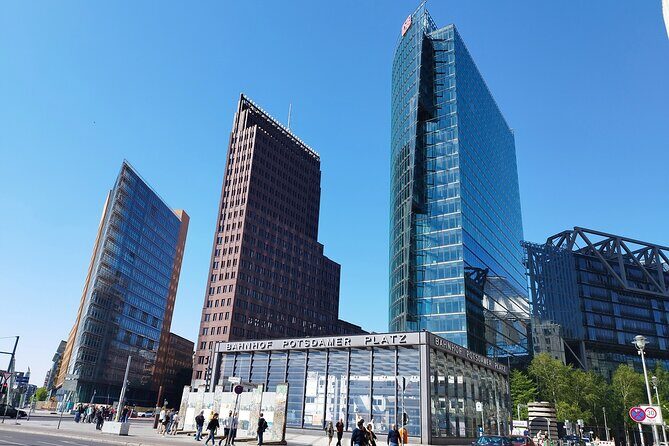
After the memorials and Wall-era sites, you roll into Potsdamer Platz. The tour frames it as Europe’s largest construction site historically, and what you’ll see now is a mix of skyscrapers and futuristic buildings, including the Sony Center. This is Berlin showing its face as a city that rebuilt itself again and again.
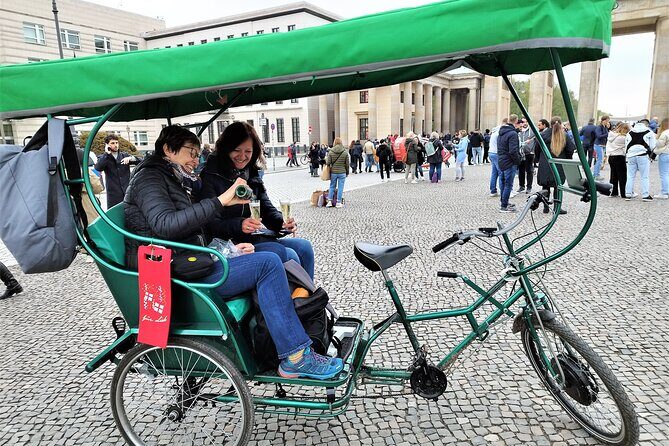
Then you head toward Brandenburg Gate, one of the most recognizable landmarks in Berlin. The Gate is free for admission on this tour, and you’ll get about 10 minutes for viewing. It’s an easy stop to appreciate, even if you’re not a history buff—because it has that unmistakable role in how Berlin is remembered globally.
By this point, the tour has done something useful: it’s connected three eras in one ride.
- old historic identity
- Cold War rupture
- post-reunification change and spectacle
If you’re someone who likes to understand how a city evolves, this sequencing helps a lot.
Reichstag, Fuhrerbunker (Now a Parking), and Berliner Dom
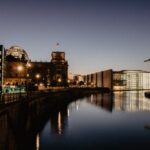
Next you visit the Reichstag Building and the government district area, with the Memorial to the Murdered Sinti and Roma noted as part of the broader government zone. The tour’s description emphasizes this transition out of the former eastern area into the political heart of modern Berlin.
Time is short here (around five minutes), so treat it as a guided look at the district’s significance. If you want to go deeper into the Reichstag itself, you’ll likely want an additional separate plan later.
After that, the tour includes Fuhrerbunker, described as now a parking area. This is one of those Berlin moments where history is both present and buried under ordinary modern life. Even with just a few minutes, the context helps you understand why the spot matters.
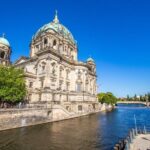
Finally, you reach Berliner Dom. You’ll see it with about 10 minutes of viewing time. Admission is listed as free for this tour segment, but again, the purpose is outside views and context rather than a full interior visit.
Price and Value: When $420.08 Makes Sense
The price is listed as $420.08 per group (with up to 2 stated in the pricing details). At the same time, the tour description allows up to 6 guests across as many as 3 rickshaws. The big idea is that this is private pricing, so the value depends heavily on how you share it.
Here’s how I’d think about it:
- If you’re traveling as a couple or small pair, you might pay more per person than a group bus tour, but you gain control, comfort, and less time wasted.
- If you can share with a small group, the per-person value often feels more reasonable because you’re spreading the guide and rickshaw cost.
- The tour’s strength is time efficiency. In just about 3 hours, you’re guided to dozens of major stops that would take a lot longer to piece together by transit.
Also note that the tour is commonly booked about 43 days in advance, which signals steady demand. If your dates are fixed, booking earlier is smart.
Should You Book This Private Rickshaw Tour?
Book it if you want to get your bearings fast and you like the idea of a driver doing the route work while you focus on landmarks. It’s especially good for first-timers, people who are short on time, and travelers who prefer history with clear explanations instead of trying to assemble it alone.
Skip it (or add a different plan) if you want deep museum time or long ticketed experiences in one day. This tour is built for short viewing windows and smart orientation—excellent for deciding what you want to revisit later.
FAQ
How long is the Berlin rickshaw tour?
It lasts about 3 hours (approx.).
Is this tour private?
Yes. It’s a private tour, and only your group participates.
Do you offer pickup, and where does the tour end?
Pickup is offered, and the tour ends in a different location. You can also end the tour back in your hotel, by a monument, restaurant, café, market, or near other starting points for a boat tour.
What language is the guide, and do I need paper tickets?
The tour is offered in English, and you’ll receive a mobile ticket.
Is WiFi included?
Yes. WiFi is included onboard.
Are entry tickets included for the sights?
The Berliner Fernsehturm admission ticket is not included. Other listed stops have admission tickets marked as free.
Can less mobile guests participate?
Yes. The tour notes that for less mobile guests, you enter the rickshaw in a few steps, and you can come close to monuments without stepping out of the rickshaw. Service animals are allowed too.