REVIEW · BERLIN
Nazi Berlin and the Jewish Community Tour
Book on GetYourGuide →Operated by Vive Berlin e.G · Bookable on GetYourGuide
Berlin forces hard questions, fast. This Nazi Berlin and the Jewish Community tour links Hitler’s rise in 1933 to the systems of persecution, then brings you to Jewish Berlin landmarks like the New Synagogue and the stories of resistance and rescue. I especially like how the guide work turns big, scary topics into clear, human-scale moments, with guides such as Silvio, Jean Charles, Céline, Vita, and Lorenzo praised for making the ideas understandable and the pace lively.
The main drawback is that it’s a heavy theme with a tight schedule, so you’ll want comfortable shoes and mental stamina. Expect some public-transport time and short guided stops, all packed into about 3 hours.
In This Review
- Key things to know before you go
- Why this tour’s focus feels both sharp and fair
- Starting with Hitler’s rise: 1933 as the turning point
- Gedenkstaette Deutscher Widerstand: resistance tied to Operation Valkyrie
- Anhalter Bahnhof: the wartime city seen through a transit lens
- New Synagogue Berlin and Jewish Berlin’s long timeline
- The heavy middle: Operation T4 and the Nazi plan for disability
- Varian Fry memorial: rescue work that saved thousands
- Passing the war-scarred city: surrender and what it looked like on the ground
- Otto Weidt Workshop for the Blind: moral courage under threat
- Price and value: $351 per group up to 6
- Languages, pacing, and what makes a great guide here
- Who should book this tour
- Should you book this tour?
- FAQ
- What’s the duration of the tour?
- How much does it cost?
- What public transport ticket do I need?
- What languages are offered for the live guide?
- Is pickup available?
- Is the tour wheelchair accessible?
- Can I cancel, and do I pay immediately?
Key things to know before you go
- Follow the chain of Nazi power: Hitler’s rise in 1933 through the machinery of persecution.
- Jewish Berlin landmarks with context: the New Synagogue area plus the oldest Jewish cemetery.
- Real resistance stories, not just slogans: the German Resistance Memorial and Operation Valkyrie connection.
- Rescue in the middle of terror: the Varian Fry escape network for thousands of Jews.
- A museum built around moral courage: the Otto Weidt Workshop for the Blind and the story of protection and hiding.
Why this tour’s focus feels both sharp and fair
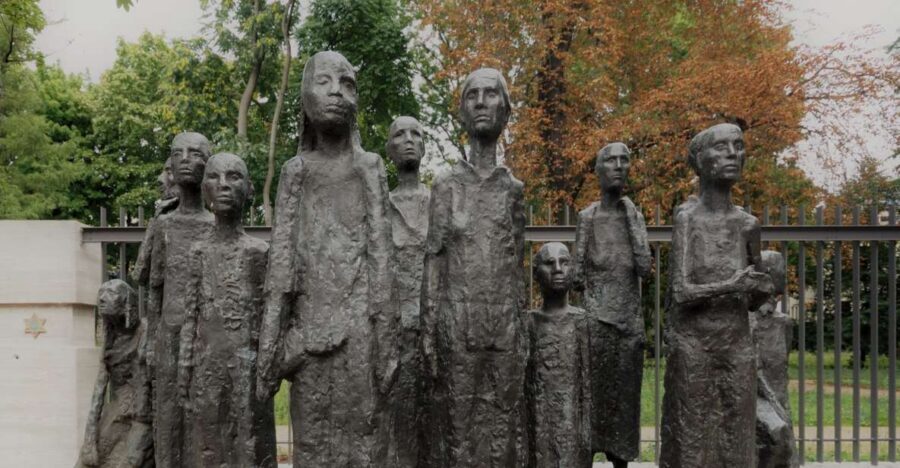
This is not a tour that tries to cover every Nazi site in Berlin. That’s a good thing. Instead, you get a guided story with a clear thread: how ideology became policy, how policy became operations, and how ordinary people responded—sometimes with resistance, sometimes with complicity, and often under impossible pressure.
I like that it balances three layers that are easy to separate in your head once the tour starts:
- How the Nazis gained and used power
- What that meant for Berlin’s Jewish community
- Who pushed back, including people acting at personal risk
It’s also fairly practical. You’re not stuck in one building for hours. You’ll move between key places, hear short guided explanations, and connect the dots across the city with public transport.
And because it’s led by live guides in several languages, you can follow the story without guessing. The experience is offered with French or Italian-speaking guides, and live interpretation is available in French, Italian, English, Spanish, and German.
You can also read our reviews of more tours and experiences in Berlin.



Starting with Hitler’s rise: 1933 as the turning point
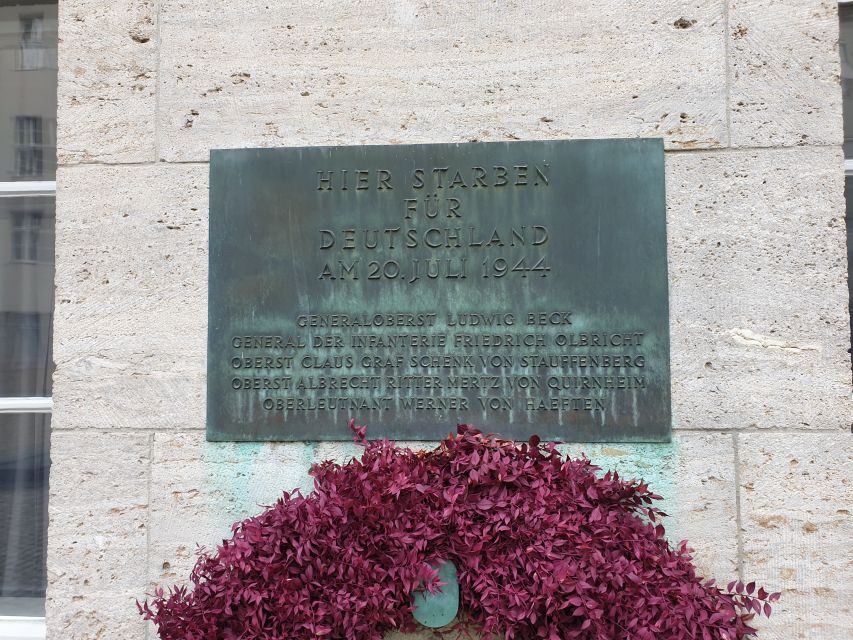
The tour begins with a guided orientation that sets up the big picture: how Hitler’s rise to power in 1933 wasn’t just one political event. It was a change in atmosphere, institutions, and permission—permission for violence and discrimination to become normal.
This matters because Berlin’s memorial landscape can otherwise feel like a series of separate sites. Here, you’re given the timeline and the mechanism first, so when you later see memorials and buildings tied to operations, you’ll understand what you’re looking at.
One practical note: the tone stays thoughtful and direct. Guides who have led this route (like Silvio and Jean Charles) are repeatedly praised for explaining concepts clearly and keeping the pace engaging even when the subject is difficult. You’ll still be walking and listening, so bring the attitude of steady attention, not casual sightseeing.
Gedenkstaette Deutscher Widerstand: resistance tied to Operation Valkyrie
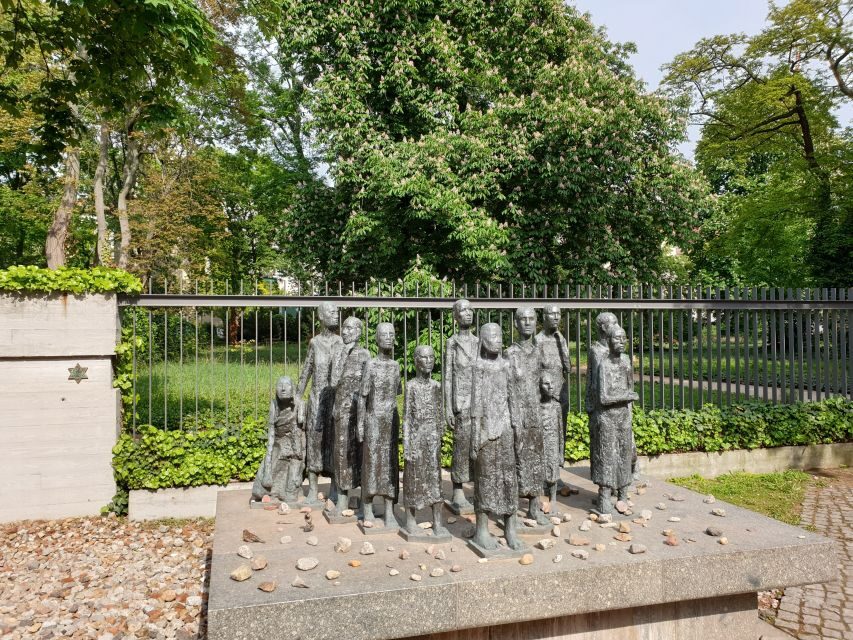
A major early stop is the German Resistance Memorial (Gedenkstaette Deutscher Widerstand). This is one of the places where Berlin’s history stops being abstract.
You’ll hear how Germans opposed Nazism and how resistance is remembered here. The site is connected to Operation Valkyrie, the plan directed from that location. The tour also frames this as more than a dramatic plot story. It’s also about who chose to fight back and why that choice mattered, even when it was doomed.
What you’ll likely feel at this point: resistance stops sounding like a movie and starts sounding like a chain of risky decisions. That’s the value of hearing it guided—especially since the tour later covers how Nazi planning worked at an administrative level.
Anhalter Bahnhof: the wartime city seen through a transit lens
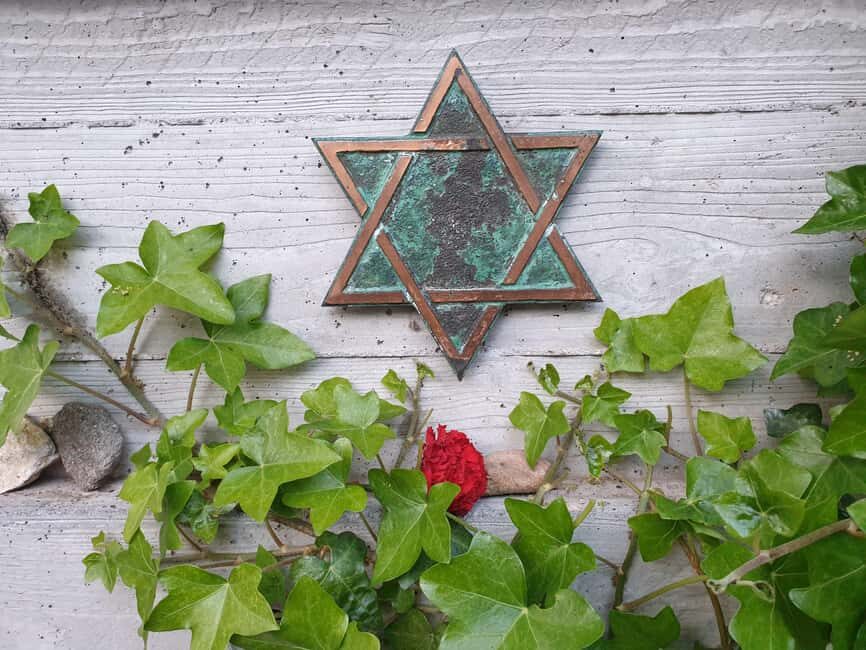
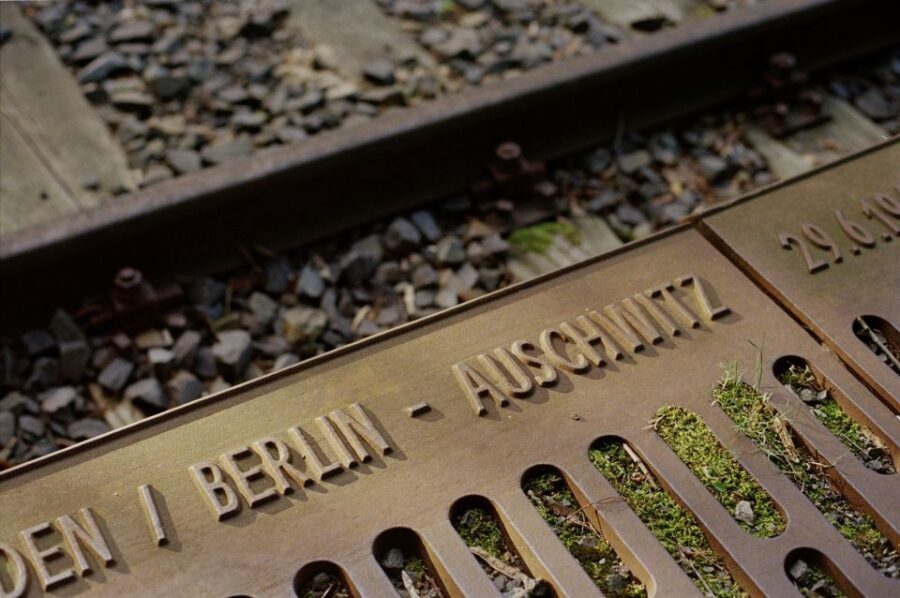
Next comes Anhalter Bahnhof, approached by bus/coach and train segments as you move across the city. The station area is a good place to absorb the wartime reality of Berlin: trains, routes, movement, and the logistics of occupation.
You get a short guided stop here, designed to help you connect the broader story of deportation and forced labor with the physical places where movement became policy. It’s also one of the moments where the tour’s design makes sense: it gives you a brief window to look, think, and then keep going rather than turning the whole day into one long museum marathon.
Also, the tour passes by remnants and ruins of World War II combat-scarred buildings during parts of the route. Even without lingering for hours, you see how the war literally shaped the city’s surface, and you revisit the end moments leading to Nazi Germany’s surrender in May 1945.
New Synagogue Berlin and Jewish Berlin’s long timeline
Then you step into the Jewish heart of Berlin’s historic district. The highlight at this stage is the New Synagogue Berlin – Jewish Centre, with its well-known golden dome.
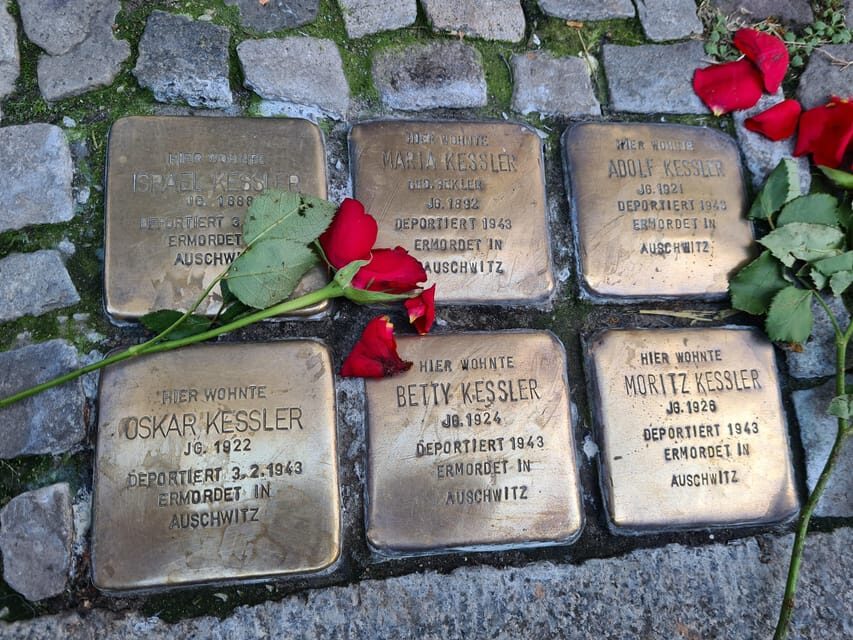
But the tour doesn’t treat the synagogue as a standalone monument. You’ll also learn about the long presence of Jewish life in Berlin before the Nazi takeover, and how quickly that long story was shattered after 1933. You’ll hear about mechanisms that drove Jewish suffering, including forced labor and deportations during World War II.
A key plus: the tour includes time around the oldest Jewish cemetery in Berlin. That changes your perspective. Cemeteries are not just about dates; they show continuity, community structure, and the weight of names. In a tour like this, it helps you stop seeing Jewish history only through the lens of catastrophe.
The guide experience is central here too. People have praised guides like Céline, Vita, and Lorenzo for keeping the explanations clear and the atmosphere respectful, which matters when you’re standing in a place that represents both memory and loss.



The heavy middle: Operation T4 and the Nazi plan for disability
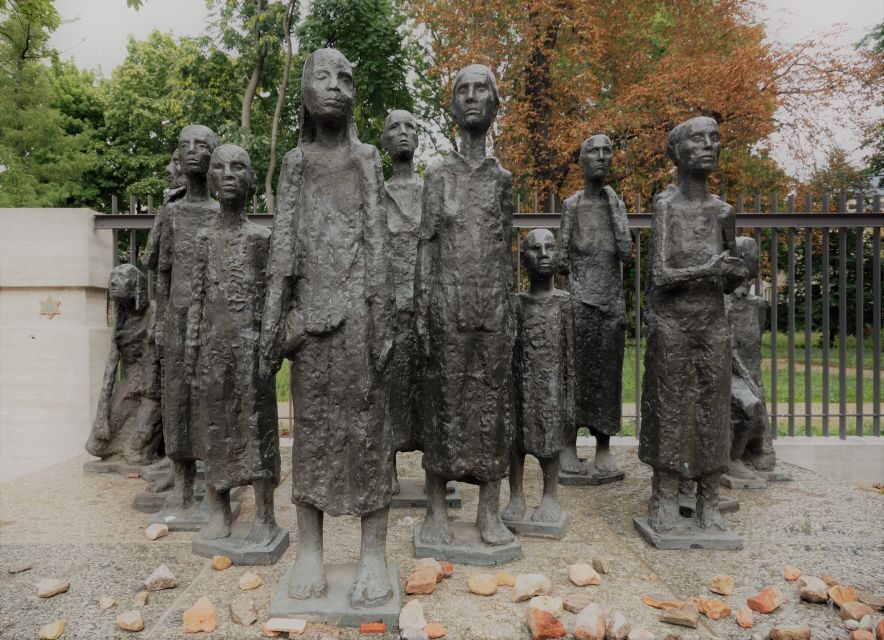
One of the most disturbing parts of this tour is the stop connected to the command center of Operation T4. The tour frames it as the SS planning extermination and sterilization of tens of thousands of disabled citizens.
Even if you’ve read about Nazi Germany before, a guided stop like this is hard to file away as “information.” The value is in how it ties ideology to bureaucracy—how violence was made systematic, staffed, planned, and carried out.
If you’re sensitive to grim subject matter, you’ll want to mentally prepare for this section. There’s no sugarcoating here, and the point is not shock for shock’s sake. The point is clarity: once you understand how Nazi policy worked inside a system, many other events in history start to make more sense.
Varian Fry memorial: rescue work that saved thousands
After grappling with Operation T4, the tour shifts—without changing the seriousness. You’ll visit a lesser-known memorial dedicated to American journalist Varian Fry, who orchestrated escapes for over 3,000 persecuted Jews from Nazi-occupied Europe.
This is where the tour becomes both tragic and hopeful in a way that doesn’t feel cheesy. You’ll hear about prominent people associated with the escape efforts, including painter Marc Chagall, philosopher Hannah Arendt, and writer Heinrich Mann.
What I like about including this: it refuses to let the story end at victimhood. Even inside a world designed to destroy people, there were networks of help, risk, and rapid decision-making. It’s also a strong reminder that resistance can look like paperwork, coordination, and escape logistics—not only guns and uniforms.
Passing the war-scarred city: surrender and what it looked like on the ground
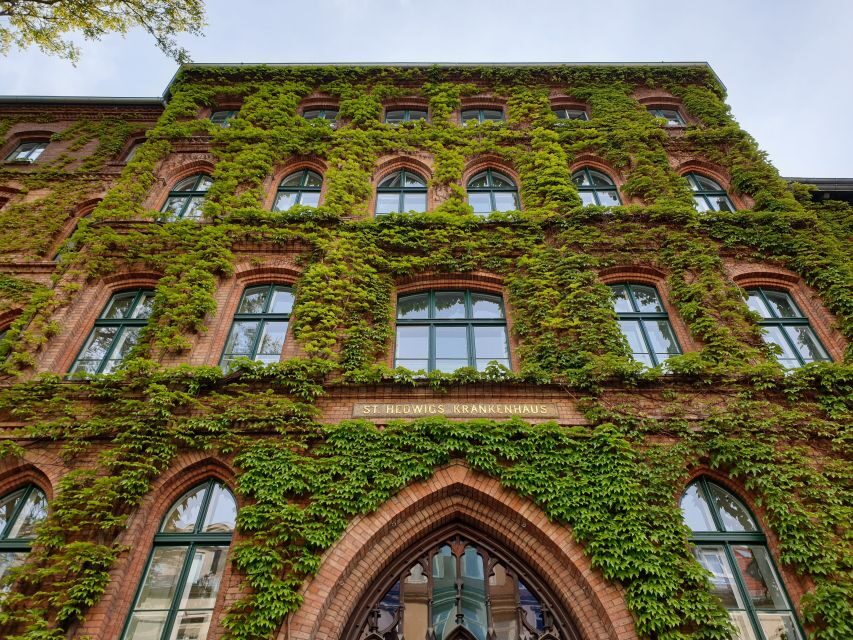
As the tour continues, you’ll pass by places connected to the final phase of the war. The route revisits the tragic moments leading to Nazi Germany’s surrender in May 1945, while you also see ruins that still show the scars of World War II combat.
This part is less about one “photo stop” and more about atmosphere. In Berlin, you can feel how the war still sits under the modern city. A guided explanation helps you read the street-level evidence: what was destroyed, why that destruction mattered, and how the city moved from occupation to collapse.
Otto Weidt Workshop for the Blind: moral courage under threat

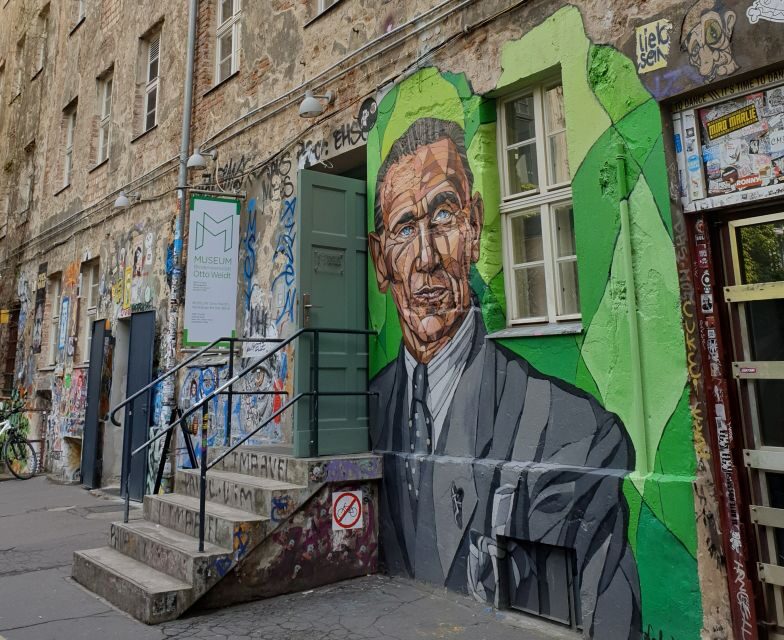
The last major stop is the Otto Weidt Workshop for the Blind. This museum section is built around the story of a Righteous Among the Nations and his efforts to protect Jewish workers from persecution and deportation.
You’ll learn how, as the threat grew, he found places for some of them to hide—on the premises of what is now the museum. That detail is powerful, because it turns the idea of help from a general concept into a specific set of choices made in real time.
This is the part of the tour that often sticks with people for weeks because it’s concrete. You can connect the “how” to the “why.” It’s not a vague moral lesson. It’s a story about action when the stakes were extreme.
If you care about authentic Berlin experiences, this museum lands well because it’s not just about what happened to victims. It also shows a small number of people who acted as protectors, knowing the risk.
Price and value: $351 per group up to 6
The price is $351 per group up to 6, for about 3 hours (210 minutes) with a live guide. For Berlin, that’s a solid value if you’re traveling with friends, because you’re effectively buying a focused, guided narrative that uses multiple transit segments and multiple guided stops.
Here’s how I’d think about it for your budget:
- If you’re going solo, group pricing can feel steep compared to per-person tours.
- If you’re a pair or small group, it becomes much easier to justify because the guide attention stays high and the itinerary stays tight.
- If you want a structured route through Jewish Berlin and Nazi-era memorial sites, the cost buys clarity—especially around major operations like Operation T4 and rescue networks like Varian Fry.
Also, the tour depends on having an AB all-day public transport ticket, so factor that into your total day planning. (That’s not a deal-breaker, just something to get right before you start moving.)
Languages, pacing, and what makes a great guide here
This tour’s topic doesn’t leave room for wandering. You need a guide who can explain ideology and operations clearly without turning it into a lecture that loses your attention. The review record attached to this experience points strongly in that direction: guides like Silvio, Jean Charles, Céline, Vita, and Lorenzo have been praised for being prepared, pedagogical, and genuinely engaging—some even making the experience enjoyable for younger adults.
Pacing-wise, you’re looking at short guided windows at several stops (roughly 10–20 minutes each), with some transit between. That’s ideal if you like “listen, walk, look, repeat.” It’s less ideal if you prefer long time at fewer sites.
Who should book this tour
This is a strong match if you:
- Want a guided story connecting Hitler’s rise, Nazi operations, and Jewish Berlin sites
- Care about resistance and rescue efforts like Operation Valkyrie and Varian Fry
- Like walking routes with short guided explanations rather than one slow museum day
It may not be the best fit if you:
- Want a lighter introduction to Berlin history
- Prefer long, silent time at memorials
- Have limited stamina for public transport segments and frequent stops
Should you book this tour?
If your goal is understanding—real understanding of how Nazi power spread and how Jewish communities were targeted—this tour is worth your time. You get a focused route that includes major memorial context and also brings in the rescue-minded stories of Varian Fry and the protective work at Otto Weidt’s museum.
Book it if you like structured history, clear guidance, and an itinerary that keeps moving with purpose. Skip it if you’re looking for a general sightseeing loop. Here, every stop has a job: to explain the why behind the heartbreak you’re looking at.
FAQ
What’s the duration of the tour?
It runs about 3 hours, listed as 210 minutes.
How much does it cost?
The price is $351 per group, up to 6 people.
What public transport ticket do I need?
You need an AB all-day public transport ticket for the tour.
What languages are offered for the live guide?
The tour provides a live guide in French, Italian, English, Spanish, and German.
Is pickup available?
Pickup is optional. If you choose it, you should wait in your hotel lobby about 10 minutes before the scheduled pickup time, and you’re asked to contact the provider ahead of time to coordinate details.
Is the tour wheelchair accessible?
Yes, the tour is listed as wheelchair accessible.
Can I cancel, and do I pay immediately?
There is free cancellation up to 24 hours in advance for a full refund, and you can reserve now and pay later.