A short rikscha ride can still feel like a full day in Munich. This private tour stitches together the city’s best-known squares and one major green escape—without turning it into a walking test. You’ll roll past big-ticket sights, pause for stories, and glide right into the English Garden.
I especially like the view-from-the-street perspective. On a regular foot tour, you’re mostly staring up at buildings; from the rikscha you get a steadier look at facades, courtyards, and how neighborhoods connect. Second, I love how the route balances landmark time with real breathing room, including stops built around the city center and the English Garden.
One consideration: this experience needs good weather. If it’s rainy or unpleasant, you may be offered a different date or a refund, and you’ll want to dress for the ride.
In This Review
- Key things to notice before you go
- Munich by rikscha: a smooth way to see more than you expect
- Stop 1: Marienplatz, with the Old Town’s power centers in view
- Stop 2: Max-Joseph-Platz and the Residence courtyards
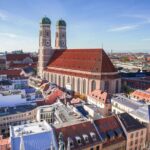
- Stop 3: Odeonsplatz, Feldherrenhalle, and Theatinerkirche views
- Stop 4: The English Garden, with tea house, Monopteros, and towers
- Why the 1-hour format actually works (and who it’s best for)
- The guide matters: friendly, adaptive, and fun with the details
- Price and value: what $118.96 per group really buys you
- Practical tips so you enjoy it more
- Should you book this Munich rikscha tour?
- FAQ
- How long is the rikscha tour?
- Where do we meet for the tour?
- Is this tour private?
- Is the tour available in English?
- Can I bring a service animal?
- Is alcohol allowed during the tour?
Key things to notice before you go
- Private group comfort: You won’t be mixed with strangers, and the pace works for families and slower walkers.
- 4 guided stops, built-in narrative time: Each area gets a focused introduction, then you move on.
- English Garden highlights in one hour: Japanese Tea House area, Monopteros, and the Chinese Tower are all part of the plan.
- City-center viewpoints from a rikscha: Marienplatz, Max-Joseph-Platz, and Odeonsplatz come into focus fast.
- Guide flexibility: A guide like Pablo can adjust timing if you want to catch a clock show at the right moment.
- Beer is an option for 18+: You can take a relaxed break during the ride if you’re of legal age.
Munich by rikscha: a smooth way to see more than you expect

If Munich feels spread out when you first arrive, this kind of tour is a smart fix. In about an hour, you’re not just checking boxes—you’re getting a quick “map in your head” for how the historic center flows into the English Garden.
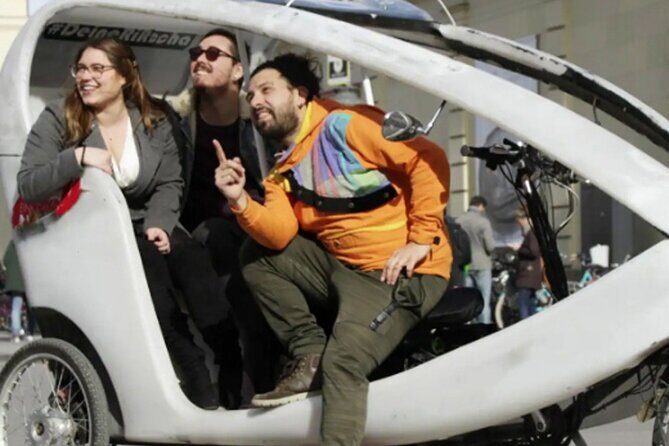
The rikscha setup is also a big part of why this works. Each rikscha can carry up to 2 adults and one minor, so small groups feel personal. And even if your group needs more than one rikscha, you stay together. That means you get variety in the ride while keeping the tour coordinated.
English is offered, and you’ll also get a mobile ticket. The meeting point is in central Munich at Burgstraße 2, 80331 München, and the tour ends back there—so you’re not stranded far from transit after your ride.
You can also read our reviews of more tours and experiences in Munich.
Stop 1: Marienplatz, with the Old Town’s power centers in view

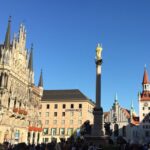
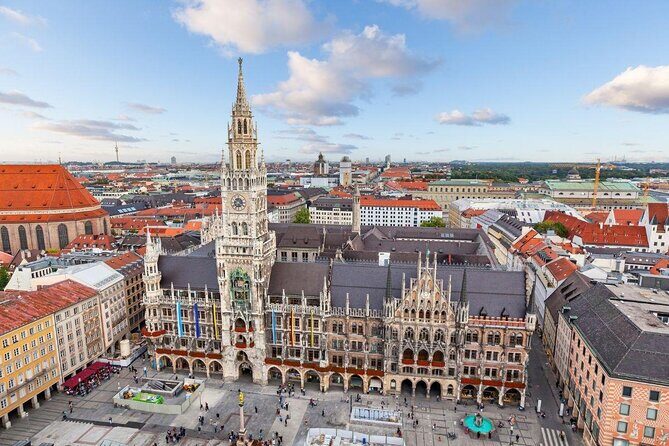
Marienplatz is the classic Munich starting point for a reason. It’s where you feel the city’s “official” heartbeat: civic buildings, iconic monuments, and churches close enough to be seen and discussed in a short window.
From this stop, you’ll see several major landmarks right from the rikscha ride:
- the Town Hall
- the Column of Mary (Mariensäule)
- the Church of San Pedro (often referred to as the Peterskirche)
- the Old Town Hall
What makes this stop work well is the timing. You’re given a short, focused chunk of time (about 15 minutes) to orient yourself. That’s useful because Marienplatz can be overwhelming if you just arrive on your own. Here, you get the quick context to understand why the square matters.
One tip if your schedule lines up: guides like Pablo have been known to steer the route so you can catch the 5 o’clock Glockenspiel moment. Even if you’re not chasing the show, this is a great area to watch how crowds move and to get a feel for the architecture without walking blocks.
Stop 2: Max-Joseph-Platz and the Residence courtyards
Next comes Max-Joseph-Platz, a shift from open square energy to royal-era Munich. This stop has a strong “how the city got its shape” story built into it—history tied directly to streets you can still walk today.
Here’s what you’ll focus on:
- the National Theater history
- the King of Bavaria Max-Joseph
- the shopping frontage along Maximilianstraße
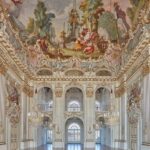
- entering and touring the inner courtyards of the Residence
The Residence courtyards are the kind of place where a short guided explanation changes everything. Courtyards can look like simple passageways, but with a bit of framing, you start noticing layout, scale, and the way power was staged. Plus, being inside (even just briefly) breaks the “all daylight, no shade” rhythm you can get in a city-center day.
This stop is also a good example of the tour’s pacing. You’re not stuck in one spot for a long time. You get enough time to absorb the key ideas, then you’re off—so the day stays light rather than exhausting.
Stop 3: Odeonsplatz, Feldherrenhalle, and Theatinerkirche views
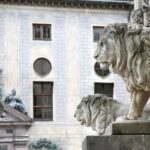
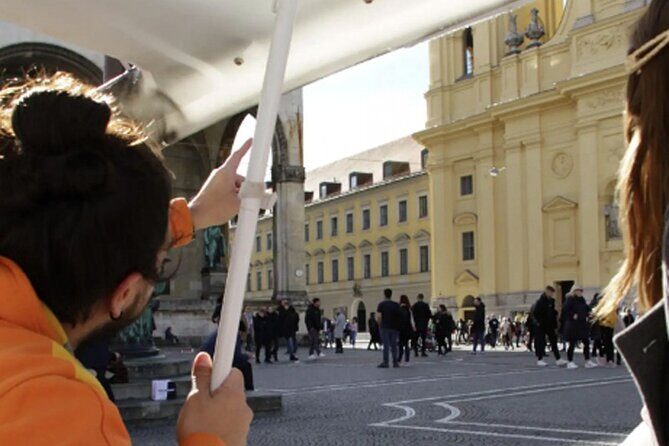
At Odeonsplatz, the tour shifts into a more somber thread of modern European history. The highlight here is a tour of the Feldherrenhalle, a site that connects you with the Second World War context.
This is the stop where I’d pay attention to the guide’s explanation most. Even if you know Munich basics, this is where the city’s story turns serious. The rikscha format helps here too: you’re not trying to squeeze yourself through thick crowds while processing information. You can look, listen, and keep your bearings.
You also get a classic church view from the area: the Church of Los Teatinos (commonly known as the Theatinerkirche). It’s a nice counterpoint to the weightier Feldherrenhalle content—architectural beauty with a different kind of story.
In about 15 minutes, you’ll have the emotional arc and the visual anchor. That short time is a benefit for most people. If you want a long, slow, museum-style experience, you’ll likely still do that on your own afterward—but for a one-hour tour, this stop is exactly the right scale.
Stop 4: The English Garden, with tea house, Monopteros, and towers
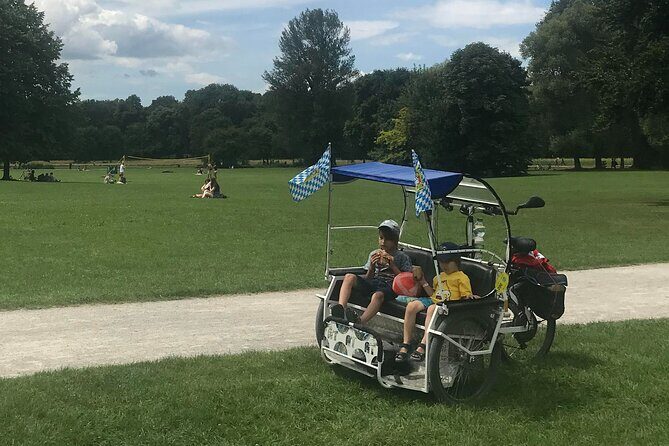
Then you hit the payoff zone: the English Garden. This is one of my favorite ways to experience Munich because it shows a side of the city that doesn’t fit the postcard stereotype.
From here, you can visit or view several signature areas:
- the Japanese Tea House area
- the Monopteros
- spots for surfers (the famous wave area along the water)
- the Chinese Tower
What I like about packing the English Garden into a short rikscha tour is that you don’t have to choose between “doing nothing” and “walking yourself into fatigue.” If you’re traveling with kids, older folks, or anyone who just doesn’t want to rack up big steps, the rikscha makes it possible to see multiple icons in a single outing.
The English Garden also changes the whole atmosphere of the day. You go from civic squares and theater streets to greenery and open space. Even with quick stops, the shift is noticeable.
The Chinese Tower and Monopteros areas are especially good for photographs because you can capture the setting without hunting for exact viewpoints. The surfer area adds a fun, modern twist—something that feels alive rather than purely historical.


Why the 1-hour format actually works (and who it’s best for)
One hour sounds short until you realize the design is built around efficiency. You get four story-rich stops, each about 15 minutes, and you’re always moving just enough to keep momentum.
This format is best for:
- First-time visitors who need quick orientation fast
- Families (the rikscha capacity and the ability to add a second rikscha help you stay together)
- People who don’t want long walks but still want real Munich landmarks
- Couples who want a private, scenic overview without committing to a half-day tour
It’s also a smart choice if you’re juggling other plans later. You’ll start centrally, see the historic highlights, then end right back at the meeting point—easy to pivot to dinner or a transit connection.
The guide matters: friendly, adaptive, and fun with the details
The tour lives or dies on the guide’s ability to connect sights to stories without making it feel like a lecture. In this experience, that tone tends to be relaxed and personable.
Guides like Pablo come up strongly in feedback: friendly communication before the tour, and the ability to adjust based on what you’ve already seen. That adaptability is a real value. If you arrive already familiar with a couple of landmarks, you don’t want the same script again—you want the route tuned to your day.
And the vibe is often described as fun, not stiff. There’s also the idea of a casual break if you’re 18+. Since alcohol is allowed only for 18+, you can take advantage of that in a responsible way—think relaxing with a beer during the pauses rather than turning it into a party.
Price and value: what $118.96 per group really buys you

The price is $118.96 per group (up to 2) for about one hour. On its face, that’s not the cheapest thing in Munich. But value here comes from the combination of privacy, transport, and the fact that your time is guided and timed.
Here’s how I’d think about it:
- You’re paying for a private experience rather than sitting in a large bus.
- You’re paying for transport between spaced sights, which is where many city tours quietly lose time.
- Your entrance fees at the stops listed are free, so you’re not paying extra just to access the planned views and areas.
- You get both historic center and English Garden in a single, coordinated loop.
If you’re traveling as two adults (or two adults plus a minor, within the rikscha capacity), the cost can feel reasonable because you’re essentially “buying back” fatigue. If you’re solo, you might compare it to other guided walks—but if you’re mobility-limited or you simply want less walking stress, the rikscha can make the price easier to justify.
Practical tips so you enjoy it more
A short tour is all about making the next 10 minutes worth it. A few practical things to keep in mind:
- Wear comfortable shoes anyway. Even though you’re on a rikscha, you’ll still step around at stops.
- Plan for weather. Since the experience requires good weather, bring a light layer and be ready to adjust if rain threatens.
- Be ready to look up. Munich’s charm is in details—church shapes, building lines, and courtyard edges.
- If you care about the Glockenspiel timing, mention it early. Guides can sometimes adjust the flow so you have a better shot at the show.
- If you want a beer break, stay within the 18+ rule. Alcohol is allowed for 18+ only, so plan accordingly.
Should you book this Munich rikscha tour?
I’d book this if you want a fast, friendly, private introduction to Munich that includes the English Garden without long walking. The biggest selling point is the balance: city-center landmarks for orientation, then a green reset that you can actually enjoy instead of rushing through.
Skip it if you’re looking for a deep, museum-style experience or you already have a very packed walking itinerary. This tour is about views, pacing, and context, not extended indoor time.
If you’re traveling with kids, anyone with limited mobility, or you just want to see more with less effort, this is a strong pick. It’s the kind of one-hour plan that leaves you smiling, not counting blisters.
FAQ
How long is the rikscha tour?
It lasts about 1 hour.
Where do we meet for the tour?
The meeting point is Burgstraße 2, 80331 München, Germany, and the tour ends back at the same place.
Is this tour private?
Yes. It’s a private tour/activity, and only your group participates.
Is the tour available in English?
Yes, the tour is offered in English.
Can I bring a service animal?
Yes, service animals are allowed.
Is alcohol allowed during the tour?
Alcoholic beverages are allowed only for people age 18+.