REVIEW · CHEMNITZ
Kaßberg – die schönste Seite von Chemnitz
Book on GetYourGuide →Operated by richter-saxony · Bookable on GetYourGuide
Chemnitz has a gorgeous street-bath of history. On this 90-minute guided walk through Kaßberg, you get streets where Art Nouveau and Wilhelminian facades are still the main event, plus a local guide who stitches in anecdotes and legends that make the past feel human instead of textbook. And yes, it’s built for the whole family, not just architecture nerds.
I liked that this tour doesn’t rush past details. You can really see how the neighborhood grew from an 1850s dare into a planned residential zone, then into a district shaped by industry, courts, schools, and even imprisonment. One thing to consider: the guide’s style can be a mix of humor and broader commentary, so if you want strictly focused, nonstop architecture background, you may wish you could steer the conversation a bit more.
In This Review
- Key things I’d circle before you go
- Walking the Kaßberg in 90 Minutes
- What makes Kaßberg one of Europe’s best street-level architecture walks
- The 1855 dare: how one house story set the neighborhood in motion
- The street grid that respects the hill (and why it’s fun to spot)
- Facades you’ll actually notice: details that reward slow looking
- The edges of Kaßberg: where industry and civic power show up
- The mood shift: Kaßberg Prison Memorial and the GDR/National Socialism layer
- Guide style: anecdotes, humor, and the right mix of past and present
- Price and value: what $23 gets you for 90 minutes
- Family-friendly, but still worth it if you’re traveling solo
- What to bring and how to get more out of the walk
- Who should book the Kaßberg tour
- Should you book this Kaßberg tour?
- FAQ
- How long is the Kaßberg guided tour?
- How much does the tour cost?
- What is included in the ticket?
- What language is the live guide?
- Is the tour family-friendly?
- What architectural styles will I see?
- Where is the Kaßberg located?
- Does the tour include the Kaßberg Prison Memorial?
- Is there free cancellation?
Key things I’d circle before you go
- One of Europe’s largest contiguous Art Nouveau and Wilhelminian districts: not just a few standout buildings, but whole streets.
- Decorative facades across an entire street grid: you’ll spend real time looking up.
- A planned street network that follows the slope: streets laid parallel or at right angles to the hill.
- Green squares for breaks and orientation: Kaiserplatz, Stephanplatz, Wielandplatz, and Andréplatz.
- A heavier stop at the Kaßberg Prison Memorial: linked to National Socialism and the GDR era, including a former Stasi Abschiebegefängnis stop noted on the route.
Walking the Kaßberg in 90 Minutes
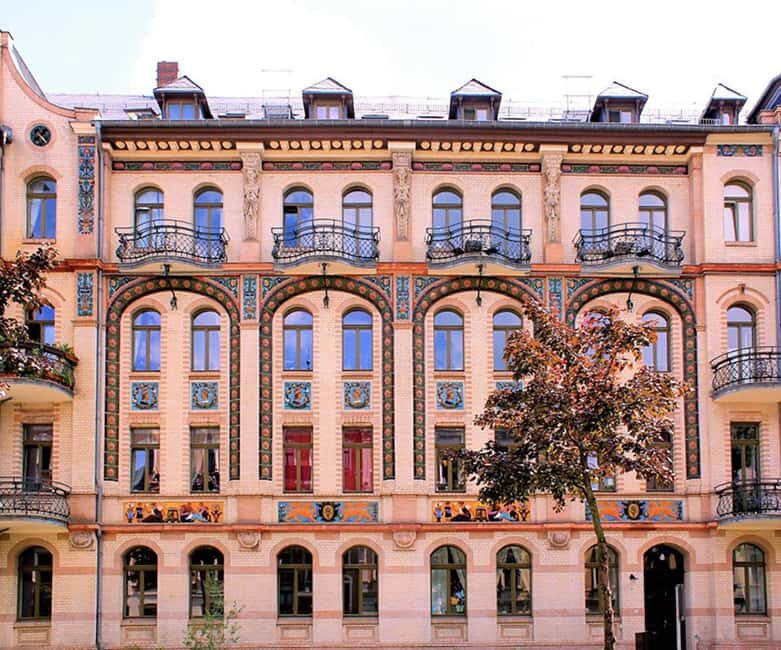
A 90-minute district walk has a sweet spot: long enough to see patterns, short enough that you’re not stuck after a few blocks. The Kaßberg itself covers roughly two square kilometers, so you’re not touring a single monument—you’re walking a whole “area monument” with about 480 buildings, mostly multi-storey residences, plus civic and school buildings.
What you’ll feel on the street is the contrast between Chemnitz’s industrial rise and the decision to keep some neighborhoods cleaner and quieter. As Chemnitz industrialized, the heights of the mountain were viewed as a better place to live because air quality was less polluted than in other parts of the city. That simple idea shaped where people wanted to live—and the architecture followed.
Practical note: wear comfortable shoes. This is a walking experience, and a lot of the “wow” comes from reading details on facades as you move.
You can also read our reviews of more tours and experiences in Chemnitz.



What makes Kaßberg one of Europe’s best street-level architecture walks
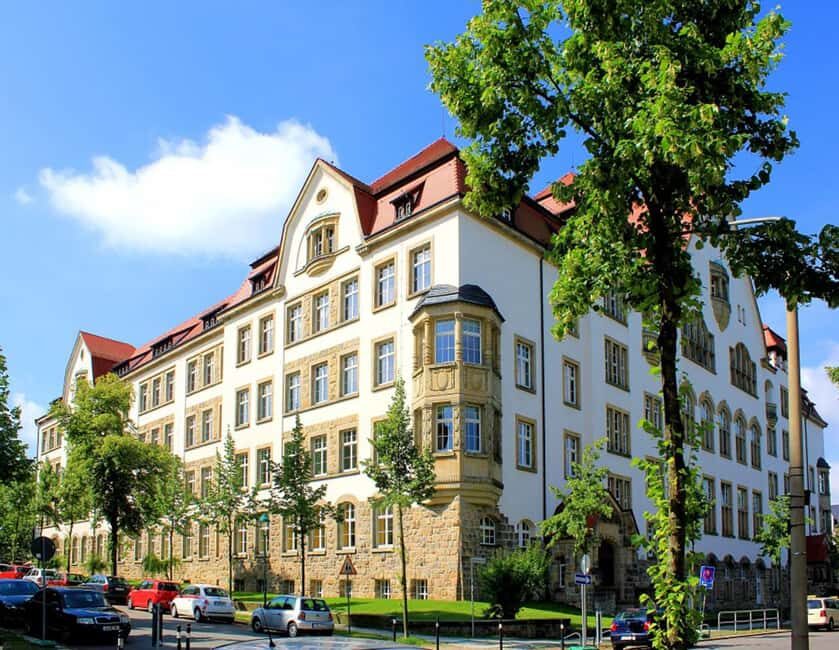
The big selling point is the sheer continuity. This isn’t a neighborhood where you spot one pretty corner and then move on. It’s described as one of the largest contiguous Art Nouveau and Wilhelminian-style districts in Europe, which matters because you get a consistent visual language across streets.
When a tour like this works, you start seeing how style changes by function. Residences emphasize decorative facades and repeating details. Civic buildings lean more formal, with the weight of authority and public purpose. Schools and administrative structures bring their own rhythm—often more symmetrical and solid-looking than private homes.
And because Kaßberg is still a popular residential area, the vibe stays grounded. You’re not looking at a fake historical set. You’re walking through a neighborhood where people actually live, which keeps the architecture from feeling like a museum display.
The 1855 dare: how one house story set the neighborhood in motion
Before the district became widely built up (most development happened between 1870 and 1930), it started with a bold individual move. The Kaßberg legend begins with Johann Friedrich Stahlknecht, a Chemnitz teacher, who built the first house there in 1855 on property bordering what was later named Hohe Straße.
Here’s the part I’d remember when you’re out walking: his house carried a fourfold inscription “I dared.” That phrase wasn’t just bragging—it was a statement about stepping into less-developed territory at a time when others would have waited. Stahlknecht then promoted the idea through articles in a Chemnitz daily newspaper, pulling in new builders by explaining the advantages of the area.
On the tour, this kind of story is useful because it changes how you read the neighborhood. Instead of thinking of Kaßberg as only old buildings, you start seeing it as an argument people made to each other: the hill is healthier, this is the future, and living here is a choice.
The street grid that respects the hill (and why it’s fun to spot)
One of the most practical things you’ll learn is that the Kaßberg street layout wasn’t random. The area is known for an orthogonal network—streets laid parallel or at right angles to the slope—so the grid adapts to the topography rather than ignoring it.
That means as you walk, you can often predict how a street will align relative to the hill. It’s the kind of detail that makes a neighborhood feel designed, not just filled in. You’re not merely passing between buildings; you’re reading planning logic.
Also, the walk isn’t just buildings. The green spaces—Kaiserplatz, Stephanplatz, Wielandplatz, and Andréplatz—were inserted into the street network. Think of them as your natural wayfinding checkpoints and breathing points. Even if the stops are brief, these squares give you a mental reset: you can look across facades and reorient before continuing.
If you like street photography or just enjoy architectural repetition, this section is where you’ll feel “it clicks.”
Facades you’ll actually notice: details that reward slow looking
The Kaßberg is famous for decorative facades with careful attention to detail, and that detail is why the tour lasts 90 minutes. Instead of speed-walking, you’re encouraged to look up and compare.
In practical terms, you’ll want to spend extra seconds on:
- the way doorways and window bays are framed
- how ornamentation changes between buildings
- how the streets “stay consistent” even as individual houses differ
Art Nouveau and Wilhelminian architecture often get described in big labels. On the street, those labels become visible in small choices—corners, reliefs, and façade rhythm. The best moment is when the guide’s story gives you a reason for why those choices were made. That’s when the neighborhood turns from pretty to meaningful.
The edges of Kaßberg: where industry and civic power show up
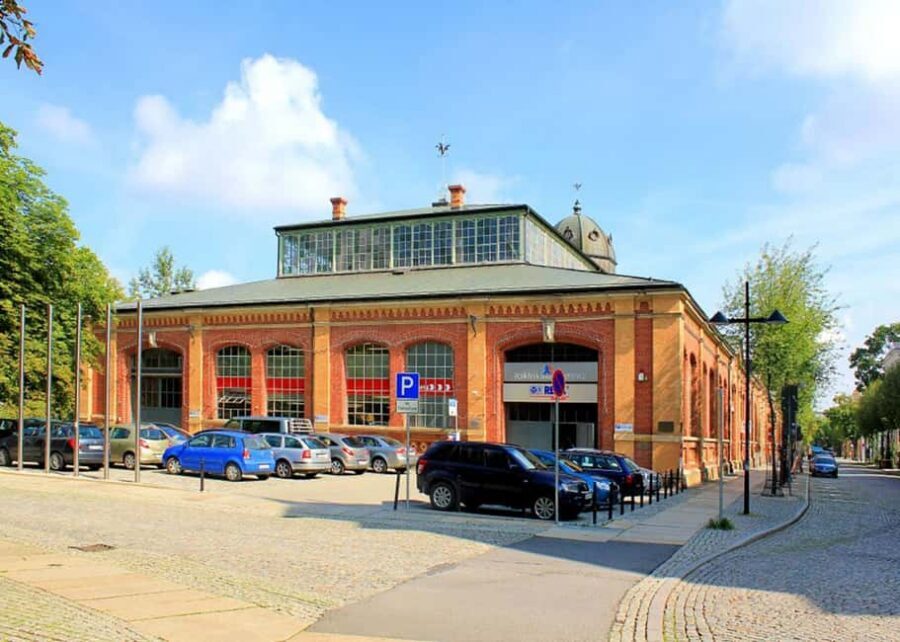
The Kaßberg wasn’t isolated from Chemnitz’s industrial energy. Companies operated along its edges, shaping the city’s economy and the jobs available to people who lived there. As you walk, you’ll encounter a built reminder that the neighborhood’s comfortable heights didn’t mean it was disconnected from production.
The names you can expect to hear include:
- Sächsische Maschinenfabrik, formerly Richard Hartmann
- Maschinenfabriken Germania, formerly J. S. Schwalbe & Sohn
- Union and C. G. Haubold
- Baum safe factory
- Presto-Werke
- the textile factory Goeritz et al.
Even if you don’t memorize every former company name, what matters is the contrast: residential streets with ornate façades, but with industrial players close enough to influence city life. That blend is a big part of why Chemnitz feels historically honest in areas like Kaßberg—industrial cities don’t hide their work behind touristic walls.
And then there’s the other “edge energy”: civic buildings. The city administration built major structures here such as a Royal District and Regional Court, Royal Tax Authority, Imperial Post Office, Royal Prison, Royal Gymnasium, and a Higher Secondary School. If you’re the type who likes architecture as a clue to power systems, this is a great section. Institutions don’t just fill space—they broadcast who runs society and how everyday life was organized.
The mood shift: Kaßberg Prison Memorial and the GDR/National Socialism layer
The Kaßberg Prison Memorial is a key reason the tour gains depth. It commemorates the ransom of prisoners in the GDR and also connects to the time of National Socialism.
This is also where one of the strongest route notes comes in: people on the walk singled out the former Stasi Abschiebegefängnis as especially interesting. That matters because it turns a neighborhood tour into a more complete city story—architecture plus the human consequences that unfolded in the same place.
If you’re worried this will feel grim and heavy, you won’t be alone in that instinct. But handled well (and the tour style seems built around storytelling, not lecture overload), this stop adds context you’d miss if you only focused on building facades.
Bring your expectations accordingly:
- enjoy the street architecture
- accept that you’ll also hear about real suffering and state control
A good tour balances tone, and that’s the value here. You leave with more than pretty pictures—you understand why this district is remembered.
Guide style: anecdotes, humor, and the right mix of past and present
From what you’ll likely experience, the guiding style can be a big part of the value. One person described the history as well-grounded, with current references that made the city feel relevant. Another emphasized dry humor and laughter, which helps on a 90-minute walking tour.
That said, style is personal. One review noted the Gründerzeit background could have been stronger, and they felt some forays into current federal politics were not the right fit for the tour. You can treat that as a simple takeaway: this is primarily a Kaßberg district and architectural story, but the guide may add modern commentary. If you’re detail-hungry, be ready to ask a focused question during the walk—guides often adjust on the fly when someone shows interest.
If you prefer purely structured lectures with zero tangents, you might want to set that expectation going in. If you like conversation and a guide who reads the room, this kind of tour can feel easy.
Price and value: what $23 gets you for 90 minutes
At $23 per person for a 90-minute guided tour, the cost can feel like a small price—or a big one—depending on what you compare it to.
Here’s why it can be good value:
- You’re walking an entire architecturally significant district, not just visiting one building.
- The Kaßberg’s scale (about 480 protected buildings) means a guide helps you see patterns fast.
- A local guide can connect facts to street-level details: the 1855 Stahlknecht dare, the planned street grid, and the civic buildings that shaped daily life.
If you’re the type who can do the basics alone and you’re comfortable reading façades without help, you could self-tour. But if you want the stories and the meaning behind the ornamentation and institutions, paying for the guidance saves you time and gives you a better “read” of what you’re seeing.
Also, you get a live German guide, which is useful if you actually want the local language context rather than a quick audio app skim.
Family-friendly, but still worth it if you’re traveling solo
The tour is described as culture for the whole family, which makes sense for two reasons. First, Kaßberg is visually easy to enjoy: facades are interesting at any age. Second, the story structure is approachable—origin tale, neighborhood planning, civic life, then the more serious memorial stop.
If you’re traveling alone, you’ll still get a clear rhythm. A district walk naturally gives you breaks at squares and turns, so it doesn’t feel like a long indoor slog.
If you’re traveling with kids, the key is to keep it moving and focus on the most readable clues: decorative details, the street grid logic, and the green squares as landmarks.
What to bring and how to get more out of the walk
For this kind of architecture tour, a few small choices make a big difference.
- Bring a camera or at least a phone ready for close-ups of facades.
- Wear shoes that handle pavement and walking time.
- Have one question ready, like why the street grid was laid to match the slope.
And keep an eye out for the story anchor: Stahlknecht’s daring inscription “I dared.” Even if you don’t spot anything on the first pass, it’s a great mental thread—ask your guide how it ties into the early development idea.
Who should book the Kaßberg tour
This tour is a strong fit if you:
- love street-level architecture and want to see patterns across whole blocks
- enjoy guided storytelling and local legends, not just dates
- want a balanced city snapshot: residential beauty plus memorial context
- like practical city details, including real-world hints such as rent context that came up on the route (cold rent levels around 5–7€ per square meter were mentioned as surprising for some visitors)
It’s less ideal if you want:
- only a narrow focus on architecture with zero broader commentary
- a highly detailed, classroom-style Gründerzeit lecture throughout
Should you book this Kaßberg tour?
If you’re choosing between wandering alone and getting a local guide, I think this one is worth it. Kaßberg is big enough and consistent enough that a guide helps you notice what makes it special, from the 1855 dare to the planned grid and green squares, and then onward to the Kaßberg Prison Memorial layer that brings the city story into sharper focus.
Book it if you want an experience you can’t fully reproduce with a generic map pin. Skip it only if you’re certain you’ll be frustrated by a guide who may mix in humor and broader context during the walk.
FAQ
How long is the Kaßberg guided tour?
The tour lasts 90 minutes.
How much does the tour cost?
The price listed is $23 per person.
What is included in the ticket?
You get a guided tour on the Kaßberg.
What language is the live guide?
The live tour guide speaks German.
Is the tour family-friendly?
It’s described as a cultural experience for the whole family.
What architectural styles will I see?
The Kaßberg is known for Art Nouveau and Wilhelminian style buildings, with decorative facades across the district.
Where is the Kaßberg located?
It’s in Chemnitz, Germany (Northern Germany).
Does the tour include the Kaßberg Prison Memorial?
The Kaßberg Prison Memorial is part of the district’s key historic context, and the former Stasi Abschiebegefängnis was noted as being on the route.
Is there free cancellation?
Yes, free cancellation is offered up to 24 hours in advance for a full refund.