REVIEW · DORTMUND
Dortmund Soccer Segway Tour
Book on GetYourGuide →Operated by sanfte-touren.de · Bookable on GetYourGuide
Segways plus football stories make a great pairing. You’ll cruise past Signal Iduna Park and Rote Erde Stadium while hearing narrated history that traces the club’s roots back to 1909, plus city stops that add texture to the matchday legend.
I especially like how the tour blends action and context: you get hands-on Segway coaching after a safety briefing, then you’re listening through a headset so the guide’s stories stay clear as you roll. The main drawback is practical: this is a German-only tour, and it’s time-limited to two hours, so you’ll move between key points rather than linger long at any one site.
In This Review
- Quick hits
- Why Dortmund’s Football Tour Works So Well on Segway
- Getting Oriented: Meeting Point, Gear, and Your First Minutes
- From the U Through Westpark to Sonnenstraße: The Warm-Up Segment
- Southwest Cemetery and Franz Jacobi: When Football History Gets Personal
- Strobelallee to the Stadiums: Riding Between Modern Icons
- The Goldsaal Stop: A Layer Beyond the Pitch
- North to Borsigplatz and the Trinity Church: Where the Story Turns
- Guides Matter: Hearing It From Locals Like Daniel, Wolfgang, and Stefan
- Price and Value: What $93 Buys in Two Hours
- Who This Tour Suits Best (And Who Should Skip It)
- Should You Book the Dortmund Soccer Segway Tour?
- FAQ
- How long is the Dortmund Soccer Segway Tour?
- What is included with the Segway tour?
- Where do we meet for the tour?
- What language is the tour guide?
- Do I need to have ridden a Segway before?
- What are the age and weight requirements?
- What should I bring?
- Can I cancel and get a refund?
Quick hits
- Helmet + headset setup so you can focus on riding and listening at the same time
- Small group (max 8), which makes the route feel controlled and the coaching more personal
- Big-name Dortmund stadium stops plus less-famous landmarks that fill in the why
- Audio storytelling tied to football history reaching back to 1909
- Route includes cemeteries and churches, which sounds odd until you learn why they matter
- Beginner-friendly guidance with help on trickier sections of the path
Why Dortmund’s Football Tour Works So Well on Segway
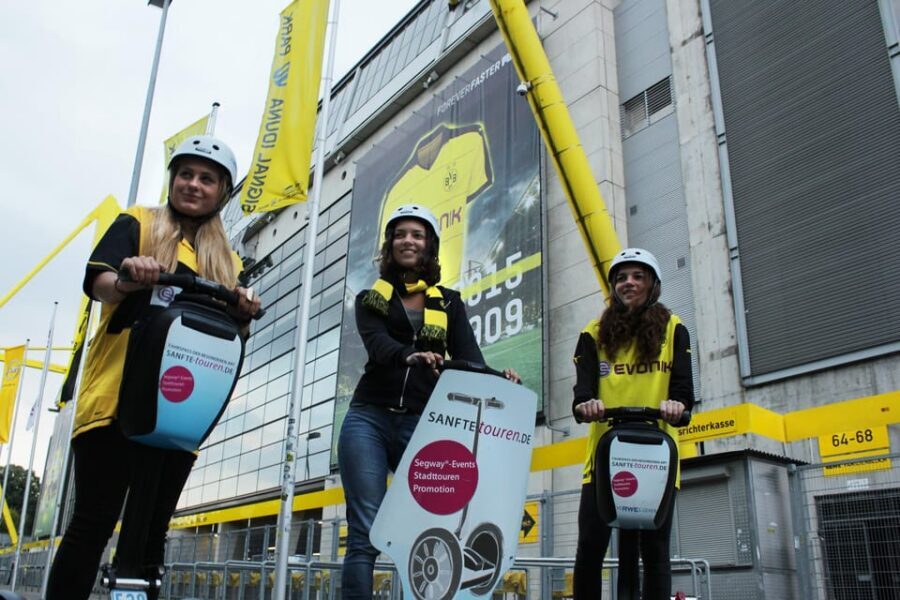
This tour is built for people who want more than a photo stop. Yes, you’ll see Dortmund’s stadium powerhouses, but the real value is the way the guide connects place to story—so the city starts making sense as you glide along.
A Segway changes the feel immediately. You cover real distances without feeling like you’re sprinting. And when you’re hearing history through a receiver, you’re not constantly fumbling with maps or translating signage. It’s a smooth rhythm: ride, listen, pause, look around, then roll on.
The other thing I like: this tour isn’t only about stadium walls. You also visit the Goldsaal and places like Borsigplatz and the Trinity Church. That mix keeps it from feeling like you’re doing the same loop of gates and corners.
And if you’re new to Segways, good instruction matters. Past riders have specifically praised how the training makes it doable even on day one.
You can also read our reviews of more tours and experiences in Dortmund.


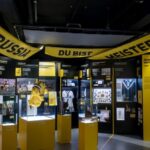
Getting Oriented: Meeting Point, Gear, and Your First Minutes
You meet at Im Defdahl 12, 44141 Dortmund. From there, it’s straight into the practical stuff: a safety briefing first, then you put on a helmet and safety vest and get your audio receiver.
That order is smart. The tour is short—2 hours—so you want the riding basics handled early, not halfway through. Once you’re set, you start with your local guide at the U and begin moving through the city right away.
Comfort counts. Bring comfortable shoes. Segways are stable, but you still need to stand, step off briefly, and handle small turns and stops. Closed footwear also helps when paths aren’t perfectly smooth.
One more detail that’s worth knowing up front: there’s a weight range requirement (45 to 118 kg / 99 to 260 lb) and a minimum age of 14. If you’re close to the limits, check before you commit.
From the U Through Westpark to Sonnenstraße: The Warm-Up Segment
The early part of the ride is a kind of warm-up both for your legs and for your attention. You start at the U, cross the Westpark, and head toward Sonnenstraße via Lindemannstraße.
Along the way, you’ll reach Restaurant Zur Sonne. This stop is more than a scenic pause. It’s tied to the foundation of the fan and promotion department, which is the kind of behind-the-scenes detail that makes football culture feel human. Instead of only thinking about teams as brands, you learn how fans organized and promoted the club’s spirit.
Why this opening works: it eases you into the motion before the stadium stops. And it also sets the theme—football history isn’t just trophies. It’s buildings, committees, and everyday people.
Southwest Cemetery and Franz Jacobi: When Football History Gets Personal
Next comes the Southwest Cemetery. Here, the guide points you to the final resting place of founder Franz Jacobi, noted as being there since 2013.
This is one of those moments where you might wonder how a cemetery fits a soccer tour. But it makes sense in context: when a tour traces the origins back to 1909, it can’t skip the founders and the legacy. Seeing this site in person gives the story weight. You’re not just hearing dates—you’re standing near where the story sits physically in the city.
It also changes the pace. For a short while, the Segway feels like a tool for access, not a thrill ride. You slow down, listen, and let the history land.
The only consideration: if you’re not comfortable around solemn places, treat this as a reflective stop rather than a sightseeing break. It’s brief, but it has meaning.
Strobelallee to the Stadiums: Riding Between Modern Icons
After the cemetery, the route continues via Strobelallee to the stadium area. This is where your eyes start doing that fan thing: scanning for recognizable shapes and entrances, even if you’ve never been to Dortmund before.
You’ll visit Signal Iduna Park and Rote Erde Stadium. The contrast between them is useful. Even without going into deep technical details, the tour structure helps you compare Dortmund’s matchday identity across different stadium eras and styles.
Why I like this middle stretch: you’re not just arriving at stadiums and leaving. You’re traveling through the city fabric that connects them. On a Segway, you feel the spacing—how these sites sit within Dortmund’s everyday life.
A practical tip for you: don’t expect every stop to be equally long. This is built as a loop in two hours, so you’ll see a lot, and each stadium stop is designed to give you the story and the photo angles without turning it into a half-day commitment.




The Goldsaal Stop: A Layer Beyond the Pitch
The tour also includes a stop at the Goldsaal. Even if you’re not sure what that means going in, it’s a strong choice for a football-focused route.
Stadiums tell one part of the story: the public, the noise, the match day. Places like the Goldsaal add the other part: how clubs and institutions hold meetings, ceremonies, and decisions. It’s where organizational life lives—where the club isn’t only playing, it’s building.
This stop also breaks up the loop visually. After stadium exteriors, it’s a change of pace: more attention on detail and explanation. You’ll get audio narration while you look around, so you’re not guessing what you’re seeing.
North to Borsigplatz and the Trinity Church: Where the Story Turns
Toward the end, you ride northwards to Borsigplatz, described as the founding place of the Dortmunder Soccer Club, plus a stop at the Trinity Church.
This is another one of those spots that makes the whole tour feel bigger than sports. You’re learning about origins, then seeing how the neighborhood’s landmarks sit around that origin story. The Trinity Church stop adds a community layer—showing how clubs grew in the same world as churches, squares, and daily life.
The best part about ending here: Borsigplatz gives you a sense of starting points. If the earlier stops made the history feel like a timeline, this finish helps you feel how that timeline began in place.
Guides Matter: Hearing It From Locals Like Daniel, Wolfgang, and Stefan
The tour lives or dies on the guide, and here it’s strong. Names that have shown up in confirmed experiences include Daniel, Wolfgang, and Stefan—and riders have praised the same core things: enthusiasm, competence, friendliness, and helpful coaching.
What I’d take from that if you’re choosing this tour: look for a guide who makes the story feel like it’s happening in real Dortmund streets, not like it’s being read from a script. The audio system helps, but a good guide still changes how you interpret what you see.
Also, past riders have specifically mentioned that instruction works well for first-timers and that the guide helps when the route has more challenging stretches. That matters because Segway confidence is built quickly when someone corrects small things early.
Price and Value: What $93 Buys in Two Hours
At $93 per person for a 2-hour tour, you’re paying for three things: a licensed local guide, the Segway experience, and the storytelling package delivered through a headset.
Is it cheap? No. But it’s also not just an attraction ticket. The helmets and headsets are included, and the guide’s narration is built into the ride. That means your time is doing two jobs at once: you’re moving around efficiently and learning as you go.
For me, the value angle is this: you’d spend a lot more time and effort cobbling together stadium visits, then trying to piece together the football origins yourself. Here, the route is designed to connect those dots quickly.
If you only want one stadium photo and you’re fine reading on your own, you might feel you’re paying for the guide’s structure. If you like guided interpretation and don’t want to plan a loop, this price starts to make sense fast.
Who This Tour Suits Best (And Who Should Skip It)
This works best for you if:
- You like football and want more than a surface-level stadium tour
- You enjoy guided city stories tied to specific places
- You’re comfortable with a short, efficient schedule and moving between stops
- You’ve never ridden a Segway and want structured instruction
It might not be ideal if:
- You need a tour in a language other than German
- You’re traveling with someone under 14 or outside the 45–118 kg weight range
- You prefer long stays at sites instead of a loop that covers multiple landmarks in limited time
For first-time riders, the setup helps a lot: safety briefing, helmet, vest, and headsets. And the small group size—8 participants max—usually means there’s room for the guide to keep an eye on everyone.
Should You Book the Dortmund Soccer Segway Tour?
Book it if you want a story-driven football walk that moves. This tour is at its best when you care about origins (1909), founders like Franz Jacobi, and the way clubs connect to real city landmarks like Borsigplatz and the Trinity Church.
I’d skip it if you’re only chasing stadium exteriors and you don’t care about the city context. With two hours, you won’t get the slow, museum-style pace. It’s more like: learn the story, see the sites, and ride out with a clearer picture of Dortmund.
If you’re on the fence and you match the basic requirements (age and weight, comfortable shoes, German language is okay), this is the kind of tour that feels efficient in the best way: you trade planning effort for a guided loop that actually makes the places click.
FAQ
How long is the Dortmund Soccer Segway Tour?
The tour lasts 2 hours.
What is included with the Segway tour?
You’ll receive a helmet and headsets to hear the guide clearly.
Where do we meet for the tour?
The meeting point is Im Defdahl 12, 44141 Dortmund.
What language is the tour guide?
The live tour guide speaks German.
Do I need to have ridden a Segway before?
No prior Segway experience is required in the information provided, and there’s a safety briefing and instruction before you start riding.
What are the age and weight requirements?
Participants must be at least 14 years old, and they must weigh between 45 and 118 kg (99 and 260 lb).
What should I bring?
Bring comfortable shoes.
Can I cancel and get a refund?
Yes, there is free cancellation up to 24 hours in advance for a full refund.