REVIEW · CHEMNITZ
Chemnitz city tour
Book on GetYourGuide →Operated by Die-Tagestour.de · Bookable on GetYourGuide
Chemnitz surprises you with its industrial scars. I love the Karl Marx head in the center and the industrial culture you see between Zwickauer and Annaberger Straße, because it turns a facts-only city into something you can actually picture. The one catch: with just 90 minutes, you’re moving at a steady pace and won’t get long stops for every detail.
The guide I got was Pedro Öhme, and his style made the timeline easy to follow—how fast the city grew, how war and the Wende changed its direction, and how Chemnitz is still figuring out what it wants to be next. If you’re the type who likes history tied to real streets (not museum-only), this tour hits the sweet spot.
In This Review
- Key points worth plotting in your head
- Why Chemnitz Feels Like Two Cities at Once
- Hotel Chemnitzer Hof or Straße der Nationen: How the 90 Minutes Work
- The Karl Marx Head: Your Shortcut Into Chemnitz’s Identity Shift
- The Streets Between Zwickauer and Annaberger Straße (Industrial Culture, Up Close)
- Kaßberg’s Gründerzeit District: When Building Went Fast
- Heckert GDR Residential Area: The Everyday Side of a Political Era
- The Castle District Ending: Origins of the Modern Center
- Pedro Öhme’s Teaching Style: Clear, Friendly, and Built for Questions
- Price and Value: $188 per Group Up to 8 in a Minibus
- Who Should Book This Chemnitz Tour (and Who Might Skip It)
- Should You Book This Chemnitz City Tour?
- FAQ
- FAQ
- How long is the Chemnitz city tour?
- What group size is this tour for?
- Where can I start the tour?
- What areas of Chemnitz does the tour cover?
- Is the tour available in English and German?
- What’s the cancellation policy?
Key points worth plotting in your head
- Karl Marx head acts like a quick visual compass for the whole tour
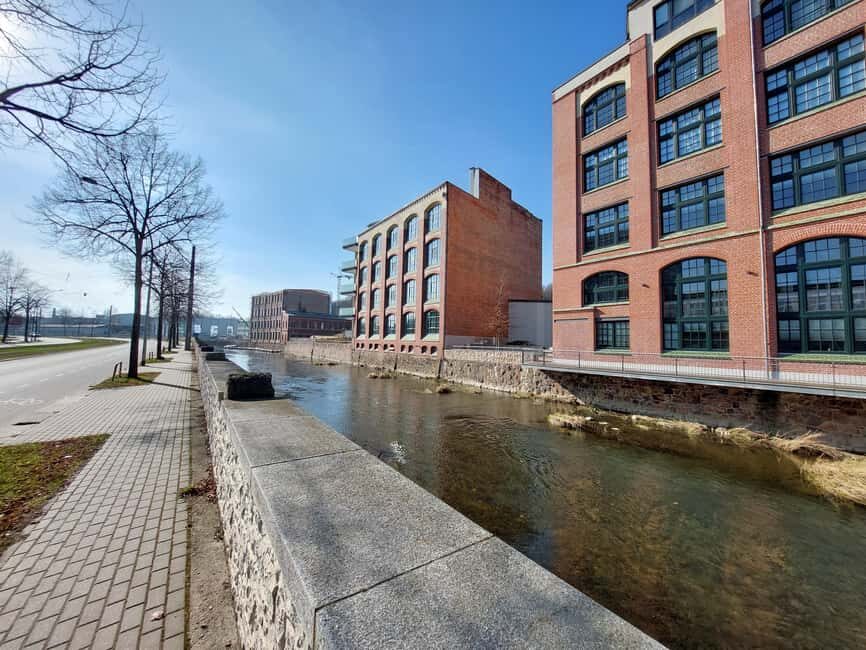
- Zwickauer and Annaberger Straße show industrial-era Chemnitz in an honest, street-level way
- Kaßberg’s Gründerzeit district captures the 19th-century building boom mindset
- Heckert GDR residential area adds the everyday, not just the political
- Castle district gives you the modern center’s origin story and a clean finish
Why Chemnitz Feels Like Two Cities at Once
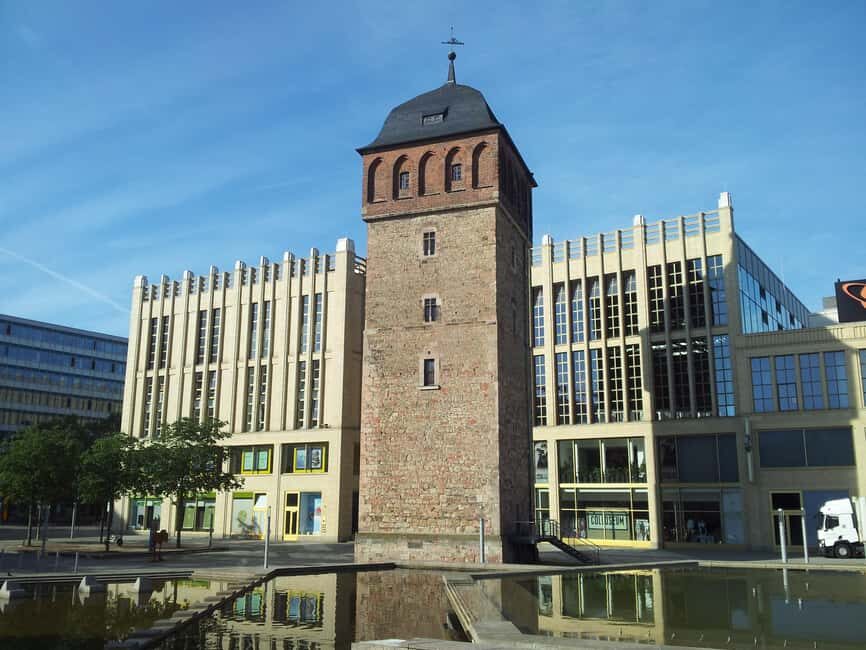
Chemnitz is one of those places where the street corners already tell a story. About 130 years ago, a Slavic settlement grew fast into one of the biggest and richest industrial cities in Germany. The city earned names like Manchester of Saxony and Rußchamtz, and you can feel why once you connect the dots between textiles, mining in the Ore Mountains, and the machines that arrived when spinning and steam power took off.
What I like about this tour is that it doesn’t treat history as a worksheet. It treats it as a chain reaction: new technology, rapid factory growth, arms industry strength through World War II, then the stop-and-start of political change as Chemnitz became Karl-Marx-Stadt and then returned to Chemnitz. Today, the city is openly searching for its next identity—while still thriving on industry and creativity.
You’ll also get a sense of why culture is such a big deal right now. Chemnitz is Europe’s Capital of Culture in 2025, so the city is planning a new chapter—this time with culture at the center of the story.
You can also read our reviews of more tours and experiences in Chemnitz.
Hotel Chemnitzer Hof or Straße der Nationen: How the 90 Minutes Work
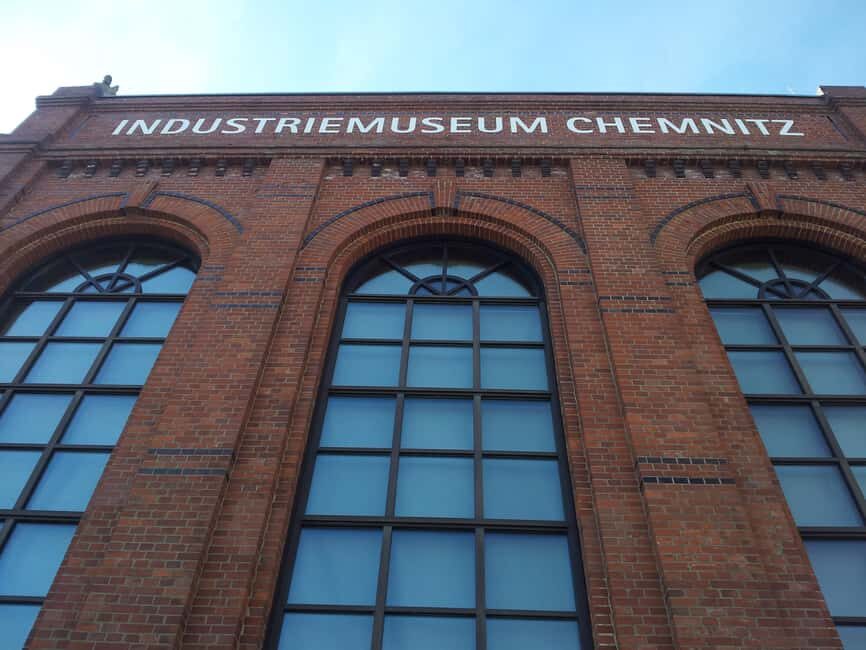
This tour runs for 90 minutes in a minibus for up to 8 people, so it stays intimate. You get a local, certified guide, and you’ll hear the story in German and English (the guide can switch languages), with time to ask questions in the moment.
There are two main options for where you start:
- Hotel Chemnitzer Hof (Straße der Nationen area)
- Straße der Nationen
And you return to one of those two areas at the end. Since the tour is structured around multiple districts, the vehicle matters. It helps you cover industrial and residential neighborhoods without burning your day on long transit.
Practical note: because the tour is citywide but timed tight, arrive a bit early so you’re not rushed when the group forms.
The Karl Marx Head: Your Shortcut Into Chemnitz’s Identity Shift
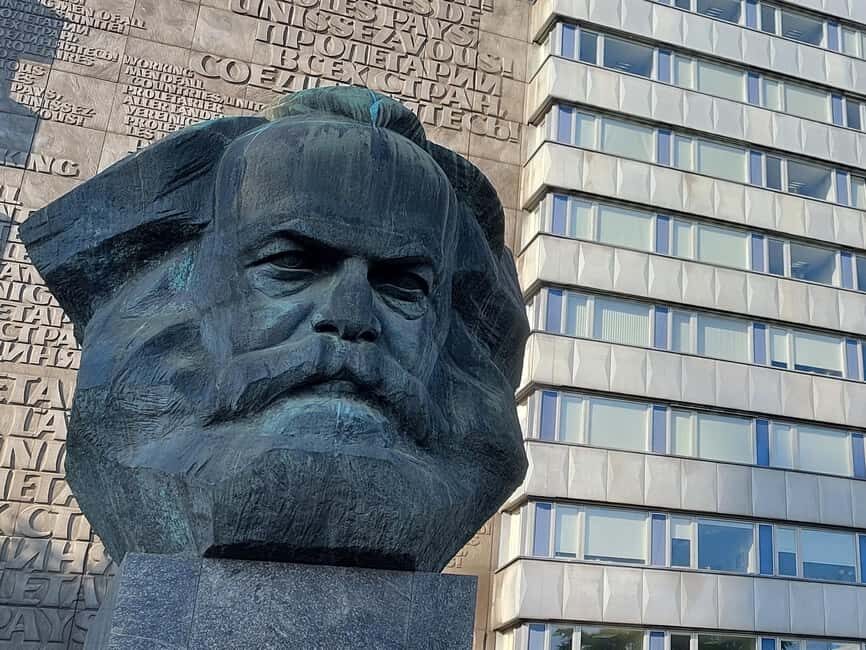
We start with one of Chemnitz’s most direct visual symbols: the Karl Marx head in the center. It sounds simple, but it’s actually a smart setup. You’re not beginning with a museum label. You’re beginning with a monument that represents a whole political era—and then you’ll see how Chemnitz moved back from Karl-Marx-Stadt to Chemnitz.
This is a good moment to pay attention to the contrast the city creates. In many towns, the industrial past sits in the background. Here, the city’s name changes alone tell you that history didn’t stay put. It moved, it got renamed, and it affected how people lived.
Even if you’re not a “politics history” person, this stop works because it’s tangible. You can point at it, you can orient yourself, and then the guide connects it to the larger arc: the city’s rise, the role of industry and arms production until the end of World War II, and the long shadow that followed.
The Streets Between Zwickauer and Annaberger Straße (Industrial Culture, Up Close)
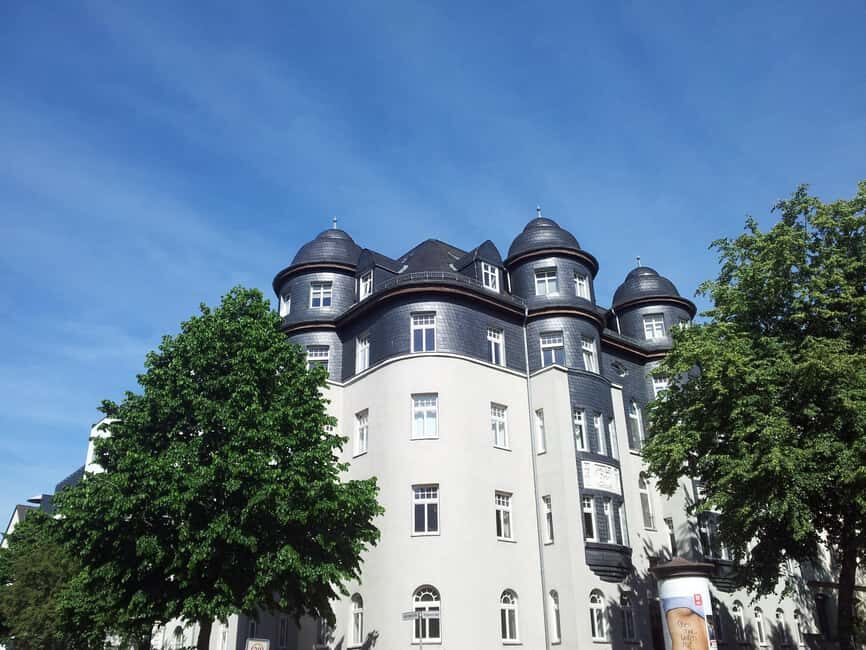
One of the tour’s big strengths is how it links industry to place. Between Zwickauer and Annaberger Straße, you get a street-level view of industrial culture—the kind that shapes architecture, street rhythm, and even neighborhood personality.
Here’s what makes this part valuable: industrial Chemnitz isn’t just factories in the distance. It’s a built environment that grew quickly when the city became one of Germany’s industrial powerhouses. With innovations like the spinning jenny and the steam engine (arriving after England’s lead), the story moves from gradual development to rapid expansion. The guide’s explanation helps you understand why the city seemed to explode in a short time, with chimneys and production everywhere.
You’ll also hear how earlier foundations mattered: the bleaching monopoly for linen in Saxony and the proximity to mining in the Ore Mountains weren’t glamorous, but they set the stage for an industrial system that was ready to scale fast.
If you like learning by seeing, this segment is where the tour clicks. You look at streets and suddenly the timeline has a physical home.
Kaßberg’s Gründerzeit District: When Building Went Fast
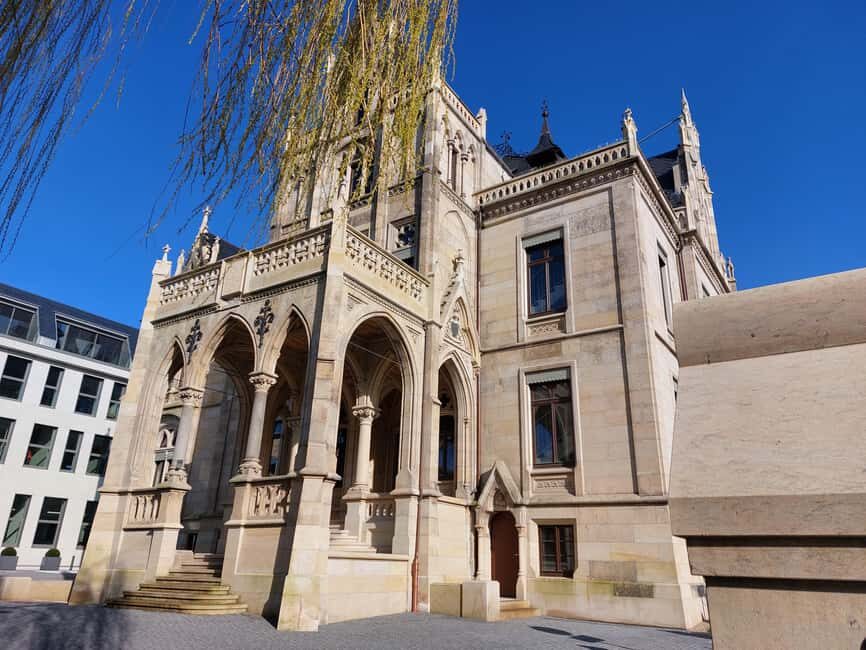
Next, you’ll spend time in the Gründerzeit district on the Kaßberg. Gründerzeit is one of those German terms you’ll hear often once you travel in the region, but this tour makes it concrete. It refers to the founder/industrial boom era—when cities were growing fast and new districts went up quickly.
Why you’ll care: Gründerzeit neighborhoods often show the optimism (and sometimes the ambition) of an era that thought growth would never stop. In Chemnitz, this matters because the city’s rise didn’t stay smooth. After the massive industrial expansion, there was a hard break driven by war and later by political and social shifts around the Wende.
So on the Kaßberg segment, I’d treat what you see as the middle chapter of the story: the era of building, the era of machines and production, and the era before decline became part of the city’s plot. It’s not just pretty architecture. It’s a snapshot of mindset.
Even without stepping inside specific buildings, you’ll come away understanding how that period shaped the way people recognize Chemnitz today.
Heckert GDR Residential Area: The Everyday Side of a Political Era
Then comes a very different neighborhood: the Heckert GDR residential area. This part is important because it balances the story. Industry gets plenty of attention in industrial cities, but daily life deserves its own spotlight.
The GDR era (and the shift after it) is a huge theme in Chemnitz. The tour ties it to the bigger arc: rise, then interruptions by the 20th century’s storms, then a new political reality, and finally the modern city trying to define itself again.
What I like here is the tour’s tone. It doesn’t feel like a lecture that forgets people. You’re seeing a residential area that reflects how housing and community planning worked under the GDR—how people lived, not just what governments announced.
If you’re curious about what history felt like at street level, this segment is a strong reason to book. It adds texture to the industrial storyline and helps you understand why the city’s identity feels layered rather than linear.
The Castle District Ending: Origins of the Modern Center
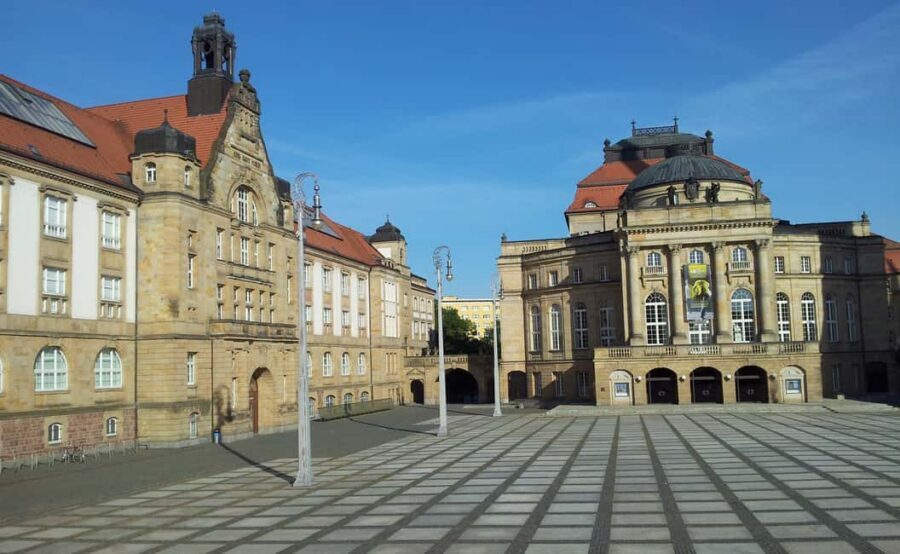
You’ll also visit the castle district, which is more than a random stop. It’s tied to the modern city’s origins—how Chemnitz’s today connects to earlier roots.
Ending here is smart because it gives you a frame: you start with a symbol of political-era naming (Karl Marx), you walk through the industrial boom and its street marks, you see the Gründerzeit expansion and the GDR residential reality, and then you finish with the area that connects back toward where the modern center grew from.
In practical terms, it’s also a good emotional reset. After sections that lean heavy on industry and political shifts, the castle district offers a more grounded sense of place. It helps you leave with orientation: you don’t just know what happened—you know where in the city to place those ideas.
Pedro Öhme’s Teaching Style: Clear, Friendly, and Built for Questions
The tour quality hinges on the guide, and the guide you’ll meet can make a big difference. With Pedro Öhme, the story gets told in a way that sticks: he explains the industrial background and the way the city’s fortunes shifted because of war and the Wende, then connects it to how people experience Chemnitz now.
That matters because Chemnitz can be misunderstood if you only focus on industry. This tour pushes you to see the human side of industrial decline and political transition—the idea that a city’s identity isn’t just buildings. It’s what residents do with the leftovers, and how they build the next chapter.
One more detail I appreciated: the guide managed to keep the tour moving even when conditions weren’t great. If you’re sensitive to rainy-day plans, that’s a reassuring sign.
Price and Value: $188 per Group Up to 8 in a Minibus
The price is $188 per group up to 8 people for a 90-minute tour. That’s how you should judge value here: not by thinking of it as a solo sightseeing ticket, but by thinking like a small group.
If you fill all seats, it can work out to roughly $23.50 per person. Even if you don’t fill the van completely, splitting the cost is still the basic advantage of this format. You’re getting:
- a local, certified guide
- a structured route across multiple districts
- the convenience of a minibus
- a time-efficient look at Chemnitz’s industrial and political layers
Also, because it’s private or small-group friendly, the tour tends to feel less like a stamp-collecting exercise and more like a guided conversation. That’s usually where these city tours outperform do-it-yourself wandering.
Who Should Book This Chemnitz Tour (and Who Might Skip It)
I’d book this tour if you want a street-based overview of Chemnitz’s biggest themes: industrial growth, the role of textiles and mining context, the shock of wartime shifts, the GDR period, and the city’s modern search for identity—especially with culture in the spotlight for 2025.
You’ll likely enjoy it if:
- you like industrial history but want it explained in plain terms
- you want to see multiple districts without spending half your day commuting
- you enjoy the mix of monuments and neighborhood texture
You might consider another option if:
- you’re looking for a slow, deep architectural crawl with long stops
- you prefer museum-focused travel over seeing districts from the outside
But for most people visiting Chemnitz for a first look, this is a smart, efficient way to get oriented.
Should You Book This Chemnitz City Tour?
Yes, I’d book it if your goal is to understand Chemnitz fast and feel how its industrial rise and political shifts show up in real neighborhoods. The tour’s strongest points are the combination of Karl Marx symbolism, industrial street-level context, and the jump into Gründerzeit and Heckert GDR housing, all within 90 minutes.
If you’re traveling as a group (or you can share with friends), the pricing also makes a lot more sense. You’ll get a guided story you can walk with afterward, not just facts you forget by the next stop.
FAQ
FAQ
How long is the Chemnitz city tour?
The tour lasts 90 minutes.
What group size is this tour for?
It’s a minibus tour for up to 8 people per group.
Where can I start the tour?
You can start either at Hotel Chemnitzer Hof (Straße der Nationen) or at Straße der Nationen. The meeting point may vary depending on what option you booked.
What areas of Chemnitz does the tour cover?
You’ll see the modern center connected to the castle district, industrial culture between Zwickauer and Annaberger Straße, the Gründerzeit district on Kaßberg, the Heckert GDR residential area, and you’ll also reference the city center point with the Karl Marx head.
Is the tour available in English and German?
Yes. The guide provides live commentary in German and English.
What’s the cancellation policy?
You can cancel up to 24 hours in advance for a full refund.