REVIEW · BERLIN
Karl-Marx-Allee Tour: Life and Architecture in East Berlin
Book on Viator →Operated by Beyond and Beneath Tours · Bookable on Viator
Karl-Marx-Allee turns politics into architecture. I love how this 2-hour walk links big ideas of East Germany to the actual buildings on Karl-Marx-Allee, and I love that it’s run as a small-group experience (up to 15) with an English-speaking guide. The only real drawback: it’s weather-dependent, so you’ll want a jacket and shoes ready for a longish outdoor stretch.
You’ll cover seven stops, each with a specific story—Hermann Henselmann’s bold towers, Hans Scharoun’s housing utopia, and memorials that remind you how close East Germany came to political upheaval. Most entries at the stops are listed as free, which keeps the cost simple.
You start at U Frankfurter Tor and finish at Strausberger Platz, a short walk (about 10 minutes) from Alexanderplatz—handy if you’re stacking this with other sights.
In This Review
- Key highlights to look for on Karl-Marx-Allee
- Karl-Marx-Allee in Two Hours: price, pacing, and what you’re paying for
- Frankfurter Tor: symmetry, Herman Henselmann, and the first socialist street plans
- Laubenganghäuser: Hans Scharoun’s postwar modernism and the utopia that got shut down
- Hochhaus an der Weberwiese: luxury on the map and why Western architects noticed
- Arbeiteraufstand 17 Juni 1953: the uprising, the near-fall, and the controversial memorial
- Café Sibylle and Stalin’s statue: everyday life next to a shifting symbol
- Karl-marx-bustendenkmal: how ideology shapes daily life, not just slogans
- Strausberger Platz: another Henselmann example and what changed after the Wall
- Should you book this Karl-Marx-Allee walking tour?
- FAQ
- How long is the Karl-Marx-Allee walking tour?
- What does the tour cost?
- Is the tour offered in English?
- How big is the group?
- Where do I meet the guide?
- Where does the tour end?
- Do I need to pay entry fees at the stops?
- Will I get a mobile ticket?
- What if the weather is bad?
- Can I bring a service animal?
Key highlights to look for on Karl-Marx-Allee
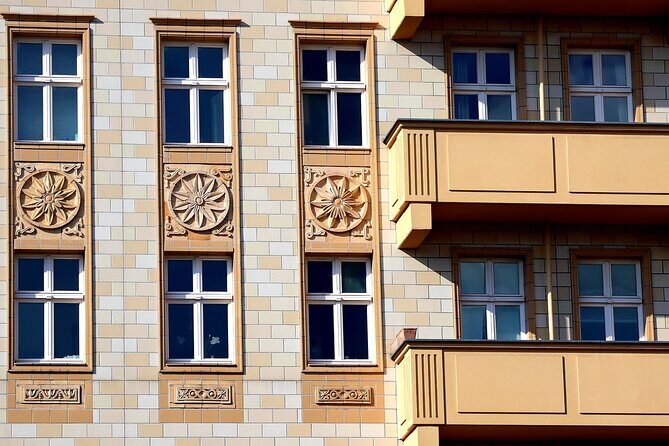
- Frankfurter Tor’s symmetry and the early 1950s plan for Germany’s first socialist street
- Hans Scharoun’s Laubenganghäuser and the utopian urban ideas rejected by the new regime
- Weberwiese’s prototype “luxury” and how the project became propaganda
- June 17, 1953 uprising memorial and why the monument is controversial
- Café Sibylle and Stalin’s nearby statue until 1961
- Strausberger Platz after reunification—what changed, what stayed, and why
Karl-Marx-Allee in Two Hours: price, pacing, and what you’re paying for
At $30.01 per person for about two hours, you’re not buying “a lot of stops.” You’re buying focus. This tour is built to connect architecture with power—why these buildings were designed the way they were, and what East German leaders hoped people would think and feel when they walked past them.
The small group size (maximum 15) matters here. East Berlin street stories can get dense fast, so a guide who can steer the conversation without rushing you makes a real difference. And since it’s offered in English with a mobile ticket, it stays easy on the logistics side once you’re in Berlin.
One practical note: you’ll be outside. The experience requires good weather, and if it gets canceled for weather you’ll get a different date or a full refund. Bring layers and plan to walk comfortably—this isn’t a sit-in-the-heated-lounge kind of tour.
You can also read our reviews of more tours and experiences in Berlin.



Frankfurter Tor: symmetry, Herman Henselmann, and the first socialist street plans
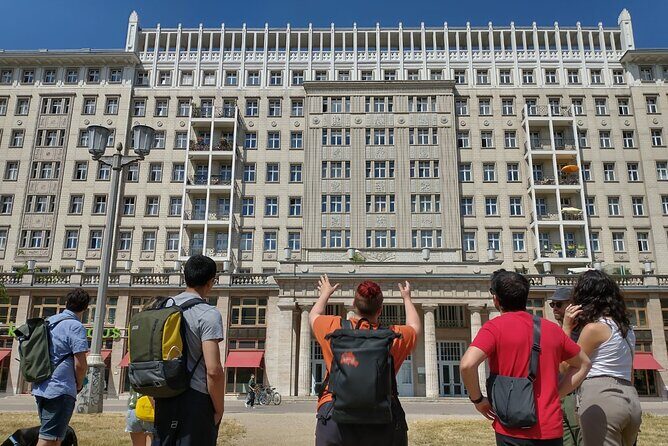
Your first stop is Frankfurter Tor, where the towers create a strong sense of order and symmetry. These were built by Hermann Henselmann, and the guide uses that visual balance to explain the early 1950s push to make Karl-Marx-Allee the first socialist street in Germany.
Here’s what I think you’ll enjoy most: the way the tour turns “pretty buildings” into a political idea. The architecture isn’t just decoration—it’s part of a national rebuilding program that mobilized thousands of volunteers. Even if you’re not into architectural theory, that scale of effort gives you something concrete to hold onto.
If you like figuring out a city by its design language, watch for how straight lines and repetition are used to signal certainty. East Berlin often tries to look planned, controlled, and future-facing—Frankfurter Tor is one of the cleanest places to see that message in stone and concrete.
Laubenganghäuser: Hans Scharoun’s postwar modernism and the utopia that got shut down
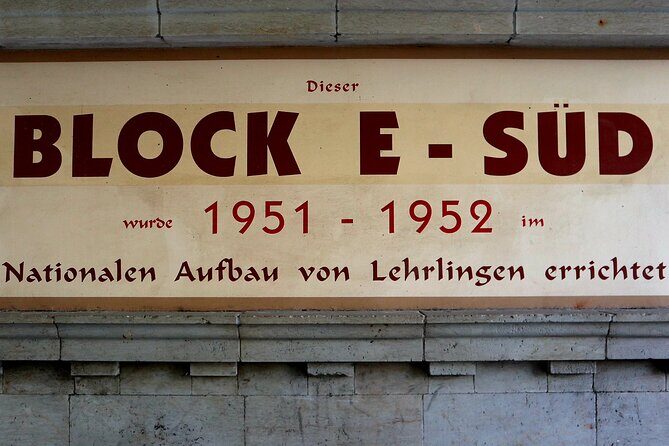
Next you’ll look at the Laubenganghäuser, tied to Hans Scharoun and the immediate post–World War II years. This stop is about modernist architecture rising from ruins—big hopes born from Berlin’s destruction.
The story goes further than style. The guide explains Scharoun’s utopian urbanist ideas and how quickly they ran into political reality, getting rejected soon after by the new East German regime. That contrast is the heart of this tour: the same country that needed creative rebuilding also enforced strict control over what “the right” future was supposed to look like.
When you stand here, try not to ask just whether the buildings look good. Ask what they were trying to do socially. Housing design can be a form of ideology—how people live, how communities form, how daily life is shaped.
Hochhaus an der Weberwiese: luxury on the map and why Western architects noticed
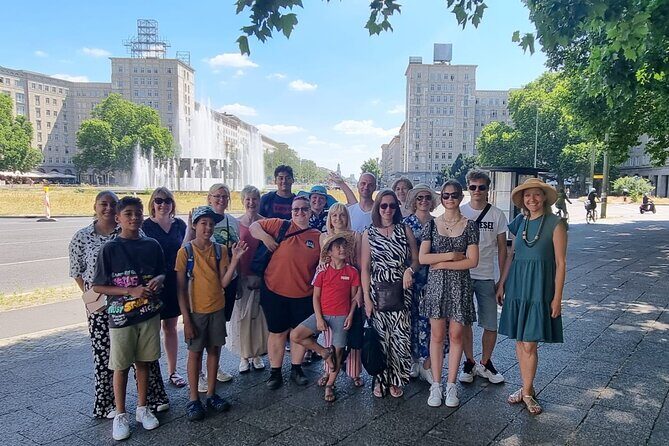
At Hochhaus an der Weberwiese, the tour shifts to a building that acted as a prototype for much of the socialist Karl-Marx-Allee. The guide points out that it offered its first tenants unprecedented luxury—an interesting detail because luxury doesn’t usually fit the propaganda sound bites people expect.
Then comes the twist: the project wasn’t only about residents. The guide frames it as a propaganda tool—something meant to advertise East German success. And it even became a magnet for Western architects, meaning outsiders were watching, too.
I like this stop because it keeps the story honest. You get the idea that both systems used design to win arguments about which future was better. When you understand that, Karl-Marx-Allee stops feeling like a single political “side” and starts feeling like a battlefield of images.
Look for the confidence in the scale and planning. The building’s purpose wasn’t only to house people—it was to make a statement you’d see every day.
Arbeiteraufstand 17 Juni 1953: the uprising, the near-fall, and the controversial memorial
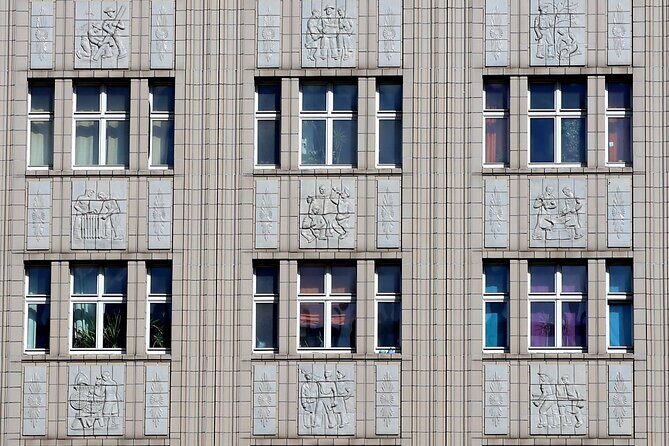
Your next stop is the Gedenkstätte Arbeiteraufstand 17 Juni 1953. Here the tour zooms out from architecture into political friction: disgruntled workers sparked a mass uprising in June 1953, one that almost toppled the socialist government of East Germany.
The guide also addresses the monument dedicated to the uprising, described as controversial. That matters. Memorials are never neutral. They show you what a society chooses to emphasize, and what it chooses to manage carefully—especially in a place where official history is tied to power.
If you visit this stop with even a little patience, you’ll come away with a clearer idea of how quickly ideology can collide with everyday frustration. The uprising detail also helps you connect the earlier “utopian” building dreams to a harder reality: people weren’t always willing to accept the script.


Café Sibylle and Stalin’s statue: everyday life next to a shifting symbol
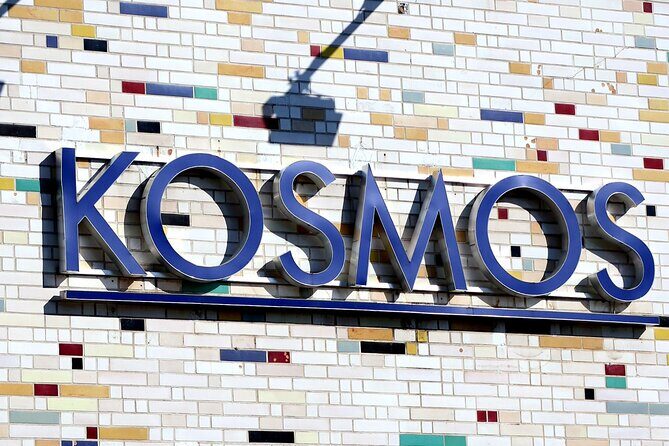
Then you’ll move to Café Sibylle, and the tour gets very grounded. This exclusive café on Karl-Marx-Allee is connected with the presence of Joseph Stalin’s statue nearby until 1961.
This stop is useful because it shows power in the most ordinary places. You’re not looking at a museum display. You’re learning how symbols sat in daily life, right next to places people would go for coffee and conversation.
What I’d pay attention to here is the contrast. A café suggests comfort and routine; a dictator’s statue suggests surveillance and political control. The tour helps you feel how those two realities could exist side by side—and how quickly the “meaning” of a neighborhood can change when symbols disappear.
Karl-marx-bustendenkmal: how ideology shapes daily life, not just slogans
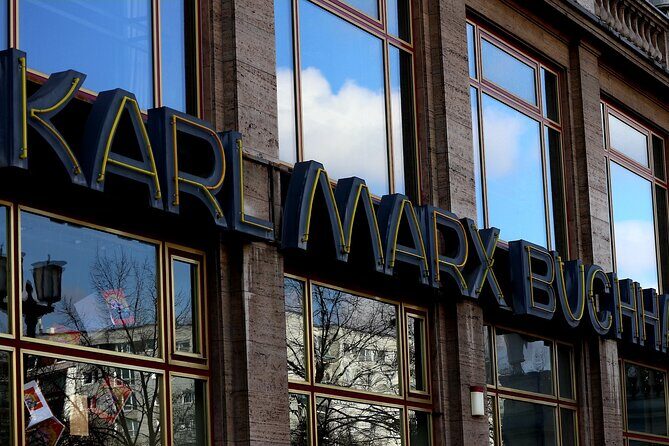
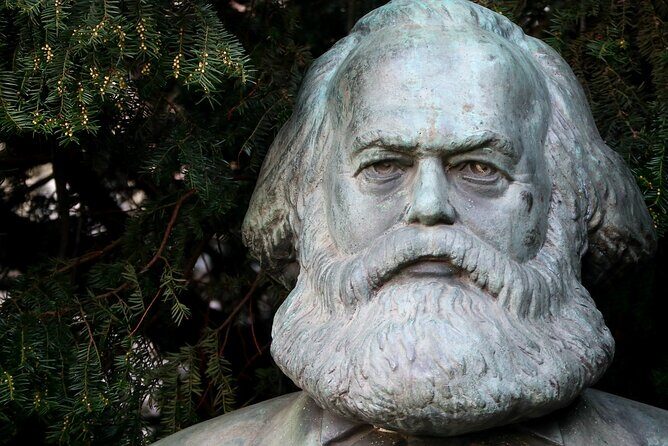
At the Karl-marx-bustendenkmal, the focus becomes ideology made physical. The guide ties the monument to the author of The Communist Manifesto and explains how socialist ideology influenced everyday life of East Berliners.
This isn’t only about names and dates. The value here is understanding how ideology shows up beyond textbooks—through what gets honored, what gets repeated, and what the built environment quietly teaches you to accept as normal.
If you’ve ever wondered why street names and monuments matter so much in authoritarian systems, this stop is where the tour connects the dots. You’ll see ideology not as a distant concept, but as a daily rhythm.
Strausberger Platz: another Henselmann example and what changed after the Wall
The tour ends at Strausberger Platz, where you’ll see another splendid example of Hermann Henselmann’s style. This section adds the “then and now” layer. The guide shares stories about life on Karl-Marx-Allee after the Fall of the Berlin Wall and what the area looks like today.
I like ending this way because it keeps the walk from becoming pure time travel. Once you see the earlier stops as tools of an old political system, it’s easier to notice what survives and what’s been rewritten.
When you finish near Strausberger Platz (a roundabout on the eastern side, with Alexanderplatz roughly a 10-minute walk away), you can keep exploring without feeling stuck. This is also a nice way to get oriented—Karl-Marx-Allee becomes a “map” in your head, not just a long boulevard.
Should you book this Karl-Marx-Allee walking tour?
Book it if you want a smart, short East Berlin overview that ties architecture to politics and daily life. The free-entry stops, the English language option, and the small group size make it a good value at $30.01, especially if you’re short on time but hate vague sightseeing.
Skip it or adjust expectations if you’re looking for long museum time or deep technical architecture reading. This is a guided walk with stories and context; it moves at a pace that fits two hours, not a full-day study session.
One more practical tip: plan your day so you have time afterward to look again on your own. Karl-Marx-Allee works best when you’ve heard the “why,” then go back and notice the “how.”
FAQ
How long is the Karl-Marx-Allee walking tour?
It runs for about 2 hours.
What does the tour cost?
The price is $30.01 per person.
Is the tour offered in English?
Yes, the tour is offered in English.
How big is the group?
The experience has a maximum of 15 people.
Where do I meet the guide?
You meet at U Frankfurter Tor, 10243 Berlin, Germany.
Where does the tour end?
It ends at Strausberger Pl., 10243 Berlin. The meeting point notes the eastern side of the Strausberger Platz roundabout, about a 10-minute walk from Alexanderplatz.
Do I need to pay entry fees at the stops?
The stops listed in the experience details are marked as admission ticket free.
Will I get a mobile ticket?
Yes. The tour includes a mobile ticket.
What if the weather is bad?
The experience requires good weather. If it’s canceled due to poor weather, you’ll be offered a different date or a full refund.
Can I bring a service animal?
Service animals are allowed.