REVIEW · BERLIN
Hitler to Stalin – WWII & Cold War Tour (Small Group)
Book on Viator →Operated by On the Front Tours · Bookable on Viator
Berlin’s past feels close, not textbook-close. This small-group walk links Hitler to Stalin eras with real street corners and monuments you can stand next to, not just read about.
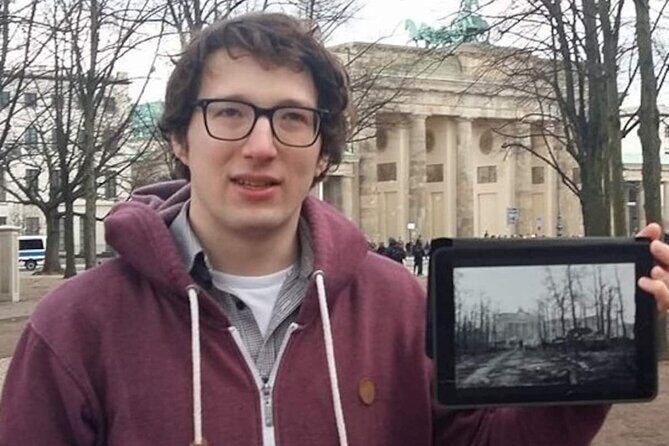
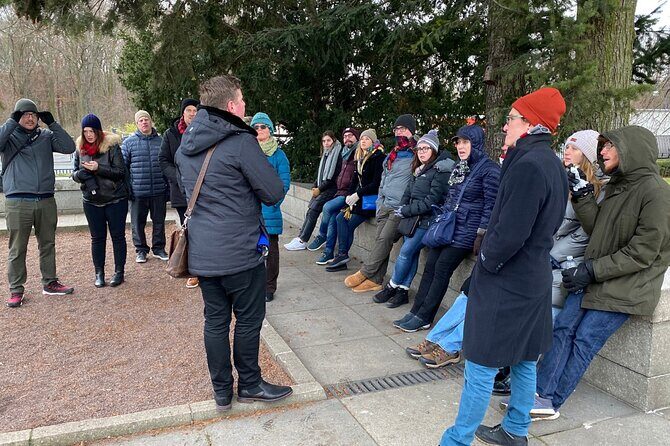
What I like most: you get a clear chain of events across decades, and the guide (often Mark) brings it to life with stories and even pictures showing what places looked like during the war versus today.
I also love that the pacing fits the topic: short stops, big takeaways. You’re moving from power and propaganda to devastation and then to the slow pressure of the Cold War, including moments that reflect both suffering and stubborn human resolve.
One consideration: this is a walk with multiple locations and relatively brief time at each stop, so if you want long museum-style immersion at one site, you’ll still want to do a deeper follow-up on your own. Also, the experience requires good weather, so plan for a backup date if skies don’t cooperate.
In This Review
- Key takeaways before you go
- Berlin’s WWII-to–Cold War story hits harder on foot
- Brandenburg Gate and Pariser Platz: where Europe starts arguing again
- Reichstag building: from Imperial politics to the 1933 fire—and back
- Soviet Memorial in the Tiergarten, then the Holocaust Memorial: grief with two very different designs
- Führerbunker: the underground last days, with names and timelines
- Cold War pressure shows up in small landmarks: Korea embassy, June 17, and the Wall
- Checkpoint Charlie: the Cold War crossing, explained in plain terms
- Price, timing, and how to make 2.5 hours worth it
- Who should book this tour (and who might want a different day)
- Should you book the Hitler to Stalin tour with On the Front Tours?
- FAQ
- How long is the tour?
- Where does the tour start and end?
- How many people are in the group?
- Is admission included for the stops?
- Will I need a paper ticket?
- Is the tour suitable for most travelers?
- What about service animals?
- Does the tour depend on weather?
- How does cancellation work?
Key takeaways before you go
- Small group (max 15): easier questions, less crowd noise at major sites.
- Guides like Mark: passionate, with clear context and helpful visual comparisons.
- Free-feeling stops: key landmarks here list admission as free, so you mainly pay for the guiding.
- WWII to Cold War in one loop: you connect the end of one conflict to the start of the next tension.
- Concrete emotions, not just facts: the Holocaust Memorial is designed to make you feel uncertainty.
- A fast, city-walking format: 2.5 hours means you’ll learn a lot, then decide what to explore next.
Berlin’s WWII-to–Cold War story hits harder on foot
Berlin is one of those cities where the map already looks political. You can walk a few blocks and see how power, ideology, and punishment changed shape—then see how people rebuilt, protested, and insisted on freedom.
This tour is built around that reality. Instead of treating WWII and the Cold War as two separate chapters, you get the bridge between them: how the defeat of Nazi Germany doesn’t end conflict—it rearranges it. You also keep “Berliners’ tenacity” in view, not just the machinery of war.
You can also read our reviews of more tours and experiences in Berlin.

Brandenburg Gate and Pariser Platz: where Europe starts arguing again
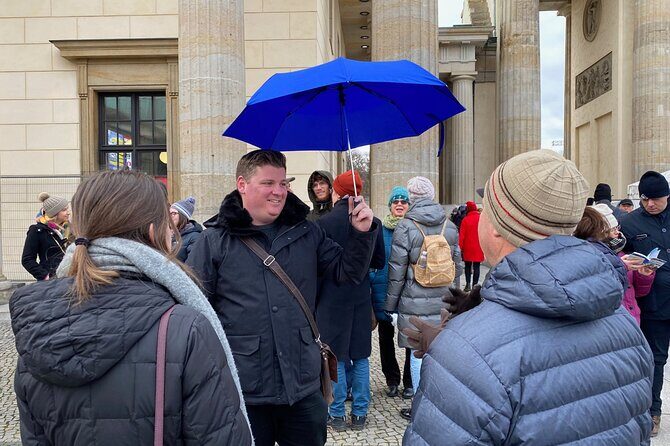
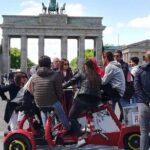
You kick off at the Brandenburg Gate, near Pariser Platz in the Mitte area. The gate was built by Frederick William II in the 18th century, originally on a former city gate site, and it sits at the intersection of Ebertstraße and Unter den Linden.
The point here isn’t only architecture. The Brandenburg Gate has been a stage for major historical moments, and today it’s treated as a symbol of European unity and peace. Standing there, you can feel the contrast: a former entry point for empires becomes a public shorthand for reconciliation.
If you’re the type who likes to get your bearings fast, this opening works well. It helps you understand why Berlin’s later divisions feel so personal: you’re starting with a place meant to represent something shared.
Reichstag building: from Imperial politics to the 1933 fire—and back
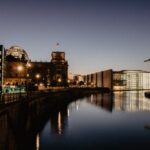
Next up is the Reichstag building, home of Germany’s Bundestag (the lower house of parliament). The building opened in 1894 as the Imperial Diet’s home, then suffered destruction by fire in 1933—right when Nazi power was consolidating.
After World War II, it was badly damaged, then restored in 1999. That restoration matters because it turns a site of political violence and collapse into a functioning democratic seat. You’re not just looking at an old building; you’re looking at Germany’s postwar choice to rebuild institutions, not only walls.
Soviet Memorial in the Tiergarten, then the Holocaust Memorial: grief with two very different designs
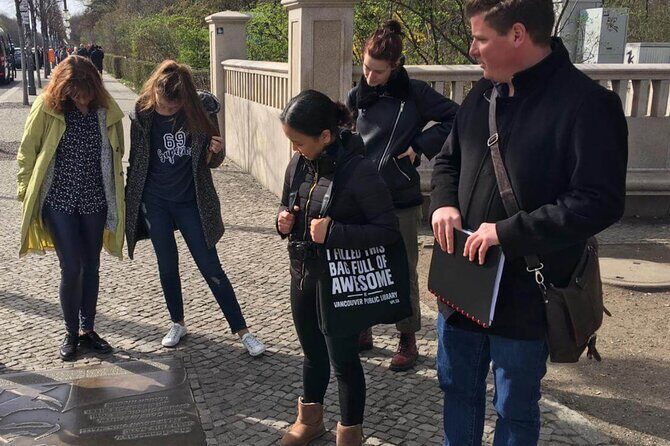
A short walk brings you to the Soviet War Memorial in Berlin, built by the Soviet Union in 1945 to honor soldiers of the Soviet Armed Forces who died in the Battle of Berlin. It sits in the Großer Tiergarten, at the northwest corner of Straße des 17. June (a major east-west street).
Then you move to the Holocaust Memorial—Memorial to the Murdered Jews of Europe, established in 1999 and designed by Peter Eisenman. Here the design is intentionally unsettling: 2711 concrete slabs spread across 19,000 square meters, and the uneven floor can make you feel off-balance or even a little dizzy. It’s abstract on purpose, so you confront the subject in your own way instead of being told exactly how to feel.
This pairing is powerful because it frames WWII memory as something contested and layered. One monument carries commemoration shaped by state narrative; the other refuses easy interpretation. Either way, you leave thinking about what Berlin chooses to preserve—and how.
Führerbunker: the underground last days, with names and timelines
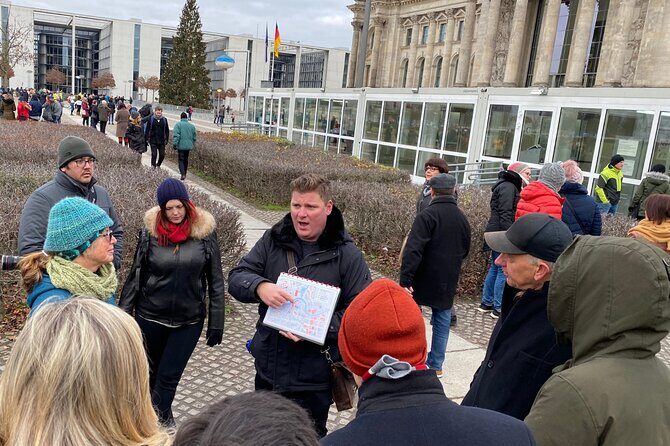
The most intense stop is at the Führerbunker, the air-raid shelter that served as Hitler’s last headquarters. On January 16, 1945, Hitler took over the bunker area, and then, in the final stretch, he married Eva Braun on April 29, 1945—less than 40 hours before their suicide.
The tour also points out the physical story: the old Chancellery buildings were leveled by the Soviets, while newer ones were built, and the underground complex remained mostly undisturbed until 1988. That matters because it connects history to what survives and what stays buried—literally.
If you’re sensitive to the darker side of history, give yourself permission to slow down here. The details are factual, but the topic is heavy.

Cold War pressure shows up in small landmarks: Korea embassy, June 17, and the Wall
From WWII, the tour keeps pushing forward into Cold War tension through several short, high-meaning stops.
At the Embassy of the Republic of Korea—specifically the Democratic People’s Republic of Korea (North Korea) embassy—your stop is brief and practical: you’re shown its location in Mitte at Glinkastraße 5. It’s a reminder that Cold War lines don’t only live in museums. They can still exist in how states position themselves.
Then comes the Denkmal zur Erinnerung an den Aufstand des 17. Juni 1953. This uprising was the first major challenge to the communist regime after the war, and it was suppressed when Soviet tanks moved in. About 15,000 people were arrested following the incident.
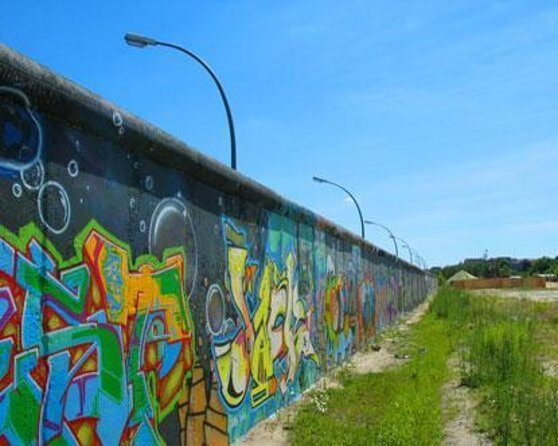
Finally, you reach the Memorial of the Berlin Wall. It commemorates both the Wall’s division of the city and the deaths that occurred along it. Even when you don’t see the original structure right in front of you, the memorial keeps the core point fixed: Berlin wasn’t just divided on paper. People suffered at the boundary.
Checkpoint Charlie: the Cold War crossing, explained in plain terms
The tour ends at Checkpoint Charlie, one of the most famous Wall-era crossing points between East and West Berlin during the Cold War (1947–1991). The name Checkpoint Charlie, or Checkpoint C, came from the Western Allies.
This stop tends to “click” for people because you finally connect the Wall’s political logic to a place that sounds like a real daily experience. Even though the tour keeps it to about 20 minutes here, it’s enough time to understand why this location became internationally symbolic—and why Berlin’s division gained global attention.
Price, timing, and how to make 2.5 hours worth it
The price listed is $23 for about 2 hours 30 minutes, with a small group up to 15 people and a mobile ticket. At this price, you’re paying mainly for guided storytelling and historical context, while the landmark stops themselves are marked as free.
What you get in return is a structured “timeline walk.” Because each stop is relatively short, the guide can connect the dots: where WWII ends, how Soviet influence shows up in monuments, and how Berlin becomes the stage for Cold War standoffs.
My advice: don’t try to absorb everything at once. Pick one theme you care about most—Nazi collapse, Soviet commemoration, Holocaust memory design, or Wall-era protest and borders. Let the other parts support that theme rather than compete with it.
Also, bring comfortable shoes. You’re walking between major points in central Berlin, and 2.5 hours can feel longer when you’re stopping to read details and ask questions.
Who should book this tour (and who might want a different day)
This is ideal if you want a clear, street-level overview of Berlin’s WWII-to-Cold War transformation without spending your day hopping between museums. It’s also a good match if you like asking questions—small group size helps, and a guide like Mark is clearly the kind who answers and explains.
It may not be perfect if you already planned to spend hours inside one big institution, because this format is built for movement and context, not long stays. You’ll likely come away wanting to do extra research on your favorite stop afterward—especially the Reichstag, the Holocaust Memorial, or the Wall sites.
Should you book the Hitler to Stalin tour with On the Front Tours?
If your goal is to understand Berlin’s logic from WWII to the Cold War, I’d book it. The value is strong: a low price for expert-guided connections across multiple landmarks that each carry big meaning.
I’d book especially if you want the human side of the story—tenacity, fear, propaganda, and the way Berliners lived through both eras. And if you get Mark as your guide, you’re in good shape: the reviews highlight his passion, his ability to answer questions, and the way he uses pictures to make war-era Berlin feel less abstract.
FAQ
How long is the tour?
It runs for approximately 2 hours 30 minutes.
Where does the tour start and end?
It starts at Brandenburg Gate, Pariser Platz 10117 Berlin, Germany, and ends at Checkpoint Charlie, Friedrichstraße 43-45, 10117 Berlin, Germany.
How many people are in the group?
The tour has a maximum of 15 travelers.
Is admission included for the stops?
The stops listed here show admission as free for each of them.
Will I need a paper ticket?
You receive a mobile ticket.
Is the tour suitable for most travelers?
The tour states that most travelers can participate.
What about service animals?
Service animals are allowed.
Does the tour depend on weather?
Yes. The experience requires good weather. If it’s canceled due to poor weather, you’ll be offered a different date or a full refund.
How does cancellation work?
Free cancellation is offered. You can cancel up to 24 hours in advance for a full refund, and changes less than 24 hours before the start time aren’t accepted.