REVIEW · AUGSBURG
Historical Walking Tour of Augsburg / Historische Führung
Book on GetYourGuide →Operated by Historical walking tour through Augsburgs old town · Bookable on GetYourGuide
Augsburg history gets personal fast. On this 150-minute walking tour you move through the city’s key sights while the stories connect the Renaissance, powerful merchant families, and big-name culture to what you see right in front of you around Rathausplatz.
I especially like how the tour keeps history readable. You get the Town Hall (Rathaus) and its famous interior hall, plus the Fugger influence explained in a way that feels human, not like a textbook. Another strong point is the guiding style—Michael (the guide named in one account) brings the streets to life and makes room for side angles that pull in big cultural figures like Brecht and Leopold Mozart.
One thing to consider: the tour runs with a German live guide, and the group can feel a bit hard to hear at times. If you’re relying on perfect audio in a second language, you’ll want to sit closer to the guide and keep expectations realistic about comprehension.
In This Review
- Key highlights at a glance
- Rathausplatz: where the tour grabs your attention
- Augsburg Town Hall by Elias Holl and the Goldener Saal
- Perlach Tower: panoramic views and a watchtower mindset
- Fugger Square: Europe’s merchant families, explained in plain street talk
- Little Venice canals: a scenic pause that changes the pace
- Brechthaus: Bertolt Brecht’s birthplace and why it lands in Augsburg
- Leopold Mozart Haus: music lineage you can actually connect to real walls
- Augsburg Cathedral (Dom): Romanesque + Gothic, stained glass, and bronze door details
- The walking reality: shoes, timing, and how the 5 km-ish route feels
- Price and what you really get for about $22
- Who should book this Augsburg walk (and who might skip it)
- Should you book Historical Walking Tour of Augsburg?
- FAQ
- How long is the Augsburg historical walking tour?
- Where does the tour start?
- Where does the tour finish?
- Is food included in the price?
- What’s the price per person?
- What language is the tour guide speaking?
- What is included in the tour?
- Can I take photos during the tour?
- Does the tour run in rain or snow?
- Is the tour suitable for wheelchair users or mobility impairments?
Key highlights at a glance
- Rathausplatz start near the center of town, with an easy-to-find meeting point and a clear route.
- Augsburg Town Hall and Goldener Saal: Renaissance architecture plus the standout hall interior.
- Perlach Tower for classic city views from a former watchtower.
- Fugger Square and the story of Europe’s powerful merchant families.
- Little Venice canals for a scenic detour that changes the mood.
- Brechthaus + Leopold Mozart Haus linking Augsburg to major theater and music history.
Rathausplatz: where the tour grabs your attention
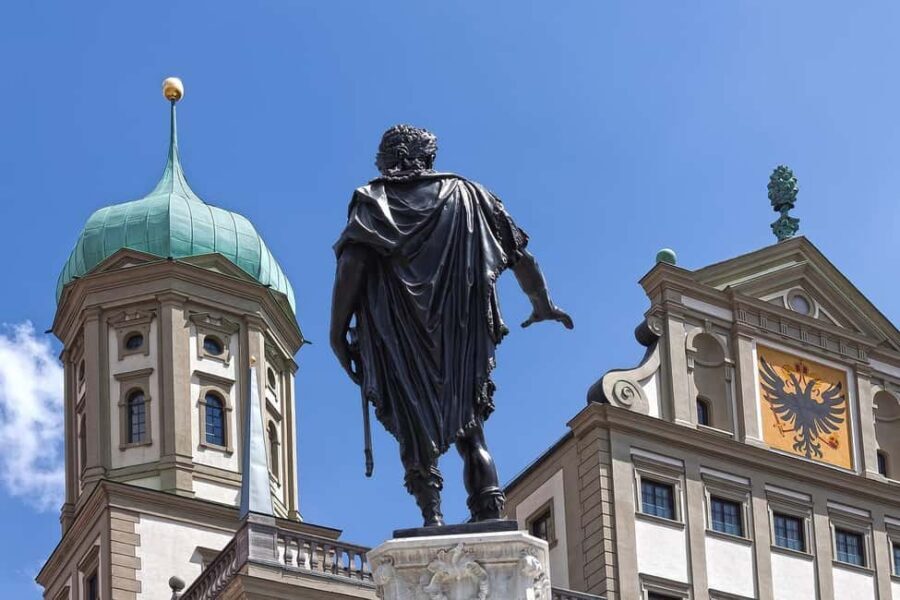
The smart move here is starting at Rathausplatz, Augsburg’s public square and natural orientation point. If you arrive a little early, you’ll have time to get your bearings before the group heads out. The tour meets at 10:30am at Rathausplatz Augsburg, and you’ll want to spot the yellow umbrella.
From the first minutes, you’re not just looking at buildings. You’re learning how the city’s layout supports the story: Augsburg built its identity around civic pride (the town’s center) and trade power (the families who shaped commerce and influence). That’s why the walk feels “guided” rather than just sightseeing—you’re constantly matching what you see to what it meant.
Practical tip: start hydrating early. The tour is only about 2.5 hours, but you’ll still walk enough that water helps, especially if the weather turns warm.
You can also read our reviews of more walking tours in Augsburg



Augsburg Town Hall by Elias Holl and the Goldener Saal
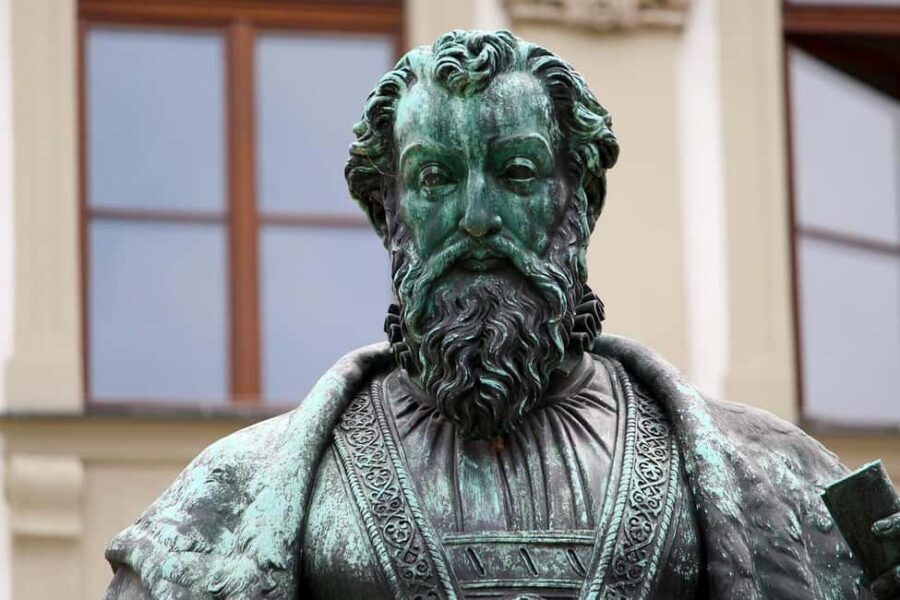
The centerpiece stop is the Augsburg Town Hall (Rathaus), designed by Elias Holl. This isn’t a quick photo-and-go sight. You’ll get oriented to what makes it Renaissance-era and why it mattered for a city like Augsburg that wanted to look powerful and organized.
The highlight inside is the Goldener Saal—a famous hall people travel specifically to understand. Even if you don’t know Renaissance art terms, the tour gives you the keys to interpret what you’re seeing: the idea of civic wealth shown through craftsmanship, design, and symbolism.
Two things to watch for on your visit:
- Pay attention to how the guide frames the building as a statement of power, not just a pretty façade.
- If the group pauses for viewing, don’t drift off toward the edge. You’ll miss the explanations tied to particular details.
This stop is one of the strongest reasons the tour feels worth the time.
Perlach Tower: panoramic views and a watchtower mindset
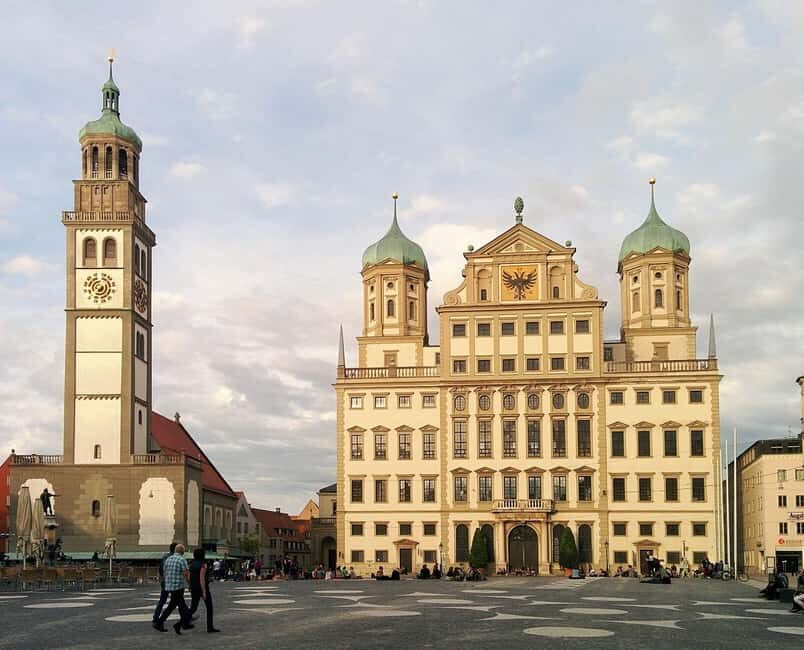
After the Town Hall area, you’ll move to the Perlach Tower, originally a former watchtower. That word matters. Watchtowers weren’t decoration; they were part of how a city managed visibility and safety.
What you’ll enjoy most is the combination of skyline views and context. From here you can look out and understand how a dense old-town layout makes planning and defense practical. It also helps you mentally map the walk as you continue.
If you like photography, this is a good moment to slow down. Take a few photos, then listen for the guide’s tie-in between the tower and what Augsburg needed to watch for historically—so the view becomes more than a pretty backdrop.
Fugger Square: Europe’s merchant families, explained in plain street talk
One of the most praised segments is the Fugger thread—specifically the story behind the Fuggers, described here as Europe’s most powerful merchant families. You’ll reach the Fugger Square and get the narrative behind why these families mattered.
The value of this part isn’t only name recognition. It’s how commerce, politics, and civic identity can overlap in real places. In a single walk, you start seeing Augsburg as a networked economy rather than just a “pretty medieval town.”
When the guide connects the dots, you’ll likely remember more because you’re linking people to buildings:
- A powerful family doesn’t just exist in history books.
- They leave marks in the kind of institutions and landmarks the city highlights.
Bonus for culture buffs: some big names also show up in the tour discussions (including references such as Holbein alongside Brecht and Mozart in guide context). Even if you’re not a specialist, it helps you understand why Augsburg produced people with influence across arts and public life.
Little Venice canals: a scenic pause that changes the pace
Mid-walk, you’ll head to little Venice, a charming district with canals that remind people of Venice. This stop is more than a cute photo spot. It gives your brain a reset.
Canals in Augsburg aren’t just aesthetics—they connect to how the city worked and how water supported daily life and trade. So while the vibe feels lighter, the context still keeps the tour coherent. You get scenery without losing the “why” behind it.
If you tend to get tired during walking tours, this is where you’ll feel the benefit. Even brief stops along the water make the whole 150 minutes feel less like marching and more like wandering with a plan.
You can also read our reviews of more historical tours in Augsburg
Brechthaus: Bertolt Brecht’s birthplace and why it lands in Augsburg
Next up is the Brechthaus, the birthplace of playwright Bertolt Brecht, now serving as a museum honoring his life and works. The tour timing is good here: you’ve already built the city’s historical framework, so the jump to a major theater figure feels like a continuation, not a detour.
What makes this stop meaningful for many people is that it ties a modern cultural giant to a specific place. Instead of hearing only dates, you see Augsburg as a starting point for ideas that traveled far beyond the city.
When you’re inside, follow the guide’s pointers on what to look for. If you’re short on reading time, focus on the big themes the guide mentions first—then use your own eyes for the details.
Leopold Mozart Haus: music lineage you can actually connect to real walls
Then you’ll go to the Leopold Mozart Haus, where Leopold Mozart (father of Wolfgang Amadeus Mozart) was born. It’s now a museum showcasing the musical history tied to the Mozart family.
This is a smart pairing after Brecht. Theater and music both depend on performance, training, and cultural environment. By the time you reach the Leopold Mozart Haus, you’ve already practiced the tour’s method: connect famous people to physical locations.
Even if you’re more into sightseeing than music history, this stop works because it’s concrete. You’re not just hearing that the Mozart family mattered—you’re standing where that story begins.
Tip: if you enjoy music, take a moment after the tour to listen to a Mozart piece back in town. It helps the museum experience stick, even when your day schedule moves on.
Augsburg Cathedral (Dom): Romanesque + Gothic, stained glass, and bronze door details
Your final major landmark is the Augsburg Cathedral (Dom), which features Romanesque and Gothic elements. This mix is a clue: Augsburg kept evolving, and its sacred architecture reflects that long timeline.
Inside, don’t rush past the standout pieces:
- Look for the 12th-century stained glass windows
- Notice the detailed bronze door
Those two features are exactly the kind of anchors that make cathedral visits feel more alive. Stained glass can look like color and shapes until someone explains what role it played. Bronze doors can look like craft until you realize they’re often tied to iconography and storytelling.
The tour includes access to the cathedral, which makes a difference. You’re not relying on your own timing to fit it into your day. It’s already built into the walk.
The walking reality: shoes, timing, and how the 5 km-ish route feels
The tour lasts 150 minutes, and the walking is described as moderate. One account notes the route is around 5 km, which feels about right for a city-center loop that doesn’t drag on.
The practical side:
- Bring comfortable shoes
- Carry water
- Dress for the weather
Weather policy matters too. The tour operates in all other weather conditions, but not when it’s raining or snowing. So plan for the fact that your schedule is mostly “weather-dependent,” not weather-proof.
Also, photography is allowed. That’s good news because Augsburg rewards slowing down for details—just don’t turn into the person who stops every 20 steps. Keep moving, then take photos when the guide pauses or points things out.
Price and what you really get for about $22
At $22 per person, this tour is strong value if you like your sightseeing with structure. You’re paying for a guided walk focused on Augsburg’s big civic and cultural anchors, plus access to the Augsburg Cathedral.
What you don’t get is also clear: food and drinks are not included, and there’s no hotel pick-up. That’s normal for this kind of walking tour, but it means you should plan a snack stop before or after.
Here’s how I think about value:
- If you would otherwise visit the Town Hall and cathedral on your own, the guided context saves time and adds meaning.
- If your German is limited, the value depends on whether you can follow enough to enjoy the stops. The route is designed for learning, not just wandering.
Overall, the price makes sense for a focused 2.5-hour highlights tour—especially if you want a guided version of Augsburg instead of building your own route from scratch.
Who should book this Augsburg walk (and who might skip it)
This is a good fit if you want a compact experience that covers Augsburg’s main storylines: civic power, merchant influence (the Fuggers), and major culture connections (Brecht and the Mozart family). It also suits you if you like history presented with atmosphere instead of endless lists.
It’s less ideal if you need step-free access. The tour is not suitable for people with mobility impairments or wheelchair users, so take that seriously.
And if you’re not comfortable with German, you’ll want to bring extra patience. The guide provides the tour in German, and the group can be a little tricky to hear at times, so plan to stand closer.
Should you book Historical Walking Tour of Augsburg?
If you’re visiting Augsburg for a day or two and want a clear route that hits the must-see landmarks with helpful interpretation, I’d say yes. The mix of Rathausplatz, Elias Holl’s Town Hall, the Fuggers, and the cultural anchors (Brechthaus and Leopold Mozart Haus) makes this more than a checklist walk.
Book it if:
- you want history you can connect to real buildings
- you’re okay walking for about 2.5 hours
- you’re fine with a German guided experience
Skip or reconsider if:
- you need wheelchair-friendly access
- you can’t handle listening in German and you rely heavily on audio clarity
FAQ
How long is the Augsburg historical walking tour?
The duration is 150 minutes (about 2.5 hours).
Where does the tour start?
You meet at 10:30am at Rathausplatz Augsburg, and you should look for the yellow umbrella.
Where does the tour finish?
The tour finishes at Hofgarten.
Is food included in the price?
No. Food and drinks are not included.
What’s the price per person?
The price is $22 per person.
What language is the tour guide speaking?
The live guide speaks German.
What is included in the tour?
You get a guided walking tour of historic landmarks, and access to the Augsburg Cathedral.
Can I take photos during the tour?
Yes. Photography is allowed.
Does the tour run in rain or snow?
The tour operates in all other weather conditions, meaning it does not run when it is raining or snowing.
Is the tour suitable for wheelchair users or mobility impairments?
No. It is not suitable for people with mobility impairments and wheelchair users.