REVIEW · GORLITZ
Görlitz: Ghosts and Spooky Historical Night Walking Tour
Book on GetYourGuide →Operated by Mysterium Tremendum · Bookable on GetYourGuide
Ghost stories in Görlitz start right at the church. This 1.5-hour night walk pairs real local landmarks with chilling tales of executions, paranormal rumors, and old superstitions. I especially like the way the guide uses an old city map to lead you through shadowy backstreets and how the tour leans into the town’s authentic spooky atmosphere. One drawback to plan for: it’s mostly storytelling, so if you want lots of tight, daytime-style historical facts, you may wish you’d pair it with a museum visit.
You’ll meet at Peterskirche and spend the evening moving from Gothic stone to darker alleyways, with stops that help explain why certain places became folklore magnets. The best moments feel playful but still grounded in place names you can point to later. Just know the route includes about a mile of uneven ground and the tour runs rain or shine, so comfortable shoes matter more than you’d expect.
In This Review
- Key things that make this tour worth it
- Entering Görlitz’s Ghost Story: Night Walk Energy With Real Places
- Meeting Point at Peterskirche: Where the Night Really Starts
- Peterskirche Stop: Gothic Shadows and Why Fear Takes Hold
- The Waidhaus: Oldest Secular Building and the Web of Superstition
- Following the Old City Map: Alleys, Forgotten Pathways, and the Spooky Map Trick
- The Plague Tract: A Forgotten Document That Keeps the Mystery Alive
- Spotting Locations for Spooky Activity: How the Guide Trains Your Eye
- A Spell Attempt at Night: Playful Moments Without Losing the Mood
- Ending Inside Schwibbogen Hotel: A Natural Stop to Catch Your Breath
- Price and Value: What You Really Get for About $18
- Who Should Book This Görlitz Ghost Walking Tour
- Quick Practical Tips Before You Go
- Should You Book This Görlitz Ghost Walk?
- FAQ
- How long is the Görlitz Ghosts and Spooky Historical Night Walking Tour?
- Where do I meet the guide?
- What is the tour price?
- What language is the tour guide?
- How much walking is involved, and what’s the ground like?
- Does the tour run in rain or shine?
- What should I wear or bring?
- Are pets allowed?
- Is it suitable for children or mobility needs?
- Is there free cancellation?
Key things that make this tour worth it
- Peterskirche as the launch point: meet at the church next to the Waidhaus and start with atmosphere, not a lecture.
- An old city map in your guide’s hands: you follow forgotten pathways instead of just walking the main street.
- Waidhaus stops history into the dark: it’s presented as a key piece of the area’s oldest non-religious architecture.
- Görlitz Plague Tract: you hear about a forgotten-but-important document and how it feeds local mystery.
- A memorable witch moment: the Hexe figure often lands as the highlight, with fun surprise effects.
- Ends inside the Schwibbogen hotel: a neat final stop that gives the night walk a clear finish line.
Entering Görlitz’s Ghost Story: Night Walk Energy With Real Places
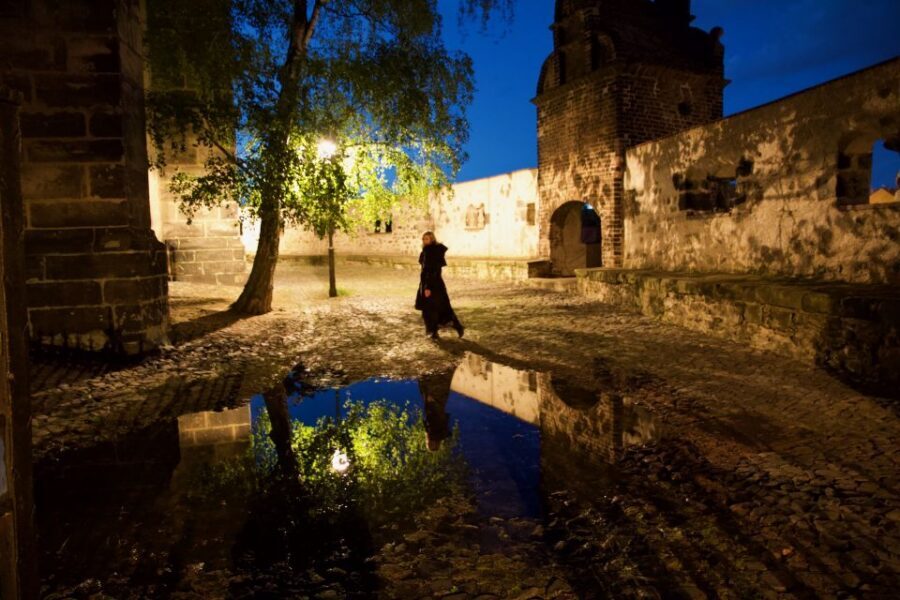
Görlitz at night has a way of making you notice details you’d normally skip. The streets feel narrower. The corners feel closer. And because the tour is built around specific spots, you’re not just imagining spooky scenes—you’re walking past the very buildings and passages the stories are tied to.
What makes this experience work is that it treats folklore like something that grew out of daily life: public fear, public punishment, and public rumor. You’ll hear about ghosts, executions, and paranormal activity, but always in relation to where you are standing. That’s the difference between a generic haunted tour and one that feels like it belongs to Görlitz.
I also like the tone. It’s fun enough to keep your attention, but not so silly that it loses credibility. Reviews mention the tour’s entertaining surprise effects, and you’ll feel that playful “something might happen” energy as the guide hits certain story beats.
The catch is simple: this is not a classroom. If you want exact dates and a heavy dose of documented history, you’ll probably crave more. Still, even for history buffs, the tour can be a great way to get an emotional map of the town—then you can confirm facts later in daylight.
You can also read our reviews of more walking tours in Gorlitz
Meeting Point at Peterskirche: Where the Night Really Starts
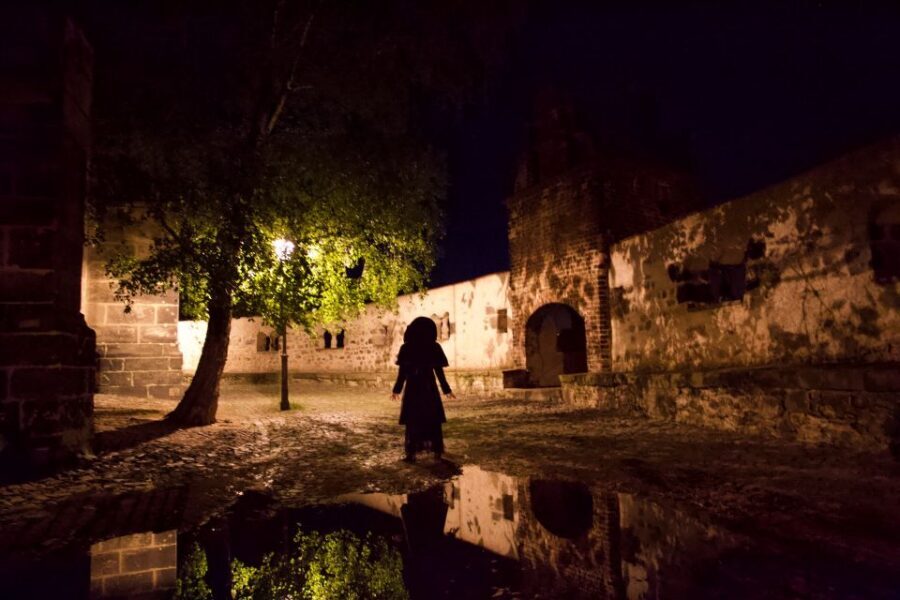
Your tour begins in front of Peterskirche, right next to the Waidhaus. That location is smart. Peterskirche is a towering Gothic church built in the 1400s, so even before the stories start, you’re standing in the right mood: stone, height, shadows, and a sense of age.
The guide is German-speaking and leads the group on foot for about 1.5 hours. You’ll also be using an old city map during the walk. That matters because the route isn’t just about moving from one famous building to another. It’s about learning how to read the town after dark—how lanes connect, where sightlines cut off, and which alleyways feel like they were designed for secrecy.
One practical note: the route uses uneven ground, and the total walking is around a mile. That doesn’t sound huge on paper, but cobbles and irregular surfaces can slow you down. You’ll want comfortable shoes and the mindset of a relaxed night stroll that includes a bit of stepping carefully.
Peterskirche Stop: Gothic Shadows and Why Fear Takes Hold
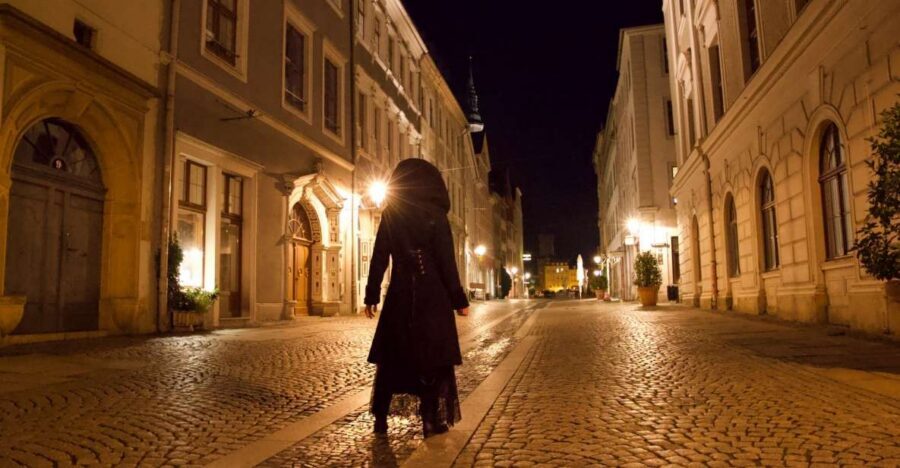
Peterskirche is more than a landmark here. It’s used like a story anchor. As you stand by it, you’ll hear about the dark past of Görlitz and how public punishment and rumor helped shape local beliefs over time.
The Gothic architecture from the 1400s sets up the theme fast: big forms, deep shadows, and a place where stories about the afterlife feel believable. The tour’s focus on executions and gruesome events isn’t random gore-for-gore’s-sake. It’s presented as the kind of local trauma that sticks to a place and then becomes folklore.
You may also notice how the guide ties these stories to the way people likely lived then—fear spread through the town by word of mouth. That’s one reason the paranormal angle works better than it sounds. You’re not only hearing about ghosts. You’re hearing about how a community learned to explain frightening things.
The Waidhaus: Oldest Secular Building and the Web of Superstition
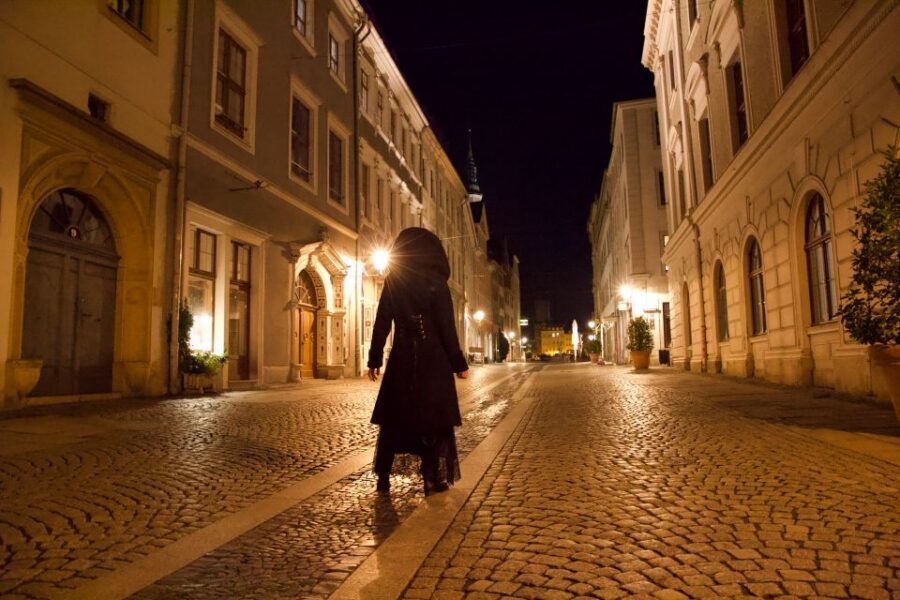
Next you continue onward toward Waidhaus, described as the oldest secular building in Görlitz. This is a key tonal shift in the walk. Churches naturally carry spiritual stories. But when the tour moves into older civic architecture, it underlines a point: fear and superstition were not only religious—they were social and public too.
This is also where the guide connects landmarks with why superstition grew around them. You’ll learn how certain executions and deaths sparked local beliefs, and how those beliefs then stuck to street corners and places people passed every day.
One detail I like in this part of the tour is the way it connects Görlitz to the idea of mummy tourism. The tour doesn’t just say the word. It frames the town as a place that later attracted curiosity around preserved remains, which helps explain why old dark stories and physical sites keep drawing attention.
Even if you’re not a folklore person, this stop gives you something practical: you start seeing the town as a set of linked locations, not isolated photos.
Following the Old City Map: Alleys, Forgotten Pathways, and the Spooky Map Trick
The most fun stretch is when the guide pulls you into narrower lanes and shadowed alleyways. This is where the old city map earns its keep. You follow the guide’s route, but the map helps you understand that some pathways feel hidden because they are. That makes the stories land harder, because you’re literally moving through the town’s “forgotten” routes.
The terrain is uneven, so this isn’t a push-through-fast walking tour. It’s a slow-down-and-look kind of walk. If you keep your eyes open, you’ll start recognizing why certain passages feel like they were meant for quick escapes, secret meetings, or avoiding notice—exactly the kinds of details your guide uses in the storytelling.
This is also the stage where surprise effects show up. Reviews highlight these moments as especially entertaining, and the Hexe figure often gets singled out as an authentic-feeling highlight. If you like theatrical storytelling that still respects the location, this is where you’ll probably feel it the most.

The Plague Tract: A Forgotten Document That Keeps the Mystery Alive
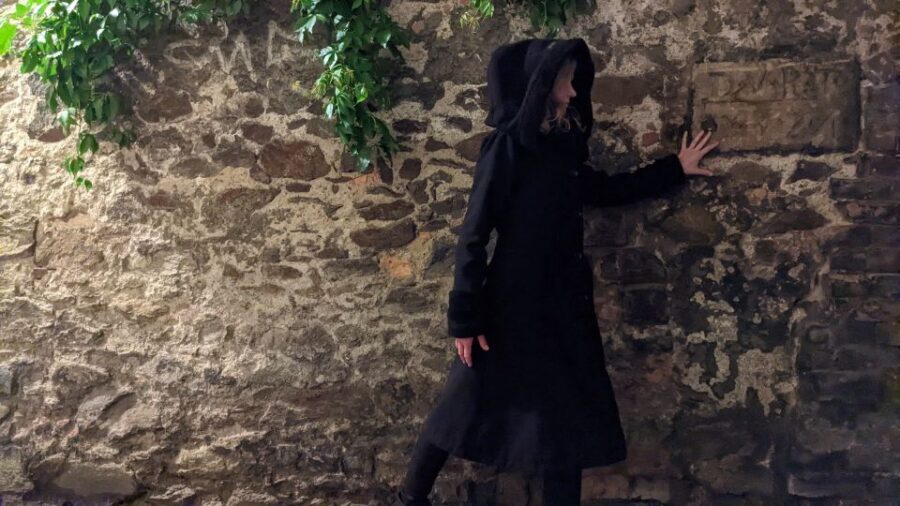
Mid-tour, you’ll hear about the Görlitz Plague Tract, described as a forgotten but historically significant document. The tour uses this element like a puzzle piece, showing how written records, fear, and rumor can feed the same local imagination for generations.
What I like about including a document-focused stop is that it adds texture. Ghost stories can sometimes feel like pure atmosphere. The Plague Tract angle grounds the vibe in something more concrete: the idea that communities tried to make sense of illness and death using whatever information they had.
If you’re the kind of person who likes to know what’s true versus what’s legend, treat this moment as a prompt. After the tour, you might want to check what you can find in daylight about the plague-era material connected to Görlitz. The tour’s job here is to point you toward curiosity, not to replace research.
Spotting Locations for Spooky Activity: How the Guide Trains Your Eye
As you continue, you’ll hear more legends and identify places of spooky activity. This is one of those underrated parts of the tour. Instead of telling you the town is haunted in general, the guide gives you specific locations and then explains why the setting mattered.
You learn to connect the dots: landmark placement, history of public events, and how people turned those experiences into tales. It’s also a clever way to keep you engaged while you walk. You’re not just absorbing stories—you’re hunting for the next “this is where it happened” moment.
Even with the darker theme, the tone stays guided and structured. You get the sense the guide knows exactly what the story needs next, and that helps the pace feel smooth even though it’s night and the ground is uneven.
A Spell Attempt at Night: Playful Moments Without Losing the Mood
The tour includes a small chance for you to try to cast your own spell before wrapping up. That kind of interactive moment does two things well. First, it resets attention so you’re not only listening for the full 1.5 hours. Second, it helps the folklore theme feel participatory, not distant.
From the way people describe the experience, the Hexe character and surprise effects are a big part of the entertainment value. One review specifically calls out the Hexe as super authentic and says the tour exceeded expectations. Another mentions small mishaps fitting in well during the Halloween outing on October 31. That tells me the guide style can be lively and responsive, which is often what makes a night tour memorable.
Just remember: it’s still a walking tour. You’ll want to stay aware of footing and keep your energy steady so you can enjoy the street atmosphere and not just the performance.
Ending Inside Schwibbogen Hotel: A Natural Stop to Catch Your Breath
The tour finishes inside the Schwibbogen hotel. That final setting helps in a practical way. After an hour of walking, uneven ground, and focused storytelling, you get a clear end point where you can sit, reset, and take a breath.
It also gives the evening a satisfying rhythm. Night walking tours can sometimes end abruptly outside in the cold. Here, the finish feels intentional—like a last scene after the walk-through.
If you want to extend the night in a smart way, this ending spot gives you a chance to review what you learned and decide what you want to see next in daylight: church architecture, the Waidhaus area, or any plague-related curiosity you want to chase further.
Price and Value: What You Really Get for About $18
At $18 per person for about 1.5 hours, this tour is priced like a local experience, not a long production. That’s a good sign for value, because the time matches the effort: you get a guided route, a live German storyteller, and a structured set of stops that includes Peterskirche, Waidhaus, and the Schwibbogen hotel finish.
You’re also paying for more than fear. You’re paying for guided context—how executions and deaths fueled superstitions, and how old records like the Plague Tract become part of the town’s modern identity. The tour uses an old map and specific landmarks, which is exactly how you get value on short tours: you don’t waste time guessing where to go next.
If you hate paying for “just vibes,” you might worry. But because the guide links stories to actual locations, it feels like you walk away with a stronger mental map of Görlitz, not only spooky soundbites.
Who Should Book This Görlitz Ghost Walking Tour
This tour is best for people who enjoy night atmosphere and storytelling tied to real streets. It also suits you if you like light theatrical touches, especially moments involving the Hexe character and surprise effects.
You should probably skip it if any of the following apply:
- you need accessibility for mobility impairments, since the tour isn’t suitable for people with mobility impairments
- you’re traveling with children under 10
- you’re pregnant
- you don’t want to walk about a mile on uneven ground
For everyone else, bring the right gear and you’ll likely have a good time. Comfortable shoes are the big one. Also, high-heeled shoes are not allowed, which is a real clue that footing matters.
And since it runs rain or shine, plan for weather. A night tour in Germany can be damp, and you’ll enjoy the stories more if your feet are happy.
Quick Practical Tips Before You Go
- Wear comfortable shoes and watch your step on uneven ground.
- Expect the tour to run rain or shine, so be ready to handle damp streets.
- Plan to avoid alcohol and drugs during the tour since they’re not allowed.
- Pets are not allowed, but assistance dogs are allowed.
Language-wise, it’s German only. If you understand some German, you’ll likely catch more of the pacing and humor. If you don’t, you can still enjoy the atmosphere and the landmark connections, but your experience may feel more “action and setting” than “word-for-word story.”
Should You Book This Görlitz Ghost Walk?
Yes, if you want a short, guided night experience that makes you feel like Görlitz has layers. The blend of Peterskirche, Waidhaus, alleyways led by an old city map, and story elements like the Görlitz Plague Tract creates a tour that’s more than jump-scare entertainment.
Skip it if you want a heavy lecture full of tightly sourced historical facts. One criticism is that more factual history would help. In that case, do this for atmosphere and then add a museum or daytime stop for the deeper verification.
If you’re okay with about a mile of uneven walking and you like spooky storytelling tied to real places, this is a strong pick for an evening in Northern Germany.
FAQ
How long is the Görlitz Ghosts and Spooky Historical Night Walking Tour?
The tour lasts about 1.5 hours.
Where do I meet the guide?
Meet in front of Peterskirche, next to the Waidhaus.
What is the tour price?
It costs $18 per person.
What language is the tour guide?
The live tour guide speaks German.
How much walking is involved, and what’s the ground like?
The tour involves about 1 mile of walking on uneven ground.
Does the tour run in rain or shine?
Yes, it takes place rain or shine.
What should I wear or bring?
Bring comfortable shoes for walking on uneven ground.
Are pets allowed?
Pets are not allowed, but assistance dogs are allowed.
Is it suitable for children or mobility needs?
It is not suitable for children under 10, pregnant women, or people with mobility impairments.
Is there free cancellation?
Yes, you can cancel up to 24 hours in advance for a full refund.