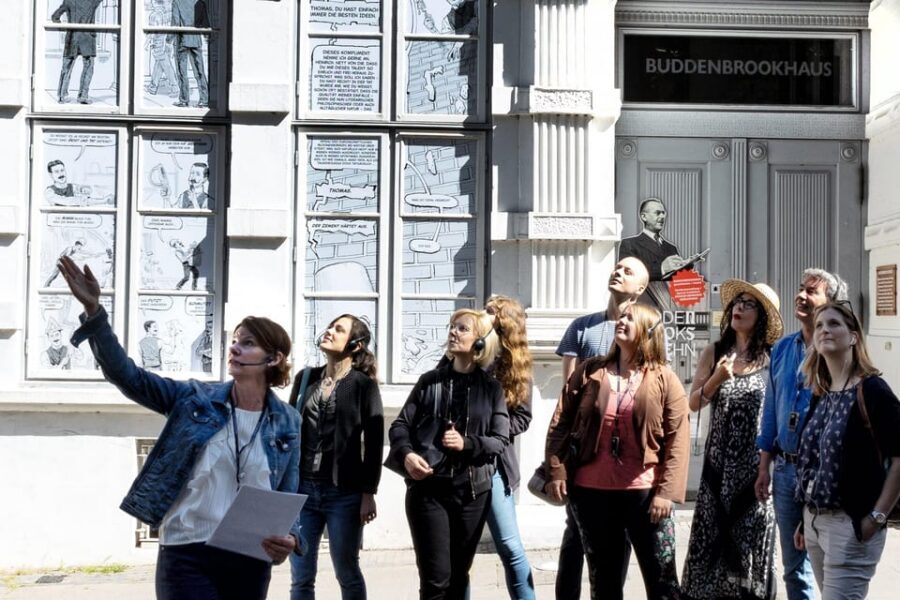
Munich feels personal on this small walk. I love how Philipp uses an architect’s eye to point out details you’d miss on your own, and I love the mix of street culture plus the Alte Utting steamboat beer garden. One consideration: it is not wheelchair-friendly, and you’ll be on your feet for the whole 150 minutes.
You get a tight group (max 16), a certified Official Munich Tour Guide, and a clear plan that strings together art, buildings, and water-related places along Munich’s south side. Food and drinks are not included, so plan to grab something before or after—though the walk itself stays fun and focused.
The best part for me is the way the tour turns random streets into something you can actually read. You’ll walk away with a digital map of Philipp’s favorite stops, plus ideas for what to look for next time you’re wandering Munich.
In This Review
- Key highlights to look forward to
- Meeting at Piazza Zenetti and spotting your guide
- Münchner Volkstheater: how the tour sets your “architecture mode”
- Beginner’s Wall street art and Bahnwärter Thiel: creativity as urban design
- Untergiesing and the Isar: walking the city through water
- MS Utting on Lagerhausstrasse: the steamboat idea starts building
- Wittelsbacherbrücke to Claude-Lorrain-Straße: small details, big payoff
- Little Venice and Scherbenviertel: the side-quest stroll you’ll remember
- Gans Woanders: whimsical beer garden as a memorable finish
- Price and time: why $30 can be good value here
- Who this tour fits (and who should consider alternatives)
- Should you book this Munich architecture tour?
- FAQ
- How long is the Hidden Architectural Gems of Munich tour?
- What is the maximum group size?
- Who is the guide?
- What languages are available?
- Where do we meet?
- How do I get to the meeting point by subway?
- What is included in the tour price?
- Are food and drinks included?
- Is the tour suitable for wheelchair users?
- Can I pay later or cancel for a refund?
Key highlights to look forward to
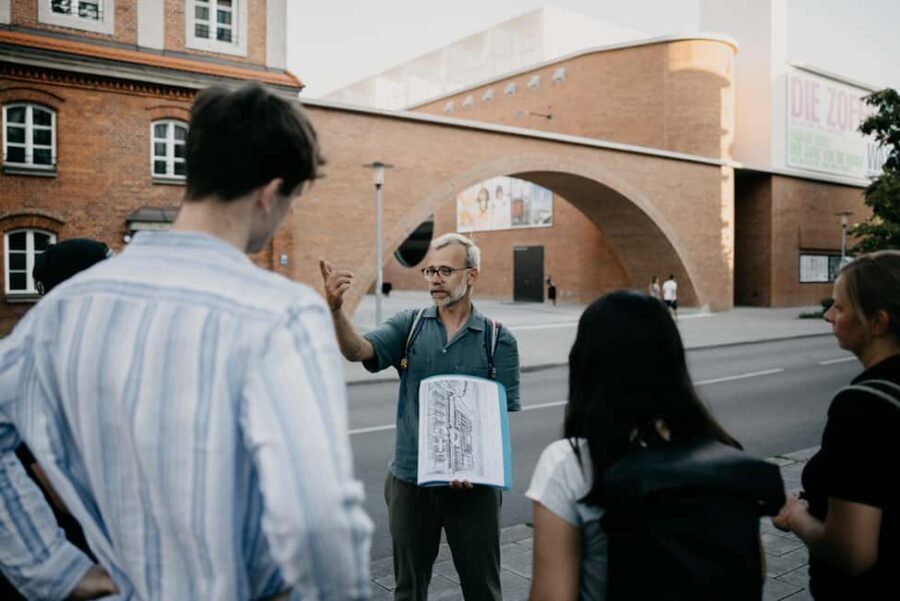
- An architect-Official guide (Philipp): design talk that stays practical and easy to follow
- Small group size (max 16): more time for questions and conversation
- Street art stops plus creative culture: the street scene is treated as part of the city’s architecture
- Munich’s water story on foot: you’ll see places tied to the Isar and the riverfront vibe
- A steamboat beer garden finale: the Alte Utting brings a playful, local flavor to the route
Meeting at Piazza Zenetti and spotting your guide
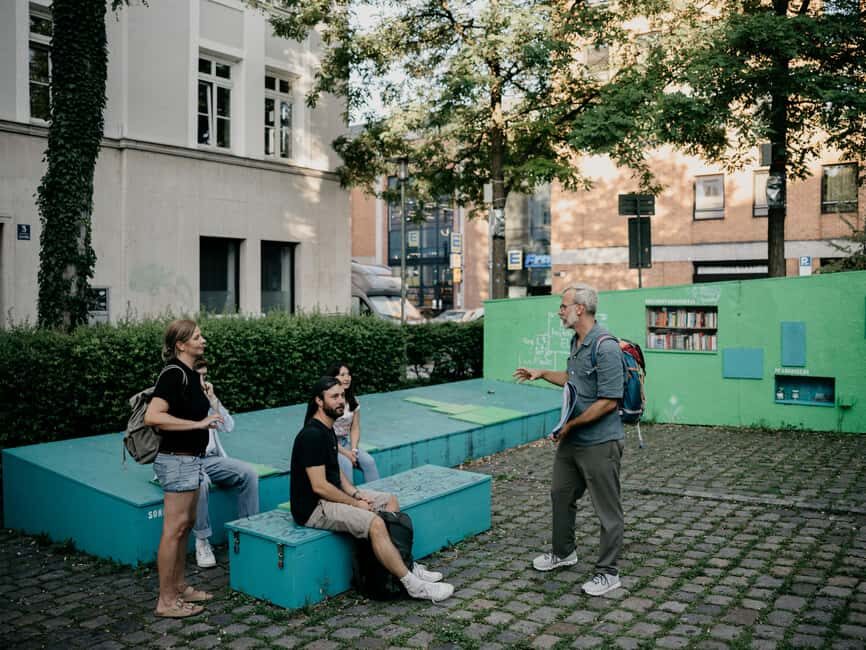
Start at Piazza Zenetti Square, marked by its distinctive grey and turquoise street furniture. It’s the kind of meeting point that helps you avoid the usual frantic look-around. When you arrive, keep an eye out for Philipp with a tablet slung over his shoulder.
If you’re using public transit, the easiest route is via subway lines U3 or U6, then exit at Poccistrasse station. From there, it’s about a 10-minute walk. I like that this is straightforward—no transfers marathon, no complicated puzzle.
Bring comfortable shoes and warm clothing. Even in decent weather, Munich’s outdoor streets and river areas can feel cool once you’re moving for a couple hours. Also, smoking isn’t allowed on the tour, so if that’s relevant for you, plan accordingly.
This is a small-group tour, so being on time matters. The route moves from one focus area to the next, and Philipp keeps a good rhythm.
You can also read our reviews of more tours and experiences in Munich.


Münchner Volkstheater: how the tour sets your “architecture mode”
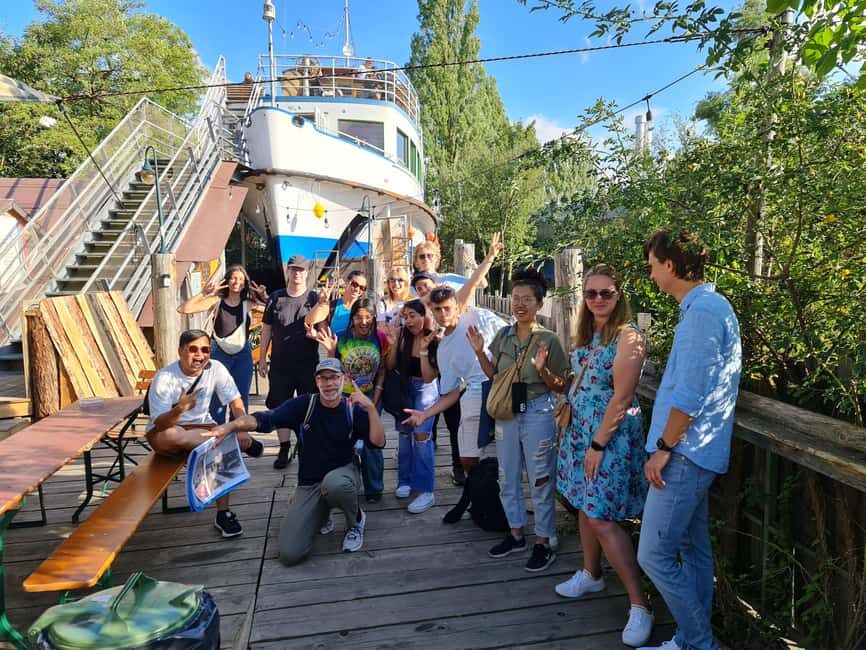
The tour begins with a guided stop at the Münchner Volkstheater. This first location matters because it trains your eyes for what comes next. Instead of rushing from one photo spot to another, Philipp gets you looking at how buildings shape the street experience around them.
Think of this as a warm-up that pays off later. Once you learn what to notice—structure, street alignment, and small design cues—you’ll start seeing the city differently when the route turns toward street art and creative spaces.
This start is also a confidence boost for first-time Munich visitors. You’re not stuck in the biggest tourist lanes right away, but you’re also not dropped into a maze. You get an orientation moment, then the tour shifts toward areas that feel more like lived-in Munich.
If you’re the type who enjoys asking questions, you’ll likely appreciate this early section. Philipp’s role as an architect turns everyday details into real discussion topics.
Beginner’s Wall street art and Bahnwärter Thiel: creativity as urban design
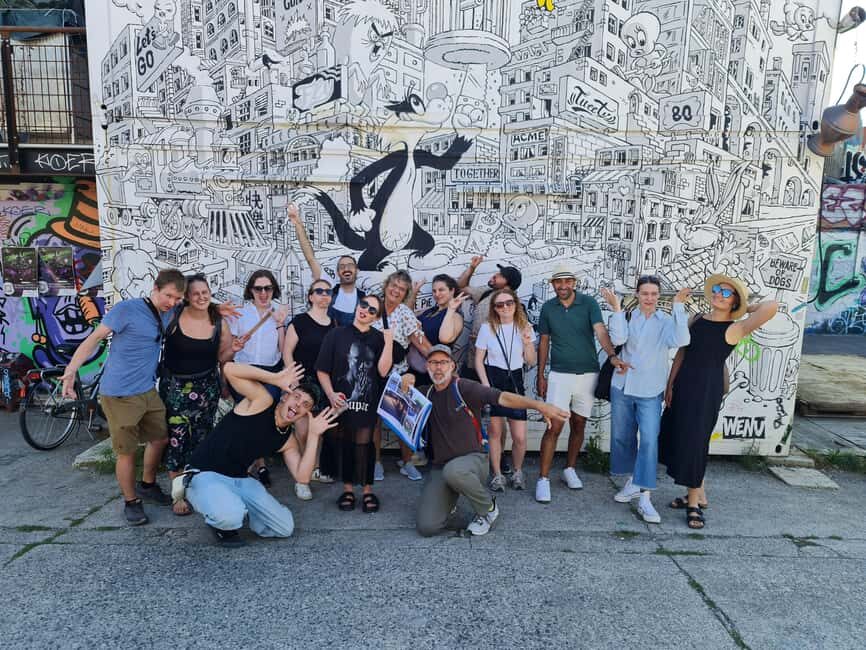
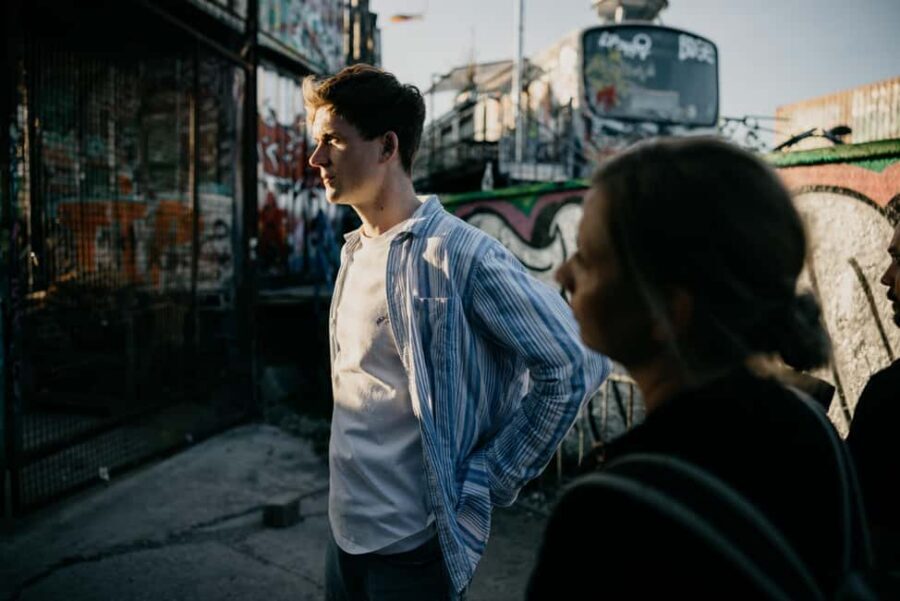
From the Volkstheater area, the walk moves into Munich’s street art scene, including the Beginner’s Wall. This isn’t treated like a random side stop. You’re learning how to read street art as part of the city’s visual language—how people claim a wall, how color and layout change the mood of a block.
Then the route heads to Bahnwärter Thiel, a cultural hub built around creativity. Here, the focus shifts from painted surfaces to the atmosphere of the place itself. You’re looking at how a site becomes a meeting point for art and community, not just an address.
What I like about combining these two stops is the contrast. Street art gives you immediacy—something you can interpret quickly. Bahnwärter Thiel gives you context—how creativity can shape a neighborhood’s identity over time.
This is also where the tour earns its repeat-visit value. Even if you’ve walked around Munich before, you’ll come away with new places to check out later and a better sense of where creative energy shows up.
Untergiesing and the Isar: walking the city through water
One of the tour’s big themes is Munich’s water story. You’ll spend time along the Isar corridor and in the south-side district area often associated with Untergiesing. This is smart because water is one of the easiest ways to understand how Munich functions. It affects how people move, where they gather, and how neighborhoods feel in different seasons.
Philipp’s approach is practical: you’re not stuck memorizing facts. Instead, you’re learning how to notice the relationship between city space and the river’s presence. The route threads you through streets and connections that make that relationship visible.
You’ll also pass through key walking segments like Dreimühlenstraße and areas near bridges, which helps break up the route visually. That matters in a 150-minute tour. The pace stays active, but you’re not walking in a straight line with no payoff.
If you tend to enjoy “how cities work” as much as “what cities look like,” this portion is a highlight. It turns Munich’s river from scenery into a story you can follow on foot.
MS Utting on Lagerhausstrasse: the steamboat idea starts building
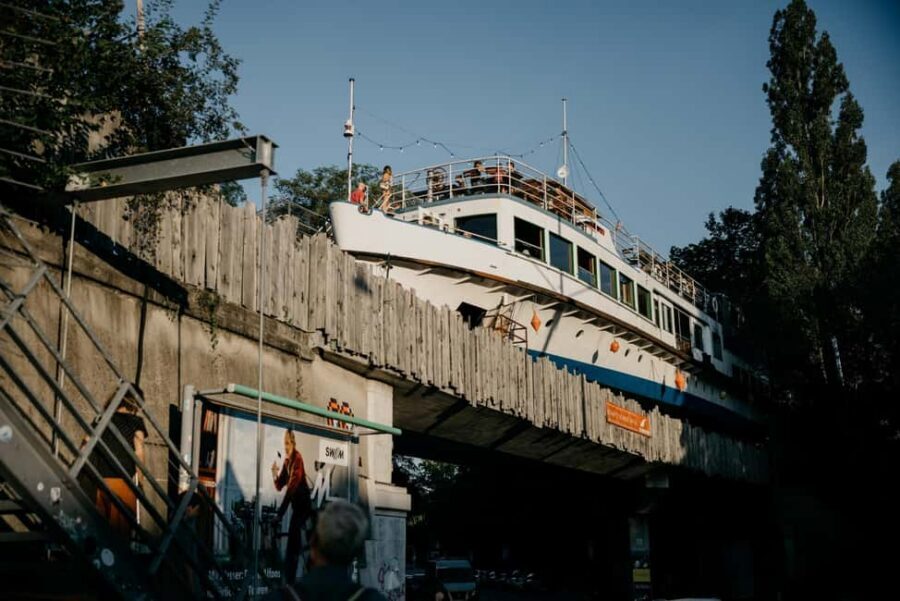
As you continue, you reach MS Utting near Lagerhausstrasse, with a guided look along the route. This is one of those Munich moments that feels both quirky and very local. Instead of a standard view from a bridge, you’re guided toward understanding why this kind of water-based setup belongs here.
This stop also helps you connect the earlier architecture cues with the later beer garden finale. When the tour arrives at the steamboat setting, you’re already primed to look at the surrounding structure—how the riverbank, the street connection points, and the building-like edges of the boat work together.
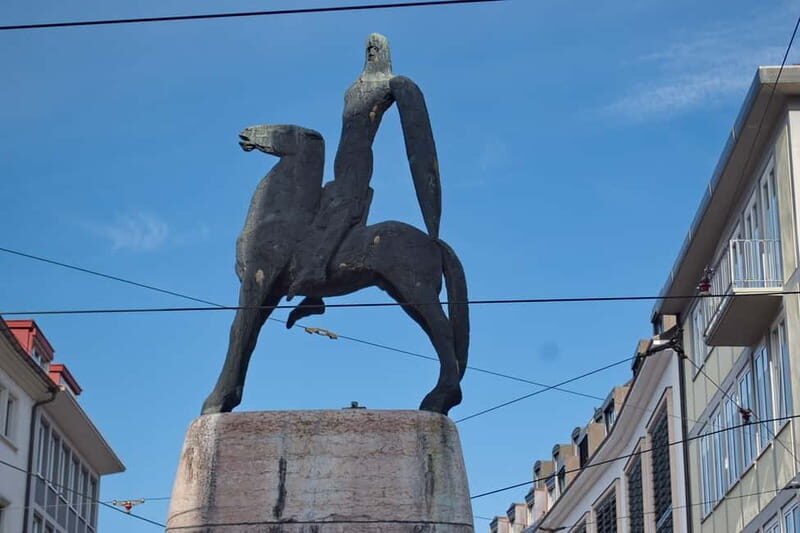
The route then moves toward Wittelsbacherbrücke, which is a natural transition point for changing views. Bridges do a lot: they reset your perspective, give you sightlines, and make walking feel less repetitive. Even without turning this into a long sightseeing lecture, Philipp uses these segments to keep your attention sharp.
If you’re a person who loves asking why something is where it is, this middle stretch is likely to feel satisfying. It’s the bridge between the art and the food-and-drinks energy later on.


Wittelsbacherbrücke to Claude-Lorrain-Straße: small details, big payoff

After the river connections, you’ll walk through segments that include Wittelsbacherbrücke and Claude-Lorrain-Straße. I like this part because it’s where the tour becomes less about one famous thing and more about learning how Munich is put together.
Bridges offer a built-in lesson: how a city frames movement. Streets like Claude-Lorrain-Straße help with the other half of the equation—how the everyday street grid supports people’s routines and social life. You’re learning to read the city as a system, not just as isolated landmarks.
This section is also a good moment to catch your breath. You’re moving, but you’re not rushing. Philipp keeps the route focused, so you’re not constantly checking your phone to figure out where you are.
Since the tour includes outdoor walking, warm clothing is a real advantage here. Even short stretches feel longer when it’s cool and you’re standing still for explanations.
If you’re traveling with friends and you all have different interests—architecture, art, or just finding cool neighborhoods—this is the part that tends to bring them together.
Little Venice and Scherbenviertel: the side-quest stroll you’ll remember
Next comes Little Venice, along with the charm of nearby areas like Scherbenviertel. This is the kind of stretch that changes the mood. After the more structured city points and the creative stops, you get something softer and more scenic.
The best way to describe it is that the route turns into a pleasant wander. You’re still getting guided context, but the area’s character does a lot of the work for you. It feels like Munich slowed down, at least for a bit.
I also like that Philipp doesn’t treat it like a quick photo line. You’re guided to notice the relationship between water-adjacent spaces and how people use them. That mindset carries into the final destination at the beer garden.
This part of the walk is especially good if you enjoy discovering quieter corners. You’re not just ticking boxes—you’re learning which zones feel distinct, and that’s the stuff you can return to later.
Gans Woanders: whimsical beer garden as a memorable finish

The tour ends at Gans Woanders, a beer garden with a playful, artistic feel. This is a strong closing move because it ties together the tour’s two main themes: how spaces shape culture, and how design shows up everywhere, even in places that are meant for relaxing.
Food and drinks are not included, so if you want a snack or a beer, treat this as your proper finish point. It’s also a good moment to ask Philipp for practical next steps. The tour includes a digital map of Philipp’s favorite places to visit in Munich, and this ending is where those recommendations feel most useful.
I like endings like this because it doesn’t feel like the tour abruptly stops. You’re released into a fun space where you can keep chatting, take photos, or just sit for a while.
And because the group is small, it’s easier to maintain good conversation right up to the end, which makes the whole 150 minutes feel more personal.
Price and time: why $30 can be good value here
At $30 per person for 150 minutes, this is one of those tours that feels reasonably priced when you look at what you’re buying. You’re not just paying for a walking route—you’re paying for an architect and certified Official Munich Tour Guide to steer your attention.
The small group size (max 16) is part of the value. It means you’re more likely to get real answers, not vague generalities. And Philipp’s background as an architect adds weight to the explanations, especially if you care about how buildings and street space interact.
Also, the tour covers a range of experiences in a tight loop: theater architecture, street art, a cultural creative hub, river/water-related spaces, and a distinctive beer garden ending. For $30, that combination is hard to beat if you prefer variety over long museum days.
Yes, you still need to handle your own food and drinks. But that also means you can choose what fits your budget and preferences, and you’re not forced into a set meal.
Who this tour fits (and who should consider alternatives)
This tour is family friendly, which is helpful if you’re traveling with teens who get bored by lectures. It also works well for first-timers because it pairs well-known Munich anchors (like the Volkstheater area) with off-the-main-street culture.
I’d especially recommend it if you:
- like architecture but don’t want it to feel academic
- enjoy street art and want it explained in a city context
- care about walking and want a route that gives you “where to go next” ideas
The main drawback is accessibility. It is not suitable for wheelchair users. Also, because it’s an outdoor-heavy walking experience, you’ll want comfortable shoes and warm clothing.
If you hate walking for 150 minutes, this may feel like too much. But if you’re okay with steady city walking and stopping often for short guided moments, it’s a great fit.
Should you book this Munich architecture tour?
Yes, if you want a guide who can connect art, architecture, and city space without turning everything into a lecture. The biggest selling point for me is Philipp’s focus: you leave with a changed way of seeing the city, plus a digital map of where to go next.
If you’re traveling with a group (or just you and one or two friends), the max 16 size keeps it friendly. If you’re traveling solo, it’s also a good way to meet your city on a human scale.
Just remember the basics: it’s $30 for the tour itself, food and drinks are on you, and you’ll want warm clothes and good shoes. If that fits your travel style, this is an excellent use of a couple of hours in Munich.
FAQ
How long is the Hidden Architectural Gems of Munich tour?
The tour lasts 150 minutes.
What is the maximum group size?
The group is limited to a maximum of 16 guests.
Who is the guide?
The tour is guided by Philipp, an official Munich tour guide and architect.
What languages are available?
The tour is offered in English, German, and Spanish.
Where do we meet?
You meet at Piazza Zenetti Square, identifiable by its grey and turquoise street furniture.
How do I get to the meeting point by subway?
The easiest route is via subway lines U3 or U6. Exit at Poccistrasse station, then walk about 10 minutes to Piazza Zenetti.
What is included in the tour price?
The tour includes Philipp as your guide, insight into the hidden architectural locations, and a digital map of Philipp’s favorite places in Munich.
Are food and drinks included?
No. Food and drinks are not included.
Is the tour suitable for wheelchair users?
No. The tour is not suitable for wheelchair users.
Can I pay later or cancel for a refund?
You can reserve now and pay later. Free cancellation is available up to 24 hours in advance for a full refund.