REVIEW · HAMBURG
Hamburg: Guided Tour in French, the essentials in 2,5 hours!
Book on GetYourGuide →Operated by une Guide à Hambourg / Gaëtane Douin · Bookable on GetYourGuide
Two and a half hours can remake Hamburg. This guided French tour with Gaëtane Douin is built to give you the keys to the city, with clear explanations and lots of lively, funny details as you walk. I especially liked how quickly you get your bearings, and how well the history clicks when you hear it from a resident guide active in Hamburg’s independent art scene since 2010. The one drawback: it’s not ideal if you have mobility issues, and you should plan for a short ferry or bus ride where the ticket costs extra.
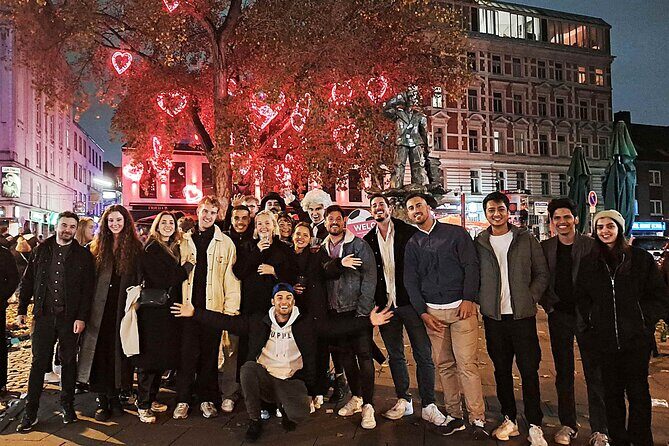
What I loved most is the route itself: it links the Altstadt around Rathaus, the Speicherstadt + HafenCity contrast, then lands you at Landungsbrücken and St Pauli where the port-city energy is easy to feel. With a small group capped at 8, you’re not stuck behind a crowd, and it’s easier to ask questions as the story moves.
In This Review
- Key highlights to look forward to
- Entering Hamburg Essentials: what makes this tour work so well
- Who this tour is best for
- Rathausmarkt and Hammaburg-Platz: starting where Hamburg’s civic story turns
- St. Nikolai Memorial and Deichstraße: learning Hamburg’s older layers
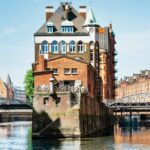
- Speicherstadt: warehouses, trade power, and why it looks the way it does
- HafenCity and the Elbphilharmonie area: understanding the city’s modern pivot
- The Elbe River and the big viewpoint moments
- Landungsbrücken and St. Pauli: where Hamburg’s port mood becomes real
- Price and timing: does $46 for 2.5 hours feel fair?
- Small group pacing: what the 8-person limit changes
- Practical tips before you go
- Should you book Hamburg Essentiel in French?
- FAQ
- What language is the tour?
- How long is the Hamburg Essentials tour?
- How much does it cost?
- How many people are in the group?
- Where do we meet the guide?
- Where does the tour end?
- Are entrance tickets included?
- Is there public transport during the tour?
- What should I bring?
- Is the tour suitable for people with mobility impairments?
Key highlights to look forward to
- French guide in a small group (max 8): easier pace, better conversation, more personal attention
- Best-first-stay routing: Rathaus area, Speicherstadt, HafenCity, Elbe, Landungsbrücken, St Pauli
- Photo-stop rhythm: you’re guided to the right viewpoints without rushing interiors
- A port-city story you can see: from old trading roots to the HafenCity shift
- Gaëtane’s style: clear diction plus history explained with practical context and humor
- A short ferry/bus hop: adds variety, with the €2 ticket handled separately
Entering Hamburg Essentials: what makes this tour work so well
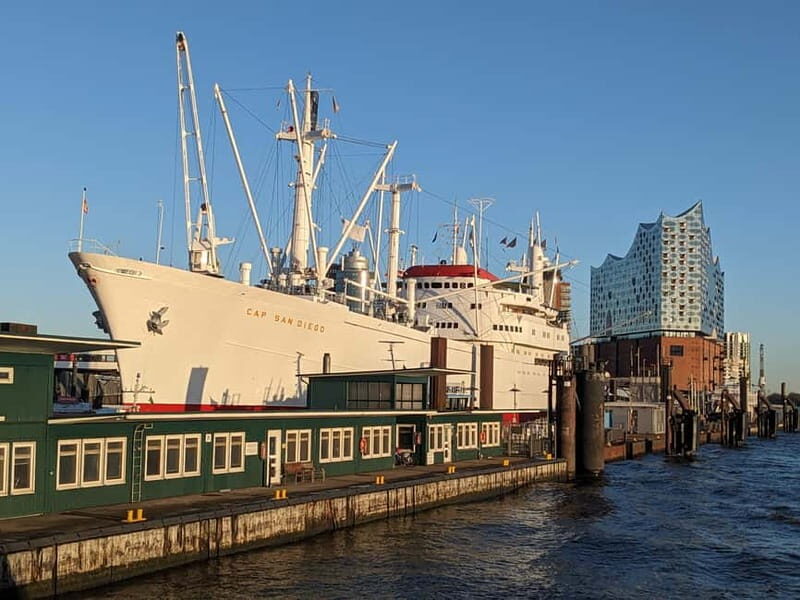
If you’re short on time, you need two things: orientation and context. This tour is designed for exactly that. You start in the city center and move step-by-step through Hamburg’s big “chapters,” from the older civic heart to the trading warehouses, then out to the water and down into St Pauli’s port-life surroundings. By the end, you’re not just seeing landmarks—you understand how Hamburg became the northern Germany shipping powerhouse it is today.
I also like that the tour stays realistic. There are no long museum detours or complicated ticket hunts. The pacing is built around outside sights, photo stops, and guided walking, so you can actually store what you learn. That matters in Hamburg, where the architecture and street layers can feel overwhelming if you try to do it alone on day one.
You can also read our reviews of more guided tours in Hamburg



Who this tour is best for
You’ll get the most from it if:
- it’s your first visit to Hamburg,
- you want the big picture quickly (and in French),
- you like walking through neighborhoods instead of sitting in one place,
- you appreciate a guide who mixes history with everyday city logic.
If you prefer museums, quiet parks, or slow, detailed interior visits, you might want something else afterward. But for a first stay, this is a smart way to get your bearings fast.
Rathausmarkt and Hammaburg-Platz: starting where Hamburg’s civic story turns
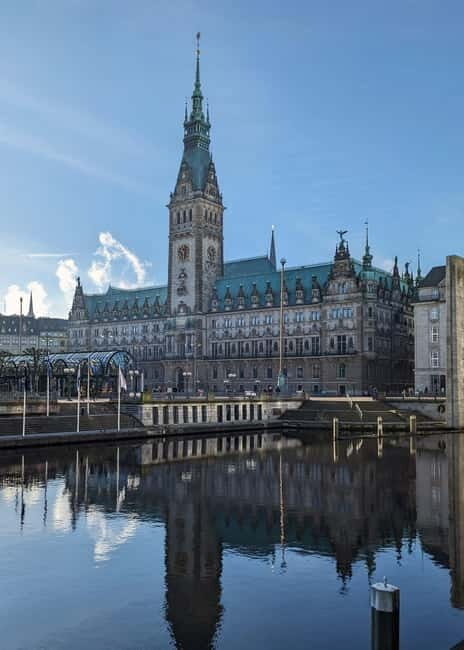
The meeting point is Hammaburg Platz, at the corner of Domstraße and Alter Fischmarkt. You’ll see the guide holding an A4 sign that says Hambourg Essentiel. The start feels like you’re entering Hamburg’s “main idea” zone: historic central streets, civic scale buildings, and a lot of visual cues that help you understand what follows.
From there, the tour stops around Rathausmarkt. This is the practical highlight of the early segment: the place where you can orient yourself spatially. Gaëtane’s approach here is about giving you context before the city speeds up. Once you understand where the Rathaus area sits, everything after starts to make sense—especially the transition from old trading town roots to modern port metropolis.
Photo stop + guided walk (about 30 minutes) keeps it moving without being exhausting. You’ll get enough time to look, take pictures, and still stay in the “story mode” instead of turning it into a sightseeing checklist.
St. Nikolai Memorial and Deichstraße: learning Hamburg’s older layers
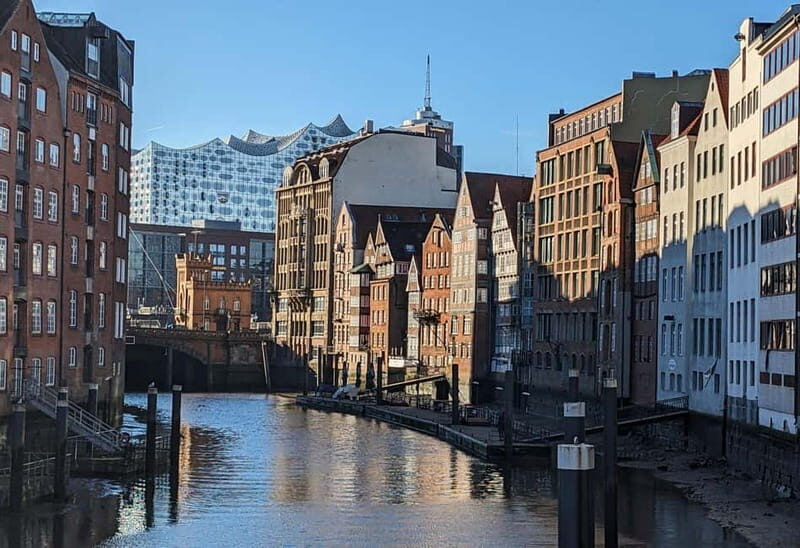
Next comes the St Nikolai Memorial. It’s only about 10 minutes on the schedule, but it’s a powerful stop because memorials teach you how a city remembers. In Hamburg, history isn’t only about dates—it’s also about resilience, losses, and rebuilding. A short stop like this is a good use of time: you get the meaning without getting trapped in a long visit.
Then you head toward Deichstraße. Another 10-minute guided/photo stop, but with an important role in the tour’s logic. Streets like these help you understand the water-and-land relationship that shaped Hamburg. Hamburg didn’t grow into a major port by accident, and the city’s infrastructure reflects that constant conversation with rivers and tides.
A small but useful note: these early stops are a good time to ask questions. Because the group is limited to 8, you can usually get a straight answer instead of waiting your turn for the last minute.
Speicherstadt: warehouses, trade power, and why it looks the way it does
Now you shift into the part of Hamburg that many first-timers come to photograph: Speicherstadt. You spend about 30 minutes here, with a mix of guided explanation, sightseeing, and walking.
What makes Speicherstadt especially valuable on an essentials tour is the “why” behind the look. This is not just a pretty district. It’s a visible reminder that Hamburg’s identity is tied to shipping, storage, and logistics—literally. When you understand that function, the architecture becomes more than background. You start seeing structure and purpose.
Also, Speicherstadt is a great mental reset. After the civic heart and memorial context, it’s easier to absorb the story when you’re standing in a place that makes the story physical. You’re close enough to landmarks to get details, but the time allocation keeps you from feeling like you’re on a scavenger hunt.



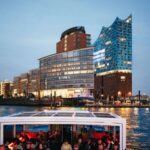
HafenCity and the Elbphilharmonie area: understanding the city’s modern pivot
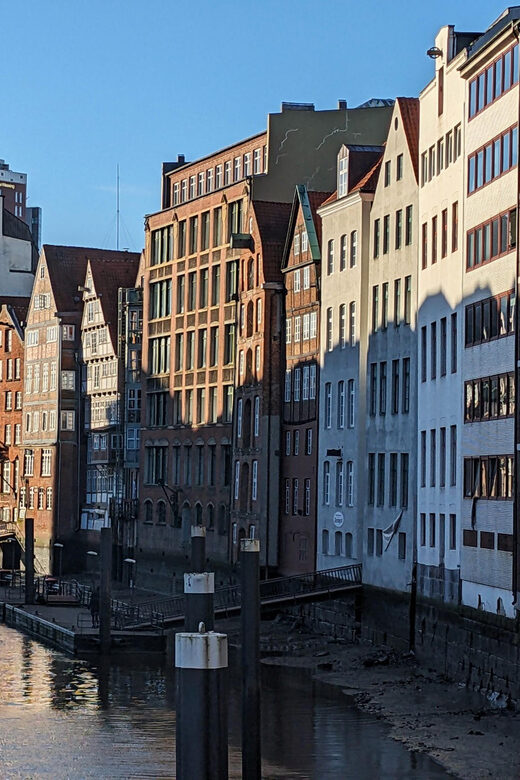
The tour moves into HafenCity next, with about 10 minutes of guided sightseeing and photo stopping. Then you’ll reach the Elbphilharmonie viewpoint area for another short guided photo stop.
These moments are brief, but they’re planned as contrast. Speicherstadt represents the historic “trade machine.” HafenCity and the Elbphilharmonie area represent the modern rewrite—Hamburg reshaping its waterfront image while staying tied to port life.
What you’ll appreciate if you’re the type who likes to connect dots: Gaëtane frames these stops so they don’t feel random. Instead, you start noticing the city’s planning decisions—how Hamburg can change its public face while still operating as a major port.
And because this is an outdoor-oriented tour with no interior visits planned, you don’t lose time waiting in lines or dealing with entrance logistics. You see the big forms, learn the context, and move on.
The Elbe River and the big viewpoint moments
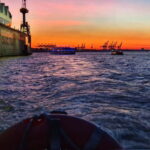
You get time near the Elbe River with about 20 minutes of sightseeing and walking. This is one of those parts of a city where photos don’t fully replace the experience, because the scale and water lines do the explaining.
The practical value here is orientation. Standing by the river helps you picture where ships go, where neighborhoods face the water, and why the city built the way it did. Even if you’re only in this stretch for part of the afternoon, it helps you later when you choose what to explore on your own.
It’s also a relief break in the route: instead of another “stop and go” landmark, you get a slightly longer window to look around and reset your eyes.
Landungsbrücken and St. Pauli: where Hamburg’s port mood becomes real
The tour finishes the main sightseeing arc at Landungsbrücken, then heads into St Pauli. You spend about 30 minutes around Landungsbrücken and another 30 minutes in the St Pauli area (with photo stop, guided tour, sightseeing, and walking).
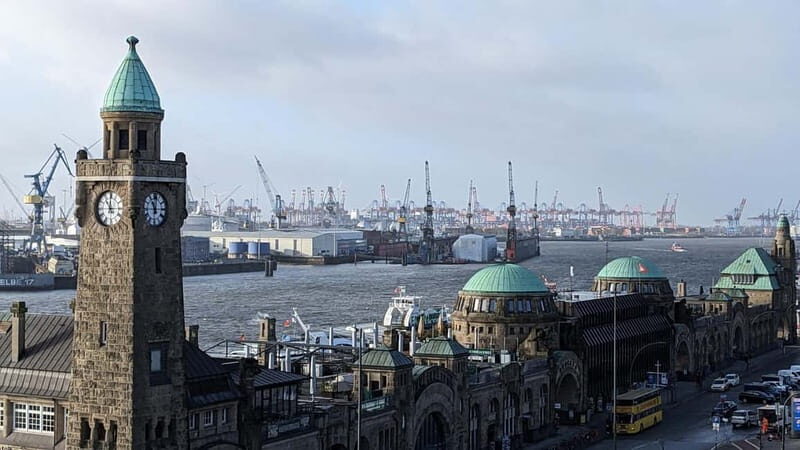
This is where the city’s personality comes through. You can learn a lot about Hamburg from memorials and architecture, but port districts are where the place starts behaving like itself. The atmosphere around Landungsbrücken makes sense of everything you’ve heard earlier: Hamburg was built for movement, trade, and water access.
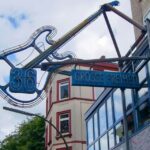
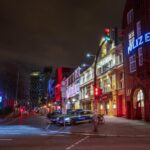
Then St Pauli adds the human layer. It’s a neighborhood where the port-city story turns more social—street life, energy, and that famous mix of old maritime culture and modern entertainment reputation. The tour is careful not to turn it into a gimmick. Instead, it uses the location to explain how Hamburg’s identity expresses itself in different ways across districts.
You end at Spielbudenplatz.
Price and timing: does $46 for 2.5 hours feel fair?
At $46 per person for about 150 minutes (2.5 hours), this is priced like a “good first-day orientation” tour rather than a long, ticket-heavy day. And that’s the point: you’re paying for a guided story and a structured route that connects major districts.
Here’s what’s included:
- Guided tour in French
- Duration around 2.5 hours
- A guided route with photo stops and walking
Here’s what’s not included:
- Entrance tickets (no interior visits are planned)
- Transportation to/from the meeting and finish points
- A ticket for one ferry or bus ride, which costs €2 per person unless you already have a day pass (recommended)
So the value is in the pacing and guidance, not in admissions. If you’re visiting for the first time and want context fast, $46 can feel like a bargain because it saves you from guessing your way through neighborhoods. If you already know Hamburg well and you’re only here to take photos, you might prefer a self-guided route. But if you want the story explained cleanly in French, you’re paying for that translation of place into meaning.
Small group pacing: what the 8-person limit changes
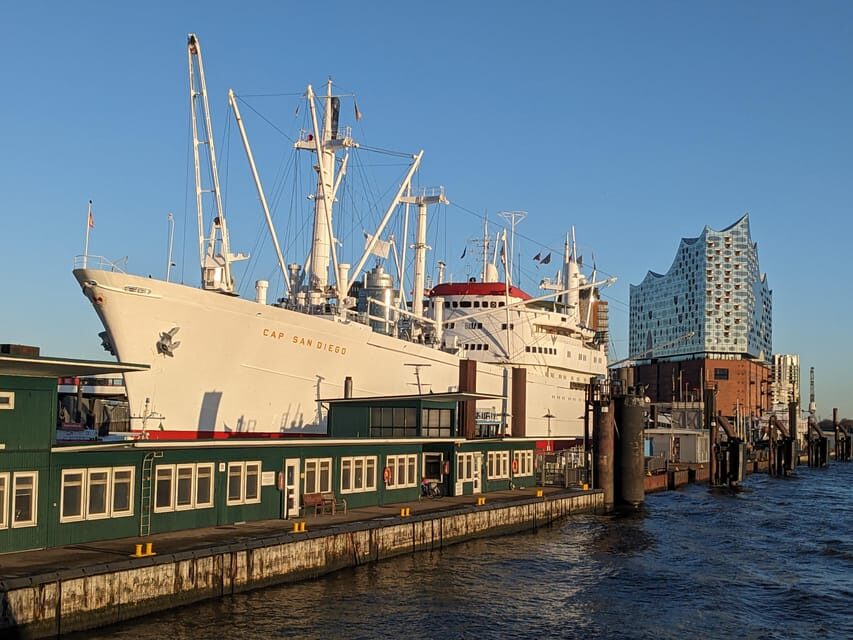
A small group capped at 8 matters more than it sounds. When you’re walking from the Rathaus area toward the Speicherstadt and HafenCity, you quickly hit the problem of big tour groups: people stop, people talk over each other, and the guide can’t answer questions.
With this group size, you can usually:
- keep up without feeling panicked,
- hear the guide clearly,
- stay flexible if something visually grabs your attention,
- get practical clarifications as you go.
This is also supported by the guide’s style in the way she communicates. The French delivery is described as clear, with well-structured explanations and a noticeable comfort speaking about Hamburg’s past and present.
Practical tips before you go
Bring:
- Passport or ID card
- Comfortable shoes (you’ll be walking)
- Camera (this tour is photo-stop friendly)
Wear:
- something you can move in; the tour is designed for walking between several districts.
Plan your day:
- The route is anchored to central Hamburg start and ends in St Pauli area (Spielbudenplatz), so it pairs well with either a longer lunch around the center afterward or a late-afternoon stroll near the port.
One extra thing to remember: you’ll take one ferry or bus ride, and the ticket is €2 per person unless you already hold a day pass. If you don’t have transit coverage, it’s a small extra cost, but it’s worth budgeting for.
Should you book Hamburg Essentiel in French?
I’d book this tour if you’re doing Hamburg for the first time and you want a guided, French-language overview that stitches together the city’s biggest themes. You’ll leave with a clearer sense of where things are, why the districts look the way they do, and how Hamburg grew from an older Saxon town into a major trading port with an independent civic identity.
Skip it (or treat it as option B) if:
- you need an interior-heavy itinerary with lots of ticketed attractions,
- walking won’t work for you,
- you want a deep museum-level experience rather than an essentials walk.
If you’re in the “first time, want context, limited time” group, this is one of the most practical choices you can make. And with Gaëtane Douin, the combination of structure, humor, and clear speaking makes the history feel like something you can actually use while you keep exploring on your own.
FAQ
What language is the tour?
The tour is in French, with a live guide.
How long is the Hamburg Essentials tour?
It runs for about 150 minutes (around 2.5 hours).
How much does it cost?
The price is $46 per person.
How many people are in the group?
The group is small, limited to 8 participants.
Where do we meet the guide?
You meet at Hammaburg Platz, at the corner of Domstraße and Alter Fischmarkt. The guide has an A4 sign saying Hambourg Essentiel.
Where does the tour end?
The tour ends at Spielbudenplatz in St Pauli.
Are entrance tickets included?
No. There are no interior visits planned, so entrance tickets are not included.
Is there public transport during the tour?
Yes. You take 1 ferry or bus ride during the visit, and the ticket costs €2 per person (unless you already have a day pass, which is recommended).
What should I bring?
Bring your passport or ID card, comfortable shoes, and a camera.
Is the tour suitable for people with mobility impairments?
No, it is not suitable for people with mobility impairments.