REVIEW · BERLIN
Gastro Tour with Klaus though the Wrangelkiez, Kreuzberg
Book on Viator →Operated by Kontext Berlin · Bookable on Viator
Food and Berlin’s border history share the same path. This Wrangelkiez tour threads history into your evening plan, with stops that are famous locally for good reason and food that keeps you moving. I love the simple, timed flow, and I love that you eat your way through multiple neighborhoods instead of just snapping photos.
Klaus runs the show with an engaging, story-first approach, tying each place to what Berliners lived through. You get an international mix at several gastro partners, and the tastings are paced so you can genuinely make this feel like a real meal, not a token bite.
One thing to consider: drinks aren’t included, so if you want beer or wine with your food, you’ll need to budget for it on the side.
In This Review
- Key highlights worth carving out time for
- Why this Kreuzberg gastro tour works as a plan
- Price and what $83.08 really buys you
- How the 3-hour flow keeps you from getting bored
- Oberbaumbrücke: East-West connection, before your first bites
- Lohmühleninsel: a small parcel that teaches big Berlin lessons
- GDR watch tower: the border story gets physical
- Görlitzer Park: a neighborhood hangout with a complicated reputation
- Falckensteinstraße: where Klaus’s picks turn the route into a meal
- Wrangelstraße: Romanesque-style church, then a final food choice
- The value of small-group guiding in a food-history tour
- Who should book this gastro tour through the Wrangelkiez?
- Should you book this gastro tour with Klaus?
- FAQ
- How long is the Gastro Tour through the Wrangelkiez?
- What does the tour cost?
- Is the tour offered in English?
- What’s included in the price?
- Are drinks included?
- Where does the tour start and where does it end?
- How large are the groups?
- Is free cancellation available?
- Is a mobile ticket used?
Key highlights worth carving out time for
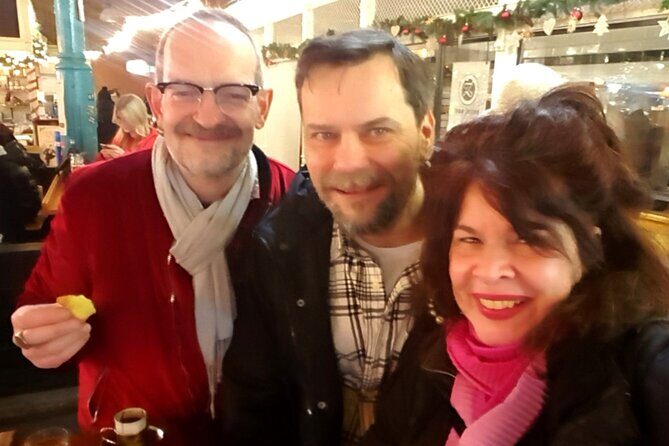
- Small-group pacing (max 15) keeps the tour friendly and easy to follow
- Five gastro partner tastings are built into the 3-hour loop
- East-West landmarks up front, starting at the Oberbaumbrücke
- A preserved GDR watchtower stop in the former border area
- Falckensteinstraße + Wrangelstraße food density lets you compare cultures street by street
- Final choice near Schlesisches Tor for either a last drink or subway-free transit
Why this Kreuzberg gastro tour works as a plan
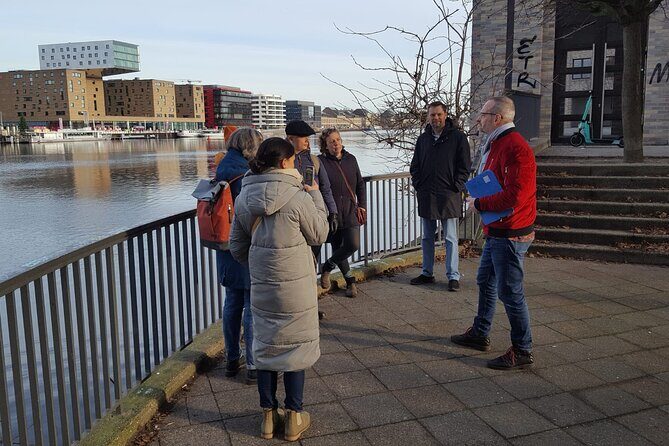
Berlin can be intense. You can spend days doing museums and memorials and still feel like you missed the everyday life part. This tour gives you a different rhythm: you walk through recognizable Kreuzberg scenes, then you stop for tastings that turn the neighborhood into something you can taste and remember.
The big win for me is the balance. You’re not stuck listening the entire time, and you’re not stuck eating without context. Places like the Oberbaumbrücke and the former border watch tower matter because they help you understand why Kreuzberg looks the way it does and why its food scene grew into something international and loud with identity.
It’s also a practical “evening save” if you like structure. At about 3 hours, you get a whole mini-story arc—from the East-West connection to what people built right beside the former dividing line—without burning your whole day.
You can also read our reviews of more tours and experiences in Berlin.



Price and what $83.08 really buys you
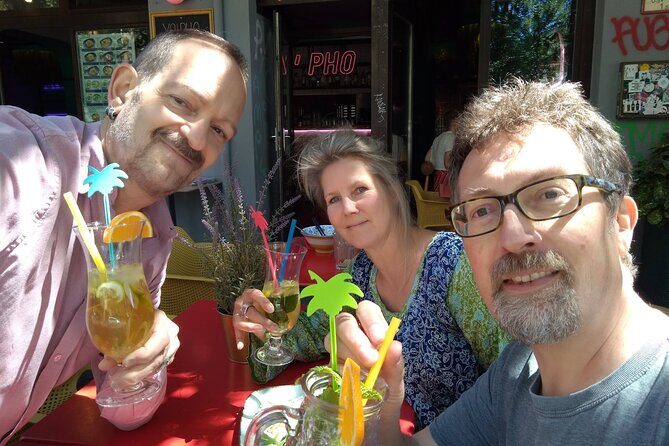
At $83.08 per person for about 3 hours, the price doesn’t scream “cheap,” but it also doesn’t feel inflated for what’s included. You get:
- a local guide
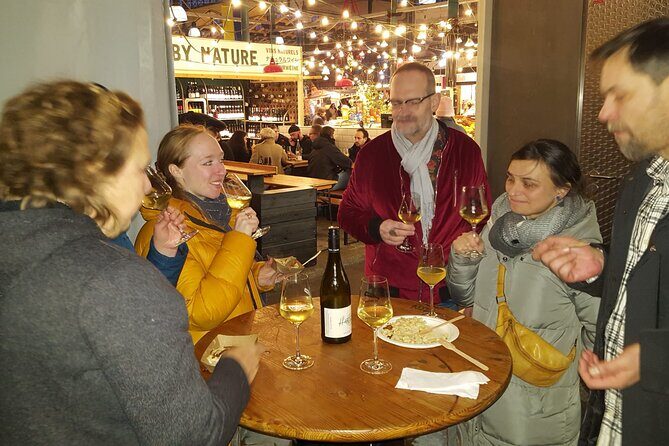
- snacks through five gastro partners, with selected tastings (some can be street-food stalls)
- admission tickets that are marked free for the stops
That’s the key value piece: you’re not paying separately for entry fees, and you’re not just paying for walking-and-talking. The tastings are baked into the timeline, so you’re more likely to leave satisfied.
The only clear extra cost you should anticipate is drinks. Since drinks aren’t included, you may want to plan for water and any beer/coffee stop you choose after the last tasting.
How the 3-hour flow keeps you from getting bored
The tour starts at Cuvrystraße 2, 10997 Berlin and ends near the metro at Schlesisches Tor, with the final gastro partner depending on the season. That matters because the last part of your evening should fit the day’s vibe—whether the neighborhood is doing more indoor cozy or outdoor street style.
Expect a steady walk between stops and short time windows at each location. The stop list is built for quick context:
- landmark history first,
- then architectural or border-era details,
- then a long food-focused stretch where you can compare multiple international options in one corridor.
With a max group size of 15, it stays manageable. Big groups can make history tours feel like a conveyor belt. Here, you’re more likely to hear the explanation and ask a quick question when something clicks.
Oberbaumbrücke: East-West connection, before your first bites
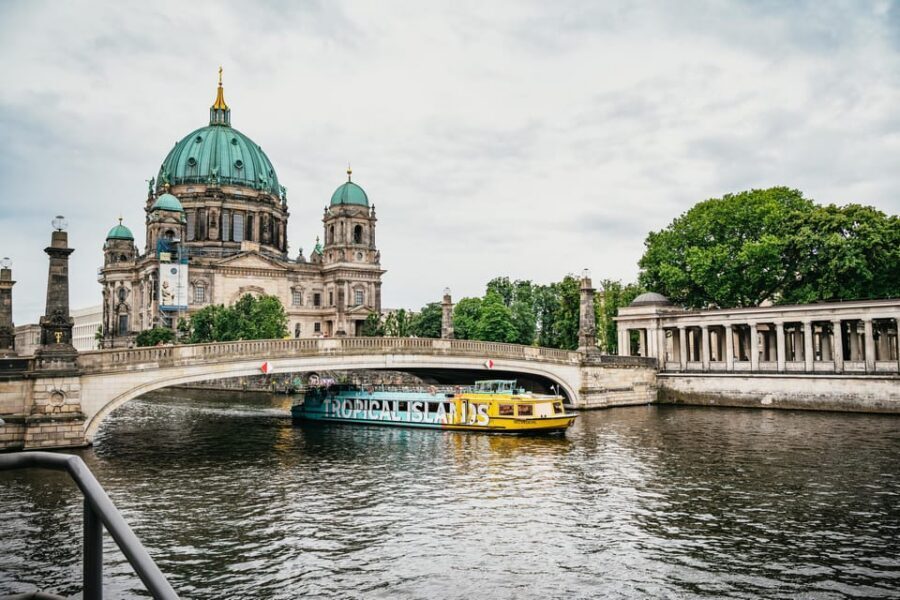
The tour begins at the Oberbaumbrücke, one of Berlin’s best-known landmarks. It’s not just a pretty bridge—this is where the story of connection and division becomes visible in one glance.
Why it’s a smart first stop: your brain needs orientation. If you start in a food district without the political geography, Kreuzberg’s character can feel random. Starting at the bridge gives you a framework: you’re not only touring buildings, you’re understanding how the border shaped everyday routes, neighborhoods, and identities.
Practical note: the stop is short, around 10 minutes. You’ll want to use that time to look outward and around the bridge, not just at the central span. The area around it helps you visualize how East and West interacted through Berlin’s urban layout.
Lohmühleninsel: a small parcel that teaches big Berlin lessons
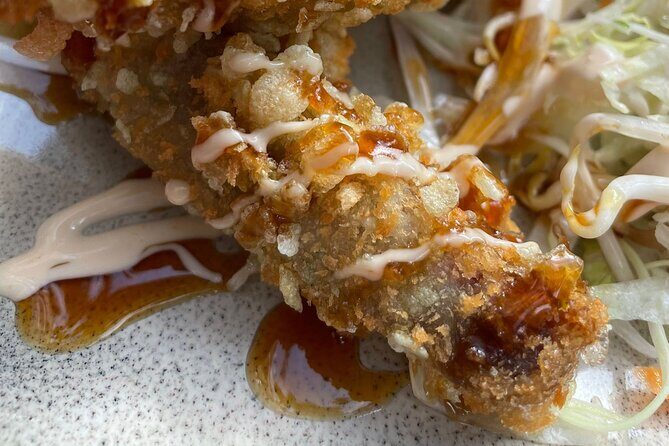
Next comes Lohmühleninsel, a small island-like parcel of land with an eventful past. The point here is scale: Berlin’s history isn’t only carved into grand monuments. It’s also tucked into small places where you might not think to look.
This stop works well because it slows the pace slightly. You get architectural and local context without the pressure of sprinting for another photo spot. If you like noticing details—how a place got used over time—this is the kind of stop you’ll appreciate.
A minor consideration: because it’s brief, you won’t get a deep lecture. Think of it as a “spotlight moment,” setting up the more emotional border-era stops that follow.



GDR watch tower: the border story gets physical
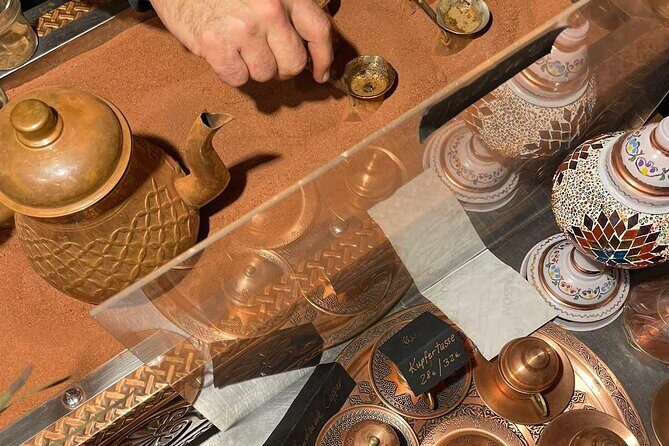
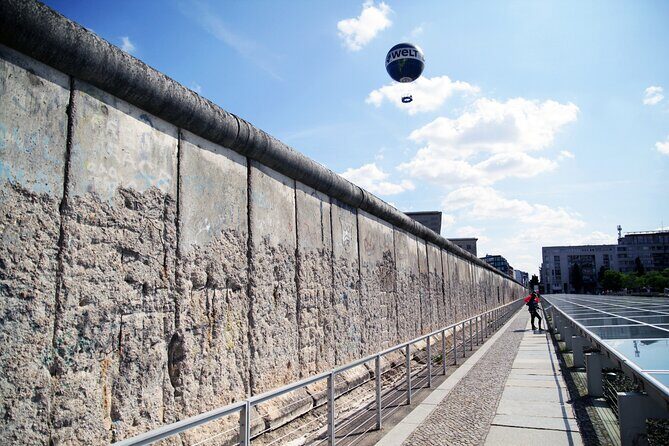
The tour then hits the GDR watch tower, preserved from the former border zone. This is where the partition of Berlin becomes tangible. In the border period, areas like Kreuzberg and Alt-Treptow were pushed to the edges of the city’s daily rhythm—peripheral not in distance, but in experience.
That’s why I think this stop is one of the most powerful on the route. You can read about the border all day, but seeing a preserved relic changes how you imagine daily life. It helps you understand the feeling of living beside something you couldn’t ignore.
This is also a short stop, around 5 minutes. Don’t waste it. Use it to get your bearings: look for how the tower sits in the environment and what kinds of lines of sight it suggests.
Görlitzer Park: a neighborhood hangout with a complicated reputation
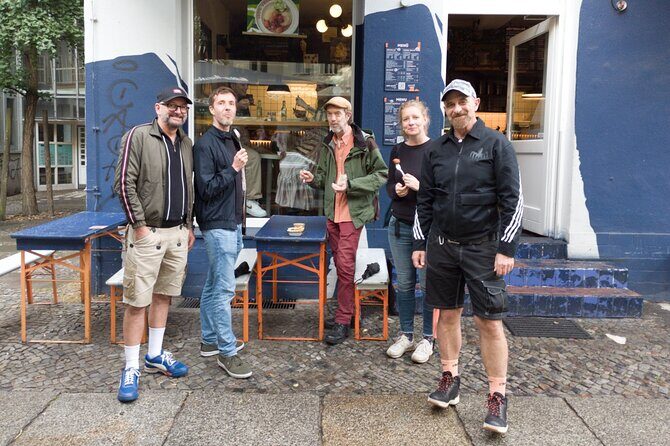
Then you head to Görlitzer Park, described as a recreational area for the neighborhood. The interesting part isn’t only what it looks like, but why it has a bad reputation today—and what that reputation means in practice.
For me, tours that include one “reality check” stop feel more honest. Berlin has places that get simplified by headlines. A park stop like this can give you context for how a public space becomes labeled and why that label persists.
Because your time is limited (around 10 minutes), the goal is not to debate politics. It’s to give you the narrative thread that makes the park’s current vibe make more sense as you continue walking toward the food streets.
Falckensteinstraße: where Klaus’s picks turn the route into a meal
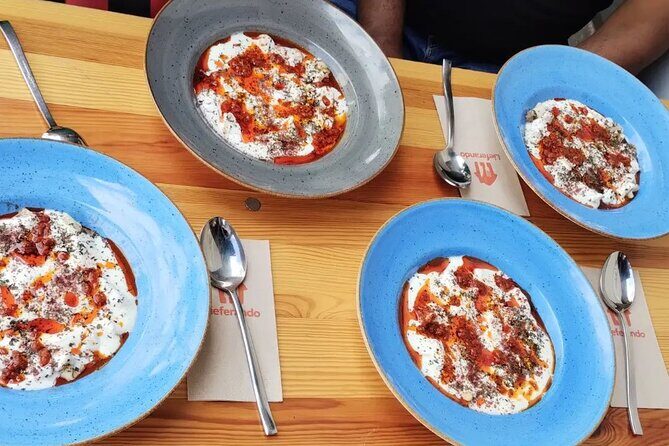
This is the long food stretch: Falckensteinstraße, with an extraordinary density of international gastro options. Instead of making you “just try your luck,” the guide brings you to personally tested highlights and keeps the tastings flowing.
This is also where the tour really earns its name. Five gastro partner tastings are included overall, and this area is a major part of that experience. You’re not only eating; you’re comparing styles across cultures in a way that’s hard to replicate on your own in one evening.
From what I know about Klaus’s guiding style, the best part is the explanation that comes alongside the food. You learn how the neighborhood’s mix of cultures shows up in plates, not just in signage.
A practical consideration: since drinks aren’t included, you might feel tempted to grab beverages between tastings. That’s fine, but set a small budget so the evening doesn’t creep. Also, street-food style tastings can be messy. Bring a napkin mindset.
Wrangelstraße: Romanesque-style church, then a final food choice
The tour continues to Wrangelstraße, the name-giving street of the neighborhood. Here you get one more architecture anchor: a church built in the style of a Romanesque monastery. Even if you’re not a church person, it helps to have this kind of visual contrast while you’re walking through food streets.
Then the food density continues again. This is where you can see how the international gastro scene carries forward from Falckensteinstraße—less like a one-street novelty and more like a sustained neighborhood identity.
Your final option is also built for real travel needs. The tour ends near metro at Schlesisches Tor, where the subway is not underground. That detail matters because it changes how you imagine transit after an evening out. You don’t have to fight deep-station tunnels if you plan to keep moving.
You can also stop in a Kiez pub near the route for a final rest, depending on what the group decides.
The value of small-group guiding in a food-history tour
The reviews you can read for this tour highlight one theme: Klaus connects food with place. That shows up in what this tour feels like in motion. You’re not just handed a checklist of stops. You get short, usable context that makes each next choice feel logical.
Two things I especially like about this style:
- The pace stays social, so you can talk, ask, and react instead of standing silently in a crowd.
- The food isn’t random. You’re guided toward options you’d likely skip if you were rushing, and the variety helps you avoid repeating the same cuisine twice in one evening.
If you’re the type who likes to understand a neighborhood’s identity, this is a stronger use of your time than a generic walking tour with no tastings.
Who should book this gastro tour through the Wrangelkiez?
I’d book this if you:
- want a 3-hour evening plan that mixes walking, stories, and eating
- like Kreuzberg and want to go beyond the most obvious photo stops
- enjoy international food and want help choosing in the middle of a very dense food corridor
- prefer a small group over a big bus-style experience
I might skip it if you:
- want drinks fully included (they aren’t)
- dislike walking at all, since this is built around multiple stops over the course of the evening
- need very specific dietary accommodations and you can’t manage with snack tastings that may vary by partner
If you’re flexible and curious, this tour is a great way to get an evening that feels both Berlin-specific and food-meaningful.
Should you book this gastro tour with Klaus?
If you want a Berlin evening that’s more than a set of monuments, I think this is a smart pick. You get a clean blend of landmarks tied to the East-West divide, a preserved border relic, and then a food route where the guide helps you make choices you’d otherwise miss.
At $83.08, the main question is whether you value guided tastings plus local history over doing it all on your own. For many visitors, the tastings alone are worth it, and the historical context makes the food stops feel less like a checklist and more like a story of how Kreuzberg became what it is.
If that sounds like your kind of night, book it.
FAQ
How long is the Gastro Tour through the Wrangelkiez?
The tour is about 3 hours.
What does the tour cost?
It costs $83.08 per person.
Is the tour offered in English?
Yes, it is offered in English.
What’s included in the price?
You get a local guide, snacks with selected tastings at five gastro partners, and admission is free for the tour stops.
Are drinks included?
No, drinks are not included.
Where does the tour start and where does it end?
It starts at Cuvrystraße 2, 10997 Berlin. It ends near the metro at Schlesisches Tor, with the final gastro partner near the station depending on the season.
How large are the groups?
The tour has a maximum of 15 travelers.
Is free cancellation available?
Yes. You can cancel up to 24 hours in advance for a full refund.
Is a mobile ticket used?
Yes, the tour includes a mobile ticket.